What’s actually slowing this PC down?
Pick the symptom - the matching free tool is one click away.
An SSD running 24/7 encoding for weeks will show degradation metrics that would be alarming in any other context but are completely normal for streaming workloads. The drive is consuming its write endurance constantly, visible in SMART monitoring tools as the remaining lifespan decreases day by day.
Understanding that degradation—how fast it happens, what the real replacement timeline looks like, and whether it’s a critical factor in streaming hardware decisions—separates realistic planning from unnecessary panic.
How SSD Write Endurance Is Measured
SSDs have a finite number of write cycles they can perform before the flash memory becomes unreliable. Manufacturers rate this in terabytes written (TBW), which estimates how much total data can be written to the drive before it reaches 0.1% uncorrectable error rate—the industry standard for “the drive is starting to fail.”
A typical mid-range SSD like a Samsung 870 EVO (2TB) has an endurance rating of 1,200 TBW. This means the manufacturer expects you to write 1,200 terabytes of data total before the drive reaches the failure threshold. In a typical office environment where the drive gets maybe 50 gigabytes of writes per day, that’s 1,200 TB divided by 0.05 TB per day equals 24,000 days, or 65 years of service.
PC Slower Than It Used to Be?
A free scan shows the junk files, broken settings and background clutter dragging Windows down - then fixes them in one click.Free scan · Windows 10 & 11Crashes, No Sound, or Screen Glitches?
Random freezes, missing sound and display glitches usually trace back to one bad driver. Find and replace yours safely.Free scan · under a minuteThe math changes dramatically under continuous streaming.
#1 Best Overall

- MEET THE NEXT GEN: Consider this a cheat code; Our Samsung 990 PRO Gen4 SSD helps you reach near max performance with lightning-fast speeds; Whether you’re a hardcore gamer or a tech guru, you’ll get power efficiency built for the final boss
- REACH THE NEXT LEVEL: Gen4 steps up with faster transfer speeds and high-performance bandwidth; With a more than 55% improvement in random performance compared to 980 PRO, it’s here for heavy computing and faster loading
- THE FASTEST SSD FROM THE WORLD'S FLASH MEMORY BRAND: The speed you need for any occasion; With read and write speeds up to 7450/6900 MB/s you’ll reach near max performance of PCIe 4.0 powering through for any use
- PLAY WITHOUT LIMITS: Give yourself some space with storage capacities from 1TB to 4TB; Sync all your saves and reign supreme in gaming, video editing, data analysis and more
- IT’S A POWER MOVE: Save the power for your performance; Get power efficiency all while experiencing up to 50% improved performance per watt over the 980 PRO; It makes every move more effective with less consumption
Streaming Write Patterns and SSD Wear
A GPU encoding a continuous stream produces a steady write load. Your streaming setup writes several things continuously:
- Video cache and intermediate files from the encoder: typically 200-500 MB per second depending on bitrate
- Temporary files and logs from the streaming software: 50-100 MB per second
- System cache and OS maintenance: another 50-200 MB per second
Total continuous write rate: roughly 300-800 MB per second, depending on your bitrate, codec, and logging verbosity. Many creators push the higher end, especially if they’re recording backup copies locally while also streaming.
Let’s use 500 MB per second as a realistic average.
Free tools Windows power users keep installed
One-click scans. No signup required.
500 MB/second × 86,400 seconds per day = 43.2 gigabytes per day
That same Samsung 870 EVO with 1,200 TBW endurance now exhausts its write budget in:
1,200 TB divided by 0.0432 TB per day = 27,777 days
Wait—that’s still 76 years. Why do so many streamers report SSD failures?
The answer lies in what “typical” means.
Real-World Streaming Write Loads Are Higher
In practice, streaming setups write more than the theoretical minimum. Here’s why:
Many creators stream from Windows or macOS machines that generate copious temporary files, cache entries, and system logging. A Windows machine running encoding software writes 500-800 MB per second just from cache activity, system files, and swap activity. Add the streaming encoder on top of that, and total writes climb to 800-1,200 MB per second.
Rank #2

- BREAKTHROUGH PCIe 5.0 PERFORMANCE: Supercharge your workflow and gaming with PCIe 5.0, boasting up to 14,700/13,400 MB/s* sequential read/write speeds. Tackle massive files and power up your gaming with Gen5—twice as fast as the 990 PRO SSD.
- EVERY TASK, TURBOCHARGED: Speed past productivity limits. With random read/write speeds up to 1,850K/2,600K IOPS*, enjoy fast game loads, seamless AI apps, and efficient multitasking. Virtually no lag, no limits—just nonstop performance.
- THINK FAST, CREATE FASTER: With random read/write speeds of up to 1,850K/2,600K IOPS*, the 9100 PRO SSD fuels seamless AI content creation, swift loads, and smooth gameplay. Work, play, and create at lightning speed.
- SPEED, WHENEVER YOU NEED: From laptops to desktop PCs, experience blazing PCIe 5.0 speeds and up to 8TB of storage. Perfect for video editing, gaming, and creative tasks, with the compatibility to match your device.
- STAY COOL, RUN FAST: Push limits, not temperatures. A 5nm controller boosts power efficiency up to 49% over the 990 PRO SSD*, while advanced thermal control keeps performance smooth and reliable.
Some creators record backup copies locally—creating a copy of the stream on a secondary SSD while also uploading to YouTube. This doubles the write load instantly.
Others keep verbose application logs to troubleshoot streaming issues, and those logs accumulate quickly when the application runs 24/7.
Recommended Free Tools
Let’s recalculate with a more realistic 1,000 MB per second continuous write rate:
1,000 MB/second × 86,400 seconds per day = 86.4 gigabytes per day
That same Samsung 870 EVO with 1,200 TBW endurance now exhausts its write budget in:
1,200 TB divided by 0.0864 TB per day = 13,888 days = 38 years
Still seems safe. But there’s another factor: not all SSDs can sustain maximum write rate continuously.
NAND Flash Wear Leveling and Thermal Throttling
SSDs use wear leveling to distribute writes evenly across the NAND flash cells. A cell that receives a million writes ages faster than one that receives one hundred thousand writes. Wear leveling moves data around to prevent any single cell from being over-used.
This wear leveling itself consumes write cycles. When an SSD is under sustained write load, the wear leveling becomes more aggressive, consuming additional cycles to balance wear across the drive. The real wear rate is higher than the raw write bytes suggest.
Rank #3
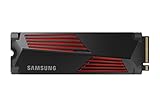
- BLAZING SPEED. COOL VICTORY: Consider this a cheat code; Our Samsung 990 PRO Gen 4 with Heatsink SSD helps you reach near max performance* with lightning-fast speeds and Heatsink for improved temperature control
- REACH THE NEXT LEVEL: Gen4 steps up with faster transfer speeds and high-performance bandwidth; With a more than 55% improvement in random performance compared to 980 PRO, it’s here for heavy computing and faster loading
- THE FASTEST SSD FROM THE WORLD'S #1 FLASH MEMORY BRAND**: The speed you need for any occasion; With read and write speeds up to 7450/6900 MB/s* you’ll reach near max performance of PCIe 4.0*** powering through for any use
- PLAY WITHOUT LIMITS: Give yourself some space with storage capacities from 1TB to 4TB; Sync all your saves and reign supreme in gaming, video editing, data analysis and more
- MADE w/ PS5 IN MIND: Ultra-slim Integrated Heatsink is designed to dissipate heat from your device to stabilize its temperature and prevent performance issues; It’s compatible with PlayStation 5 and PCI-SIG D8 standard desktops and laptops****
Additionally, sustained write loads generate heat. NAND flash has thermal limits. When the drive gets too hot, it thermally throttles—reducing write speed to dissipate heat. A drive rated for 500 MB/sec sustained writes throttles to 200 MB/sec if it overheats during continuous encoding.
Some creators work around this by upgrading to enterprise SSDs or high-endurance consumer models. An Samsung 990 Pro with 1,200 TBW endurance or a Western Digital Black SN850X can handle higher sustained write rates before throttling. But enterprise SSDs cost $300+ per terabyte vs $80-100 for consumer drives.
Realistic SSD Lifespan Under 24/7 Streaming
Manufacturer endurance ratings are conservative and assume normal temperature ranges. Under the heat of continuous encoding, effective endurance is lower.
Here are realistic timelines for various SSD models under 24/7 streaming:
Consumer SATA SSD (Samsung 870 EVO, Crucial MX500):
– Nominal endurance: 600-1,200 TBW
– Real-world write load during streaming: 86-172 GB/day
– Realistic useful life: 3-4 years (assuming 50-75 MB/sec average write rate)
– Expected failures: 1-2 major incidents in first 3 years due to thermal throttling or wear-out
– Replacement cost: $60-100
Quick wins for a faster PC:
Clear out junk files and repair common Windows errorsFree Scan →Scan for outdated or missing drivers - takes under a minuteDriver Scan →NVMe SSD (Samsung 970 EVO Plus, WD Blue SN570):
– Nominal endurance: 600-1,200 TBW
– Real-world write load: 86-172 GB/day
– Realistic useful life: 3-5 years
– Expected failures: thermal throttling common, occasional SMART warnings starting year 2
– Replacement cost: $70-120
High-endurance NVMe (Samsung 990 Pro, WD Black SN850X):
– Nominal endurance: 1,200-2,400 TBW
– Real-world write load: 86-172 GB/day
– Realistic useful life: 5-8 years
– Expected failures: rare, mostly limited to thermal issues in poorly ventilated spaces
– Replacement cost: $150-300
The key variable is whether you’re writing optimized data (just the stream) or bloated data (stream plus system cache plus temporary files plus logs). Optimized setups last toward the upper end of the range. Unoptimized setups reach the lower end, sometimes faster.
What the SMART Data Actually Tells You
Modern SSDs report their remaining write endurance in SMART monitoring tools. You can see this data with utilities like CrystalDiskInfo (Windows) or Disk Utility (Mac).
Do these 3 things before closing this tab:
1Repair Windows errors before they cause bigger problems2Scan for outdated or missing drivers - takes under a minute3Clear out junk files and repair common Windows errorsSMART reports “remaining life” as a percentage. An SSD at 100% has its full endurance remaining. At 50%, it has consumed half its write budget. At 0%, it has exhausted its endurance rating and is likely to start failing soon.
Many streamers get alarmed when they see the remaining life drop from 100% to 80% to 50% in the first few months. They assume the drive is dying. In fact, they’re just watching the normal degradation that continuous writes produce.
A consumer SSD under 24/7 streaming load drops from 100% to 50% in roughly 18-24 months. That’s normal. It reaches 0% somewhere between 3-4 years. That’s when the drive becomes unreliable and needs replacement.
Rank #4

- GROUNDBREAKING READ/WRITE SPEEDS: The 990 EVO Plus features the latest NAND memory, boosting sequential read/write speeds up to 7,250/6,300MB/s. Ideal for huge file transfers and finishing tasks faster than ever.
- LARGE STORAGE CAPACITY: Harness the full power of your drive with Intelligent TurboWrite2.0's enhanced large-file performance—now available in a 4TB capacity.
- EXCEPTIONAL THERMAL CONTROL: Keep your cool as you work—or play—without worrying about overheating or battery life. The efficiency-boosting nickel-coated controller allows the 990 EVO Plus to utilize less power while achieving similar performance.
- OPTIMIZED PERFORMANCE: Optimized to support the latest technology for SSDs—990 EVO Plus is compatible with PCIe 4.0 x4 and PCIe 5.0 x2. This means you get more bandwidth and higher data processing and performance.
- NEVER MISS AN UPDATE: Your 990 EVO Plus SSD performs like new with the always up-to-date Magician Software. Stay up to speed with the latest firmware updates, extra encryption, and continual monitoring of your drive health–it works like a charm.
The problem is that reaching 0% remaining life doesn’t mean the drive suddenly stops working. It means the SMART rating indicates you’re beyond the manufacturer’s confidence interval. The drive can fail tomorrow. It could last another year. You’re operating in the failure zone, and the failure can happen at any time without warning.
The Tool Desk
Outbyte PC Repair FREERepair Windows errors before they cause bigger problemsFix Now →Outbyte Driver Updater FREEScan for outdated or missing drivers - takes under a minuteDriver Scan →The Real Cost of SSD Wear in Streaming
The cost isn’t the drive itself—an $80 SSD is a minor expense. The cost is the uncertainty.
A streaming setup on an SSD that has reached 0% remaining life is one bad power spike, one thermal event, one ambient temperature increase away from catastrophic data loss. The stream files can corrupt. You can lose your streaming configuration. You discover the corruption only after the drive is completely unresponsive.
This is why the sensible approach is to replace the SSD before it reaches zero remaining life. At 20-30% remaining life, the SSD is still functionally reliable but clearly approaching the end of its service life. Replacing it then gives you safety margin.
So the realistic SSD replacement schedule for 24/7 streaming looks like:
- Year 1: SSD at 80-90% remaining life. Monitor but don’t replace.
- Year 2: SSD at 40-60% remaining life. Start planning a replacement.
- Year 3: SSD at 10-30% remaining life. Replace immediately.
For a single $80 consumer SSD, this means $80 every 3 years, or about $27 per year.
For a streaming setup using multiple SSDs (one for OS, one for cache, one for backups), the cost multiplies. $80 per drive × 3 drives × every 3 years = $80 per year.
Independent reader supportYour contribution helps us test, update, and keep practical guides available for everyone.How Cloud Streaming Eliminates the SSD Question
Cloud streaming removes the SSD from your ownership entirely. The encoding happens on cloud infrastructure using SSDs that the service maintains. You don’t need to monitor SMART data, plan replacements, or worry about when the drive will fail.
Avoid 24/7 SSD Wear with Cloud YouTube Streaming
StreamNeo is designed for creators who want to turn an owned or licensed prerecorded video into an always-on YouTube Live stream without leaving a PC or encoder running. Upload the video and paste your YouTube stream key to start the stream in the cloud, keeping continuous encoding writes off your local SSD.
Best Value

- HUGE SPEED BOOST: Get random read/write speeds that are 40%/55% faster than 980 PRO; Experience up to 1400K/1550K IOPS, while sequential read/write speeds up to 7,450/6,900 MB/s reach near the max performance of PCIe 4.0*
- BREAKTHROUGH POWER EFFICIENCY: Use less power and get more performance; Enjoy up to 50% improved performance per watt over 980 PRO, plus optimal power efficiency with max PCIe 4.0 performance**
- SMART THERMAL CONTROL: Samsung's own nickel-coated controller delivers effective thermal control; With its slim size, 990 PRO is a perfect fit for desktops and laptops that meet the PCI-SIG D8 standard***
- THE CHAMPION MAKER: Up to 65% improvement in random performance enables faster loads for an ultimate gaming experience on PS5 and DirectStorage PC games****
- SAMSUNG MAGICIAN SOFTWARE: Get the most out of your SSD with Samsung Magician's advanced yet intuitive optimization tools; Monitor drive health, protect valuable data, and receive important updates for your 990 PRO
StreamNeo checks stream health every 30 seconds and automatically restarts dropped streams. That provides a more dependable way to keep a YouTube channel live while your computer stays off, without having to monitor SMART data or plan around local drive wear.
A free 24-hour 720p/30fps trial is available with no card required at signup. Use it to test the full workflow and decide whether moving the workload to the cloud makes sense for your streaming schedule.
You upload your video once, paste your YouTube stream key, and the stream runs from the cloud. The SSD wear happens on someone else’s infrastructure. Your local machine isn’t running 24/7 encoding, so the SSDs in your own computer age at normal rates.
StreamNeo also checks stream health every 30 seconds and automatically restarts dropped streams, helping maintain an always-on YouTube Live broadcast while the PC remains off.
PC Slower Than It Used to Be?
A free scan shows the junk files, broken settings and background clutter dragging Windows down - then fixes them in one click.Free scan · Windows 10 & 11Crashes, No Sound, or Screen Glitches?
Random freezes, missing sound and display glitches usually trace back to one bad driver. Find and replace yours safely.Free scan · under a minuteThis is particularly valuable for creators who lack technical comfort with storage monitoring. You don’t need to understand SMART data, thermal throttling, or wear leveling. You just stream, and the infrastructure handles the degradation.
The Real Numbers: Should You Worry About SSD Wear
If you’re planning a 24/7 streaming setup for a full year:
- Consumer SSD cost: $80-100
- One-year SSD replacement cost (amortized): $27-30
- Monitoring burden: low (run CrystalDiskInfo monthly)
- Risk of data loss from wear-out: moderate (failure is possible but not guaranteed in the first year)
If you’re planning a 3-year 24/7 streaming operation:
- Consumer SSD total cost: $240-300 for replacements
- Monitoring burden: moderate (watch SMART data every few months, plan replacements)
- Risk of catastrophic failure: moderate-to-high (original SSD almost certainly fails in year 3)
If you’re planning to stream 24/7 indefinitely:
- SSD lifecycle: replace every 3 years
- Maintenance: ongoing, unpredictable failures
- Peace of mind: medium (you know it will fail eventually, just not when)
StreamNeo removes this from the equation entirely. The free 24-hour trial, no card required, is long enough to experience what it means not to monitor SMART data, not to plan SSD replacements, and not to worry about catastrophic drive failure during a critical stream.
Free tools Windows power users keep installed
One-click scans. No signup required.
For creators running multiple channels or long-term streaming operations, that peace of mind often proves more valuable than the dollar cost of replacement SSDs.
Quick Recap
Product prices and availability are accurate as of the date/time indicated and are subject to change. Any price and availability information displayed on Amazon at the time of purchase will apply.




