Windows Errors? Fix Them Before They Spread
Repair common Windows errors and clear accumulated junk for a smoother, more stable PC - no reinstall needed.Free scan · no reinstallOutdated Drivers Are Slowing You Down
One free scan finds every outdated or missing driver and matches the right update for your exact hardware.Free scan · exact hardware matchSpaceX is not buying EchoStar Corporation. It agreed to acquire specific EchoStar wireless-spectrum licenses and related rights, while arranging future Starlink Direct to Cell access for EchoStar’s wireless customers. The amended transaction is worth approximately $20 billion and could give Starlink more capacity and flexibility for satellite texting, voice, data and Internet-of-Things services—but it does not instantly create a nationwide satellite mobile network.
What SpaceX agreed to acquire
EchoStar announced the SpaceX agreement on September 8, 2025. The original transaction was valued at approximately $17 billion, payable through up to $8.5 billion in cash and up to $8.5 billion in SpaceX stock. EchoStar later amended the agreement to add AWS-3 spectrum, raising total consideration to approximately $20 billion. Up to $11 billion of that amended consideration was to be paid in SpaceX stock valued at $212 per share under the agreement terms.
The assets are spectrum licenses and associated rights—not EchoStar’s entire company, Boost Mobile, or Dish Network. EchoStar’s filing describes the transfer as including relevant domestic and international authorizations, filings, concessions, licenses, rights, priorities and certain related assets.
Read the transaction details in EchoStar’s Q1 2026 Form 10-Q and the original EchoStar announcement.
#1 Best Overall
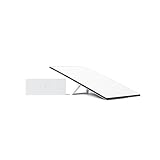
- Starlink provides reliable high-speed, low-latency, internet wherever you live
- Service plan required, activate STARLINK by selecting a service plan that is customized to meet your personal needs
- Select from plans suited for households or travel
- Get online in minutes, set up STARLINK with just 2-steps, plug it in and point at the sky
- STARLINK comes with everything needed to get online including a kickstand, gen 3-router, cables and power supply
The spectrum involved
| Asset | Frequency or description | Role in the amended deal |
|---|---|---|
| AWS-4 and H-Block | 2000–2020 MHz, 2180–2200 MHz, 1915–1920 MHz and 1995–2000 MHz | Core spectrum in the original agreement, approximately 50 MHz across specified bands |
| AWS-3 | Up to 15 MHz in the 1695–1710 MHz range for each relevant license area | Added by the amendment, increasing consideration to approximately $20 billion |
| Related rights | Domestic and international authorizations, filings, concessions, licenses and priorities | Transferred where covered by the agreement and required approvals |
The agreement remained subject to FCC and Department of Justice approvals and other closing conditions described in EchoStar’s filing. Unless a later closing notice confirms completion, the existence of an agreement should not be treated as proof that every license has already transferred.
Why spectrum matters to satellite-to-phone service
Conventional satellite internet normally requires a dish or dedicated terminal. Direct to Cell works differently: specially equipped low-Earth-orbit satellites communicate with ordinary or minimally modified phones using mobile-network spectrum. Starlink describes its satellites as functioning much like cellular towers in space, using phased-array antennas, custom silicon and software that compensates for a low-power handset moving beneath a fast satellite.
Starlink’s Direct to Cell service materials describe operator partnerships using LTE spectrum in roughly the 1.6–2.7 GHz range. EchoStar’s licenses could give SpaceX additional frequencies and more control over how satellite beams and terrestrial networks are coordinated.
What additional spectrum could improve
- More capacity when many phones share a satellite beam.
- Greater flexibility in designing coverage and frequency reuse.
- More options for integrating satellite links with mobile-network cores.
- A stronger technical path from messaging toward voice, selected data services and IoT connections.
- Less dependence on the spectrum portfolio of a single terrestrial carrier.
What spectrum cannot solve by itself
- The weak link between a low-power phone and a satellite hundreds of kilometers overhead.
- Limited capacity per satellite and congestion during peak demand.
- Indoor, forested, mountainous or otherwise obstructed locations.
- Satellite handoffs, latency, weather effects and delayed messages.
- FCC power limits, interference coordination and international authorizations.
- The cost and timetable for launching satellites with the required antennas and software.
- Phone compatibility, mobile-core integration and the economics of serving low-revenue areas.
What Starlink satellite-to-phone service can do now
Starlink’s earlier commercial Direct to Cell rollout used mobile-network partners, including T-Mobile in the United States and One New Zealand. Current consumer capability is best understood as a set of satellite-assisted services rather than a replacement for terrestrial broadband.
Rank #2

- Gen 3 Satellite Dish: Third-generation antenna delivers a stronger, more stable signal and faster performance.
- Wi-Fi 6 Router: Modern router technology supports faster speeds, increased device capacity, and better efficiency.
- Extra 150FT Cable Included: Extended reach for more flexible installation in large spaces or hard-to-access locations.
- High-Speed, Low-Latency Internet: Stream HD content, video conference, or work remotely with confidence.
- Ideal for Rural and Remote Areas: Perfect for homes, cabins, RVs, boats, and off-grid setups where wired internet isn’t available.
T-Mobile’s T-Satellite page lists text and picture messaging, location sharing, selected satellite-optimized applications, WhatsApp voice chat and text-to-911 in supported circumstances. On eligible plans it is included; otherwise T-Mobile advertises $10 per month per line, subject to plan, device and promotional conditions.
Availability depends on a compatible phone, an eligible mobile plan, satellite coverage and a reasonably clear view of the sky. Messages can be delayed or fail. Satellite data is capacity-constrained and is intended primarily for optimized applications, not ordinary terrestrial-speed browsing or streaming.
Emergency-use limits
T-Mobile says satellite 911 is text-only and can involve delays, coverage limitations and less precise location information. A message may sometimes route to a national response center rather than a local 911 center. Satellite emergency messaging should therefore be treated as a useful fallback, not a guarantee of immediate emergency communications.
What the Boost Mobile arrangement means
The EchoStar agreement contemplates future long-term commercial arrangements under which EchoStar wireless subscribers can access next-generation Starlink Direct to Cell text, voice and broadband services. EchoStar also describes a fee-based referral program that can direct existing and new Starlink customers to SpaceX, along with installation and related services for Starlink customers.
What’s actually slowing this PC down?
Pick the symptom - the matching free tool is one click away.
Rank #3

- 🚀 Next-Generation Connectivity: Enjoy lightning-fast, low-latency internet powered by SpaceX’s Standard Dish — ideal for homes, farms, and rural or remote areas.
- 📶 Enhanced Wi-Fi 6 Router: Includes the latest dual-band Wi-Fi 6 router delivering stronger coverage, faster speeds, and improved reliability for multiple connected devices.
- ⚡️ Easy Plug-and-Play Setup: Simple installation with all required cables and mounts included — connect, power on, and get online in minutes.
- 🌦️ Rugged & Weather-Resistant Design: Built to perform in extreme environments — rain, snow, or high winds — for year-round connectivity.
- 🏕️ Residential & Remote-Area Ready: Perfect for off-grid living, cabins, RVs, and rural households seeking a dependable high-speed internet solution.
That language does not establish that every Boost customer already receives full Starlink satellite voice and broadband service. Eligibility can depend on the Boost plan, handset, country, network configuration and the timing of commercial rollout. The arrangement also does not prove that SpaceX has launched a standalone Starlink wireless plan.
Could Starlink become a conventional wireless carrier?
The spectrum purchase gives SpaceX assets that could support a hybrid network combining Starlink satellites, EchoStar frequencies, terrestrial infrastructure, mobile-network partnerships and network-core integration. SpaceX could use that architecture to remain a wholesale partner, sell a Starlink-branded mobile product, compete more directly with carriers, or use different models in different markets.
What is confirmed is narrower: a spectrum transaction and a commercial access arrangement. A nationwide conventional carrier with published pricing, a handset catalog, coverage guarantees and a launch date has not been established by the materials describing this deal.
EchoStar’s separate AT&T spectrum transaction
EchoStar also agreed to sell approximately $23 billion of spectrum licenses to AT&T, including 600 MHz and 3.45 GHz licenses. That transaction is separate from SpaceX’s deal, as documented in AT&T’s SEC Form 8-K.
Rank #4

- Not official Starlink Bundle. No warranty.
- This is not an official starlink bundle. Purchasing this item does not come with a Starlink warranty.
- This is not Starlink. You will not receive a warranty with this bundle created by an outside seller.
The two transactions show EchoStar monetizing different spectrum assets with different strategic buyers: SpaceX is acquiring frequencies useful to satellite-to-device connectivity, while AT&T is acquiring spectrum suited to terrestrial wireless capacity. EchoStar and Boost can continue customer and commercial relationships even as spectrum ownership changes.
Independent reader supportYour contribution helps us test, update, and keep practical guides available for everyone.Regulatory and technical hurdles before users see a major change
The FCC must review license transfers, interference protections, power levels, geographic restrictions, build-out obligations and compliance with its Supplemental Coverage from Space framework. The Department of Justice and other closing conditions can also affect timing. The FCC’s Report and Order FCC 24-136 describes the regulatory framework for satellites connecting directly to ordinary mobile devices.
Even after approval, SpaceX would need to deploy suitable satellites, coordinate frequencies with terrestrial licensees, integrate carrier network cores and manage capacity. A phone may show a satellite connection outdoors while still being unable to support a normal call, unrestricted web session or sustained high-throughput data connection.
How the competitive landscape is changing
SpaceX is not competing in a simple two-company race. The market includes carrier-led satellite services, specialized satellite messengers and several satellite operators with different technical designs and commercial models.
The Tool Desk
Outbyte Driver Updater FREEScan for outdated or missing drivers - takes under a minuteDriver Scan →Outbyte PC Repair FREEClear out junk files and repair common Windows errorsFree Scan →| Platform | Broad approach | What remains different |
|---|---|---|
| Starlink Direct to Cell | Large LEO constellation, carrier partnerships and spectrum acquired or accessed through mobile operators | Current service is strongest in messaging and selected applications; broader voice and data remain expansion areas |
| AST SpaceMobile | Large satellites designed to connect with standard phones through terrestrial-carrier partnerships | Satellite design, deployment scale, spectrum arrangements and commercial timing differ from Starlink |
| Amazon Leo and Globalstar | Amazon announced in April 2026 that it would acquire Globalstar and add direct-to-device capability to Amazon Leo | Amazon said voice, data and messaging services were targeted to begin in 2028; timing and availability remain future-dependent |
| Dedicated messengers | Garmin inReach, ZOLEO and Somewear use dedicated hardware and separate plans | They are not phone-integrated mobile networks and can have different battery, emergency and coverage characteristics |
Amazon’s announcement is available at Amazon’s Leo and Globalstar release. AST SpaceMobile and Globalstar provide company information at AST SpaceMobile and Globalstar.
What consumers should check
- Compatibility: Confirm that the exact phone model and software support the satellite feature.
- Carrier and plan: Check whether the service is included, an add-on or unavailable on your plan.
- Location: Verify country availability and whether the phone needs an unobstructed sky view.
- Functionality: Distinguish messaging and selected apps from ordinary voice calls, general data or broadband.
- Emergency behavior: Read the carrier’s warnings about delays, routing and location accuracy before relying on satellite 911.
- Rollout status: Treat announcements about future Boost or Starlink capabilities as plans until a customer-facing eligibility page confirms them.
Bottom line
SpaceX’s EchoStar transaction materially strengthens Starlink’s position in satellite-to-phone connectivity by adding valuable spectrum and a path to more mobile customers. It could help Starlink progress from texting toward voice, selected data and IoT services. The practical impact will arrive progressively, however: approvals, satellite deployment, capacity, handset compatibility and carrier integration—not the spectrum purchase alone—will determine whether users experience a faster, broader or more independent Starlink mobile network.
Quick Recap
Product prices and availability are accurate as of the date/time indicated and are subject to change. Any price and availability information displayed on Amazon at the time of purchase will apply.




