Free tools Windows power users keep installed
One-click scans. No signup required.
Siemens AG and NEC Corporation launched Mobisphere Ltd. in November 1999 to develop radio-infrastructure equipment for third-generation (3G) mobile networks. Based in Reading, England, Mobisphere was reported as 51% owned by Siemens and 49% by NEC. Its planned platform was designed to support both UMTS radio modes, TDD and FDD; handset development remained separate.
What was Mobisphere?
Mobisphere Ltd. was a Siemens–NEC joint venture focused on the radio infrastructure used by UMTS, the 3G mobile-network standard. The November 1999 launch report described a common platform for network equipment, with products sold under a shared product name through the two parent companies’ separate sales forces. It was not a joint consumer-handset venture.
At launch, Mobisphere was based in Reading, England. Siemens held 51% and NEC held 49%, and the venture was reported to have initial capitalization of $10 million. These are the November launch terms, rather than the different figures discussed in the companies’ earlier planning announcement. EE Times reported the launch details in 1999.
How the March plan differed from the November launch
The venture took shape in two reported stages. In March 1999, Siemens and NEC announced a memorandum of understanding; in November, they announced Mobisphere and its launch terms.
Quick wins for a faster PC:
Scan for outdated or missing drivers - takes under a minuteDriver Scan →Repair Windows errors before they cause bigger problemsFix Now →#1 Best Overall

- Carrier: This phone is locked to Tracfone, which means this device can only be used on the Tracfone wireless network. A Tracfone plan is required to activate this device. Activating is easy, upon receipt go to Tracfone Website and select “Activate” and follow the prompts.
- 📱 Classic Flip Design & Dual Displays: Features a pocket-friendly flip design with a large internal display for easy reading and navigation, plus a convenient external preview screen to check time, incoming caller ID, and notifications at a glance without opening the phone. Sim Card Included - Separate Purchase Not Necessary
- 📶 Reliable 4G LTE Connectivity & VoLTE: Powered by 4G LTE network speeds for crystal-clear HD voice calls, reliable text messaging, and dependable nationwide coverage across America's top networks.
- ⌨️ Tactile Keypad & Loud Speakerphone: Designed with large, easy-to-press buttons for comfortable dialing, intuitive menu navigation, and a powerful speakerphone for hands-free conversations.
- 🔋 All-Day Battery: Stay connected with a long-lasting battery designed for extended talk and standby time. Wi-Fi Note: Wi-Fi is locked until device is activated. Note: Network-locked to TracFone for 365 days from activation.To find the no-contract Tracfone plan for you, visit the Tracfone Store Link located below the product title
| Detail | March 1999 memorandum | November 1999 launch |
|---|---|---|
| Status | Memorandum of understanding to form a joint venture | Mobisphere Ltd. announced as launched |
| Ownership | Expected capital contributions were described as equal; final ownership shares were not stated in the March report. | Siemens 51%; NEC 49% |
| Capital | About $17.24 million in proposed capital, split evenly | $10 million initial capitalization |
| Location | Still being worked out | Reading, England |
| Product scope | Common UMTS radio-subsystem products, including base stations, base-station controllers, and operations and maintenance centers | Common radio-infrastructure platform for TDD and FDD modes |
The March report described an early proposal, not the final reported terms. Its expected $17.24 million contribution and equal split should not be substituted for the $10 million capitalization and 51%/49% ownership reported at launch. EE Times covered the March memorandum.
Why the venture targeted both UMTS modes
UMTS radio networks could use two duplexing approaches: time division duplex (TDD) and frequency division duplex (FDD). In broad terms, TDD separates uplink and downlink transmissions by time on the same frequency channel, while FDD separates them by frequency. The launch coverage presented the partners’ expertise as complementary: Siemens was associated with TDD and NEC with FDD. Mobisphere’s technical rationale was to develop a platform spanning both modes.
Rank #2
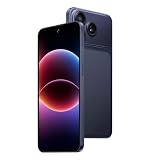
- 【3G network Dual Micro SIM Card】: This is a 3G network mobile phone. The network frequency band supported by the mobile phone is 3G:B1/B5/B2/B8. Please ask your carrier before purchasing whether it supports it, otherwise it may not be used. For example, Verizon users may not be able to use it. The phone cannot support 4G and 5G networks (the SIM card not included in the package).
- 【6.67" HD Screen Android Phone】: This phone features a 6.67-inch display with a resolution of 576×1280, providing a clear and comfortable viewing experience for daily use. The unlocked smartphone is about 0.34 inches thick, providing you with an excellent grip feel. eSIM is not supported on this model.
- 【RAM 2GB + ROM 16GB】: Please note that this phone does not support SD card expansion. With 2GB of RAM, it can only handle 2–3 apps running simultaneously — opening more may cause lag. The phone comes with 16GB of built-in storage, but the system reserves a portion of it, so the actual available space on your unlocked phone will be less than 16GB. Due to the limited memory, some memory-intensive apps like TikTok may not function properly.
- 【3000mAh Battery But No Fast Charging】 : This mobile phone is equipped with a 3000mAh battery. Due to the long transportation time, the battery may run out. Please charge the phone for more than 1 hour after receiving it. The mobile phone uses a type-C interface, but due to the inability to charge quickly, it takes about 2 hours to fully charge, the charger adapter is not included in the box.
- 【Two cameras:】: This unlocked smartphone is equipped with a rear 16MP main camera and a 2MP front camera, making it a great expert at recording beautiful moments in life.This product is suitable for novice users and not for experienced players
That intended breadth should be distinguished from evidence of performance. The launch reports describe the venture’s goal; they do not establish that every Mobisphere product supported both modes in every deployment or document comparative network results. Siemens management board member Volker Jung said the partnership would make the companies “the only companies in the world able to support the two different UMTS Universal Mobile Telecommunications System modes from the commercial start.” That was Jung’s claim about the companies’ position, not independent proof of exclusivity. RCR Wireless covered the launch and the stated technical rationale.
Independent reader supportYour contribution helps us test, update, and keep practical guides available for everyone.What the companies said Mobisphere would develop
The March memorandum named base stations, base-station controllers, and operations and maintenance centers among the planned common radio-subsystem products. By November, the launch report described the broader aim as a common radio-infrastructure platform. Network infrastructure is the equipment and systems that enable operators to build and manage mobile networks; it is distinct from the phones people use to connect to them.
Rank #3

- Carrier: This phone is locked to Tracfone, which means this device can only be used on the Tracfone wireless network. Tracfone plan required, activating is easy, just 3 steps.
- DISPLAY: Immersive viewing on a 6.7-inch super-bright 120Hz display with powerful stereo speakers and Bass Boost for cinematic entertainment.
- CAMERA SYSTEM: Advanced 50MP Quad Pixel camera captures sharp, detailed photos and videos in any lighting condition
- PERFORMANCE: Lightning-fast 5G connectivity paired with a powerful processor and RAM Boost for smooth multitasking.
- BATTERY LIFE: Long-lasting 5000mAh battery with TurboPower charging technology delivers hours of power in minutes.
Mobile-terminal development remained under the independent control of Siemens and NEC. The companies’ launch announcement therefore concerned shared network-side development and marketing, not a co-branded handset range.
What later records show—and do not show
Siemens filings indicate that activity associated with Mobisphere continued beyond the 1999 launch, but the figures are historical company reports rather than current market measures.
Quick Recap
- Fiscal 2002: Siemens said it was involved in 18 contracted 3G network projects with Mobisphere support. Siemens’ fiscal 2002 filing reports the project count.
- Fiscal 2004: Siemens reported 30 commercial contracts for 3G network projects and described W-CDMA infrastructure rollouts in Europe and Asia. This was Siemens’ reported contract activity for that fiscal year, not a present-day total. Siemens’ fiscal 2004 filing gives the figures.
- 2007: Nokia Siemens Networks and NEC described their WCDMA collaboration as continuing earlier Siemens–NEC work carried out through Mobisphere. That supports a connection in the history of the collaboration, but it does not establish a precise legal dissolution date for Mobisphere or a complete legal succession history. The 2007 announcement describes the later cooperation.
Product prices and availability are accurate as of the date/time indicated and are subject to change. Any price and availability information displayed on Amazon at the time of purchase will apply.




