If you already have cash earmarked for a diversified, long-term portfolio, investing it promptly has historically produced a higher typical outcome than phasing it in over a few months. But a lump sum also exposes the full amount to an immediate market decline. An SIP can spread out that entry risk and help you stick to a plan, but it does not guarantee a profit or prevent losses. First account for high-interest debt, emergency savings, and near-term spending; then choose a schedule that fits your goals, investment horizon, and tolerance for losses.
What “lump sum versus SIP” means
This comparison is about what to do with money you already have available, such as a windfall or accumulated savings. Investing new money regularly as it arrives from a paycheck is a different decision: those contributions can be invested as they become available rather than held back while waiting for markets to feel safer.


An SIP, or systematic investment plan, commonly means investing a fixed amount at regular intervals. The SEC defines dollar-cost averaging as investing equal portions at regular intervals regardless of market movements. A fixed schedule determines when cash is invested; it does not determine whether the investment is suitable or how much risk the portfolio carries.
How the two approaches differ in a volatile market
| Question | Invest the lump sum promptly | Phase the cash in through an SIP |
|---|---|---|
| How much is exposed to a decline right away? | The full amount is exposed to market movements as soon as it is invested. | Only the installments invested so far are exposed; the remaining cash is not yet invested. |
| What happens if prices rise during the schedule? | The full amount participates in the rise from the start. | Some cash may miss gains until later installments are invested. |
| What happens if prices fall during the schedule? | The full amount participates in the decline. | Later installments buy at the lower prices if the market falls before they are invested, but earlier installments can still lose value. |
| What can make it easier to follow through? | It avoids managing a deployment schedule, but can feel difficult if markets fall soon after investing. | A predetermined schedule can make the decision feel more manageable and reduce the temptation to keep waiting for a “better” entry point. |
Phasing in can reduce how much of the original cash is exposed to an immediate decline during the chosen deployment period. It does not remove market risk: investments already purchased can fall, and the cash still waiting to be invested can lose purchasing power to inflation or miss market gains.
Do these 3 things before closing this tab:
1Repair Windows errors before they cause bigger problems2Fix the driver behind crashes, sound loss and screen glitches3Clear out junk files and repair common Windows errors#1 Best Overall

- My Trading Journal for Stock Market, Forex, and Crypto: Precisely track and analyze every trade. This log book is essential for improving your trading performance and decision-making skills.
- Comprehensive Day Trading Planner: Record and review 80 guided trades with 8 review sections, perfect for traders aiming to refine their strategies and maximize profits.
- Customizable Trading Setup: Tailor your trading approach by documenting your setups, analyzing results, and adjusting strategies based on market conditions.
- For All Types of Traders: Whether you're trading stocks, forex, or crypto, My Trading Journal supports your unique trading style and helps you achieve consistent success.
- Premium Quality and Durability: Made with high-quality materials, this A5-sized journal is perfect for daily use and designed to withstand the rigors of active trading.
What historical evidence says—and what it cannot say
In a 2023 analysis, Vanguard found that investing a lump sum outperformed a three-month cost-averaging schedule 68% of the time after one year in rolling comparisons using MSCI World Index returns from 1976 through 2022. The analysis modeled a 100% equity investment, split the cash into three equal monthly investments for cost averaging, and assumed the uninvested cash earned no interest. The MSCI World Index is not directly investable, and this historical frequency is not a forecast or guarantee. Vanguard’s 2023 paper explains the comparison and its assumptions.
The typical historical outcome is only part of the picture. In Vanguard’s reported one-year wealth distributions, median ending wealth favored lump-sum investing in each of three example portfolios: 100% equity, 60% stocks and 40% bonds, and 40% stocks and 60% bonds. At the 5th percentile, cost averaging had higher ending wealth in all three examples. That illustrates the trade-off: investing earlier helped the median historical result, while delaying some exposure improved some poor outcomes during the deployment period. These comparisons do not establish a universally best installment length or say what will happen in a future volatile market. Vanguard’s distribution analysis provides the allocation and percentile comparisons.
Rank #2
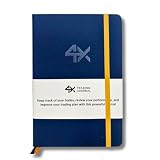
- BUILT FOR YOUR MARKET, FUTURES, STOCKS, FOREX, OPTIONS & CRYPTO: 4X is a mindset and process journal, not a strategy tool tied to one instrument. The plan, the trade log, the deep dive and the weekly review work the same whether you trade ES, EURUSD, SPY or BTC. Traders use it across all five markets every day.
- THE 2026 EDITION, REBUILT FROM TRADER FEEDBACK: Same trusted system, better in every way. An extra daily page for more room to log the session. Weekly reviews now grouped with each week's trades, so no more flipping back and forth. Crisp, darker print that's easy on the eyes after hours on a screen. A Quick-Start QR that scans straight to step-by-step instructions.
- NOT A NOTEBOOK, A COMPLETE 12-WEEK SYSTEM: Start with a one-time 9-part Trading Plan (your market, setups, risk rules and discipline checklist). Then twelve identical weeks: five Daily Logs, five Deep Dive trade pages, and a two-page Weekly Review. 189 guided pages, roughly 80 trades. Guided prompts walk you through every step. You never stare at a blank page.
- RATE YOUR EXECUTION, NOT YOUR RESULT: Your platform tracks the P&L. Nothing tracks the why. Log energy, sleep and mindset before the open; grade every trade A to F on whether you followed your plan, not on whether it won; then face the pattern every weekend with START / STOP / IMPROVE / CONTINUE. That review habit is the edge. You're 42% more likely to hit a goal you've written down.
- BUILT TO LAST, ARRIVES GIFT-READY: Vegan-leather hardcover, 100gsm bleed-resistant paper, two ribbon markers and an elastic closure band. Bound to lay flat so you're not fighting the spine while you write. 189 pages, 5.75" x 8.5", carries in a bag. Ships in a premium gift box: the gift every trader in your life actually wants.
Decide whether the money is ready to invest
Market entry timing is not the first decision if some of the cash has a more immediate job. The SEC’s Investor.gov recommends considering financial priorities before investing a lump sum:
- Pay down high-interest debt. Compare the cost of carrying the debt with the uncertainty of investment returns.
- Keep emergency savings available. Money needed for unexpected expenses should not depend on selling investments during a downturn.
- Separate near-term goals from long-term investing. Money needed soon may not have time to recover from a market decline.
- Choose an allocation suited to your horizon and risk tolerance. An SIP changes the timing of purchases, not the risk of the underlying portfolio.
- Consider diversification and fees. Costs reduce returns, and spreading investments across appropriate holdings can help avoid relying on a single investment.
These are general U.S. investor-education considerations, not individualized financial or tax advice. Account rules and tax treatment vary by jurisdiction and account type. Investor.gov’s lump-sum guidance discusses debt, emergency savings, goals, diversification, time horizon, risk, and fees.
The Tool Desk
Outbyte PC Repair FREEClear out junk files and repair common Windows errorsFree Scan →Outbyte Driver Updater FREEScan for outdated or missing drivers - takes under a minuteDriver Scan →Choose a schedule you can actually follow
If the allocation is appropriate and the cash is genuinely intended for long-term investing, the central choice is between earlier exposure and a smoother-feeling transition. A short, defined schedule may be useful if investing everything at once could lead you to abandon the plan after a decline. Set the dates and amounts in advance rather than making each installment depend on a prediction about market direction.
There is no basis in the cited evidence for a single best SIP duration for every investor. A longer schedule keeps more cash uninvested for longer, which can miss gains if prices rise; it can also leave more cash outside the market if prices fall during that period. A volatile market by itself does not tell you which outcome comes next. The SEC warns that short-term investing in volatile markets carries significant risk of loss, rather than offering a reliable timing signal. Investor.gov’s volatility alert explains the risks of short-term market-driven decisions.
Independent reader supportYour contribution helps us test, update, and keep practical guides available for everyone.Practical decision guide
- Consider investing promptly when the money is available for long-term goals, your portfolio allocation is settled, and you can tolerate a decline soon after investing.
- Consider phasing it in when a preset schedule would help you follow through and avoid making an all-or-nothing decision in response to market swings. Treat the schedule as a behavioral aid and a temporary reduction in exposure, not as protection from loss.
- Pause the timing decision if you have high-interest debt, lack emergency savings, expect to need the money soon, or have not chosen an appropriate diversified allocation.
- Review costs and professional help if the amount is complex to manage or you have tax or allocation questions. Investor.gov recommends checking an investment professional’s registration, services, compensation, and disciplinary history. The SEC also points investors to FINRA’s Fund Analyzer for comparing investment fees.
Investors outside the United States should check the rules, protections, taxes, and investment account options that apply where they live; the SEC resources cited here describe U.S. investor guidance.
Quick Recap
Best Value
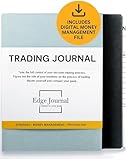
- FOR SERIOUS TRADERS: Track every entry, exit, position size, P&L, and setup with a structured layout designed for forex, stocks, options, futures, and crypto traders who want to identify what actually works in their strategy. NEUROSCIENCE-BASED DESIGN that encourages Growth Mindset and accountability
- TRADER PSYCHOLOGY FOCUS: Built on proven cognitive science principles, each page guides you through emotion tagging, bias recognition, and post-trade reflection to rewire reactive decision-making and build the disciplined mindset top-performing traders rely on
- COMPLETE 2026 TRADING LOG BOOK: Undated 12-month layout with performance summaries and goal tracking for day traders, swing traders, and long-term investors building consistent and serious results
- PERFORMANCE METRICS THAT DRIVE GROWTH: Dedicated sections for win rate, risk-reward ratio and strategy backtesting help you turn raw data into actionable insights, so every losing trade becomes a lesson and every winning trade becomes a repeatable system
- DIGITAL MONEY MANAGEMENT FILE INCLUDED : calculate your risk/reward ratio and win rate to find out whether you have a mathematical edge on the market, or not.
Product prices and availability are accurate as of the date/time indicated and are subject to change. Any price and availability information displayed on Amazon at the time of purchase will apply.
Free tools Windows power users keep installed
One-click scans. No signup required.




