Quick wins for a faster PC:
Repair Windows errors before they cause bigger problemsFix Now →Fix the driver behind crashes, sound loss and screen glitchesFind Drivers →Clear out junk files and repair common Windows errorsFree Scan →SEMI’s September 2024 forecast projected $400.2 billion in global spending on 300-mm semiconductor fab equipment from 2025 through 2027. It was a forecast—not a binding industry commitment, a tally of money already spent, or the total cost of building new fabs. Later SEMI outlooks changed the expected spending path: an October 2025 forecast put 2026–2028 at $374 billion, while annual projections published in April 2026 imply $478 billion for 2027–2029. Those figures cover different periods and are estimates made at different times.
What the $400 billion figure measures
The figure refers to SEMI’s projection of global spending on equipment for semiconductor fabs that process 300-mm wafers. SEMI published the original outlook on September 26, 2024, forecasting $123.2 billion for 2025, $136.2 billion for 2026 and $140.8 billion for 2027—a total of $400.2 billion, rounded in the headline to $400 billion. SEMI’s original forecast also put 2024 spending at $99.3 billion and described 2025 as the first year expected to exceed $100 billion.



Fab equipment spending is only one part of semiconductor investment. The forecast is not a measure of total fab construction costs, chip-company revenue, government subsidies, or cash already committed under contracts. It also does not represent all spending on chip design, packaging, testing, data centers, or finished semiconductor products. Building a fab requires land, buildings, cleanrooms, utilities, labor and other infrastructure in addition to manufacturing equipment.
Equipment covered by the outlook serves manufacturing processes such as lithography, deposition, etching, ion implantation, cleaning, thermal processing, wafer handling, metrology, inspection and process control. The precise scope of individual categories depends on SEMI’s methodology; its public releases summarize the forecast rather than providing all project-level data.
Windows Errors? Fix Them Before They Spread
Repair common Windows errors and clear accumulated junk for a smoother, more stable PC - no reinstall needed.Free scan · no reinstallOutdated Drivers Are Slowing You Down
One free scan finds every outdated or missing driver and matches the right update for your exact hardware.Free scan · exact hardware match#1 Best Overall
Why the 300-mm wafer matters—and what it leaves out
A 300-mm wafer is approximately 300 millimeters in diameter. Its larger surface can yield more dies per wafer than a 200-mm wafer, helping make high-volume production more economical. That does not mean every chip is made on 300-mm wafers. Mature-node analog, power, specialty, MEMS and legacy products may use other wafer sizes or processes tailored to their needs.
Nor does a dollar of equipment spending translate directly into a fixed amount of new wafer capacity. Advanced tools can be more expensive, process flows can become more complex, and technology transitions can require substantial equipment without producing an equivalent near-term increase in output. Capacity growth can also be affected by ramp-up, qualification and yield.
What drove the original outlook
SEMI identified AI demand and the regionalization of semiconductor manufacturing as major forces behind the 2024 projection. The first is a demand story; the second reflects efforts by governments and companies to distribute production across more locations and reduce reliance on a small number of manufacturing hubs. The September 2024 release describes those original drivers.
AI demand travels through several parts of the supply chain
- Logic: AI accelerators and high-performance processors require advanced logic manufacturing.
- Memory: Training and inference need large amounts of memory, including high-bandwidth memory (HBM) used alongside processors. DRAM investment also supports products such as DDR5.
- Storage: More AI workloads and generated data can increase demand for storage, including 3D NAND flash.
- Supporting systems: Data centers also need networking and power-management semiconductors. Advanced packaging matters to system performance, but packaging spending is not the same thing as front-end 300-mm fab-equipment spending.
SEMI’s later memory outlook connected expected investment to HBM, DDR5, AI accelerators, cloud-service-provider capital spending, data centers and storage. These links help explain why AI can affect several manufacturing segments at once; they do not make every forecasted purchase certain.
Regionalization builds capacity, not complete self-sufficiency
Regionalization can mean new fabs, duplicate or partly duplicated capacity for strategic products, and local investment in suppliers, utilities, chemicals, gases, skilled labor and maintenance. It can also raise near-term costs when redundancy reduces economies of scale. A broader geographic footprint still depends on globally connected sources of equipment, materials, software and expertise. Government incentives, export controls and the availability of local infrastructure can influence where projects proceed.
The original annual forecast
| Year | SEMI forecast published September 2024 |
|---|---|
| 2024 | $99.3 billion |
| 2025 | $123.2 billion |
| 2026 | $136.2 billion |
| 2027 | $140.8 billion |
| 2025–2027 total | $400.2 billion |
The three-year total is the sum of the three annual projections: $123.2 billion + $136.2 billion + $140.8 billion = $400.2 billion. Each number is a forecast, not an audited record of actual spending.
How subsequent forecasts changed the picture
SEMI’s outlooks have shifted as the forecast horizon moved and its view of the project pipeline changed. The figures below are not like-for-like totals: each covers a different period and was published at a different date.
| Publication date | Forecast period | Published outlook | How to read it |
|---|---|---|---|
| September 26, 2024 | 2025–2027 | $123.2B in 2025; $136.2B in 2026; $140.8B in 2027; $400.2B total | Original three-year forecast. |
| October 8, 2025 | 2026–2028 | $116B in 2026; $120B in 2027; $138B in 2028; $374B total | Later outlook for a shifted three-year window. |
| April 1, 2026 | 2026–2029 annual outlook | $133B in 2026; $151B in 2027; $155B in 2028; $172B in 2029 | The 2027–2029 figures sum to $478B; this is an arithmetic total of published annual projections, not a separately stated SEMI three-year total. |
The October 2025 figures are from SEMI’s 2026–2028 outlook; the annual figures are from its April 2026 update. The lower $374 billion total and the higher implied $478 billion total can coexist: they cover different years and reflect estimates made at different times, not successive reports of a single fixed commitment.
Rank #3
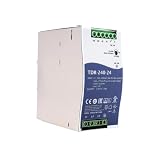
- Wide Input Voltage Range: Supports 340-550VAC or 480-780VDC input, enabling stable operation in diverse industrial environments with flexible power source compatibility.
- High Efficiency Performance: Achieves up to 92% efficiency with passive PFC, reducing energy loss and heat generation for reliable long-term operation in automation applications.
- Comprehensive Protection Features: Integrated short-circuit, overload, over-voltage, and over-temperature safeguards ensure device safety and durability under demanding conditions.
- Compact Rail Mount Design: Slim 63mm width with TS-35/7.5 or 15 rail mounting, optimizing space utilization in control cabinets while facilitating easy installation and maintenance.
- Industrial Compliance & Certification: Meets UL61010, BS EN/EN61000-3-2, and EMC standards, guaranteeing suitability for industrial controls, manufacturing equipment, and electromechanical systems.
Which manufacturing segments are expected to receive spending
Logic and microprocessors
Advanced logic investment supports foundry capacity and processors for AI and high-performance computing. SEMI’s October 2025 forecast projected $175 billion in Logic & Micro equipment spending during 2026–2028. In April 2026, SEMI projected $228 billion for the category across 2027–2029. The industry’s references to “2 nm” or “1.4 nm” describe process-generation labels; they are not literal measurements of every transistor feature and are not directly comparable across manufacturers without context.
Memory: DRAM, HBM and 3D NAND
In October 2025, SEMI projected $136 billion in memory equipment spending for 2026–2028, including more than $79 billion for DRAM and $56 billion for 3D NAND. Its April 2026 outlook projected $175 billion for memory during 2027–2029, including $111 billion for DRAM and $62 billion for 3D NAND. These are forecast figures for different periods, not guarantees of orders or a direct measure of production volume.
A June 29, 2026 update projected 300-mm memory equipment spending of $52 billion in 2026 and $57 billion in 2027. SEMI attributed that outlook to demand for HBM, DDR5, AI accelerators, data centers and storage. It also noted that technology migration and process complexity—including advanced-node DRAM, HBM and higher-layer NAND transitions—can moderate capacity growth even as equipment investment rises.
Mature-node and specialty manufacturing
The investment cycle is not only a race to the newest logic processes. 300-mm fabs also serve a range of products and applications, while other wafer sizes remain relevant in automotive, industrial, IoT, power, analog and specialty markets. Spending across those areas responds to different demand patterns and manufacturing requirements than leading-edge AI processors.
Do these 3 things before closing this tab:
1Repair Windows errors before they cause bigger problems2Fix the driver behind crashes, sound loss and screen glitches3Clear out junk files and repair common Windows errorsRank #4
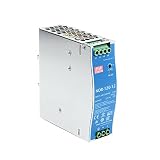
- Original and Genuine NDR-120W|(12V 10A).(24V 5A).(48V 2.5A) For Industrial automation control system,Semiconductor fabrication equipment,Electro-mechanical apparatus
- The NDR-120 series relevant certificates for industrial control apparatus (UL508, TUV BS EN/EN62368-1, and etc.) is a very competitive power supply solution for industrial applications.
- Input 90-264Vac, in line with German industrial standard thin economical power supply
- The metal shell has good heat dissipation, stable operation in the environment of -20? to 70?, and the efficiency is as high as 89%
- It is equipped with constant current mode for over-load protection, fitting various inductive or capacitive applications.
Regional outlook: where equipment spending was projected
SEMI’s October 2025 forecast gave this regional breakdown for 2026–2028:
| Region | Projected 300-mm fab-equipment spending, 2026–2028 | Context identified in the outlook |
|---|---|---|
| China | $94 billion | Domestic capacity expansion and self-sufficiency policies. |
| Korea | $86 billion | Strong connection to memory investment. |
| Taiwan | $75 billion | Advanced foundry capacity, including 2-nm and sub-2-nm production. |
| Americas | $60 billion | Advanced-process expansion and efforts to strengthen domestic manufacturing ecosystems. |
| Japan | $32 billion | Regional forecast; the release did not state a comparable specific driver for this row. |
| Europe and Middle East | $14 billion | Regional forecast; the release did not state a comparable specific driver for this row. |
| Southeast Asia | $12 billion | Regional forecast; the release did not state a comparable specific driver for this row. |
The values are forecasts of equipment spending in regions, not guaranteed public investment and not necessarily spending by companies headquartered there. In April 2026, SEMI said China, Taiwan, Korea and the Americas would each maintain substantial spending, while Japan, Europe and the Middle East, and Southeast Asia would grow from smaller bases; that release did not provide the same detailed regional dollar table.
SEMI’s project database also changed between outlooks. The October 2025 release said its 300mm Fab Outlook covered 391 facilities and lines worldwide, including 173 updates and nine new fab or line projects since the January 2025 edition. The April 2026 release listed 404 facilities and lines. That changing base is one reason to treat the forecast as a moving estimate of anticipated projects rather than a fixed list of funded construction.
Independent reader supportYour contribution helps us test, update, and keep practical guides available for everyone.What could change the spending path
Forecasts depend on projects proceeding on schedule and customers continuing to need the capacity. Important sources of uncertainty include:
Free tools Windows power users keep installed
One-click scans. No signup required.
- AI infrastructure budgets: If spending on AI servers, accelerators, networking or data centers slows, equipment orders tied to projected demand could be delayed.
- Memory-cycle conditions: Memory remains exposed to oversupply, price declines, customer inventory changes and the cost of technology transitions. SEMI has said AI demand may cushion traditional cycle downturns, but that is an outlook, not a certainty.
- Construction and ramp schedules: Delays, equipment lead times, workforce shortages, utility constraints, qualification work and yield challenges can shift installation and production timelines.
- Policy and trade conditions: Changes to incentives or export controls can alter project economics, equipment availability and regional investment plans.
- Product mix and utilization: Demand can move between leading-edge and mature-node products, while lower fab utilization can reduce the urgency to add capacity.
What the forecast means for suppliers and buyers
A larger equipment market can create opportunities across lithography, etch, deposition, inspection, metrology, process control, materials, gases, factory automation and maintenance. But SEMI’s aggregate forecast does not allocate spending among individual vendors or establish that any company will receive a particular share. Vendor outcomes depend on product mix, market share, customer relationships, delivery timing, export rules and qualification.
For equipment and materials suppliers, regional expansion can mean demand for local service, technical support and supply-chain capacity alongside tool orders. For fab operators, a spending plan is only one input: project timing, workforce, utilities, yields and the availability of qualified suppliers determine when installed equipment can contribute to production. The forecast alone is not a basis for a company-specific investment conclusion.
How to interpret the headline
The $400 billion number was a credible SEMI forecast for a defined category and three-year period: 300-mm fab-equipment spending expected during 2025–2027, as estimated in September 2024. It was not a confirmed industry-wide commitment. Later SEMI outlooks revised the expected path and extended the horizon, with AI-related logic and memory demand and regional capacity plans among the major forces shaping the estimates.
Quick Recap
Product prices and availability are accurate as of the date/time indicated and are subject to change. Any price and availability information displayed on Amazon at the time of purchase will apply.




