Reflection AI raised $2 billion on October 9, 2025, at a reported $8 billion valuation—before publicly releasing its first frontier model. The funding gives the startup the money and compute access to attempt something ambitious: build a U.S.-based lab that releases model weights, research, and development software rather than keeping frontier AI entirely behind a private API.
That makes Reflection a potentially important competitor to DeepSeek, Meta, OpenAI, and Anthropic. It does not yet prove that Reflection has matched their models, built a sustainable business, or demonstrated that its version of “open intelligence” is genuinely open in practice.
What Reflection AI announced
Reflection AI said on October 9, 2025, that it had raised $2 billion to build what it describes as “America’s open frontier AI lab.” TechCrunch reported that the round valued the company at approximately $8 billion, up sharply from a reported $545 million valuation seven months earlier. The valuation and funding details were reported by TechCrunch and covered by The Information.
Reflection’s own announcement said the money would support hiring, compute, model training, infrastructure, evaluations, security, and deployment. At the time, however, the company had not released its first model. TechCrunch reported that an initial, text-focused model was expected in early 2026.
#1 Best Overall

- 【AI Max+ 395 AI Workstation】16 cores, 32 threads, up to 5.1 GHz boost and 80 MB cache. Integrated Radeon 8060S graphics with 40 CUs, RDNA 3.5, delivers performance close to RTX 4060/4070 laptop GPUs. Triple-engine design(CPU+GPU+XDNA 2 NPU) with up to 126 TOPS total, including 50+ TOPS dedicated NPU for local AI inference and machine learning acceleration. Ideal for AI development, content creation, virtualization, data analysis, and demanding multitasking. Compact, high-performance workstation.
- 【256-bit LPDDR5X MAX 128GB】The LPDDR5X onboard memory reaches 8400 MT/s - 1.5x faster than DDR5 SODIMM. Unlock the full potential of your graphics with massive 128GB memory pooling. This system allows you to manually assign up to 128GB of the onboard RAM to serve as video memory (VRAM) directly within the BIOS setup, delivering unparalleled performance for 4K video editing, and AI model training without the need for a discrete graphics card.
- 【Lastest GPU 8060S & XDNA 2 NPU】Built on the RDNA 3.5 architecture, the AMD Radeon 8060S Graphics iGPU features 40 compute units (2,560 stream processors). It delivers performance on par with NVIDIA's mobile RTX 4070, efficient encoding/decoding for AVC, HEVC, VP9, and AV1 video codecs. And It can connect 4 screens via HDMI & DisplayPort & Full Featured USB4 x2 to efficiently handle your tasks and meet your specific needs. Supports 8K/4K resolution displays.
- 【Dual LAN (2.5GbE+10GbE)& WiFi 7】The computer has double LAN, one is 2.5GbE (I226), the other is 10GbE(AQC113). provides more applications, such as firewall, soft routing, multichannel aggregation. Built-in WiFi module, support WiFi 7 and Bluetooth5.4. Known as 802.11be, Wi-Fi 7 promises up to 46Gbps theoretical throughput, making it 4.8x faster than Wi-Fi 6. and computer has 4 built-in NVMe SSD slots, 1 SD card slot, allowing you to expand its storage capacity.
- 【Engineered to Endure】The computer measures 7.13 x 7.24 x 2.99 inches. AI mini pc is encased in a premium all-aluminium chassis. Dual turbo CPU fans deliver silent, ultra-efficient cooling, To enable the computer to maintain stable operation for a long time. We offer up to 2 years warranty and lifetime professional customer service. Please feel free to contact us if any issues happened. thanks
That distinction matters for investors, business customers, and taxpayers: a large financing round is evidence that investors are willing to fund the opportunity. It is not evidence that the company has already delivered frontier-level performance.
Who founded Reflection AI?
Reflection was founded in March 2024 by Misha Laskin and Ioannis Antonoglou. TechCrunch reported that Laskin previously worked on reward modeling for Google DeepMind’s Gemini project, while Antonoglou was a DeepMind researcher associated with AlphaGo.
The startup initially focused on autonomous coding agents before expanding its mission to frontier models. By the October 2025 announcement, TechCrunch reported that Reflection had about 60 employees, primarily researchers and engineers.
What the company means by “open intelligence”
Reflection’s stated approach is broader than simply providing a chatbot for free. On its about page, the company says it intends to:
- Release model weights.
- Publish research papers and technical reports.
- Open-source software for model customization and development, including reinforcement-learning tools and environments.
Readers should not automatically translate that language into “fully open-source AI.” These terms describe different levels of access:
| Term | What it generally means |
|---|---|
| Open-weight | The trained parameters can be downloaded, while training data, source code, or licensing may remain restricted. |
| Open-source software | Code is available under a license that permits specified forms of inspection, modification, and redistribution. |
| Open science | Methods, evaluations, data provenance, and technical findings are documented publicly. |
| Commercially accessible | The model can be obtained and used by businesses, although running it may require expensive hardware and specialist staff. |
Reflection’s openness is therefore a commitment to evaluate, not an established fact. A meaningful assessment will require the eventual model license, training-data disclosures, source-code releases, safety controls, evaluation scripts, and rules governing commercial redistribution.
Why DeepSeek is the comparison
DeepSeek became a symbol of China’s ability to produce highly capable open-weight models and of the possibility that frontier performance could be achieved more efficiently than many investors expected.
Rank #2

- [Local AI Inference & 70B Model Ready] Equipped with the AMD Ryzen 7 PRO 8845HS processor, NEXUS is engineered for heavy local AI workloads. With a full-size GPU bay, it runs 70B LLMs natively without an internet connection. Ideal for AI developers and tech enthusiasts who need private environment for coding and model testing.
- [132TB Mass Storage with ZFS Integrity] Features a hybrid storage architecture (3×NVMe + 4×3.5" HDD) supporting up to 132TB. Utilizing the enterprise-grade ZFS file system and ECC memory, it prevents data corruption and bit rot—a must-have for professional photographers and video editors safeguarding 4K/8K RAW footage.
- [OpenClaw-Driven Automation Workflow] The built-in OpenClaw execution layer allows complex automated tasks to be processed locally. Even when offline, your backup schedules and AI file organization continue seamlessly. Say goodbye to monthly cloud subscriptions and high latency.
- [Dual 10GbE & USB4 Ultra-Connectivity] Experience server-class speeds with dual 10GbE ports and a 40Gbps USB4 interface. It enables multi-user real-time collaboration on large project files directly from the NAS, ensuring zero-lag editing for creative studios and production teams.
- [Open-Source ZimaOS for Total Privacy] Running on the fully open-source ZimaOS, NEXUS ensures your data stays physically on-premise with no backdoors. It acts as a "Digital Fortress" for privacy-conscious families and small businesses who demand absolute data sovereignty.
Reflection’s pitch is strategically different. It is a U.S.-based company led by former DeepMind researchers, backed by enormous private capital, and seeking to release open models and research. DeepSeek’s reputation, by contrast, has been built around high-performing models and perceived efficiency.
Free tools Windows power users keep installed
One-click scans. No signup required.
Calling Reflection “the American DeepSeek” is useful shorthand, but it should not be treated as a literal equivalence. The companies differ in ownership, financing, institutional context, infrastructure, model history, and demonstrated products. DeepSeek is also not a static target: any comparison must identify the specific model versions and dates involved.
What Reflection said it had built
Reflection said it had assembled an AI research team and built a frontier large-language-model training stack. TechCrunch reported that the stack was designed to train large mixture-of-experts models and that the company planned to train on tens of trillions of tokens.
Those are company claims or reporting based on company statements, not independent proof of performance. Important unanswered questions include:
- What hardware and cluster size were actually secured?
- How much of the training stack was developed internally?
- Was the system tested at the claimed scale?
- Were training data licensed, public, synthetic, or scraped?
- What architecture and parameter count would the first model use?
- How would safety and capability evaluations be conducted?
For a business customer, these questions affect more than technical prestige. They determine whether the model can be deployed legally, economically, and reliably.
The Tool Desk
Outbyte Driver Updater FREEFix the driver behind crashes, sound loss and screen glitchesFind Drivers →Outbyte PC Repair FREERepair Windows errors before they cause bigger problemsFix Now →The compute bill may be larger than the funding round
By 2026, the story had expanded from venture financing to industrial-scale infrastructure. TechCrunch reported that Reflection signed an arrangement involving SpaceX’s Colossus 2 data center, Nvidia GB300 systems, and payments of approximately $150 million per month beginning July 1, 2026. The arrangement could reportedly be worth up to $6.3 billion through 2029, with termination rights after an initial period.
“Up to $6.3 billion” does not mean Reflection spent $6.3 billion, paid that amount upfront, or received it as investment. It may represent a multiyear capacity commitment subject to usage, financing, delivery, and termination conditions. It is also larger than the original $2 billion raise, which raises practical questions about future financing and cash flow.
Rank #3
- 【AI Max+ 395 AI Workstation】16 cores, 32 threads, up to 5.1 GHz boost and 80 MB cache. Integrated Radeon 8060S graphics with 40 CUs, RDNA 3.5, delivers performance close to RTX 4060/4070 laptop GPUs. Triple-engine design(CPU+GPU+XDNA 2 NPU) with up to 126 TOPS total, including 50+ TOPS dedicated NPU for local AI inference and machine learning acceleration. Ideal for AI development, content creation, virtualization, data analysis, and demanding multitasking. Compact, high-performance workstation.
- 【256-bit LPDDR5X MAX 128GB】The LPDDR5X onboard memory reaches 8400 MT/s - 1.5x faster than DDR5 SODIMM. Unlock the full potential of your graphics with massive 128GB memory pooling. This system allows you to manually assign up to 128GB of the onboard RAM to serve as video memory (VRAM) directly within the BIOS setup, delivering unparalleled performance for 4K video editing, and AI model training without the need for a discrete graphics card.
- 【Lastest GPU 8060S & XDNA 2 NPU】Built on the RDNA 3.5 architecture, the AMD Radeon 8060S Graphics iGPU features 40 compute units (2,560 stream processors). It delivers performance on par with NVIDIA's mobile RTX 4070, efficient encoding/decoding for AVC, HEVC, VP9, and AV1 video codecs. And It can connect 4 screens via HDMI & DisplayPort & Full Featured USB4 x2 to efficiently handle your tasks and meet your specific needs. Supports 8K/4K resolution displays.
- 【Dual LAN (2.5GbE+10GbE)& WiFi 7】The computer has double LAN, one is 2.5GbE (I226), the other is 10GbE(AQC113). provides more applications, such as firewall, soft routing, multichannel aggregation. Built-in WiFi module, support WiFi 7 and Bluetooth5.4. Known as 802.11be, Wi-Fi 7 promises up to 46Gbps theoretical throughput, making it 4.8x faster than Wi-Fi 6. and computer has 4 built-in NVMe SSD slots, 1 SD card slot, allowing you to expand its storage capacity.
- 【Engineered to Endure】The computer measures 7.13 x 7.24 x 2.99 inches. AI mini pc is encased in a premium all-aluminium chassis. Dual turbo CPU fans deliver silent, ultra-efficient cooling, To enable the computer to maintain stable operation for a long time. We offer up to 2 years warranty and lifetime professional customer service. Please feel free to contact us if any issues happened. thanks
Reflection’s news page also lists reporting that Nebius would sell the company $1 billion in AI capacity. The exact capacity, term, and commercial structure should be verified against the underlying financial reporting or an official filing; a news index alone does not establish those terms.
The economics are central to the company’s challenge. The relevant comparison with DeepSeek is not simply who raises more money. It is:
Quick wins for a faster PC:
Clear out junk files and repair common Windows errorsFree Scan →Fix the driver behind crashes, sound loss and screen glitchesFind Drivers →Repair Windows errors before they cause bigger problemsFix Now →- Cost per trained model.
- Capability per GPU-hour.
- Cost and latency per useful output.
- Hardware utilization and availability.
- Whether customers will pay enough to support continuing training.
From startup to strategic infrastructure
Reflection’s later announcements suggest that it is pursuing government and sovereign-AI deployments in addition to commercial software.
Axios reported in May 2026 that Reflection was partnering with the Department of Energy to help power the Genesis Mission. The official Genesis Mission site describes a platform connecting supercomputers, experimental facilities, AI systems, and scientific datasets to increase the productivity of U.S. research.
The White House announced more than $5 billion in federal commitments for the broader Genesis Mission on July 22, 2026. That money belongs to the federal initiative; it is not funding raised by Reflection.
Reflection and South Korean conglomerate Shinsegae also announced a memorandum of understanding to build a proposed 250-megawatt AI factory in South Korea, using Reflection’s open-weight models and Nvidia GPUs. The announcement is an MOU, not proof that a data center is complete, operational, or generating revenue.
PC Slower Than It Used to Be?
A free scan shows the junk files, broken settings and background clutter dragging Windows down - then fixes them in one click.Free scan · Windows 10 & 11Outdated Drivers Are Slowing You Down
One free scan finds every outdated or missing driver and matches the right update for your exact hardware.Free scan · exact hardware matchThese relationships could matter commercially because governments, national laboratories, and regulated companies may value local control over data, models, and infrastructure. But institutional relevance does not substitute for independent model evaluations.
Rank #4
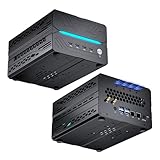
- [Powerful Processor] Mini Gaming PC equipped with Core i9-14900F, 24 Cores 32 Threads, 36M Cache, Max Turbo Frequency: 5.8GHz, Windows 11 pro (64 Bit).64G DDR5-5600 RAM| 4T M.2 NVME PCIE4.0 SSD| 4T SATA SSD. With GeForce RTX 50 Series GPUs. supporting ray tracing and AI cores. Delivering AI-acceleration in top creative apps. Whether you’re rendering complex 3D scenes, editing 4K video, or Gaming livestreaming with the best encoding and image quality.
- [Powerful Capacity & Storage Expansion] The mini desktop computer is equipped with Dual-DDR5 RAM (dual channel DDR5 high-speed memory, which can support up to 96G RAM), 1 x M.2 2280 PCIE4.0 high-speed SSD, and support add 1 x 2.5-inch SATA HDD/SSD is enough to accommodate system files and massive games, Excellent reading and writing speed greatly shortening your boot time.
- [8K@60Hz Four-Display] Mini PC equipped with GeForce RTX5060Ti 16GB GDDR7 discrete graphics card, supporting ray tracing and AI cores. easy connect 4 monitors, 1×HDMI 2.1b and 3×DisplayPort 2.1b(All Support 8K@60Hz display), It can provide you with a first-class TV experience and realistic picture quality, for your visual home entertainment, streaming video, web browsing, work design and 3D games create a very smooth experience.
- [Functional Interfaces] Mini computer is equipped with 4 x USB 3.2, 4 x USB2.0, 1 x HDMI2.1 port, 3 x DP2.1 ports, 2xRJ-45 Gigabit Network Ethernet, 1 x Fiber Optic PORT, 1 x Audio in/out. Built-in Bluetooth 5.4 and IEEE 802.11be wifi 7, Higher transfer rates and lower latency. Mini PC supports multiple device connection and can be used with servers, monitoring equipment, office equipment, projectors, televisions, etc, Mini desktop computer support automatic power on and Wake On Lan.
- [Warranty & heat dissipation] Warrant: 2 year/24 months. The compact computer size: 8.6*6.6*4.5in, 5.5lb, Inside the chassis are four all-copper turbo fans and eight vacuum heat pipes for powerful cooling performance. Make it can work smoothly and will not cause too much noise.
How can an open AI lab make money?
Reflection has said it identified a scalable commercial model compatible with releasing frontier models openly, but its October 2025 announcement did not provide a complete financial model. Its solutions page describes a broader stack built around open models; public pricing and detailed product packaging were not available in the reviewed material.
Possible revenue sources include:
- Paid enterprise support and service-level agreements.
- Private deployment, fine-tuning, and customization.
- Managed inference through a cloud service.
- On-premises or sovereign “AI factory” deployments.
- Reinforcement-learning, evaluation, security, and governance services.
- Enterprise tooling sold alongside freely available model weights.
These are possible business models, not evidence that any one stream is already material.
The financial tension is straightforward: training frontier models requires enormous capital, while releasing weights can make the core asset easier to copy and harder to monetize exclusively. Reflection may be betting that openness creates demand for deployment, infrastructure, customization, and support. That could work—but it must be demonstrated through paying customers, contracted revenue, margins, and repeatable deployments.
What changed by August 2026?
Reflection’s public profile had grown substantially by August 16, 2026. Its news page listed reporting of a latest funding round that closed at a reported $25 billion pre-money valuation in April 2026. Because the page points to outside coverage and does not provide the round’s full terms or size, that valuation should remain attributed rather than presented as independently confirmed.
The company was also associated with the reported SpaceX compute arrangement, reported Nebius capacity, the Genesis Mission partnership, and the South Korean sovereign-AI proposal. Together, these developments change the question from “Can a startup raise money?” to “Can open frontier AI be industrialized?”
How to judge whether Reflection is succeeding
Funding and partnerships are useful signals, but the following evidence matters more:
1. Model capability
Look for independent results against specific versions of DeepSeek, Llama, Qwen, Mistral, and leading closed models. The comparison should include reasoning, coding, multilingual performance, multimodal capabilities, tool use, inference cost, and latency—not only a single benchmark.
Recommended Free Tools
Best Value

- Professional AI & Creator Workstation: AMD Radeon AI PRO R9700 GPU with 32GB GDDR6 is engineered for AI development, professional content creation, and compute-intensive workloads.
- Massive 32GB Memory Capacity: 32GB of GDDR6 memory on a 256-bit bus provides ample bandwidth for large AI models, 8K video editing, and complex 3D rendering.
- Advanced RDNA 4 with AI Accelerators: 64 Compute Units with 3rd Gen Ray Tracing and dedicated 2nd Gen AI Accelerators for groundbreaking AI performance and visual computing.
- Professional Blower Cooling: Efficient single blower design exhausts heat directly out of the chassis, ideal for multi-GPU workstation and server configurations.
- Enterprise-Grade Thermal Solution: Vapor chamber heatsink with industrial Honeywell PTM7950 thermal interface material ensures reliable cooling under sustained professional loads.
2. Real openness
Check whether weights are downloadable without an application, whether commercial use and redistribution are allowed, whether training data and filtering are documented, and whether fine-tuning and inference tools are available.
3. Reproducibility
A credible release should include a technical report, architecture details, training-compute disclosure, evaluation scripts, data documentation, and enough information for independent replication attempts.
4. Commercial durability
Customers must pay for more than free weights. Evidence would include revenue or contracted revenue, enterprise support, manageable gross compute costs, and reduced dependence on a small number of hardware and data-center providers.
5. Strategic relevance
Government and allied-country adoption could make Reflection important even if it does not dominate consumer chatbots. The relevant tests include secure sovereign deployments, national-laboratory use, export-control compliance, and whether open weights advance U.S. strategic goals without creating unacceptable misuse risks.
Do these 3 things before closing this tab:
1Repair Windows errors before they cause bigger problems2Fix the driver behind crashes, sound loss and screen glitches3Clear out junk files and repair common Windows errorsThe main risks
- Technical risk: The company may fail to produce a model that is competitive with established open-weight or closed systems.
- Economic risk: Compute commitments could consume capital faster than enterprise revenue grows.
- Infrastructure concentration: Dependence on Nvidia and a limited number of data-center providers creates capacity, pricing, power, and delivery risks.
- Openness risk: A permissive label may not mean permissive licensing, transparent data, or reproducible research.
- Safety risk: Open weights support auditing and customization, but they can also make safeguards easier to remove. Reflection’s belief that openness can improve safety remains a proposition to test.
- Execution risk: A sovereign-AI announcement or government partnership may never become a completed deployment.
What this means for businesses and investors
Free model weights do not mean free AI. Organizations still need GPUs or cloud capacity, storage, networking, inference software, monitoring, security, model updates, compliance work, and technical staff. A hosted consumer AI service may be cheaper and simpler for a small team, while a self-hosted open model may make sense for a government, large enterprise, or regulated organization that needs control over data and deployment.
Before adopting Reflection, a buyer should verify the current model version, license, supported hardware, deployment regions, minimum commitments, enterprise support, data handling, safety obligations, and service-level guarantees. No reliable public Reflection product pricing was identified in the reviewed sources as of August 16, 2026.
Quick Recap
Product prices and availability are accurate as of the date/time indicated and are subject to change. Any price and availability information displayed on Amazon at the time of purchase will apply.




