Red Hat completed its acquisition of Neural Magic on January 13, 2025. The deal, first announced on November 12, 2024, brought Neural Magic’s inference-optimization engineers, vLLM expertise, LLM Compressor and related model-optimization technology into Red Hat’s AI portfolio. Neural Magic is no longer the main product brand: Red Hat subsequently introduced Red Hat AI Inference Server and now markets the broader offering as Red Hat AI Inference.
The acquisition is complete—not just announced
Red Hat announced a definitive agreement to acquire Neural Magic on November 12, 2024. Red Hat announced the transaction’s completion on January 13, 2025, describing Neural Magic as a specialist in software and algorithms for accelerating generative-AI inference workloads. The public completion announcement did not disclose a purchase price.
That distinction matters: “Red Hat is acquiring Neural Magic” describes the 2024 announcement, while the current status is that the transaction closed in January 2025.
| Date | Event |
|---|---|
| November 12, 2024 | Red Hat announced a definitive agreement to acquire Neural Magic. |
| January 13, 2025 | Red Hat announced that the acquisition had closed. |
| 2025 | Red Hat’s customer portal identified Neural Magic’s product direction as Red Hat AI Inference Server. |
| 2026 | Red Hat markets the expanded stack as Red Hat AI Inference, incorporating vLLM- and llm-d-based capabilities. |
What Neural Magic brought to Red Hat
Inference engineering
Inference is the production stage in which a trained model generates a prediction or response. Neural Magic focused on improving throughput, latency and hardware utilization while reducing the memory and compute burden of serving models on CPUs and GPUs. Those improvements are engineering goals, not guaranteed savings: results vary with the model, precision, batching, traffic pattern, hardware, utilization and latency target.
Crashes, No Sound, or Screen Glitches?
Random freezes, missing sound and display glitches usually trace back to one bad driver. Find and replace yours safely.Free scan · under a minuteWindows Errors? Fix Them Before They Spread
Repair common Windows errors and clear accumulated junk for a smoother, more stable PC - no reinstall needed.Free scan · no reinstall#1 Best Overall

- NVIDIA Volta GV100 Architecture — 4,608 CUDA Cores, 640 1st-Gen Tensor Cores delivering 14 TFLOPS FP32 and 112 TFLOPS deep learning performance for AI training, inference, HPC, and scientific computing workloads
- 32GB HBM2 ECC Memory — 900 GB/s Bandwidth — High-bandwidth memory on a 4096-bit bus with ECC error correction provides the memory capacity and throughput required for the largest AI models, simulations, and datasets
- PCIe 3.0 x16 Interface — 250W TDP — Standard PCIe Gen3 connectivity with passive cooling designed for enterprise rack server deployment in HPE ProLiant, Dell PowerEdge, and Supermicro platforms with adequate chassis airflow
- NVLink — Scale to 96GB Unified Memory — Connect two V100 GPUs via NVLink at 300 GB/s bi-directional bandwidth to scale GPU memory from 32GB to 96GB for larger AI training and HPC workloads
- Multi-Precision Computing — Supports FP64 (7 TFLOPS), FP32 (14 TFLOPS), FP16 (112 TFLOPS) and INT8 precision modes for flexible deployment across training, inference, and scientific simulation workloads
vLLM expertise
vLLM is an open-source engine for serving large language models. Red Hat acquired Neural Magic’s people, commercial technology and expertise around vLLM; it did not acquire vLLM itself or make the upstream project proprietary. Red Hat’s current inference products use vLLM as a central runtime.
LLM Compressor, sparsity and quantization
Neural Magic’s LLM Compressor provides model-optimization techniques such as quantization and sparsity. Quantization uses lower-precision representations, while sparsity reduces work on models with removable or zero-valued parameters. Either can reduce memory or compute requirements, but may affect accuracy, supported operators or model behavior. Red Hat and the developer documentation describe these capabilities at Business Wire and Red Hat Developers.
Pre-optimized models
Neural Magic also maintained pre-optimized models intended to work with vLLM. That can reduce deployment engineering, but it does not mean every model, tokenizer, quantization format or accelerator is automatically compatible.
Why Red Hat wanted the technology
Red Hat already had pieces of an enterprise AI portfolio:
- Red Hat Enterprise Linux AI (RHEL AI): a foundation-model platform aimed at running models on individual Linux servers.
- Red Hat OpenShift AI: a broader platform for developing, training, serving and monitoring models across Kubernetes and hybrid-cloud environments.
- InstructLab: an open-source project for customizing open-source-licensed Granite models.
The acquisition added a more substantial serving and optimization layer between model development and production. Red Hat’s strategic case was to help customers run inference across on-premises servers, private and public clouds, edge locations, and mixed CPU/GPU estates while retaining enterprise support and lifecycle management.
Rank #2
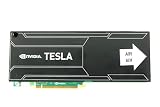
- Bulk Pack without retail box
For buyers, the practical promise is portability and operational consistency—not a universal guarantee that inference will be cheaper or faster. Cost per token depends on model architecture, sequence length, concurrency, memory bandwidth, network topology, scheduling and the quality target after optimization.
What happened to the Neural Magic brand?
Red Hat’s customer portal later stated that Neural Magic had been rebranded as Red Hat AI Inference Server. Current product materials use the shorter name Red Hat AI Inference, an integrated stack powered by vLLM and llm-d with model optimization and distributed-inference capabilities.
The naming progression is:
- Neural Magic (acquired company and original product identity)
- Red Hat AI Inference Server (post-acquisition product branding)
- Red Hat AI Inference (current portfolio direction)
This indicates incorporation into Red Hat’s AI portfolio rather than continued promotion as a standalone Neural Magic-branded Red Hat product. It does not, by itself, prove that every former Neural Magic product was discontinued; product-level availability should be checked with Red Hat.
What Red Hat AI Inference is now
Red Hat describes Red Hat AI Inference as a supported stack for fast, consistent inference at scale. Its current positioning includes:
- vLLM-based model serving.
- llm-d-based distributed inference.
- Model optimization, including quantization workflows.
- Kubernetes-native operation and hybrid-cloud deployment.
- Support for selected accelerator and software combinations.
Red Hat also discusses extending the stack to managed Kubernetes services, including CoreWeave and Microsoft Azure, in its product announcement. “Any model on any accelerator” should be treated as marketing breadth, not a support guarantee: supported hardware, drivers, runtime versions and model operators still define what Red Hat will support.
Rank #3

- Item Package Dimension -14.7L X 8.8W X 3.4H Inches
- Item Package Weight - 2.4 Pounds
- Item Package Quantity - 1
- Product Type - Video Card
Does it require OpenShift?
Not necessarily. Red Hat says AI Inference can run with Red Hat products and on certain third-party Linux or Kubernetes platforms under its third-party support policy. OpenShift AI is a separate, broader platform and requires an underlying OpenShift entitlement. The distinction is important when estimating both architecture and subscription cost.
| Product | Primary job | Deployment/licensing signal |
|---|---|---|
| Red Hat AI Inference | Specialized model inference and optimization | Available standalone or through Red Hat AI; priced per accelerator according to Red Hat’s current materials. |
| RHEL AI | Supported AI environment for individual servers | Includes Red Hat inference capabilities; priced per accelerator. |
| OpenShift AI | Development, training, serving, monitoring and lifecycle management | Requires OpenShift; follows core-based or bare-metal subscription models with Standard or Premium support options. |
| Red Hat AI Enterprise | Bundled OpenShift and AI platform | Node-based bundle described by Red Hat as including OpenShift, OpenShift AI and applicable AI accelerator entitlements. |
Red Hat’s subscription distinctions are detailed in its AI subscription guide. Red Hat advertises 60-day, self-supported trials for Red Hat AI Enterprise and Red Hat AI Inference, subject to account and eligibility requirements, through its trial page.
Quick wins for a faster PC:
Repair Windows errors before they cause bigger problemsFix Now →Scan for outdated or missing drivers - takes under a minuteDriver Scan →Who benefits—and who may not
Likely beneficiaries
- Enterprises serving language models at scale.
- Red Hat customers operating across data centers, clouds and edge sites.
- Teams trying to use existing accelerators more efficiently.
- Platform engineers seeking supported, Kubernetes-native inference.
- Organizations that want enterprise support around open-source components.
Possible poor fits
- Developers who only need a free local inference server.
- Teams already committed to a hyperscaler’s fully managed model API.
- Organizations with no Red Hat subscription or enterprise-support requirement.
- Workloads that do not need optimization or distributed inference.
- Deployments using unsupported consumer GPUs or unusual accelerators.
Commercial and operational trade-offs
Open source versus supported software
vLLM and related projects remain open source. Red Hat’s commercial value is the tested packaging, integrations, lifecycle, security guidance, support and accountability around a supported stack. Open-source availability does not make enterprise operation free: teams still pay in engineering time, hardware, cloud GPU capacity, observability and maintenance.
Per-accelerator licensing
Per-accelerator pricing can align licensing with inference capacity, but costs can rise in large GPU clusters and may be inefficient when accelerators are lightly utilized. Red Hat does not publish a universal list price in the cited materials; obtain a quote for the exact accelerator count, support tier, geography and contract.
Hardware and model validation
Before purchase, verify the precise GPU or other accelerator, driver stack, CUDA/PyTorch versions where applicable, model architecture, tokenizer, precision, multimodal features and serving APIs. Red Hat’s supported combinations are documented in the Red Hat AI Inference Server hardware guide.
Rank #4

- Standard Memory: 40 GB
- Host Interface: PCI Express 4.0
- Cooler Type: Passive Cooler
- Product Type: Graphics Card
Inference is not the same as MLOps
Choosing OpenShift AI or Red Hat AI Enterprise for a requirement that is only high-throughput serving can add platform and subscription overhead. Conversely, a serving runtime alone will not provide the full workbench, monitoring, collaboration and governance functions of a lifecycle platform.
Recommended Free Tools
How to evaluate it against alternatives
| Option | Strength | Trade-off |
|---|---|---|
| Upstream vLLM | No Red Hat subscription; maximum control for capable engineering teams. | You manage upgrades, security, observability, compatibility and support. |
| NVIDIA AI offerings | Deep integration for organizations standardized on NVIDIA hardware. | Hardware and ecosystem dependence; verify current licensing and model coverage. |
| Managed cloud AI platforms such as Amazon SageMaker, Google Vertex AI or Microsoft Azure AI Foundry | Less infrastructure operations and strong cloud integration. | Potentially less portability and greater cloud-specific cost or architecture dependence. |
Managed-service features and prices change frequently, so confirm current terms directly with each provider before making a financial comparison.
A practical buyer checklist
- Define the deployment: bare metal, RHEL, OpenShift, managed Kubernetes, public cloud, edge or a mixture.
- Confirm supported hardware: match the exact accelerator and software versions to Red Hat’s support matrix.
- Test the real model: include tokenizer, quantization format, multimodal components and required APIs.
- Set measurable targets: time to first token, inter-token latency, throughput, concurrency and tail latency.
- Measure quality after optimization: compare quantized or sparse models with the original on representative evaluations.
- Choose the smallest suitable product: inference only, RHEL AI for individual servers, OpenShift AI for lifecycle management, or AI Enterprise for a bundled platform.
- Model total cost: include accelerators, cloud rental, subscriptions, storage, networking, support and engineering labor.
- Confirm portability and support: obtain written confirmation for third-party Kubernetes, geography and contract terms.
What the acquisition means for vLLM and Red Hat customers
The acquisition likely increases Red Hat’s engineering and commercial investment around vLLM-based enterprise inference. It does not give Red Hat ownership of the upstream vLLM project or prove control of its governance. Customers should expect Red Hat’s supported distributions and integrations to evolve, while developers using upstream vLLM can continue to choose the community project independently.
For existing Red Hat customers, the main change is a clearer path from model serving to a supported hybrid-cloud inference product. For new buyers, the decision is less about the historical Neural Magic name and more about whether Red Hat’s support, portability and subscription model justify the cost compared with self-managed vLLM or a managed cloud service.
Bottom line
Red Hat’s Neural Magic acquisition closed on January 13, 2025. Neural Magic’s optimization technology and expertise were folded into Red Hat’s AI portfolio, first as Red Hat AI Inference Server and now as Red Hat AI Inference, built around vLLM and expanded with distributed-inference capabilities. The strategic value is a supported, portable inference layer—not automatic cost savings, universal hardware compatibility or ownership of vLLM. Buyers should benchmark their own models, verify supported accelerators and compare the per-accelerator or bundled subscription with the operational cost of alternatives.
Quick Recap
Product prices and availability are accurate as of the date/time indicated and are subject to change. Any price and availability information displayed on Amazon at the time of purchase will apply.




