Rackspace Technology provides managed and professional services across public cloud, VMware-based private cloud and hybrid environments. Its “multi-cloud solutions experts” positioning describes a real service portfolio, but it is not independent proof that Rackspace is the best provider. The practical question is whether its engineering, operations and infrastructure support solve a problem your organization cannot address more effectively in-house or through a cloud provider directly.
What “multi-cloud” means in Rackspace’s portfolio
Multi-cloud means using two or more public-cloud providers, such as AWS, Microsoft Azure and Google Cloud. Hybrid cloud combines public cloud with private cloud, colocation or on-premises infrastructure. A private cloud is dedicated to one organization; a sovereign cloud is designed around jurisdictional, data-residency or governance requirements. These terms describe different architecture choices, not interchangeable products.
Rackspace markets services across AWS, Azure, Google Cloud, VMware and other environments. Its multicloud offering also describes connections among public, private and hosted infrastructure. Rackspace’s multicloud overview and solutions portfolio describe the company’s positioning.
Running workloads in several clouds does not automatically improve resilience, reduce costs or make applications portable. Teams still have to reconcile different identity systems, network controls, monitoring, billing and security practices. Data movement can add cost, and an application built around one provider’s services may be difficult to move even if its servers can be recreated elsewhere.
#1 Best Overall
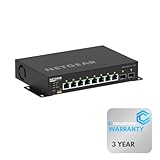
- 𝐋𝟑 𝐌𝐚𝐧𝐚𝐠𝐞𝐝 𝐒𝐰𝐢𝐭𝐜𝐡 Experience superior network control with Layer 3 management, ensuring advanced routing, security, and configuration options for optimized performance.
- 𝐏𝐨𝐄+ 𝐏𝐨𝐫𝐭𝐬 Power up to 8 devices directly through the switch with PoE+ (Power over Ethernet Plus) ports, delivering up to 220W of power for IP cameras, phones, and other PoE-enabled devices.
- 𝐈𝐡𝐢𝐠𝐡-𝐬𝐩𝐞𝐞𝐝 𝐂𝐨𝐧𝐧𝐞𝐜𝐭𝐢𝐯𝐢𝐭𝐲 𝐰𝐢𝐭𝐡 2x 10 𝐆𝐢𝐠𝐚𝐛𝐢𝐭 𝐒𝐅𝐏+ 𝐔𝐩𝐥𝐢𝐧𝐤𝐬 Benefit from high-speed connectivity with 2x 10 Gigabit SFP+ uplink ports, ideal for connecting to servers, storage devices, or other switches.
- 𝐑𝐚𝐜𝐤-𝐌𝐨𝐮𝐧𝐭𝐚𝐛𝐥𝐞 Design your network setup with ease using the rack-mountable form factor, perfect for professional and organized installations in server rooms or network closets.
- 𝐒𝐭𝐚𝐲 𝐏𝐫𝐨𝐭𝐞𝐜𝐭𝐞𝐝 𝐰𝐢𝐭𝐡 𝐂𝐥𝐨𝐮𝐝 𝐂𝐚𝐫𝐞 With Cloud Care's first ever All-in-one Warranty SupportPlus, you can now have all your products warrantied just by purchasing off of our listings under Cloud Care and make a claim with the same form for any manufacturer you buy off us.
What Rackspace sells
| Service area | What Rackspace describes | What to verify |
|---|---|---|
| Public-cloud engineering | Elastic Engineering supports work such as migrations, infrastructure build-outs, infrastructure-as-code, DevOps, CI/CD, security, performance management and cost optimization across AWS, Azure and Google Cloud. Rackspace’s service page describes the offering. | Which deliverables, roles, cloud accounts and ongoing responsibilities are included in the proposal. |
| Managed operations | Modern Operations is positioned as managed public-cloud operations, with 24x7x365 support described for relevant services. Rackspace’s managed-services page explains its scope. | Which services, regions, incidents and response targets the particular contract covers. |
| Elastic Engineering | A recurring monthly, hours-based model using a pod of engineers, architects and technical account personnel; Rackspace describes it as a “do-with” service and says there is no long-term commitment on its service page. | Minimum hours or spend, rollover, notice periods, onboarding fees, after-hours incident charges and the meaning of “no commitment” in the contract. |
| Private cloud and VMware | Managed VMware-based offerings include SDDC Enterprise, Business, Flex and Anywhere. Rackspace positions them for traditional workloads, managed infrastructure and hybrid-cloud use. See Rackspace’s VMware page and SDDC Anywhere. | Licensing, hardware, support, migration, renewal and exit costs, as well as where the service is hosted. |
| Connectivity | RackConnect Global is described as connecting Rackspace environments with AWS, Azure, Google Cloud, OpenStack and VMware. Rackspace states a 99.95% connectivity uptime guarantee for this service. | The guarantee is for connectivity, not end-to-end application availability. Review its exclusions and any separate compute, storage and managed-service commitments. |
| Data placement | Data Freedom is positioned as a way to keep data adjacent to cloud environments and reduce dependence on public-cloud data-transfer economics. | Any egress savings depend on traffic, storage location, interconnection charges, architecture and contract terms; it is not a universal removal of transfer fees. |
| Security, data and AI | Rackspace markets managed and cloud-native security, as well as data and AI services, across its broader portfolio. Its solutions overview lists these areas. | Exact service scope, operational responsibility, certifications and attestations for the service and region you would buy. |
Elastic Engineering: flexible capacity, with contract details to settle
Elastic Engineering is central to Rackspace’s pitch for organizations that need engineering capacity but do not want to hire every specialty or commission a large fixed-scope project. Rackspace describes monthly service, flexible throughput and hours-based tiers, with a pod combining engineering, architecture and technical-account support. The intended model is collaboration with a customer’s team rather than simply handing over an entire environment. Rackspace’s Elastic Engineering page describes the arrangement.
The company does not publish dollar prices for this service on the page. Ask for the proposed tier, named roles and location, how work is prioritized, and what happens when planned hours are used. The page’s no-commitment language should not substitute for checking notice periods, onboarding charges, minimum spend, limits and emergency support in the quote and master services agreement.
Rank #2

- Modular Dual-Piece Design: this 19-inch rack shelf features a modular two-piece structure, offering flexible front, rear, or single-sided mounting for standard server racks and network cabinets to support custom IT and AV setups
- Heavy Duty Alloy Steel Build: crafted from alloy steel, this vented rack mount tray supports up to 110 pounds, with a center-weighted design that prevents sagging and keeps heavy network switches and servers stable
- Optimized Space Management: at 10 inches deep, this server rack shelf is ideal for shallow 19-inch enclosures, organizing cluttered data closets and providing a sturdy platform for non-rackable gear without wasting vertical rack space
- Slotted Ventilation for Thermal Control: the slotted venting pattern promotes consistent airflow, helping to prevent equipment overheating and protect sensitive network devices like routers and switches in server room environments
- Universal Compatibility: designed to fit all standard 19-inch cabinets and open frames, this server rack shelf includes all necessary hardware to streamline your studio or server room organization immediately
- Who owns the infrastructure-as-code, scripts, runbooks and other work products?
- Is documentation and knowledge transfer included, and how will the customer’s staff be trained?
- Are engineers embedded in the team or assigned to a queue of tickets?
- How are urgent incidents handled outside planned engineering work?
- Can the customer approve key personnel and request replacements?
VMware and the private-cloud decision
A managed VMware environment may suit organizations that cannot immediately refactor applications designed for traditional infrastructure, or that need dedicated infrastructure alongside public cloud. Rackspace presents its SDDC packages as managed options and says they include bundled VMware licenses; commercial terms are not published on the cited service page. Bundling can simplify procurement, but it does not establish that the total cost is lower than renewing an existing arrangement or migrating workloads.
Rackspace’s VMware page says Broadcom sunset the legacy VMware Cloud Service Provider program and white-label licensing on October 31, 2025, and introduced an invited-partner model from November 1, 2025. Rackspace also describes its continuing partner status there. Because partner and licensing rules can change, verify the exact licensing and commercial arrangement that applies to your proposal and contract: Rackspace VMware services.
Rank #3

- Customizable Depth Design: Enjoy flexible configuration with 4-post 42U Network rack pen frame featuring 4 vertical rails and adjustable 22"-35" depth range. Offers ample clearance for AV systems, network gear, and cable management while providing multi-angle access to ports and equipment
- Strong Load Capacity: 42U Network Rack is constructed from durable cold rolled steel (2mm thickness) for better weldability performancedesigned for ventilation with 42U mounting height and 1900lbs (855kg) weight capacity
- Enterprise-Grade Compatibility: Full 42U height (80"H) accommodates standard 19" rack-mount equipment. Features pre-installed square holes with included M6 screws/cage nuts. Universal depth adjustment (21"W x 22"-35"D) works seamlessly with switches, patch panels, and UPS systems.
- Quick-Lock Assembly System: Assembly is required, but it's simple. With all the included hardware & witty instructions, you'll have your server rack ready for servers & networking gear in under 20 minutes.
- Multi-Environment Ready: Enterprise-grade solution for server rooms, data centers, broadcast studios, and commercial spaces. Ideal for consolidating IT infrastructure in offices, schools, retail stores, or home lab setups with space-saving vertical organization
Compare the full cost over the period you expect to operate the workloads. Include existing or bundled licensing, compute, storage, networking, support, disaster recovery, migration labor, hardware refresh, exit costs and a credible public-cloud alternative. Also establish what portability means in practice: moving an application, its data, its infrastructure, its operating processes and its contract are separate challenges.
Where Rackspace could be a useful fit
- A mixed estate: Your organization runs workloads in multiple public clouds alongside VMware, hosted infrastructure or on-premises systems and needs coordinated operations.
- Limited operations staffing: You need round-the-clock coverage but cannot staff every cloud platform, security specialty and operational shift internally.
- A gradual VMware transition: Existing applications need a managed home while teams assess modernization or migration rather than making an immediate all-at-once move.
- Temporary engineering capacity: Your internal team wants help with migration, automation, optimization or security work while retaining architectural ownership.
- Specialized or regulated workloads: A provider may help implement controls and operate infrastructure, but you still need to confirm the exact service scope, jurisdiction and compliance responsibilities.
For a regulated workload, ask for evidence tied to the specific service, region and contract: applicable certifications or attestations, data handling, subcontractor access, customer responsibilities and available compliance documentation. A provider’s assistance does not by itself make a customer compliant with HIPAA or another framework.
Rank #4

- Customizable Depth Design: Enjoy flexible configuration with 4-post 27U Network rack pen frame featuring 4 vertical rails and adjustable 22"-35" depth range. Offers ample clearance for AV systems, network gear, and cable management while providing multi-angle access to ports and equipment
- Strong Load Capacity: 27U Network Rack is constructed from durable cold rolled steel for better weldability performancedesigned for ventilation with 27U mounting height and 1200lbs (550kg) weight capacity
- Enterprise-Grade Compatibility: Full 27U height (43.5"H) accommodates standard 19" rack-mount equipment. Features pre-installed square holes with included M6 screws/cage nuts. Universal depth adjustment (21"W x 22"-35"D) works seamlessly with switches, patch panels, and UPS systems.
- Quick-Lock Assembly System: Assembly is required, but it's simple. With all the included hardware & witty instructions, you'll have your server rack ready for servers & networking gear in under 20 minutes.
- Multi-Environment Ready: Enterprise-grade solution for server rooms, data centers, broadcast studios, and commercial spaces. Ideal for consolidating IT infrastructure in offices, schools, retail stores, or home lab setups with space-saving vertical organization
When the model may not be worth the added layer
- A single-cloud environment with a capable internal platform team may not need another operations provider.
- A small or straightforward workload may be better served by native cloud support or a specialist consultant.
- If the main goal is the lowest infrastructure price, managed engineering and operations may add cost without enough corresponding value.
- Organizations that require complete control over staffing, tooling and operational methods may prefer to build those capabilities internally.
- Choosing several clouds only to avoid lock-in can backfire if the architecture has no workload-specific reason to span providers.
- Buyers who need a fully transparent price before a sales evaluation may find the contact-led pricing model difficult to assess.
A managed provider can coordinate platforms; it cannot make them identical or remove the need for internal governance. Multi-cloud can mean more identity and network integrations, separate billing systems, additional data-transfer charges, fragmented skills and more complicated disaster-recovery testing. Evaluate portability separately for applications, data, infrastructure, operations and contracts rather than treating it as a single feature.
Independent reader supportYour contribution helps us test, update, and keep practical guides available for everyone.Compare Rackspace with the realistic alternatives
| Option | May suit | Trade-off to consider |
|---|---|---|
| Direct hyperscaler services | Organizations standardized on AWS, Azure or Google Cloud with experienced internal teams that want direct platform ownership. Official starting points: AWS, Microsoft Azure and Google Cloud. | Less neutral across competing platforms and may not address VMware, colocation or legacy infrastructure as one service relationship. |
| Internal platform team | Organizations that need maximum control and have the resources to hire, retain and equip engineers and operate coverage at the required hours. | Staffing, tooling, training and 24×7 coverage become the organization’s responsibility. |
| Large systems integrator | Broad transformation programs spanning applications, ERP, data, integration or organizational change. Examples to evaluate include Accenture, Deloitte, IBM Consulting, Kyndryl and Capgemini. | A broad consulting engagement may bring more overhead than a focused operations or engineering need warrants. Compare the proposed scope and staffing rather than assuming equivalent offers. |
| Specialist consultancy or regional MSP | A defined platform, workload, geography or need such as Kubernetes, FinOps, security or VMware. | A specialist may provide less breadth across cloud platforms, private infrastructure or global 24×7 coverage, potentially requiring more vendors. |
These are evaluation categories, not a ranking: offerings, prices and regional coverage vary by provider and contract. Compare the actual operating model and responsibility boundaries, not just the names of supported clouds.
PC Slower Than It Used to Be?
A free scan shows the junk files, broken settings and background clutter dragging Windows down - then fixes them in one click.Free scan · Windows 10 & 11Crashes, No Sound, or Screen Glitches?
Random freezes, missing sound and display glitches usually trace back to one bad driver. Find and replace yours safely.Free scan · under a minuteBest Value

- 𝐎𝐦𝐚𝐝𝐚 𝐏𝐥𝐚𝐭𝐟𝐨𝐫𝐦 𝐂𝐞𝐧𝐭𝐫𝐚𝐥𝐢𝐳𝐞𝐝 𝐑𝐞𝐦𝐨𝐭𝐞 𝐌𝐚𝐧𝐚𝐠𝐞𝐦𝐞𝐧𝐭 – Unlock numerous advanced features by integrating with Omada Cloud Management Platform, such as network monitoring, remote network configuration, AI features, ZTP(Zero Touch Provisioning) etc. More possibilities you can find with your network management
- 𝐒𝐭𝐚𝐧𝐝𝐚𝐥𝐨𝐧𝐞 𝐌𝐚𝐧𝐚𝐠𝐞𝐦𝐞𝐧𝐭 𝐎𝐩𝐭𝐢𝐨𝐧𝐬 𝐀𝐯𝐚𝐢𝐥𝐚𝐛𝐥𝐞 – web GUI, CLI(Telnet/SSH), SNMP and RMON
- 𝟐 𝐏𝐨𝐰𝐞𝐫 𝐌𝐨𝐝𝐮𝐥𝐞 𝐁𝐚𝐜𝐤 𝐔𝐩 – Two internal fixed power supply modules back each other up
- 𝐀𝐝𝐯𝐚𝐧𝐜𝐞𝐝 𝐍𝐞𝐭𝐰𝐨𝐫𝐤𝐢𝐧𝐠 𝐅𝐮𝐧𝐜𝐭𝐢𝐨𝐧𝐬 – Omada platform provide numerous advanced networking features, which can be done and monitored remotely, over web or APP
- 𝐀𝐛𝐮𝐧𝐝𝐚𝐧𝐭 𝐒𝐞𝐜𝐮𝐫𝐢𝐭𝐲 𝐂𝐚𝐩𝐚𝐛𝐢𝐥𝐢𝐭𝐢𝐞𝐬 – A lot of security features are ready to defend, 802.1X, IP-MAC-Port binding, DHCP snooping, ACL, Dos/DDos, flood control, STP, SSHv
A buyer’s checklist for a Rackspace evaluation
Commercial terms and staffing
- What is the minimum monthly Elastic Engineering tier, and do unused hours roll over?
- Which roles are included, where are they based, and what happens if a required skill is unavailable?
- Are emergency incidents charged separately? What are the termination, transition-assistance and price-increase terms?
- Who owns code, automation, runbooks and documentation, and can you approve or interview key technical staff?
Architecture and portability
- Why does each workload belong on-premises, in private cloud or in a particular public cloud?
- How will identity federation, secrets, inventory, configuration and cross-cloud networking work?
- How are latency and data-transfer charges forecast, and which application services are specific to one provider?
- How will failover be tested, and what is the exit path if you replace Rackspace or a cloud provider?
Operations and service levels
- Is monitoring included, which alerts create tickets, and what runbooks can Rackspace execute?
- What are the escalation chain, change-approval process, reporting cadence and disaster-recovery exercise schedule?
- Is FinOps included in the base service? How are service credits calculated?
- What does each service-level commitment cover: connectivity, compute, storage, response or resolution? Review exclusions, maintenance and third-party outages.
Security and compliance
- Which certifications and attestations apply to the exact service and region, and where is data stored or processed?
- Which subcontractors can access the environment, how is tenant isolation implemented, and what is the breach-notification timeline?
- How are encryption keys and privileged-access sessions handled? Can you use your own identity provider and SIEM?
- Which controls remain your responsibility, and can the provider support the required jurisdiction or sovereignty model?
What evidence supports the “expert” label?
A promotional profile published August 3, 2024, describes Rackspace’s expertise across AWS, Azure, VMware and OpenStack, and highlights hybrid cloud, healthcare and Elastic Engineering. It is useful for understanding the company’s positioning, but executive statements and historical company-size figures are not independent measures of customer satisfaction, reliability, migration outcomes or comparative value. The profile’s claims of more than 7,000 employees, 40 data centers and customers in 120 countries should be treated as figures reported in that 2024 feature, not current 2026 facts. Read the August 2024 profile.
For a buying decision, request customer references relevant to your workload and geography, a current staffing plan, service-level schedules, a security responsibility matrix, and a workload-specific cost and exit analysis. Those materials are more useful than a broad claim of expertise.
Quick Recap
Product prices and availability are accurate as of the date/time indicated and are subject to change. Any price and availability information displayed on Amazon at the time of purchase will apply.




