Qualcomm’s acquisition of Arduino is real, and it is already producing more powerful edge-AI boards. It has not, based on the available evidence, revoked the open-source licenses covering Arduino’s published software, schematics, tooling or libraries. The controversy instead centers on Arduino’s hosted services, user-submitted content and updated platform terms—raising a broader question: can Arduino remain open in its code while becoming more restrictive in its cloud governance?
The acquisition in brief
Qualcomm announced an agreement to acquire Arduino on October 7, 2025. Qualcomm said the combination would bring its processors, graphics, artificial intelligence and connectivity to Arduino’s large developer, education and maker community. Arduino said it would retain its brand, tools, mission, support for multiple semiconductor suppliers and open approach. The transaction value was not disclosed in the cited announcements.
By early 2026, Arduino’s public materials described the company as part of the Qualcomm family, making this a completed corporate acquisition rather than a proposed partnership. The announcement is available from Qualcomm and Arduino.
What Qualcomm bought—and what it did not automatically own
“Arduino” describes several legally different things:
Free tools Windows power users keep installed
One-click scans. No signup required.
#1 Best Overall

- 35+ Guided Electronics Projects: Progress from LEDs and buttons to RFID access, real-time clocks, motion and distance sensing, environmental monitoring, motor control and interactive displays for STEM learning, coding clubs and maker projects
- More I/O and Memory for Larger Builds: The MEGA 2560 R3 provides 54 digital I/O pins, including 15 PWM outputs, 16 analog inputs, 4 hardware serial ports and 256 KB flash for projects that combine more sensors, controls and displays
- 200+ Components for Prototyping: Includes LCD1602, RC522 RFID, RTC, DHT11, HC-SR501 PIR, ultrasonic and water-level sensors, GY-521, MAX7219, keypad, joystick, rotary encoder, relay, SG90 servo, stepper motor, DC motor, breadboard and more
- Learn, Modify and Create: Follow 35+ guided lessons with example code, then adjust sensor thresholds, timing, display text, motor behavior and control logic to turn structured exercises into access systems, monitors, alarms and interactive projects
- Organized for Repeatable Learning: Pre-soldered modules, a solderless breadboard, storage case and small-parts box reduce setup time and keep sensors, LEDs, ICs, wires and other components easy to find between projects
- The Arduino company, trademarks and commercial products.
- The IDE, command-line tools and other software released under open-source licenses.
- Published board designs, schematics and documentation.
- Arduino Cloud, forums, Project Hub, courses and other hosted services.
- Community-created sketches, libraries, tutorials and uploaded projects.
- Independent Arduino-compatible boards and projects made by third parties.
Buying the company does not automatically turn every community artifact into proprietary property. Copyright, trademarks, patents, hardware licensing, software licensing and website terms must be considered separately.
Why Qualcomm wanted Arduino
Qualcomm’s stated strategy is to make edge computing and AI accessible to a much wider developer audience. Arduino offers a familiar route from a classroom experiment or maker prototype to a professional embedded product. Qualcomm supplies silicon, graphics, connectivity and AI acceleration; Arduino supplies approachable tools, documentation and community reach.
The move also fits Qualcomm’s broader industrial-IoT and edge-AI expansion, alongside its work with Edge Impulse and Foundries.io. Qualcomm describes a full stack spanning hardware, software, AI development, deployment and cloud services. That is a public rationale, not proof of Qualcomm’s private financial model or expected return.
Potential strategic benefits
- A recognizable development brand for Qualcomm processors.
- More opportunities to place Qualcomm silicon in prototypes that may become commercial products.
- A bridge between deterministic microcontroller control and Linux-capable AI computing.
- More funding for documentation, education, distribution and support.
- A unified workflow covering sketches, Linux, Python, real-time operating systems and AI through Arduino App Lab.
UNO Q shows the product logic
The Arduino UNO Q combines a Qualcomm Dragonwing QRB2210 microprocessor with an STM32U585 microcontroller. The Qualcomm processor can run Linux and handle networking, computer vision, Python, containers and AI workloads. The STM32 is suited to deterministic timing, sensors, motors and low-latency input/output. Arduino and Qualcomm describe the board on Arduino’s Qualcomm page.
What’s actually slowing this PC down?
Pick the symptom - the matching free tool is one click away.
Rank #2

- TURN CODE INTO REAL-WORLD RESULTS — Follow 22+ guided lessons to make LEDs blink, read temperature and distance, move servo and stepper motors, control an LCD and respond to joystick or IR input; ideal for a family weekend build, homeschool unit, coding club or STEM classroom
- MORE PROJECT VARIETY IN ONE ORGANIZED KIT — Includes the UNO R3 controller, LCD1602 with pre-soldered header, breadboard power module, ultrasonic and DHT11 sensors, joystick, IR receiver and remote, SG90 servo, stepper motor, relay, DC motor, fan blade, displays, LEDs, buttons, resistors and jumper wires
- START WITHOUT SOLDERING — Plug-in modules, a solderless breadboard and the pre-soldered LCD help beginners focus on wiring, code and testing; the illustrated component list makes it easier to find each part and move from one lesson to the next
- LEARN THE LOGIC, THEN CREATE YOUR OWN — Use Arduino IDE and the included example code to understand digital input and output, analog sensing, timing, motor control and display functions, then change thresholds, speeds and sequences for alarms, environmental monitors, reaction games and motion projects
- CLEAR SETUP SUPPORT FOR FIRST-TIME BUILDERS — Download the latest tutorial and code, select the UNO board and correct computer port, check component polarity and breadboard rows, and keep power-module input at 9V or below; younger learners should work with an experienced adult
This “dual-brain” design avoids forcing one processor to perform incompatible jobs. It also introduces costs: more power use, a more complicated software stack, additional maintenance and greater dependence on vendor-specific components. UNO Q is therefore not a replacement for a simple, low-power Arduino Uno-class board.
VENTUNO Q extends the AI direction
In March 2026, Arduino announced VENTUNO Q, based on Qualcomm’s Dragonwing IQ8 series. The companies described an NPU rated at up to 40 dense TOPS, paired with an STM32H5 microcontroller, for generative AI, robotics and actuation. Arduino’s announcement cites offline examples including voice assistants, gesture recognition, speech processing, local language models and computer vision. The product announcement is at Arduino, while Qualcomm’s specification release is at Qualcomm.
These boards demonstrate the acquisition’s hardware case. They do not establish that the processor firmware, drivers, boot chain or AI runtime are open, reproducible by independent manufacturers or portable to non-Qualcomm hardware.
What remains open
Arduino says that “anything that was open, stays open.” Its FAQ says existing open-source hardware schematics, software including the IDE, tools and libraries remain available under their existing licenses. The company also says it will continue supporting makers, students, educators, entry-level boards and multiple semiconductor providers. See the Arduino FAQ.
Quick wins for a faster PC:
Repair Windows errors before they cause bigger problemsFix Now →Fix the driver behind crashes, sound loss and screen glitchesFind Drivers →Clear out junk files and repair common Windows errorsFree Scan →Rank #3
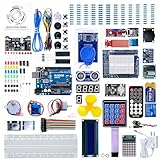
- 30+ Guided Electronics Projects: Start with LEDs and build toward LCD1602 displays, RFID access, motion detection, distance sensing, motor control and environmental monitoring for STEM learning, coding clubs, classrooms and hobby projects
- 200+ Components Across 63 Types: Includes an ELEGOO UNO R3 controller, LCD1602, RC522 RFID, RTC, HC-SR501 PIR sensor, ultrasonic sensor, DHT11, GY-521, MAX7219, keypad, joystick, relay, SG90 servo, stepper motor, breadboard and more
- Begin Without Soldering: Pre-soldered modules, a solderless breadboard, organized storage case and small-parts box reduce setup time and help beginners move from lesson to lesson while keeping LEDs, ICs, wires and sensors easy to find
- Learn, Modify and Create: Program the ELEGOO UNO R3 board with Arduino IDE using the included PDF tutorial and example code, then adjust sensor thresholds, timing, display text and motor behavior to turn guided lessons into original projects
- Flexible Power and Project Setup: Includes a 9 V, 1 A power supply, breadboard power module, 9 V battery and USB cable to support controller, breadboard and module experiments without sourcing basic setup accessories separately
The IDE source code has been identified in independent coverage as being released under the AGPL-3.0 license. A company generally cannot retroactively revoke valid permissions already granted under an applicable open-source license. It can, however, stop publishing future versions, license future original work differently, move functionality into proprietary services, change hosting and support, or restrict use of its trademarks.
Open source is not the same as open platform
| Area | What the available evidence indicates |
|---|---|
| IDE, libraries and published tooling | Arduino says existing open-source releases remain available under their licenses. |
| Board designs and schematics | Arduino says its open hardware materials remain available. |
| Third-party sketches and libraries | Their authors’ own licenses and copyright still matter; acquisition alone does not transfer them. |
| Arduino Cloud and other SaaS | They are governed by separate terms and privacy policies. |
| Qualcomm processor components | Openness varies by firmware, drivers, binaries and toolchains; the cited material does not establish full openness. |
| Arduino trademarks | Open-source licensing does not grant unrestricted trademark rights. |
Why the November 2025 terms caused backlash
Arduino updated its Terms of Service and Privacy Policy in November 2025. Critics focused on restrictions concerning reverse engineering, broad language about user-submitted content, data use and retention, AI-related provisions, and the conditions attached to contributions and online participation.
Adafruit representatives, as reported in Ars Technica and summarized by Adafruit, questioned why reverse engineering would be restricted on a platform associated with hackable systems. They also argued that broad wording about uploaded content could be read to permit extensive reuse, republication or monetization, including in future Qualcomm-related systems. Those are criticisms about how the language could operate, not evidence that Qualcomm has already taken users’ projects or trained models on every upload.
Arduino’s response says the reverse-engineering restriction applies to its SaaS applications, not to artifacts already released under open-source licenses. It also says Arduino does not claim ownership of user-generated content and may use material published on the platform to operate services, support collaboration and implement requested features. Arduino’s explanation is in its November 21, 2025 response; the current terms are at Arduino’s Terms and Conditions page.
Recommended Free Tools
Rank #4

- All-in-One Starter Kit for Beginners: Part of the Powered by Arduino program, this kit includes an original Arduino UNO R4 WiFi, 300+ high-quality components, 50+ hands-on projects (30 basic, 13 fun, and 8 IoT), and 100+ free video lessons co-created with renowned educator Paul McWhorter. Designed for beginners ages 8+, it provides a complete, step-by-step path to learn Arduino, electronics, coding, and IoT. RoHS compliant for added safety and quality, it also makes a thoughtful gift for tech enthusiasts, students, and aspiring makers for birthdays, holidays, and special occasions
- Powerful Arduino Uno R4 WiFi Board: Upgraded from the Arduino Uno R3, the Arduino Uno R4 WiFi features a 32-bit processor, more memory, and built-in WiFi and Bluetooth, enabling connection to third-party apps for more interactive and practical projects.
- 300+ Components for Endless Possibilities: With 300+ components and sensors, this kit is perfect for portable projects. It features step-by-step tutorials, open-source code, and compatibility with other Arduino boards like Uno R3 and Nano, offering endless customization and learning opportunities.
- Engaging Projects for Every Skill Level: Featuring 50 projects (30 basic, 13 fun, 8 IoT) with IoT app integration like Arduino IoT Cloud , this kit supports Arduino C++ programming, making it perfect for students, teachers, and engineers to learn, code, and create at any skill level.
- Dedicated Support for Beginners: Alongside online resources and video tutorials, SunFounder provides technical support and troubleshooting forums to help beginners solve programming challenges with ease.
What the deal means for different users
Hobbyists with offline projects
Someone using a locally installed Arduino IDE, locally stored sketches, published libraries and conventional Arduino-compatible boards has not been shown by the cited evidence to have lost access to that workflow. Keeping source files, board documentation and build dependencies locally remains the simplest way to reduce exposure to service-policy changes.
Arduino Cloud users
Cloud compilation, online storage, device management, collaboration and AI-enabled features involve an account and hosted-service policies. Review the current terms and privacy policy before uploading proprietary designs, personal information or confidential work. Cloud terms should not be assumed to have the same licensing status as the IDE or schematics.
Schools and educators
Institutions should check whether student projects are uploaded, whether minors’ information is involved, whether accounts are mandatory, whether projects can be exported and archived locally, and whether an internet outage stops classroom work. A local IDE can provide a different privacy and continuity profile from a cloud-first course.
Library authors and contributors
Keep a clear license in each repository, understand the terms attached to pull requests or hosted uploads, and maintain an independent copy of important work. Open-source licensing can protect code while platform rules still govern how a contribution is submitted, displayed or processed.
The Tool Desk
Outbyte PC Repair FREEClear out junk files and repair common Windows errorsFree Scan →Outbyte Driver Updater FREEScan for outdated or missing drivers - takes under a minuteDriver Scan →Best Value
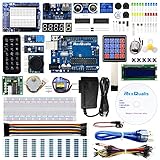
- The most economical kit comes with everything compatible with Arduino to starting programming for beginners .
- This is the upgraded starter kits come with a 9V 1A Power Adapter (At least $5.99 on amazon) to replace a 9V Battery , and the Lcd1602 module come with pin header(not need to be soldered by yourself).
- Include High Quality Base Board base on Arduino UNO R3 compatible with Arduino IED and Sensors, Servo, Motor, ULN2003 driver board, lcds, etc.
- Free PDF Tutorial and Datasheet are available to download from our official website or you can contact our customer service.
- All of the Components and Integrated Circuits are individually packaged and labeled, and packing in a plastic box which is bigger enough for you.
Startups and commercial developers
Treat an Arduino board as a development platform, not proof that the complete production stack is open. Evaluate chip supply, proprietary binaries, security updates, regulatory requirements, trademark use, cloud dependence and whether the product can be built without Arduino-hosted services.
Benefits and trade-offs
| Potential benefit | Corresponding cost or risk |
|---|---|
| Qualcomm compute and AI acceleration | Greater dependence on Qualcomm-specific silicon and software. |
| Familiar Arduino workflow | More complexity from Linux, AI and dual processors. |
| Corporate funding and distribution | Less perceived independence and more community skepticism. |
| Cloud integration | Account, privacy, availability and data-governance concerns. |
| Multi-vendor support promise | Future documentation and tooling could still favor Qualcomm. |
| Higher performance | Potentially higher power use, cost and engineering effort. |
What to watch next
- Whether future IDE releases remain independently usable offline.
- Whether new boards continue to support non-Qualcomm processors.
- Whether critical AI drivers, runtimes and firmware are source-available or binary-only.
- Whether Arduino narrows or clarifies platform terms about data, contributions and reverse engineering.
- Whether users can export or self-host more of their workflows.
- Whether community participation remains as strong under the new governance model.
Bottom line for makers and buyers
The evidence does not support saying that Qualcomm “closed” Arduino or canceled its open-source licenses. Arduino’s published software, schematics, tooling and libraries remain described as open under their existing licenses. The meaningful dispute is broader: hosted services, user data, contribution terms and trust in future governance.
For offline hobby projects and established boards, the immediate risk appears limited. For users dependent on Arduino Cloud, schools handling student data, contributors uploading valuable work and companies planning commercial products, the acquisition makes legal and technical due diligence more important. Qualcomm may give Arduino the resources to deliver compelling AI and robotics hardware, but the long-term success of the deal will depend on whether platform openness earns the same confidence as source-code openness.
Quick Recap
Product prices and availability are accurate as of the date/time indicated and are subject to change. Any price and availability information displayed on Amazon at the time of purchase will apply.




