The Tool Desk
Outbyte Driver Updater FREEFix the driver behind crashes, sound loss and screen glitchesFind Drivers →Outbyte PC Repair FREERepair Windows errors before they cause bigger problemsFix Now →A proprietary trading firm uses its own capital or risk capacity to trade for its own account. But “prop firm” can also describe a retail-facing business that charges for an evaluation and may offer a contractual profit share or access to a simulated or otherwise restricted account. Those are not interchangeable arrangements: before paying, find out what the contract says about the account, costs, trading limits, and payouts.
What does a proprietary trading firm do?
In the institutional sense, proprietary trading means a firm trades financial instruments for its own account rather than simply executing a customer’s order. A firm may seek returns from market-making, arbitrage or relative-value positions, directional trades, or hedging. It may use one strategy, several, or none of these; the label alone does not reveal a firm’s business model.


A retail-facing offer may instead involve a paid evaluation followed by a contractual opportunity to trade under specified conditions and receive a share of profits. The account might be simulated or otherwise constrained; the word “funded” does not, by itself, establish that a participant is trading live capital belonging to the firm. Nor does it establish how the firm earns revenue. Those details depend on the firm’s current contract and account mechanics.
| Arrangement | What the label describes | What to verify |
|---|---|---|
| Institutional proprietary trading | A firm’s own-account trading and the mandate, capital, and risk controls governing it. | Reliable firm disclosures about strategy mandate, capital and risk controls, technology and execution, compensation, and regulatory setting. |
| Retail-facing evaluation offer | A product that may charge an evaluation fee and condition access or profit sharing on contractual rules. | Whether the account is simulated, live, or described another way; fees, evaluation rules, payout conditions, legal entity, jurisdiction, and dispute terms. |
The U.S. Commodity Futures Trading Commission (CFTC) includes offers to trade with a proprietary trading firm’s money and share profits among common forex-fraud pitches. That is a reason to investigate an offer carefully, not evidence that every prop firm is fraudulent. See the CFTC’s Forex Frauds guidance.
#1 Best Overall

- My Trading Journal for Stock Market, Forex, and Crypto: Precisely track and analyze every trade. This log book is essential for improving your trading performance and decision-making skills.
- Comprehensive Day Trading Planner: Record and review 80 guided trades with 8 review sections, perfect for traders aiming to refine their strategies and maximize profits.
- Customizable Trading Setup: Tailor your trading approach by documenting your setups, analyzing results, and adjusting strategies based on market conditions.
- For All Types of Traders: Whether you're trading stocks, forex, or crypto, My Trading Journal supports your unique trading style and helps you achieve consistent success.
- Premium Quality and Durability: Made with high-quality materials, this A5-sized journal is perfect for daily use and designed to withstand the rigors of active trading.
How do trading strategies seek returns—and how can they fail?
The strategy names below describe general sources of expected edge and their risks. They are not claims about any particular company’s approach or a promise of returns.
| Strategy family | Possible source of return | Important failure modes |
|---|---|---|
| Market-making | Earning the spread or compensation for providing liquidity. | Inventory losses, adverse selection, and execution risk can outweigh the spread earned. |
| Arbitrage and relative value | Trading a perceived pricing difference or relationship between related instruments. | Correlations may break; financing, liquidity, or convergence assumptions may fail. |
| Directional macro or fundamental trading | Gaining from a price move anticipated from market, economic, or company factors. | The view may be wrong, and market moves or position sizing can create losses. |
| Hedging | Reducing a defined exposure by taking an offsetting position. | Basis, model, and residual risks remain; an imperfect hedge can behave differently from the exposure it is meant to offset. |
Even a sound thesis is subject to execution, market, liquidity, operational, and cost risks. A return claim should therefore be considered alongside how a strategy is executed, what risks it takes, and what costs or constraints apply.
Rank #2
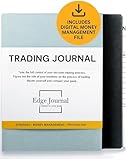
- FOR SERIOUS TRADERS: Track every entry, exit, position size, P&L, and setup with a structured layout designed for forex, stocks, options, futures, and crypto traders who want to identify what actually works in their strategy. NEUROSCIENCE-BASED DESIGN that encourages Growth Mindset and accountability
- TRADER PSYCHOLOGY FOCUS: Built on proven cognitive science principles, each page guides you through emotion tagging, bias recognition, and post-trade reflection to rewire reactive decision-making and build the disciplined mindset top-performing traders rely on
- COMPLETE 2026 TRADING LOG BOOK: Undated 12-month layout with performance summaries and goal tracking for day traders, swing traders, and long-term investors building consistent and serious results
- PERFORMANCE METRICS THAT DRIVE GROWTH: Dedicated sections for win rate, risk-reward ratio and strategy backtesting help you turn raw data into actionable insights, so every losing trade becomes a lesson and every winning trade becomes a repeatable system
- DIGITAL MONEY MANAGEMENT FILE INCLUDED : calculate your risk/reward ratio and win rate to find out whether you have a mathematical edge on the market, or not.
What should a retail trader check before paying?
Compare the fee and rules as one package: a low entry price does not reveal how hard it may be to satisfy the conditions for keeping an account or receiving a payout. Use the firm’s current official contract and rules, not summaries or old promotional material.
| Contract area | Questions to answer |
|---|---|
| Fee and refund | What is the total evaluation fee? When, if ever, is it refundable, and what conditions apply? |
| Targets and drawdown | What is the profit target? How are daily and total drawdowns calculated? Are limits fixed or trailing, and what balance or equity measure is used? |
| Trading permissions | Which instruments and trading hours are allowed? What do the rules say about news trading, holding positions overnight, copy trading, and automation? |
| Consistency and violations | Are there consistency rules or other performance conditions? What action follows a breach, and how are disputes over a breach handled? |
| Account and payout | How does the contract describe the account: simulated, live, or otherwise? What are the payout timing, caps, eligibility conditions, and withdrawal rules? |
| Firm and contract terms | Which legal entity is your counterparty, where is it based, what dispute process applies, and what independently checkable regulatory record is relevant? |
Read the operative terms for the exact product and jurisdiction you are considering. If the firm does not clearly explain a fee, drawdown calculation, account status, payout condition, or termination provision, do not assume the most favorable interpretation.
Rank #3

- BUILT FOR YOUR MARKET, FUTURES, STOCKS, FOREX, OPTIONS & CRYPTO: 4X is a mindset and process journal, not a strategy tool tied to one instrument. The plan, the trade log, the deep dive and the weekly review work the same whether you trade ES, EURUSD, SPY or BTC. Traders use it across all five markets every day.
- THE 2026 EDITION, REBUILT FROM TRADER FEEDBACK: Same trusted system, better in every way. An extra daily page for more room to log the session. Weekly reviews now grouped with each week's trades, so no more flipping back and forth. Crisp, darker print that's easy on the eyes after hours on a screen. A Quick-Start QR that scans straight to step-by-step instructions.
- NOT A NOTEBOOK, A COMPLETE 12-WEEK SYSTEM: Start with a one-time 9-part Trading Plan (your market, setups, risk rules and discipline checklist). Then twelve identical weeks: five Daily Logs, five Deep Dive trade pages, and a two-page Weekly Review. 189 guided pages, roughly 80 trades. Guided prompts walk you through every step. You never stare at a blank page.
- RATE YOUR EXECUTION, NOT YOUR RESULT: Your platform tracks the P&L. Nothing tracks the why. Log energy, sleep and mindset before the open; grade every trade A to F on whether you followed your plan, not on whether it won; then face the pattern every weekend with START / STOP / IMPROVE / CONTINUE. That review habit is the edge. You're 42% more likely to hit a goal you've written down.
- BUILT TO LAST, ARRIVES GIFT-READY: Vegan-leather hardcover, 100gsm bleed-resistant paper, two ribbon markers and an elastic closure band. Bound to lay flat so you're not fighting the spine while you write. 189 pages, 5.75" x 8.5", carries in a bag. Ships in a premium gift box: the gift every trader in your life actually wants.
How can you check a firm’s U.S. registration and background?
Regulatory requirements depend on the products and activities involved; it is not accurate to say every proprietary trading firm must register. For a business covered by U.S. derivatives rules, check its registration and disciplinary history through the National Futures Association’s BASIC database. The CFTC’s Be Smart: Check Registration & Backgrounds Before You Trade advises checking registration and disciplinary history before researching a product’s risks or potential returns.
- Identify the legal name of the entity selling the product in the contract and determine which products and activities it offers.
- For a covered U.S. derivatives business, use NFA BASIC to check registration status and disciplinary history. Match the result to the contracting entity rather than relying only on a brand name.
- Read the CFTC’s guidance alongside the result: registration and a clean disciplinary record do not eliminate fraud risk. A database check is one part of due diligence, not a guarantee.
- Compare the contract, account description, and payout conditions with the firm’s public claims. Treat unexplained inconsistencies as a reason to pause before sending money.
The CFTC also discusses online trading-system claims in its Commodity Trading Systems Sold on the Internet advisory. Its consumer guidance is a warning to verify a seller and its claims; it does not establish that every firm using the prop-trading label is deceptive.
Independent reader supportYour contribution helps us test, update, and keep practical guides available for everyone.What does the Volcker Rule cover?
The Volcker Rule generally restricts proprietary trading by banking entities and restricts their investing in or sponsoring hedge funds or private equity funds, subject to exceptions in the regulations. It is not a blanket prohibition on every independent trading firm or retail evaluation business. The Federal Reserve’s Volcker Rule overview explains the general scope; its Section 248.3—Prohibition on Proprietary Trading text provides regulatory detail. The SEC’s 2020 rulemaking page describes amendments adopted by five agencies to regulations implementing section 13 of the Bank Holding Company Act; it is rulemaking context, not proof that every retail-facing firm is subject to the regime.
Are pass rates, payouts, or typical earnings known?
No reliable, representative pass-rate, payout-rate, average-earnings, or evaluation-failure statistic is established here. A number without a dated original disclosure, a clear denominator, and a credible methodology cannot tell you the odds for a prospective participant. Do not treat isolated testimonials or undated online claims as typical outcomes.
Quick Recap
Product prices and availability are accurate as of the date/time indicated and are subject to change. Any price and availability information displayed on Amazon at the time of purchase will apply.




