Quick wins for a faster PC:
Clear out junk files and repair common Windows errorsFree Scan →Fix the driver behind crashes, sound loss and screen glitchesFind Drivers →AheadComputing, a Portland-area semiconductor startup founded by former Intel CPU architects, announced a $30 million Seed2 round on January 21, 2026. Eclipse, Toyota Ventures, and Cambium co-led the financing, which brings the company’s publicly disclosed funding to $53 million. The company is developing licensable RISC-V CPU core technology—not announcing a finished processor for sale.
What the $30 million round means
The latest financing is a follow-on seed round, called Seed2 by the company. The $30 million is the amount raised in this round; $53 million is the cumulative disclosed funding after it, including an earlier $21.5 million seed round. The announcement does not state a company valuation, investor ownership percentages, or individual check sizes. AheadComputing’s financing announcement says the funds will support CPU microarchitecture development, software and ecosystem work, and test-chip efforts.
Eclipse, Toyota Ventures, and Cambium co-led the round. Corner, Trousdale Ventures, EPIQ, MESH, and Stata also participated. The company is commonly described as Portland-based; its own social materials identify Beaverton, Oregon, so “Portland-area” is the more precise description without a confirmed headquarters address. GeekWire’s January 2026 report described the startup as having nearly 120 employees at that time.
What AheadComputing is building
AheadComputing’s stated business is designing CPU core intellectual property that other chip or systems companies could license and incorporate into their own silicon. Its public materials describe high-performance, 64-bit cores based on the RISC-V instruction-set architecture, with intended markets spanning AI infrastructure, cloud and data centers, client devices, mobile, and edge systems. The company highlights out-of-order execution, latency hiding, instruction-level parallelism, and performance per watt as design priorities. These are architectural aims and company claims, not independently established performance results. The company’s technology overview describes its CPU IP and target markets.
#1 Best Overall

- Flexible MCU Board: Incorporate the ESP32-C3 32-bit RISC-V chip, operating up to 160 MHz, mounted multiple development ports,
- Developer Friendly: Compatible with Arduino IDE, MicroPython, CircuitPython, PlatformIO, ESP IDF, Zephyr, Matter, ESPNow, Meshtastic, WLED, ESPHome, Home Assistant, Ubidots
- Outstanding RF performance: Complete Wi-Fi functions and Bluetooth Low Energy, while supporting communication over 100m with anFL antenna
- Elaborate Power Design: 4 working modes as low as 44 μA in deep sleep mode, while supporting lithium battery charge management
- Thumb-sized Design: 21 x 17.5mm, Seeed Studio XIAO series classic form factor
This distinction matters: a CPU core design is not the same thing as a completed chip. A licensee would still need to integrate the core with memory, interconnects and other components, complete physical design and verification, arrange manufacturing and packaging, and support the resulting system. AheadComputing has not publicly announced a production processor shipment or a generally available chip product.
Why CPUs matter in AI systems
GPU accelerators are well suited to highly parallel work such as the matrix calculations central to many AI training and inference tasks. But an AI server is a system of cooperating parts, not just a GPU. CPUs run operating systems and application code, coordinate work, prepare and move data, manage networking and storage, and handle control flow and other tasks that may be irregular or sensitive to latency.
Rank #2
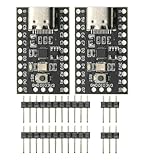
- CH32V003 Development Minimum System Board for Nano RISC-V CH32V003F4U6 Chip TYPE-C USB 22Pin
- on-board 24MHz Crystal oscillator
- Power by TYPE-C USB
If a CPU cannot feed or coordinate accelerators efficiently, accelerator capacity can go underused. AheadComputing’s thesis is that faster, more efficient general-purpose CPUs could improve that balance, particularly for orchestration, data movement, and workloads that do not divide cleanly across many parallel processors. That is a bet on stronger CPU-accelerator systems, not evidence that CPUs are replacing GPUs. GeekWire’s coverage describes the company’s rationale in similar system-level terms.
Why choose RISC-V?
RISC-V is an open instruction-set architecture: it defines the instructions software and processors use to communicate, while companies can create their own implementations of that architecture. For a startup, the approach can reduce dependence on licensing a proprietary ISA and leave room to customize or extend a design within the RISC-V framework. It may also appeal to customers seeking greater control over their processor architecture or an alternative to x86 and Arm.
Rank #3

- The ESP32-C3 SUPERMINI is positioned as a high-performance, low-power, cost-effective IoT mini development board, suitable for low-power IoT applications and wireless wearable applications
- It is equipped with a rich set of interfaces, including 11 digital I/Os that can be used as PWM pins and 4 analog I/Os that can be used as ADC pins.
- It supports four serial interfaces, including UART, I2C, and SPI.
- The ESP32-C3 features a 32-bit RISC-V CPU, including an FPU (Floating Point Unit) capable of 32-bit single-precision
- Package: 2PCS ESP32-C3 MINI Development Board ESP32 SuperMini ESP32 C3 WiFi Module
AheadComputing says it chose RISC-V to pursue a clean-slate design without legacy constraints. That is the company’s strategic rationale, not proof that RISC-V cores are inherently faster or cheaper. An open ISA does not make a competitive CPU free or straightforward to build: the work still includes verification, physical implementation, compilers, operating-system support, firmware, security, manufacturing, packaging, and customer integration. Extensive customization can also complicate compatibility if extensions are not supported consistently across software tools and products. AheadComputing’s explanation of its RISC-V choice sets out its own perspective.
Founders with Intel CPU experience
AheadComputing was formed in July 2024 by Dr. Debbie Marr, Jonathan Pearce, Dr. Srikanth Srinivasan, and Mark Dechene. All four came from senior CPU architecture roles at Intel. The company identifies Marr as a former Intel Fellow and chief architect of Intel’s Advanced Architecture Development Group; its biographies describe Pearce, Srinivasan, and Dechene as former Intel principal engineers and CPU architects. GeekWire reported that Marr spent more than three decades at Intel. The experience is relevant to the technical ambition, but it cannot substitute for product results. The company’s launch announcement and team biographies provide the founders’ backgrounds.
Rank #4

- ESP32-C6 WiFi 6 microcontroller development board adopts ESP32-C6-WROOM-1-N8 module, which is equipped with RISC-V 32-bit single-core processor, up to 160MHz main frequency, built-in 8MB Flash
- Integrates WiFi 6, Bluetooth 5 and and IEEE 802.15.4 (Zigbee 3.0 and Thread) wireless communication, with superior RF performance
- Integrates rich peripherals including SPI, UART, I2C, I2S, LED PWM, SDIO and other interfaces, compatible with the pinout of ESP32-C6-DevKitC-1-N8 development board, more convenient to use and expand a variety of peripheral modules
- Onboard CH343 and CH334 USB HUB chips, supports USB and UART development at the same time via a USB-C port
- Comes with online examples and tutorials for ESP-IDF development environment
Funding and company timeline
| Milestone | What was announced |
|---|---|
| July 2024 | AheadComputing was formed by Marr, Pearce, Srinivasan, and Dechene. Company launch announcement. |
| February 2025 | The company announced a $21.5 million seed round led by Eclipse, with participation from Maverick Capital, Fundomo, EPIQ Capital Group, and Jim Keller. Seed-round announcement. |
| February 2025 | AheadComputing announced that Jim Keller, CEO of Tenstorrent, joined its board. The company also described him as an early supporter and angel investor. Board announcement. |
| January 21, 2026 | The company announced its $30 million Seed2 round, bringing publicly disclosed funding to $53 million. Financing announcement. |
Keller’s board position and reputation as a CPU architect add industry context; they do not establish that AheadComputing’s design has achieved a particular performance level. The company also names Alchip, Cadence, SkyeChip, and Tenstorrent in connection with product development. Those are described as ecosystem collaborations, not confirmed CPU customers or commercial deployments in the available announcements.
Independent reader supportYour contribution helps us test, update, and keep practical guides available for everyone.What remains unproven
The financing and experienced founding team show investor confidence in the opportunity. They do not establish that AheadComputing has delivered a competitive processor. Public materials do not provide independent benchmark results against current Intel, AMD, Arm-based, or other RISC-V cores, and do not identify a named CPU customer, production chip, valuation, or specific delivery timetable.
Best Value

- Ample PSRAM Storage – The development board offers 8MB PSRAM, providing substantial extra memory for handling more complex tasks, large data buffers, and advanced processing.
- Enhanced Multi-Tasking Capability – With the additional 8MB PSRAM, the ESP32-C5-WIFI6-KIT can efficiently manage multiple protocol stacks simultaneously, ensuring smooth operation in multi-tasking IoT environments.
- Support for Medium-Load Applications – The 8MB PSRAM allows the ESP32-C5 to handle medium-load applications more effectively, making it ideal for scenarios requiring real-time data processing or continuous communication.
- Seamless Performance – The increased memory improves the overall performance and responsiveness of the device, particularly when running applications with larger memory footprints or more demanding computations.
- Future-Proof for Complex Projects – With 8MB of PSRAM, developers are better equipped to build scalable, high-performance solutions that support both current and future IoT use cases, offering flexibility for future-proofing designs.
For a startup licensing CPU IP, the path from architecture to revenue depends on more than core design. Prospective customers need a complete software stack—compilers, operating systems, libraries, firmware, debugging tools, and application compatibility—and must integrate and validate the design in their own products. Data-center customers in particular require extensive platform qualification. Final performance and efficiency also depend on implementation choices such as process technology, memory subsystem, packaging, and system design.
Useful milestones to watch include a test-chip or silicon announcement, reproducible independent benchmarks with comparable test conditions, named licensees or customers, operating-system and software support, and clear progress from tape-out to sampling and production. Performance-per-watt claims are meaningful only when the measurement boundary is clear—core, chip, socket, or complete server—and comparisons use comparable workloads and configurations.
How to read the competitive challenge
AheadComputing is entering a market where Intel and AMD supply x86 processors, Arm-based designs are used across data-center and other markets, and several companies are developing RISC-V processor technology. Large cloud providers also design custom silicon for their own systems. Those alternatives bring established software, customer relationships, engineering capacity, or—in some cases—control over the full system.
AheadComputing’s potential opening is specialized CPU core IP for customers who want high performance, architectural flexibility, or a RISC-V alternative. A licensing model could let its designs reach more than one chip program without the company manufacturing every finished processor, but it also makes customer design wins and ongoing license or royalty revenue essential. The public funding announcement does not establish those wins. Its collaborations with design and ecosystem partners may support development, but they should not be mistaken for proof of a commercial deployment.
Free tools Windows power users keep installed
One-click scans. No signup required.
Quick Recap
Product prices and availability are accurate as of the date/time indicated and are subject to change. Any price and availability information displayed on Amazon at the time of purchase will apply.




