Streaming from a personal computer generates heat. OBS encoding at 1080p60 consumes 40–80% of a quad-core CPU, and that sustained load pushes temperature toward thermal limits. When the CPU overheats, it throttles—reducing speed to cool down—and your stream quality crashes. Viewers see pixelation, lag, or dropout. This happens during your best streaming times, obviously, because that’s when CPU load is highest.
If other Windows processes are adding to the encoder load, Outbyte PC Repair may help identify resource-heavy activity as an optional optimization aid, but it cannot replace temperature monitoring or physical cooling checks.
Why Streaming Overheats Computers
A home desktop PC is built for intermittent loads—gaming sessions, video editing, office work. Each task runs for 1–4 hours, then the system rests. CPU thermals are designed with that pattern in mind.
Streaming is different. A 24/7 stream (or even a 4-hour daily stream) runs the encoder continuously. That CPU core sits at 70–90% utilization for hours. Heat builds continuously. Most home cases aren’t designed for that sustained load.
Do these 3 things before closing this tab:
1Clear out junk files and repair common Windows errors2Scan for outdated or missing drivers - takes under a minute3Repair Windows errors before they cause bigger problemsThermal throttling is the failure mode: Once CPU temperature reaches 85–95°C (depending on processor), the CPU itself reduces clock speed to shed heat. Slower clock speed means lower encoding bitrate. A 6 Mbps stream might drop to 3 Mbps without warning. Viewers see quality degrade in real time.
#1 Best Overall
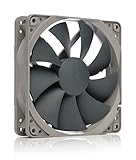
- High performance cooling fan, 120x120x25 mm, 12V, 4-pin PWM, max. 1700 RPM, max. 25.1 dB(A), >150,000 h MTTF
- Renowned NF-P12 high-end 120x25mm 12V fan, more than 100 awards and recommendations from international computer hardware websites and magazines, hundreds of thousands of satisfied users
- Pressure-optimised blade design with outstanding quietness of operation: high static pressure and strong CFM for air-based CPU coolers, water cooling radiators or low-noise chassis ventilation
- 1700rpm 4-pin PWM version with excellent balance of performance and quietness, supports automatic motherboard speed control (powerful airflow when required, virtually silent at idle)
- Streamlined redux edition: proven Noctua quality at an attractive price point, wide range of optional accessories (anti-vibration mounts, S-ATA adaptors, y-splitters, extension cables, etc.)
Temperature creep is insidious because it’s not an instant crash. It’s a slow degradation that looks like a network problem to the untrained eye.
Diagnosis: Is Your Computer Overheating During Streaming
Before troubleshooting, confirm overheating is actually your problem:
Check CPU temperature during streaming. Download HWiNFO or Core Temp (both free) and monitor CPU temperature while your stream runs.
– Below 70°C: No overheating issue.
– 70–80°C: Warm, but manageable if case airflow is good.
– 80–85°C: Thermal throttling is starting. You’ll see bitrate drops under heavy load.
– Above 85°C: Thermal throttling is active. Stream quality will degrade noticeably.
Free tools Windows power users keep installed
One-click scans. No signup required.
Check CPU clock speed during streaming. Your CPU has a rated clock (e.g., 3.8 GHz). If the actual clock drops to 2.5–3.0 GHz during streaming, throttling is active.
Correlate throttling with stream quality drops. Run your stream with temperature monitoring open. When temperature spikes above 85°C, does bitrate drop? Does the frame rate stutter? If yes, overheating is your culprit.
Check OBS encoding settings. If you’re streaming at 1080p60 with H.264 (not H.265/HEVC), your CPU is working harder than necessary. Even before cooling fixes, switching to a lower bitrate or resolution will confirm if encoding load is the issue.
The Causes, Ranked by Frequency
Dust buildup in the case (50% of overheating cases). Dust blocks air intake and exhaust vents, trapping heat inside. A 6-month-old PC with a closed case can accumulate enough dust to block 30–50% of airflow.
PC Slower Than It Used to Be?
A free scan shows the junk files, broken settings and background clutter dragging Windows down - then fixes them in one click.Free scan · Windows 10 & 11Crashes, No Sound, or Screen Glitches?
Random freezes, missing sound and display glitches usually trace back to one bad driver. Find and replace yours safely.Free scan · under a minuteInadequate case airflow design (25%). Many budget cases have poor fan placement or restricted intake areas. Two rear exhaust fans with no intake fans create negative pressure, reducing cooling efficiency.
Ambient temperature too high (15%). A streaming setup in a 28°C room will always run hotter than one in a 22°C room. Each degree of ambient temperature increases CPU temperature by roughly 0.5°C.
thermal paste degradation (5%). If your CPU cooler is more than 3–4 years old, the thermal paste between the CPU and heatsink may have hardened or separated, reducing heat transfer.
Undersized or failing cooler (5%). Stock coolers that ship with CPUs are adequate for moderate workloads, not sustained encoding. If your cooler is tiny or the fan is failing, overheating is guaranteed.
Rank #2

- HIGH STATIC PRESSURE: Efficient even with resistance – the generated airflow easily penetrates dense radiators, narrow perforated panels and mesh structures and ensures reliable cooling
- PWM CONTROL WITH WIDE SPEED RANGE: The speed can be progressively adjusted up to 3000 rpm via the 4-pin PWM connection – the fan stops completely at less than 5% PWM
- PRECISE MANUFACTURING FOR MAXIMUM SMOOTH RUNNING: Minimal gaps, automatic balancing and high-precision measurement noticeably reduce vibrations – for quiet, efficient and long-lasting performance
- SMOOTH-RUNNING FLUID DYNAMIC BEARING (FDB): The self-lubricating bearing minimizes noise during operation – ideal for quiet, efficient cooling and a long, reliable service life
- NEW FAN BLADE DESIGN FOR MORE PERFORMANCE: The redesigned rotor blades offer an optimal balance of performance and low noise – especially efficient at low speeds
Fixes, Ranked by Effort and Cost
Fix 1: Clean dust from the case (Effort: Low, Cost: $0)
Most powerful and cheapest fix. Open your PC case and use compressed air to blow out dust from all vents, fans, and heatsinks. Hold the fan blades so they don’t spin (spinning a stationary fan can damage it). Do this outside or in a well-ventilated area.
Repeat every 3 months if streaming regularly.
Effectiveness: Dust buildup alone can drop CPU temperature by 10–15°C. After cleaning, test streaming again. If temperature stays below 80°C, you’re done.
Fix 2: Improve case airflow (Effort: Low–Medium, Cost: $30–100)
If your case has only exhaust fans, add intake fans. A typical setup: two 120 mm intake fans at the front (pulling cool air in), one exhaust fan at the rear (pushing hot air out).
Fans cost $10–30 each. Total cost: $30–90. Installation: 10 minutes.
Rule: Intake airflow should equal exhaust airflow. If you add two intake fans, add one exhaust fan to match.
Effectiveness: Good case airflow can lower CPU temperature by 5–10°C. Combined with dust cleaning, often enough to solve overheating.
Recommended Free Tools
Fix 3: Upgrade the CPU cooler (Effort: Medium, Cost: $40–150)
If dust and airflow don’t help, the cooler itself may be undersized. Stock Intel or AMD coolers are barely adequate for sustained loads.
Mid-range aftermarket coolers (Noctua NH-D15, Bequiet Dark Rock Pro 4, Thermalright Peerless Assassin) cost $40–100 and can lower CPU temperature by 10–20°C compared to stock.
Installation is 30 minutes if you’ve done it before, 1–2 hours if not. Requires reapplying thermal paste.
Effectiveness: A good cooler can mean the difference between thermal throttling at 70% load and stable temps at 90% load. This is often the decisive fix for streaming.
Rank #3
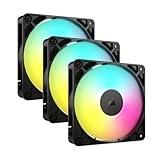
- Streamlined Fan Connections: Daisy-chain multiple fans together and control them all through just one 4-pin PWM connector and one +5V ARGB connector.
- Lighting Made Easy: Eight LEDs per fan shine bright with customisable lighting through your motherboard’s built-in ARGB control (requires compatible motherboard).
- Precise PWM Speeds: Set your fan speeds up to 2,100 RPM while providing up to 72.8 CFM airflow to your system.
- CORSAIR AirGuide Technology: Anti-vortex vanes direct airflow at your hottest components for concentrated cooling, pushing air in the direction you need when mounted to a radiator or heatsink.
- High Static Pressure: RS fans work well as radiator fans with a static pressure of 2.8mm-H2O to push through obstructions.
Fix 4: Lower streaming bitrate or resolution (Effort: Low, Cost: $0)
Reduce the CPU load instead of improving cooling. Options:
- Drop from 1080p60 to 720p60 (25% less CPU load)
- Lower bitrate from 8 Mbps to 5.5 Mbps (less data encoding, lower load)
- Switch from H.264 to H.265/HEVC (20–30% less CPU for same quality)
This doesn’t fix the overheating—it avoids triggering it by reducing the load.
What’s actually slowing this PC down?
Pick the symptom - the matching free tool is one click away.
Effectiveness: Moderate. You’re addressing the symptom, not the cause. Useful as a temporary workaround while you plan hardware upgrades.
Fix 5: Switch to hardware encoding (Effort: Low, Cost: $200–500 GPU upgrade)
Most modern GPUs (NVIDIA RTX cards, AMD RDNA series) can encode video using dedicated hardware instead of CPU. This offloads the thermal load entirely.
Requires a compatible GPU and updating OBS to use hardware encoder. If you don’t have a GPU, the cost is $200–500 for an entry-level card.
The Tool Desk
Outbyte PC Repair FREERepair Windows errors before they cause bigger problemsFix Now →Outbyte Driver Updater FREEFix the driver behind crashes, sound loss and screen glitchesFind Drivers →Effectiveness: Decisive. Hardware encoding drops CPU load from 60% to 10%. Temperature typically drops 10–20°C.
Downside: Requires GPU investment and specific hardware support.
The Cloud Solution: Why It Avoids Overheating Entirely
All of these fixes address symptoms: better cooling, lower load, hardware encoding. But they all assume you’re encoding on your PC.
Rank #4

- 【High Performance Cooling Fan】 Automatic speed control of the motherboard through the 4PIN PWM fan cable interface, which can determine the speed according to the temperature of the motherboard, with a maximum speed of 1550RPM. Configured with up to 55cm of cable for PWM series control of fans, ideal for cases and CPU coolers.
- 【Quality Bearings】The carefully developed quality S-FDB bearings solve the problem of pc cooling fan blade shaking in lifting mode, keeping fan noise to a minimum while providing maximum cooling performance when needed and extending the life of the fan.
- [Excellent LED light] The high-brightness LED atomizing argb fan blade can effectively reflect the light, making the ARGB lighting effect softer, and it matches the cooler and case more perfectly. Up to 17 modes of light effects with ARGB support, color can be managed and synchronized through the port on motherboard.
- 【Silent Fan Size】 Model: TL-C12C-S X5, Size: 120*120*25mm, Speed: 1550RPM±10%, Noise ≤ 25.6dBA Connector: 4pin pwm, Current: 0.20A, Air Pressure: 1.53mm H2O, Air Flow: 66.17CFM, Higher air flow for improved cooling performance.
- 【Perfect Match】The PC fan can be used not only as a case fan, but is also suitable for use with a cpu cooler to create a cooling effect together, which can take away the dry heat from the case and the high temperature generated by the CPU in operation, allowing for maximum cooling; Ideal for cases, radiators and CPU coolers.
Streaming from the cloud eliminates the problem completely. You upload your video once to a cloud service. The cloud infrastructure—which is built for sustained high-load computing—does the encoding. Your PC stays off. No heat, no throttling, no crashes.
Quick wins for a faster PC:
Fix the driver behind crashes, sound loss and screen glitchesFind Drivers →Repair Windows errors before they cause bigger problemsFix Now →StreamNeo applies this workflow to prerecorded YouTube Live: upload your video and paste your YouTube stream key, then the broadcast runs in the cloud while your PC stays off. This removes sustained OBS encoding heat from the local machine.
Keep YouTube Live Running Without an Overheating PC
StreamNeo is built for turning a prerecorded video into an always-on YouTube Live stream without leaving your PC or encoder running. Upload your video and paste your YouTube stream key; the broadcast runs in the cloud while your computer stays off.
StreamNeo checks stream health every 30 seconds and automatically restarts dropped streams. That makes it a practical way to remove sustained OBS encoding heat while keeping the broadcast running without manually restarting it after an interruption.
A 24-hour 720p/30fps trial is free with no card at signup. Use it with a representative prerecorded video to test cloud broadcasting before committing to a longer-term workflow for a daily or 24/7 channel.
The tradeoff is cost: a managed cloud streaming service costs $50–100/month. But for a creator who streams regularly, that’s cheaper than buying and installing a GPU, and it requires zero technical knowledge.
To evaluate the cloud workflow before making another hardware purchase, StreamNeo offers a free 24-hour 720p/30fps trial with no card at signup. Upload a representative prerecorded video and paste your YouTube stream key to test it while the PC remains off.
Independent reader supportYour contribution helps us test, update, and keep practical guides available for everyone.Case Study: Streaming Setup Overheating Scenario
The problem: A creator streams daily for 3 hours (9 PM–midnight). CPU temperature reaches 92°C within 10 minutes, and bitrate drops from 6 Mbps to 4 Mbps by the end of the stream. Viewers see quality degrade after 10 minutes and complain.
Diagnosis: HWiNFO shows CPU at 92°C and clock speed dropped from 3.8 GHz to 2.8 GHz. Clear thermal throttling.
Do these 3 things before closing this tab:
1Repair Windows errors before they cause bigger problems2Fix the driver behind crashes, sound loss and screen glitches3Clear out junk files and repair common Windows errorsSolution attempt 1 (Clean dust, $0): Compressed air clears visible dust. Temperature drops to 87°C. Better, but still throttling.
Best Value

- 【High Performance Cooling Fan】 Automatic speed control of the motherboard through the 4PIN PWM fan cable interface, which can determine the speed according to the temperature of the motherboard, with a maximum speed of 1550RPM. Configured with up to 55cm of cable for PWM series control of fans, ideal for cases and CPU coolers.
- 【Quality Bearings】The carefully developed quality S-FDB bearings solve the problem of pc cooling fan blade shaking in lifting mode, keeping fan noise to a minimum while providing maximum cooling performance when needed and extending the life of the fan.
- [Excellent LED light] The high-brightness LED atomizing argb fan blade can effectively reflect the light, making the ARGB lighting effect softer, and it matches the cooler and case more perfectly. Up to 17 modes of light effects with ARGB support, color can be managed and synchronized through the port on motherboard.
- 【Silent Fan Size】 Model: TL-C12C-S X3, Size: 120*120*25mm, Speed: 1550RPM±10%, Noise ≤ 25.6dBA Connector: 4pin pwm, Current: 0.20A, Air Pressure: 1.53mm H2O, Air Flow: 66.17CFM, Higher air flow for improved cooling performance.
- 【Silent Fan Size】 Model: TL-C12C-S X3, Size: 120*120*25mm, Speed: 1550RPM±10%, Noise ≤ 25.6dBA Connector: 4pin pwm, Current: 0.20A, Air Pressure: 1.53mm H2O, Air Flow: 66.17CFM, Higher air flow for improved cooling performance.
Solution attempt 2 (Upgrade cooler, $80): Noctua NH-D15 replaces stock cooler. Temperature drops to 78°C. No throttling. Stream bitrate stays stable at 6 Mbps for the full 3 hours. Problem solved.
Total cost and time: $80, 1.5 hours installation.
When to Stop Troubleshooting and Move to Cloud
If you’ve tried dust cleaning, airflow improvement, and a good cooler, and CPU temperature is still above 80°C, it’s time to consider the actual problem: your home PC is not designed for streaming.
At that point, the ROI of further hardware upgrades (new CPU, GPU, more fans) is poor. A managed 24/7 streaming service costs less than a GPU and solves the entire category of thermal problems.
Quick wins for a faster PC:
Repair Windows errors before they cause bigger problemsFix Now →Scan for outdated or missing drivers - takes under a minuteDriver Scan →When repeated cooling upgrades have not solved sustained heat, StreamNeo lets you move the prerecorded YouTube Live broadcast off the PC. Upload the video, paste the stream key, and let the cloud run the broadcast while the computer stays off.
Before buying more hardware, test StreamNeo with its free 24-hour 720p/30fps trial, which requires no card at signup. Upload a prerecorded video and paste your YouTube stream key to evaluate an always-on cloud broadcast while the PC remains off.
The cloud solution is also the right answer if you want your stream to survive internet outages, power flickers, or hardware failures. Home PC streaming has no redundancy. Cloud streaming does.
For an unattended broadcast, StreamNeo checks stream health every 30 seconds and automatically restarts dropped streams. That gives you a practical reliability test while the PC stays off.
StreamNeo supports this reliability-focused workflow by running the broadcast in the cloud while your PC stays off. It checks stream health every 30 seconds and automatically restarts dropped streams, reducing the need to intervene when a stream connection fails.
The Real Fix for Serious Streamers
Stop streaming from your PC. Upload your content once to a cloud platform. Let the cloud handle encoding and delivery. Your computer stays off.
Leaving a desktop encoding 24/7 is the classic pain point that breaks hardware eventually—one thermal failure and your stream is dark. StreamNeo removes that dependency entirely: you upload the video once, paste your YouTube stream key, and the stream runs from the cloud with your computer off, restarting itself if the connection drops. There is a free 24-hour trial and no card required, so you can test whether this approach eliminates overheating issues entirely.
For daily streamers or anyone running 24/7 channels, this is the most reliable and cost-effective fix to overheating.
Free tools Windows power users keep installed
One-click scans. No signup required.
Quick Recap
Product prices and availability are accurate as of the date/time indicated and are subject to change. Any price and availability information displayed on Amazon at the time of purchase will apply.




