Part 61 and Part 141 are different FAA training frameworks, not quality rankings. Part 61 sets certification requirements for pilots and instructors; Part 141 covers FAA-certificated pilot schools that teach approved, structured courses. Part 141 can have a lower minimum flight-time requirement for a private pilot certificate, but that does not guarantee a student will finish sooner or spend less. The right choice depends on the specific course, instructor, schedule, and school.
What do Part 61 and Part 141 mean?
Part 61 of Title 14 of the Code of Federal Regulations sets requirements for pilot certificates and ratings, as well as for flight instructors and ground instructors. Training under Part 61 is not unregulated: instructors and providers must meet applicable certification requirements. A provider does not have to be a Part 141-certificated school to offer flight training. The FAA says non-certificated providers can provide high-quality instruction. FAA Pilot Schools Information and the FAA’s hourly-requirements FAQ explain the distinction.
Part 141 sets certification and operating requirements for pilot schools. A certificated school must use an FAA-approved course and meet requirements for such areas as curricula, personnel, equipment, and facilities. Schools may offer training under more than one pathway, so the school’s general label is not enough to identify the rules for your enrollment. Ask which specific course you will take and whether it is an FAA-approved Part 141 course.
How the training paths compare
| Question | Part 61 training | Part 141 school |
|---|---|---|
| What the rules cover | Pilot, instructor, and ground-instructor certification requirements. | Certification and operation of pilot schools, including approved courses and school requirements. |
| How instruction is organized | More flexibility in how required material is organized; the approach depends on the instructor or provider. A 2014 FAA Safety Briefing describes instructors as having discretion over when, how, and where material is covered. FAA Safety Briefing | A structured syllabus or course outline approved by the FAA, with school and instructor requirements. FAA Advisory Circular AC 141-1B |
| Private-pilot airplane minimum | At least 40 flight hours under the FAA’s cited Part 61 requirements. FAA hourly-requirements FAQ | The FAA says an approved Part 141 course may have a 35-hour minimum. FAA Pilot Schools Information |
| What to compare in practice | Whether the instructor’s teaching approach, availability, and schedule suit you. | Whether the approved course structure, schedule, and school support suit you. |
Does Part 141 save time or money?
Part 141’s lower regulatory minimum is not a promise of a five-hour saving. The FAA’s Pilot Schools Information page, last updated June 9, 2026, says most people require 60 to 75 hours of training and notes that the difference in minimums may be insignificant. The FAA’s hourly-requirements FAQ, accessed October 8, 2026, cites approximately 75 hours as the average private-pilot completion time. These are FAA-reported training estimates, not a forecast for an individual student.
The Tool Desk
Outbyte PC Repair FREEClear out junk files and repair common Windows errorsFree Scan →Outbyte Driver Updater FREEFix the driver behind crashes, sound loss and screen glitchesFind Drivers →#1 Best Overall

- Padded internal tablet pocket
- Adjustable internal dividers
- Luggage sleeve
- Removable shoulder strap
- Plenty of room for headsets, chart, and documents
The FAA’s AC 141-1B, issued September 12, 2017, says flight-time requirements for completing a Part 141 course are often reduced compared with Part 61, largely because Part 141 training is more controlled through FAA-approved structured courses. That describes course requirements; it does not establish that your actual training will take fewer hours or cost less. A student’s total cost depends on the school’s rates and fees, aircraft and instructor availability, and how much training the student needs.
What Part 141 oversight does—and does not—tell you
Part 141 certification means the school and course must meet FAA requirements, and the FAA conducts surveillance. Those standards give students a defined course structure and oversight framework. They do not establish that every Part 141 school offers better individual instruction than every Part 61 provider, or that every student will progress at the same pace.
Rank #2

- Dimensions & Carrying - Main Compartment: 10.83" (L) x 5.5" (W) x 13.39" (H). This pilot headset bag features a hook-and-loop panel for attaching aviation patches (patch included). Equipped with a padded top handle, adjustable & removable shoulder strap, and trolley sleeve, offering 3 convenient ways to carry.
- Superior Protection - The main compartment of this aviation headset bag is lined with 5mm thick padding and includes a secure elastic mesh pocket to prevent shifting, effectively safeguarding your aviation headset against drops, bumps, and impacts. The back of this pilot flight bag features a padded laptop sleeve with 2mm thick cushioning and a hook-and-loop closure, providing reliable protection for your iPad or laptop.
- 20 Organized Pockets - This pilot bag features a rigid EVA pocket for IFR aviation sunglasses. Below it, a zippered compartment includes: a clear ID window for your pilot license; 3 pen slots; a large sleeve for your passport, third-class medical certificate, and E6B flight calculator; and a key clip. 3 side pocket for water bottle, EDC flashlight, radio and aviation fuel tester.
- Laptop Sleeve & Additional Storage - The dedicated rear compartment of this flight bag for pilot accommodates a 15-inch laptop and organizes flight essentials like plotters, pilot operating handbooks, AIM manuals, VFR kneeboards, and logbooks. Inside the headset case‘s main compartment, a top flap includes a dedicated batteries sleeve, while a bottom mesh pocket stores a tablet mount. The space can also fit spare clothing or an additional headset.
- Durable Fabric & Perfect Gift - Crafted from high-strength 900D oxford fabric with a water-resistant PVC coating, this aviation headset case is built to withstand frequent travel and daily use. This practical and durable flight bag makes an ideal gift for pilots. (Note: Bag only. Headset and accessories not included.)
Likewise, Part 61’s flexibility is not a sign that a provider is unqualified. The FAA recognizes that training providers outside Part 141 can offer high-quality instruction. A 2014 FAA Safety Briefing provides a general explanation of Part 61 flexibility, but a description of the framework cannot predict how a particular instructor will teach today. Assess the actual instructor and course rather than treating either regulatory label as a verdict.
Independent reader supportYour contribution helps us test, update, and keep practical guides available for everyone.How to choose a flight school
Compare the course you would actually enroll in, not just the school’s marketing description. The FAA recommends visiting providers and speaking with management, instructors, and students. Use those conversations to check how the program will work for your goals and circumstances.
Rank #3

- FITS ANY PILOT: The Ascend Flight Bag is designed to grow with you no matter where you're at in your aviation career. Each pocket is built to carry your flight essentials. Protect your headset, tablet, laptop, notebooks, logbook, water bottle, snacks and more. Includes a removable shoulder strap to customize how you carry.
- BALLISTIC NYLON: Lightweight, yet durable ballistic nylon is the centerpiece of Wairworthy flight bags. Our materials protect your gear while making sure you look great at the same time.
- PREMIUM QUALITY YOU CAN TRUST: Get the same quality you know and love from Wairworthy. All of our flight bags include a 7 year manufacturer warranty. Rest assured knowing you're protected.
- THE PERFECT SIZE: Built to carry your headset and much more! Measuring 12" wide, 13" tall and 7" deep, you can bring up to a 13" laptop along or pack your kneeboard. Cleverly organized to give you the flexibility you need when packing your gear.
- MULTI-FUNCTIONAL: Designed to grow with the pilot. This makes an excellent bag for students, airline captains or something who simply wants to get a $100 hamburger.
- Course and syllabus: Ask which regulations govern your enrollment, what the syllabus covers, and how lessons are sequenced.
- Schedule and pace: Find out how often lessons are available and whether the school can support part-time or full-time training that fits your life.
- Instructor continuity: Ask whether you are likely to work with the same instructor and how instructor availability is handled.
- Aircraft and facilities: Visit the school and ask about the equipment and facilities used for the course.
- Location and course offerings: Consider whether the school is practical to reach and whether it offers training aligned with your goals.
- Total cost: Request an estimate of likely total training costs and clarify what it includes. A minimum-hour figure is not a personal cost quote.
Training rules, course availability, schedules, and prices vary by provider and can change. Confirm current details directly with the school before enrolling.
Quick Recap
Best Value

- Great Protection: This aviation flight bag features a main compartment with 5mm padded cushion and adhesive wide bands to protect your aviation headset for bumps, drops and impacts. Equipped with Card window and a visible zipper pocket for easy access items (Patent Pending)
- Convenient Storage: Our aviation headset storage bag has an EVA pocket for sunglasses and two zipper pocket in front for pens, notebooks or passport, inner hanging hook for keys. Two side pockets stores flashlight or small items
- Padded Sleeve: Our flight Bag for men features a padded tablet pocket with magic tape in the back offering great protection for your iPad or tablet, as well as a pilot kneeboard
- Versatile Design: Our pilot bag is made of 600D nylon fabric materials to withstand the rigors of frequent travel and use. Inside orange edge of the pouches for quick access to gears when needed. Reflective strips on side pockets for well identify the bag in the dark
- Compact Size: L13.5’’ x W9.5’’ x H13’’. Front hook and loop panel can be personalized with aviation patches. Matched with top padded handle, a detachable shoulder strap and luggage strap offer three ways to carry
Rank #4
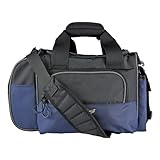
- Built Tough: Made with reinforced handles, heavy duty hardware, and padded shoulder strap, the Crosswind Bag handles the demands of flight training with ease.
- Pilot Oriented: Enough space for a headset and books, yet small enough to not throw off your weight and balance, the Crosswind bag features several tailored pockets for your radio, charts, fuel tester, and more.
- High Contrast: Helping you locate items in the cockpit, the Crosswind Bag features a high visibility interior design.
- Water Resistant: Fitted with custom cleats, the Crosswind Bag is water resistant from below with a rubber bottom.
- Protected: Keep your investment safe with our integrated E-Tracker pocket, located inside the side zippered compartment.
Product prices and availability are accurate as of the date/time indicated and are subject to change. Any price and availability information displayed on Amazon at the time of purchase will apply.




