Diagnosing Packet Loss That Kills Your Live Stream
Packet loss is the silent killer of 24/7 streams. A frame arrives complete, then the next one arrives with missing pieces, and your viewer sees a freeze or pixelation that lasts a fraction of a second. Across a three-hour stream, dozens of these microsecond gaps accumulate into visible stutter. Finding the packet loss before it ruins your broadcast requires three different tests, and knowing how to read them.
What Packet Loss Actually Looks Like
When a packet of video data fails to reach YouTube’s servers, one of three things happens: the encoder detects it and retransmits, adding delay; the encoder ignores it and the frame appears corrupted on playback; or the frame skips entirely. To viewers, this looks like brief freezes, pixelated blocks, or a momentary stutter. It is not buffering (which is slow loading)—it is mid-stream data loss.
Packet loss of 0.1 percent feels fine. Packet loss of 0.5 percent causes visible artifacts. Packet loss above 1 percent makes the stream unwatchable. Most residential internet is designed for consumer browsing, where a few lost packets are imperceptible. Streaming, especially 24/7 streaming, is unforgiving.
Test One: Ping to Your ISP’s Gateway
Open a terminal and ping your default gateway (usually 192.168.1.1 or your router’s IP). Let it run for at least 100 packets. If you see any “timeout” messages or duplicate packets, you have a problem between your machine and router. Check that Ethernet is plugged in (not Wi-Fi), restart the router, and retest.
Quick wins for a faster PC:
Clear out junk files and repair common Windows errorsFree Scan →Scan for outdated or missing drivers - takes under a minuteDriver Scan →Repair Windows errors before they cause bigger problemsFix Now →#1 Best Overall

- VERSATILE CABLE TESTING: Cable tester for data (RJ45) terminated cables and patch cords, ensuring comprehensive testing capabilities
- LARGE BACKLIT LCD: Backlit LCD display enables easy reading of pin-to-pin wiremap results, even in low-lit areas
- COMPREHENSIVE FAULT DETECTION: Test for Open, Short, Miswire, Split-Pair faults, Cross-over, and Shield, providing thorough fault detection
- INTUITIVE USER INTERFACE: User-friendly interface with three buttons and simple, easy-to-identify test responses, ensuring a smooth testing experience
- MULTIPLE TONE GENERATOR STYLES: Tone on a single wire, wire pair, or all 8 conductor wires using the multiple style tone generator (solid/warble); requires probe Cat. No. VDV500-123 (sold separately)
ping 192.168.1.1 -c 100
Look for consistency in response time. If pings vary from 1ms to 50ms, your connection to the router is unstable—something is congesting the local network, or Wi-Fi interference is present.
Test Two: MTR to YouTube’s RTMP Servers
MTR (My Traceroute) shows packet loss at each hop between you and YouTube. Install it on your system, then run it against the RTMP server you stream to.
mtr -c 100 a.rtmp.youtube.com
Let it collect 100 packets. Read the rightmost column, “Loss %”. A loss of 0 to 0.1 percent is normal. Anything above that points to a problem hop. If loss appears at hop 3 or 4, the problem is in your ISP’s network. If loss appears at hop 15 or beyond, the problem is in YouTube’s region or your ISP’s peering.
MTR is your truth source. Speed tests measure bandwidth, not reliability. MTR measures reliability directly.
Test Three: Check Your Encoder’s Logs
OBS, ffmpeg, and other encoders log every frame sent to YouTube. Open your encoder logs and search for “dropped” or “retransmit”. If your encoder is dropping frames, it is receiving packet loss or congestion feedback from YouTube, and the stream is already degrading.
Rank #2
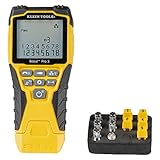
- VERSATILE CABLE TESTING: Cable tester tests voice (RJ11/12), data (RJ45), and video (coax F-connector) terminated cables, providing clear results for comprehensive testing on unenergized Ethernet cables (not designed to test PoE)
- EXTENDED CABLE LENGTH MEASUREMENT: Measure cable length up to 2000 feet (610 m), allowing for precise cable length determination
- COMPREHENSIVE FAULT DETECTION: Test for Open, Short, Miswire, or Split-Pair faults, ensuring thorough fault detection and identification
- BACKLIT LCD DISPLAY: Backlit LCD screen displays cable length, wiremap, cable ID, and test results, ensuring easy readability in various lighting conditions
- EFFICIENT CABLE TRACING: Trace cables, wire pairs, and individual conductor wires using the multiple style tone generator (requires analog probe Cat. No. VDV500-123, sold separately), simplifying cable tracing tasks
In OBS, open View > Logs and search the latest session for “Dropped Frames” or “Network Issues”. If you see any, your upload connection is not stable enough for that bitrate and resolution.
Where Packet Loss Happens: The Three Paths
Packet loss at home is usually one of three causes:
Router to ISP: Check that Ethernet connects directly to the modem (not Wi-Fi). If you must use Wi-Fi, move closer to the router, or switch to the 5GHz band if available. Wi-Fi adds variable latency and dropout risk that destroys long-form streams.
What’s actually slowing this PC down?
Pick the symptom - the matching free tool is one click away.
ISP to backbone: Run MTR to identify the hop where loss appears. If it is hops 3 to 8, contact your ISP and report the losing hop by number. This is unusual and worth investigating.
ISP to YouTube’s servers: Some ISP-to-YouTube peering agreements are overloaded at peak hours. If loss appears only between 5pm and 11pm, contact your ISP and ask about their YouTube peering capacity. They may be able to reroute traffic.
Rank #3

- Multifunctional NOYAFA NF-8508 Network Cable Tester: There are nine features to meet your needs. Continuity Testing, Cable Scan, Port Flash, Length Measurement, POE Power Supply Test, QC testing, Optical Power Meter, VFL and NVC function.It is perfectly suited for various engineering cabling projects, network troubleshooting, network equipment maintenance and testing scenarios. Its precise cable scanning and fault localization capabilities help you effortlessly pinpoint the root cause of issues.
- 7 WAVELENGTHS OPTICAL POWER METER: NF-8508 network cable tester can measure 7 standard wavelengths, 850/1300/1310/1490/1550/1625/1650, power detecting range(dBm): -70 ~ +10. Its power detection range spans from -70 dBm to +10 dBm, supporting FC/SC/ST connectors. It enables precise fiber optic power measurement, helping users efficiently assess fiber signal strength and ensure healthy fiber link operation. It effortlessly detects attenuation issues within fibers, thereby safeguarding fiber network stability.
- High Efficiency Visual Fault Locator: Easy identification of fiber breakpoints, poor connections, bending or cracking. Excellent for finding the right fiber to splice or quickly finding a break. Emmiting Energy: standard wavelenth: 650nm. Fast flashing, slow flashing, high precison.The built-in self-calibration ensures stable long-term performance, and Class IIIa laser (output<5mW) ensures safe daily operation.
- PORT FLASHING:The indicator light on the connection port in the NF-8508 device flashes to help accurately locate the cable. Displays port information, including operating speed, duplex mode, and negotiation settings. Port lights flash on the same screen to show the port's operating speed, making it easy to pinpoint lines and ports.
- PoE Testing and Cable Length Test: PoE testing can check cable mapping polarity and voltage of PoE network switches, withstand 60VDC. Automatically detects and switches between 10M/100M/1000M modes, Includes cable tracking, short circuit test, interruption of circuit test and etc The RJ45 cable tester can quickly measure the length of the cable with a range of 200m. Not only network cables, but also phone lines and BNC cables.
The Simplest Fix: Reduce Bitrate
If your connection is losing packets, cut your bitrate by 20 percent and retest with MTR. A 6 Mbps stream might drop to 4.8 Mbps. If packet loss drops to zero, your connection is not stable enough for the higher bitrate. Stick with lower bitrate and better reliability over high bitrate and interruptions.
The Dependency Problem: Why Local Streaming Breaks
When you encode locally, you also route the stream locally. Your router, your ISP, and your network card all add potential failure points. The encoder is also consuming CPU and bandwidth while running, competing for resources with the stream itself. A system update, a temperature spike, or a routine router hiccup stops the stream until manual intervention.
Do these 3 things before closing this tab:
1Fix the driver behind crashes, sound loss and screen glitches2Repair Windows errors before they cause bigger problems3Scan for outdated or missing drivers - takes under a minuteIf your connection is showing packet loss, adding a local encoder makes it worse—the encoder consumes system resources, and any reboot or thermal event stops the broadcast. Leaving the machine on 24/7 to run the encoder also means leaving the router on 24/7, doubling the chance that something fails.
Shifting encoding to the cloud eliminates the local variables. You send the video file once from your computer, then turn it off. The cloud handles encoding, bitrate management, and failover. If YouTube’s regional servers have a hiccup, the cloud automatically detects it and reconnects. Your machine is not involved.
Keep a 24/7 YouTube Stream Running Without Your PC
StreamNeo lets you upload a prerecorded video and paste your YouTube stream key, then runs the stream in the cloud while your PC stays off. That directly addresses the local encoder, router, and computer dependencies behind unattended broadcast failures.
Rank #4

- Automatically runs all tests and checks for continuity, open, shorted and crossed wire pairs. Visible LED status display.
- Cable state testing (2-wire): Line DC detecting, anode and cathode determination,Ringing signal detecting open, short and cross circuit testing
- Cable Type: RJ11 Telephone cable and RJ45 LAN cable
- Connectors: Ethernet Cat 5, Ethernet Cat 5e, Ethernet Cat 6, Ethernet Cat 7, RJ11 6P and RJ45 8P
- Power Source: DC9V Battery Required (not included)
StreamNeo checks stream health every 30 seconds and automatically restarts dropped streams, giving a 24/7 YouTube broadcast a recovery path without requiring you to keep watching the encoder. It is a practical way to separate local packet-loss troubleshooting from keeping the channel live.
Recommended Free Tools
You can test the workflow with a free 24-hour 720p/30fps trial, with no card required at signup. Upload the video, enter the stream key, and use the trial to verify that the broadcast remains reliable before choosing a longer-running setup.
StreamNeo removes the dependency on your local connection staying stable for weeks. You upload the video, paste your YouTube key, and the cloud encoder runs independently from your network. If your ISP has a brief outage, the cloud detects it and resumes when service returns. There is no encoder on your machine burning power, no router staying on around the clock, and no risk of 3am downtime. The free 24-hour trial gives you time to see whether the stream survives network hiccups unattended.
Advanced Diagnosis: TCP_BBR and MTU Size
If MTR shows zero loss but your stream still stutters, the problem might be path MTU (Maximum Transmission Unit) mismatch. Your machine might be sending packets larger than the weakest link in the path can handle, causing fragmentation and retransmit.
Test your MTU size:
traceroute -m 30 a.rtmp.youtube.com
Then test with a ping that does not fragment:
ping -D -s 1472 a.rtmp.youtube.com
If this ping succeeds but a larger one fails, adjust your network interface MTU to 1500 (standard) or lower to 1450 if fragmentation is suspected. This is rare on residential networks but worth checking if packet loss is intermittent.
Free tools Windows power users keep installed
One-click scans. No signup required.
Best Value

- Multi-Function Network Cable Tester: Supports RJ45 (CAT5, CAT5e, CAT6, CAT6A, CAT7) and RJ11 telephone cables. Quickly detects continuity, short circuits, open wires, miswiring, and cable shielding status, ensuring your LAN or phone lines are correctly wired and ready to use.
- Fast/Slow Mode with LED Indicators: Switch between fast and slow scan speeds to identify wiring issues more precisely. LED lights on both master and remote units show wire order, making it easy to spot errors like open pairs or misaligned pins at a glance.
- Split-Type Design for Long-Distance Testing: Master and remote units can be detached and used separately, allowing you to test both ends of a long cable run, ideal for wall-mounted ports, long runs, or structured cabling. Perfect for home, office, or professional IT setups.
- Compact, Lightweight & Durable: Ergonomically designed with sturdy ABS housing, this pocket-sized tester is ideal for on-the-go network engineers, DIYers, and electricians. It’s your go-to toolkit for cable maintenance, upgrades, or new installations.
- Safe & Easy to Use: Simple one-button operation makes testing quick and hassle-free. LED indicators clearly show wiring status, while the G light instantly identifies shielded (FTP/STP) or unshielded (UTP) cables. Supports safe testing of telephone lines with typical voltages under 48-72V, ideal for both home and professional use.
FAQ
Is packet loss the same as jitter?
No. Packet loss is missing packets. Jitter is inconsistent packet arrival times. Both degrade video, but jitter is harder to detect. MTR shows loss; check your encoder logs for frame delays to catch jitter.
Can Wi-Fi ever work for 24/7 streaming?
Not reliably. Wi-Fi is variable by design—interference, range, and competing devices all affect it. For anything longer than a few hours, use Ethernet. If Ethernet is impossible, use a wired extender or mesh network with dedicated backhaul, not standard Wi-Fi.
Should I call my ISP if MTR shows loss at their hop?
Yes. Provide them with the hop number, the packet loss percentage, and the destination. Professional ISPs track peering issues and can often resolve them. Consumer support might not understand MTR, so ask for a technical supervisor.
Does 5G home internet have better packet loss than cable?
It depends on your tower distance and congestion. 5G is newer and often has fewer hops to the backbone, which can mean lower loss. But it also has higher latency variance. Test with MTR before committing a 24/7 stream to 5G.
The Tool Desk
Outbyte PC Repair FREEClear out junk files and repair common Windows errorsFree Scan →Outbyte Driver Updater FREEFix the driver behind crashes, sound loss and screen glitchesFind Drivers →What if packet loss is 0 but the stream still stops?
The problem is not packet loss—it is likely a timeout or your encoder crashing. Check encoder logs for exit codes, and verify that your machine has not entered sleep mode or thermal shutdown. Turning off auto-sleep is essential for 24/7 streaming.
If the failure is an encoder crash, sleep event, or thermal shutdown rather than packet loss, StreamNeo removes the always-on PC dependency. Upload the prerecorded video and paste your YouTube stream key; its cloud stream checks health every 30 seconds and automatically restarts a dropped stream while the PC stays off.
For a prerecorded 24/7 YouTube broadcast, StreamNeo lets you upload the video and paste your YouTube stream key so the cloud stream continues while the PC stays off. This avoids tying the broadcast to a local encoder that can crash, sleep, or require manual recovery.
Quick Recap
Product prices and availability are accurate as of the date/time indicated and are subject to change. Any price and availability information displayed on Amazon at the time of purchase will apply.




