Do these 3 things before closing this tab:
1Scan for outdated or missing drivers - takes under a minute2Repair Windows errors before they cause bigger problems3Fix the driver behind crashes, sound loss and screen glitchesOpenAI asked the Trump administration to broaden the federal Advanced Manufacturing Investment Credit so it could reach AI data centers, AI servers, grid equipment and other parts of the technology supply chain. The request appeared in an October 27, 2025 submission to the White House Office of Science and Technology Policy (OSTP). It was a policy recommendation—not an enacted expansion—and current Section 48D guidance still focuses on semiconductor and semiconductor-equipment manufacturing.
What OpenAI asked the administration to change
OpenAI proposed expanding the credit created by the 2022 CHIPS and Science Act beyond chip fabrication and semiconductor-manufacturing equipment. Its October 27, 2025 OSTP submission identified several additional categories:
- Facilities serving the broader semiconductor-manufacturing supply chain.
- Grid components, including transformers and other electrical equipment.
- Specialized steel used in relevant infrastructure.
- AI-server production.
- AI data centers.
OpenAI framed the proposal as an industrial-policy measure intended to expand U.S. manufacturing and relieve bottlenecks across the AI infrastructure chain, rather than as a request limited to its own buildings.
What Section 48D covers today
The Advanced Manufacturing Investment Credit, commonly called Section 48D or AMIC, generally applies to qualified investment in a U.S. facility whose primary purpose is manufacturing semiconductors or semiconductor-manufacturing equipment. The IRS overview and Form 3468 instructions describe qualified property as generally tangible, depreciable or amortizable property placed in service after December 31, 2022 and integral to operating the qualifying facility.
Quick wins for a faster PC:
Scan for outdated or missing drivers - takes under a minuteDriver Scan →Repair Windows errors before they cause bigger problemsFix Now →Fix the driver behind crashes, sound loss and screen glitchesFind Drivers →#1 Best Overall

- Save valuable floor space: 6U wall mount server cabinet Dimensions: 13.78" H x21.65" W x17.72" D.Maximum mounting depth is 14.2"
- Keep critical network equipment secure: glass door and side panels are lockable to prevent unauthorized access. Front door can be installed on either side of the front of the cabinet to satisfy your door swing orientation preference
- Easy equipment configuration: Fully adjustable mounting rails and numbered U positions, with square holes for easy equipment mounting with top and bottom punch-out panels for easy cable access
- Durability: Made of high quality cold rolled steel holds up to 110lb (50kg) (Easy Assembly Required)
- PCI & HIPPA and EIA/ECA-310-E compliant
| Feature | Current Section 48D framework | OpenAI’s proposed expansion |
|---|---|---|
| Primary covered activity | U.S. semiconductor and semiconductor-equipment manufacturing | Additional supply-chain manufacturing, grid equipment, specialized steel, AI servers and AI data centers |
| Credit rate | 25% for qualifying property placed in service before 2026; 35% for qualifying property placed in service after 2025 under current rules | Rate and treatment for newly covered assets were not established |
| Eligible property | Generally tangible, depreciable or amortizable property integral to the qualifying manufacturing facility | Would require new statutory or regulatory definitions for facilities, equipment and ownership structures |
The 35% figure therefore does not make an ordinary data center eligible. A U.S. facility that deploys AI servers is not automatically a Section 48D manufacturing facility.
Treasury’s final Section 48D regulations became effective December 23, 2024, as recorded in Internal Revenue Bulletin 2024-51. The Treasury final-rules announcement and current IRS materials do not establish the broader data-center eligibility OpenAI requested.
Why OpenAI wants broader eligibility
OpenAI’s filing argues that AI deployment is constrained by more than chip fabrication. It points to electrical steel, copper and aluminum, transformers, transmission and power availability, data-center construction, servers and long lead times for critical equipment. In OpenAI’s view, a larger credit could lower capital costs, reduce investment risk, unlock private financing and encourage domestic production. Those are the company’s stated policy arguments, not independently verified results.
Rank #2

- Universal 19” Rack Mount Compatibility – Perfect for pro audio, video, IT, and network gear. Compatible with mixers, routers, patch panels, servers, power amps, and more.
- Heavy-Duty Load Capacity – Built to support up to 550 lbs. Ideal for studio gear, DJ setups, server equipment, and AV components that demand serious stability.
- Robust Steel Frame & Design – Made with 1.5mm thick steel and weighs 36 lbs for maximum durability, reduced vibration, and long-term reliability in any setting.
- Mobile & Secure – Preinstalled with 3” industrial-grade caster wheels (lockable), making it easy to move and position your rack exactly where you need it.
- All-In-One Setup Kit Included – Comes with 34 rack screws (5mm & 6mm), a 1U blank spacer, and an assembly tool—ready for fast installation out of the box.
Stargate creates a large infrastructure interest
The request fits OpenAI’s Stargate buildout. In an October 2025 update, OpenAI said announced Stargate sites represented nearly 7 gigawatts of planned capacity and more than $400 billion of investment over three years. The figures and project descriptions are in OpenAI’s Stargate announcement.
Free tools Windows power users keep installed
One-click scans. No signup required.
OpenAI has also sought U.S. production of compute, power, cooling and data-center hardware through a domestic-manufacturing RFP and announced a manufacturing-readiness collaboration with Foxconn covering cabling, networking, cooling and power systems in its Foxconn announcement.
Is this a request for a government bailout?
No evidence in the submission shows OpenAI asking the government to pay its construction bills, guarantee particular Stargate loans or take an equity stake. The proposed mechanism is an expanded tax credit for qualifying investment, not a Commerce Department grant, Department of Energy loan, loan guarantee or guaranteed purchase agreement.
Rank #3

- ADJUSTABLE DEPTH: 4- Post 22U 19" server rack enclosure with 4 vertical rails and adjustable mounting depth 5.7" to 33.0" (14,4cm to 83,8cm); IT rack is compatible with various servers / switches / data / video / AV and other IT networking equipment
- EASY SHIPPING AND ASSEMBLY: Enclosed 22U data rack cabinet ships compact flat-packed to avoid damage and facilitate installation; Include wheels & levelling feet to offer more stability; Home server rack cabinet is only 46.6in (118,3cm) in height
- DESIGN AND VENTILATION: Half height server rack cabinet has lockable and removable door and side panels with vented top allowing airflow; 4 Post 19" rack with 1764lb (800kg) weight capacity (stationary); Computer cabinet rack is EIA/ECA-310-E Compliant
- HARDWARE INCLUDED: Rolling home network rack includes rack mounting and equipment mounting hardware, such as 20 M6 cage nuts / screws, PVC cup washers; Front/rear doors and side panels Keys, 2x allen keys; Rack assembly hardware; Casters and leveling feet
- THE IT PRO'S CHOICE: Designed and built for IT Professionals, this 22U IT Server Cabinet is backed for life, including free lifetime 24/5 multi-lingual technical assistance
A tax credit can still provide substantial public support by reducing federal tax liabilities or, where permitted, being transferred or monetized. The eventual value would depend on the statute, eligibility rules, project ownership, tax position and treatment of any transferred or elective credit. The party claiming a credit might be a manufacturer, data-center owner, infrastructure investor or project partner—not necessarily OpenAI.
Has the Trump administration approved the expansion?
As of August 18, 2026, the available material establishes only that OpenAI submitted the recommendation through an OSTP request-for-information process. It does not establish congressional enactment, Treasury rules covering AI data centers or servers, or administration acceptance. The IRS page, last reviewed July 27, 2026, still describes Section 48D around semiconductor and semiconductor-equipment manufacturing: current IRS guidance.
The White House has separately pursued faster data-center development. Its July 2025 executive order directed agencies to develop support mechanisms for qualifying projects, and the accompanying fact sheet discussed tools including loans, grants, tax incentives and offtake agreements. Those broader initiatives should not be treated as approval of OpenAI’s specific Section 48D proposal.
Rank #4
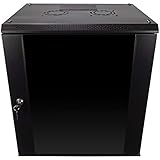
- DURABLE BUILD: Constructed from high-quality Cold Rolled Steel, the NavePoint Consumer Series 12U network cabinet boasts a sturdy, welded frame. Fitting EIA standard 19” networking equipment, this server cabinet confidently supports up to 110 lbs, providing a resilient base for your vital IT gear and equipment
- CONVENIENT DESIGN: This 12U cabinet features a reinforced, heat-treated, tempered glass front door with a security lock. Perfect for applications requiring both security and accessibility, its compact design of 17.72"L x 21.65"W x 24.42"H offers a practical solution for space-constrained settings.
- EASY & CUSTOMIZABLE EQUIPMENT SET UP - The 12U IT cabinet, with removable side panels and security locks, offers customization at its finest. Whether it's for an efficient device or cable management, this data cabinet ensures secure, adaptable configurations that suit your networking server requirements
- ENHANCED VENTILATION & SECURITY - Built-in fans and flow-through ventilation work to prevent overheating, ensuring optimal operation of your equipment. The reinforced, lockable tempered glass front door not only boosts security but also facilitates easy monitoring of installed equipment.
- SAFETY & COMPLIANCE - All NavePoint products are built to industry standards.
Who could benefit if Congress expands the credit?
- Semiconductor, packaging and equipment manufacturers.
- Transformer and other electrical-equipment producers.
- Specialized electrical-steel producers.
- AI-server and rack manufacturers.
- Data-center developers and owners.
- Construction, cooling, networking and power-system suppliers.
- Utilities and other infrastructure firms involved in qualifying projects.
Whether a benefit reaches an owner, lessee, operator, contractor or manufacturer would depend on the final statutory language. A U.S.-located data center also would not necessarily have a wholly domestic supply chain: chips, servers, transformers, cooling systems and steel could still be imported unless lawmakers add domestic-content or manufacturing requirements.
The policy trade-offs
Potential public benefits
An expanded credit could encourage factories and infrastructure that are currently expensive or risky to finance. Supporters could argue that domestic capacity improves resilience, shortens equipment lead times and strengthens national-security supply chains.
Questions for lawmakers
- Taxpayer cost: Applying a 25% or 35% credit to large data-center projects could reduce federal revenue substantially.
- Additionality: Policymakers would need to test whether subsidized projects would have been built without the credit.
- Concentration: The largest technology companies and their financing partners may be best positioned to capture the benefit.
- Definitions: “AI data center” and qualifying AI equipment would need objective, enforceable definitions.
- Energy and water demand: Faster construction could increase pressure on electricity generation, transmission, water systems and local infrastructure.
- Regional effects: Benefits may cluster where land, power, tax incentives and industrial capacity are already available.
- Program overlap: A broader Section 48D could intersect with CHIPS grants, Department of Energy loans, state incentives, depreciation and other federal credits.
- Technology neutrality: Congress could prefer support for general-purpose infrastructure rather than assets tied to one industry or company.
Why the request matters beyond OpenAI
The proposal would shift the policy debate from how to manufacture more chips to which parts of the entire AI infrastructure stack deserve federal support. That stack includes chips, packaging, servers, networking, cooling, electricity generation, transmission, data-center construction and skilled labor.
Its significance is therefore broader than any immediate tax benefit for OpenAI. Under current rules, no data-center credit is established. The larger question is whether the semiconductor incentive should become an AI-industrial-infrastructure incentive—and how lawmakers would protect taxpayers while ensuring that support creates U.S. production rather than simply subsidizing U.S. deployment.
The Bottom Line
OpenAI proposed expanding Section 48D to cover parts of the AI supply chain, including servers, transformers, specialized steel and data centers. As of August 18, 2026, that remains a proposal: current IRS guidance still limits the credit primarily to semiconductor and semiconductor-equipment manufacturing, and no specific federal commitment to OpenAI’s requested expansion is established.
Quick Recap
Product prices and availability are accurate as of the date/time indicated and are subject to change. Any price and availability information displayed on Amazon at the time of purchase will apply.




