Ocean freight generally costs less for long-distance container shipping, while rail can move freight faster on corridors such as China–Europe. The right choice depends on the full door-to-door quote and schedule—not just the headline freight rate or a transit estimate. A faster service is worth paying for only when the time saved matters enough to offset its premium and its own route and capacity risks.
How the cost comparison works
There is no current, route-independent price ratio that tells shippers what ocean or rail will cost. Rates depend on the origin and destination, cargo, service scope, capacity, and quote date. The available published comparisons illustrate the trade-off, but they are not current quotations.
As an Amazon Associate I earn from qualifying purchases.
A historical China–Europe comparison
The OECD / International Transport Forum’s ITF Transport Outlook 2019 says in its China–Europe discussion: “Although transport by rail is five times more expensive than transport by sea, it is about 1.7 times faster.” Treat that as a comparison published for that report and period—not as a current market rate, a universal multiplier, or a price estimate for a particular shipment. OECD / International Transport Forum, ITF Transport Outlook 2019.
Quick wins for a faster PC:
Fix the driver behind crashes, sound loss and screen glitchesFind Drivers →Repair Windows errors before they cause bigger problemsFix Now →Scan for outdated or missing drivers - takes under a minuteDriver Scan →What an older route study can—and cannot—show
A 2020 paper comparing one full-container-load (FCL) FEU scenario from Shanghai to Hamburg, using historical 2017 quotations, found sea to be the cheapest option in that scenario. That supports the limited point that ocean can win on line-haul cost; it does not establish what a shipper will pay now or what a different route will cost. Zhang and Schramm, “Assessing the market niche of Eurasian rail freight in the Belt and Road era”.
#1 Best Overall

- Digital shipping postal scale for weighing items; heavy duty yet lightweight, portable design
- Includes a postal scale and an AC adapter; black ABS with an aluminum anti-skid platform
- 660 pound (300kg) capacity reads to 0.11 pound/50g/2 ounce in 0.1 ounce increments; minimum load weight is 6 ounces (150g)
- Measuring units in kg, ounces, and pounds
- Additional separated large back-lit LCD display allows for reading the weighing data from a distance of up to 2m
Compare the same service scope
Compare current quotes for the same cargo, origin, final destination, and delivery requirements. Check what each total includes: pickup and delivery, terminal or port charges, handling, customs-related charges, surcharges, and insurance if applicable. Also check the quote’s validity period. A line-haul rate alone is not a door-to-door cost.
Transit times: check the endpoints
A freight-industry guide gives indicative China–Europe planning ranges of 15–22 days for rail terminal-to-terminal and 25–35 days for ocean port-to-port. These estimates stop at different endpoints, come from the guide rather than a guaranteed service commitment, and should not be compared as if they represented equivalent door-to-door journeys. HSIEHSHUN, “China–Europe Rail or Ocean Freight? Cost, Transit and the Break of Gauge”.
Rank #2

- Lightweight Postal Scale - Max. Capacity: 440lb/200kg, Min. Readability: 40g, Display Resolution: 10g. Features a Carbon Fiber platform paired with a durable ABS housing. Lightweight + sturdy, easy to clean, move, and store.
- Digital Shipping Scale - 3 weighing Modes: kg/lb/lb:oz. Separate large back-lit LCD display with adjustable/disable Auto-off. Easy to handhold or wall-mount with the included drywall anchors and screws.
- User Friendly Design - Ships pre-calibrated and can also be easily calibrated. Dual powered by 2 x AAA batteries or AC adapter (both included).
- Hold & Tare Function - Locks readings and removes container weight for multiple weighing needs. Ideal for post offices, warehouses, commercial and home use.
- Fuzion Support - We offer 2-Year Warranty and Lifetime Support for this digital scale. Full day service by our support team. We are always glad to help with all your questions or concerns.
Ask whether a quoted duration means sailing or train time, terminal-to-terminal, port-to-port, or door-to-door lead time. A full lead-time estimate may also need to account for origin pickup, consolidation and cutoff, terminal handling, border and customs processes, destination handling, and final delivery. Have the provider specify what is excluded and which milestones define the start and end of its estimate.
Outdated Drivers Are Slowing You Down
One free scan finds every outdated or missing driver and matches the right update for your exact hardware.Free scan · exact hardware matchPC Slower Than It Used to Be?
A free scan shows the junk files, broken settings and background clutter dragging Windows down - then fixes them in one click.Free scan · Windows 10 & 11How disruption risks differ
Ocean: maritime routes and chokepoints
Ocean schedules depend on available routes and maritime chokepoints. In its 2024 analysis, the OECD says the Suez Canal is the shortest sea route between Asia and Europe; for Shanghai–Rotterdam, it reduces transit time by about nine days, or 24%, compared with routing around the Cape of Good Hope. For Asia–East Coast North America, the report says the Panama Canal reduces travel time by 5–17 days, or 15–37%, versus the stated alternative routes. These are route comparisons, not forecasts of how long a future disruption would delay a shipment. OECD, Maritime transportation disruptions and international trade: Risks and Resilience in Global Trade (2024).
Rank #3
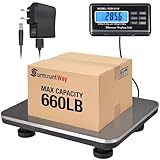
- 660lbs Capacity & 2 Readability Modes: The 660lbs shipping scale supports 2 selectable capacity/readability settings: 330lb× 0.1 lb (150 kg × 0.05 kg), 660 lb × 0.2 lb (300 kg × 0.1 kg). Press the C/R button to choose high-resolution mode for for small parcels and high-capacity mode for large packages. Supports 4 weighing units: LB, KG, OZ and lb: oz. Please clear all items and confirm zero reading before switching modes, and do not exceed the maximum load of your selected mode
- Easy to Use: 12*14 inch stainless steel platform with large backlit LCD display, making it easy to read. Notice: To ensure accurate and stable weight readings, please install all four leveling feet and place the scale on a level, even surface before use
- Adjustable Feet: The four adjustable anti-slip feet are designed to keep balance in the uneven ground surface, making the readout more accurate and protecting the floor from damage.
- Wide Application: Suitable for using in post office, warehouse, food industry, factory, express company or supermarket.
- Durability Surface: Reinforced stainless steel platform for anti-corrosion and long lifespan. It is super easy and convenient to clean with a wet or dry cloth.
Rail: corridor, border, and capacity dependencies
Rail avoids maritime canal passage on its rail leg, but it is not disruption-proof. The OECD has attributed improved reliability and reduced transit times for growing East Asia–EU rail flows to infrastructure improvements and more efficient handling, customs, and border crossings. Border processes, capacity, and network conditions remain part of the route’s risk profile. The sources do not establish a current, numeric head-to-head probability of delay for ocean versus rail. OECD / International Transport Forum, ITF Transport Outlook 2019.
Independent reader supportYour contribution helps us test, update, and keep practical guides available for everyone.Choose by the shipment’s total cost of time and transport
Mode choice involves cost, capacity, speed, reliability, and the type of goods being moved. For a specific shipment, weigh the transport quote against what faster or more dependable delivery is worth to the business. OECD, Mode Choice in Freight Transport (2022).
Rank #4

- Accurate Measurements: This digital scale offers a measuring range accuracy of 440LB/10g, providing reliable readings for your shipping needs. The minimum starting point of 150g allows for precise measurement of even lightweight items
- Versatile Usage: Suitable for a variety of settings including postal services, warehouses, markets, homes, and commercial establishments, this scale adapts to diverse weighing requirements
- Compact Design: Measuring at 11.69*9.68*1.06 inches and weighing just 0.98kg, our scale is compact and portable, making it convenient to use in different locations
- Convenient Functions: The keep and peel functions enhance usability, allowing for easy retention and removal of weight measurements as needed
- Stability: Equipped with four-corner sensors, this scale offers enhanced stability, ensuring a steady and reliable weighing experience.Whether you're shipping packages, managing inventory, or weighing goods for sale, our Precision Digital Shipping Scale is the ideal choice for accurate and efficient measurements
- Total door-to-door cost: Compare identical service scopes and inclusions, not just ocean or rail line-haul rates.
- Lead time and milestones: Match the same origin, destination, start point, and delivery endpoint; identify excluded processes.
- Cargo and capacity: Check whether the service can handle the shipment’s type, volume, weight, and handling constraints, and whether capacity is available.
- Delivery-window consequences: Estimate what a late or missed delivery would cost and how much schedule variability the shipment can tolerate.
- Route exposure: Consider relevant maritime chokepoints or rail border and corridor processes.
- Inventory tied up in transit: Include the cost of capital or working capital committed while goods are moving.
Estimate whether the time saved is worth the rail premium
Use your own shipment figures rather than a universal break-even rule. First, obtain current, same-scope quotes and calculate the rail premium over ocean. Then estimate the value tied up in the shipment, the days rail would actually save door-to-door, and the business cost of a late arrival. Compare the value of those saved days and avoided delay costs with the premium. If the transit estimates use different endpoints, resolve that difference before doing the calculation.
Recommended Free Tools
Quick Recap
Best Value

- Ultra-wide range & dual-precision: Perfect for both small parcels and heavy freight. Equipped with a high-density sensor, it features a 0.1-440 lb (200 kg) capacity with smart dual accuracy: 0.35oz high precision for small items (0.1-44 lb) to avoid overpaying postage, and 0.2 lb for heavy packages (45-440 lb).
- Backlit lcd screen: Say goodbye to blocked views from oversized boxes. The digital display is connected via a long, extendable coil cord, allowing you to mount it on the wall or hold it in hand. Never struggle to read weight numbers underneath massive cartons again. Features a clear blue backlight for easy reading. (Note: Please pull the screen out from the bottom before use).
- Upgraded type-c & dual power: Stay efficient with modern Type-C charging or battery power (Type-C cable and batteries included; adapter excluded). Plug it in for a permanent desktop shipping station to eliminate battery replacement costs, or use batteries for a mobile rolling-cart setup. Complemented by a 2-minute auto-shutdown feature to save energy.
- Smart tare & hold functions: Double your packing efficiency. The TARE function instantly zeros out the weight of empty boxes or pallets for 100% accurate net weight. The HOLD function locks the weight reading on the screen even after the package is removed, allowing a single operator to log data easily. Supports one-key toggle among kg, oz, lb, and lb:oz to match couriers.
- Heavy-duty commercial build: Rugged and reliable for high-volume everyday use. Built with a reinforced, low-profile structure (11.7x10x1.4 inches) to withstand rough daily drops in demanding workspaces. Ultimate scale for post offices, warehouses, and small businesses, yet sleek enough for home use or pet weighing.
What to ask before booking
- Confirm that both providers are quoting the same origin, final destination, cargo details, and delivery milestones.
- Request an itemized total and identify pickup, delivery, terminal or port handling, customs-related charges, surcharges, and any included insurance.
- Ask how the transit estimate is measured, what activities it excludes, and whether it is a planning range or a service commitment.
- Check available capacity, route or corridor dependencies, and what happens operationally if a milestone is missed or service is disrupted.
- Compare the rail premium with the shipment-specific value of shorter transit and the consequences of missing the delivery window.
Product prices and availability are accurate as of the date/time indicated and are subject to change. Any price and availability information displayed on Amazon at the time of purchase will apply.




