Quick wins for a faster PC:
Clear out junk files and repair common Windows errorsFree Scan →Scan for outdated or missing drivers - takes under a minuteDriver Scan →Repair Windows errors before they cause bigger problemsFix Now →NVIDIA’s January 2025 announcement named four healthcare collaborators—IQVIA, Illumina, Mayo Clinic and Arc Institute—with projects spanning life-sciences workflows, genomic analysis, digital pathology and biology models. The announcement described collaborations and plans, not demonstrated clinical results. A later June 2025 collaboration with Novo Nordisk extends the drug-discovery theme.
What NVIDIA announced in January 2025
At the J.P. Morgan Healthcare Conference on January 13, 2025, NVIDIA outlined four distinct collaborations. They are aimed at professional research and healthcare organizations, rather than consumer products. The projects use different data and technologies, so they are best understood as separate workstreams—not as a single product or a head-to-head comparison.
NVIDIA characterized healthcare and life sciences as a $10 trillion industry. That is the company’s estimate in its announcement, not an independently validated market-size figure in the cited material. The release also cautioned that statements about expected benefits, impact, availability, performance, adoption and third-party offerings are forward-looking and may differ materially from expectations.
How the four partnerships differ
| Partner | Focus | Data or modality | Announced work |
|---|---|---|---|
| IQVIA | Research and clinical-development workflows | Clinical and operational information | Custom foundation models and agentic AI solutions |
| Illumina | Genomic analysis and multiomics | Genomic and other omics data | Planned availability of DRAGEN analysis software on NVIDIA accelerated computing within Illumina Connected Analytics, plus further model and multiomics work |
| Mayo Clinic | Digital pathology | Whole-slide images and associated patient records | Pathology foundation-model development, with planned deployment of NVIDIA DGX Blackwell systems and MONAI |
| Arc Institute | Foundational biology research | DNA, RNA and protein modalities | Models intended to generalize across modalities, with research applications including drug discovery and disease |
The descriptions and plans in the table come from NVIDIA’s January 2025 announcement; they do not establish that the intended systems have improved research speed, diagnosis or patient outcomes.
#1 Best Overall

- PLEASE NOTE: Exporting an NVIDIA RTX Pro 6000 GPU outside the US requires strict adherence to the U.S. Export Administration Regulations (EAR) and issuance of an export license from the Bureau of Industry and Security (BIS). Compliance and Know Your Customer (KYC) screening may be required as a condition of order acceptance. [NVIDIA Blackwell Streaming Multiprocessor] The new SM features increased processing throughput, and new neural shaders that integrate neural networks inside of programmable shaders | DLSS 4: Multi Frame Generation ensures ultra-smooth frame pacing for lifelike simulations.
- [Double-Flow-Through Design] The RTX PRO 6000 Blackwell features a double-flow-through cooling design, optimizing efficiency and airflow to sustain peak performance under 600W power loads. | [5th Gen Tensor Cores] Deliver up to 3X the performance of the previous generation and support for FP4 precision for faster AI model processing times with reduced memory usage, enabling local fine-tuning of LLMs and generative AI | [4th Gen Ray Tracing Cores] Double the ray-triangle intersection rate of the previous generation to create photoreal, physically accurate scenes and immersive 3D designs with RTX Mega Geometry, which enables up to 100X more ray-traced triangles.
- [PCIe Gen 5] Support for PCIe Gen 5 provides double the bandwidth of PCIe Gen 4, improving data-transfer speeds from CPU memory and unlocking faster performance for data-intensive tasks like AI, data science, and 3D modeling. | [GDDR7 Memory] With 96 GB of GPU memory and 1.8 TB ps bandwidth, it can tackle massive 3D and AI projects, fine-tune AI models locally, explore large-scale VR environments, and drive larger multi-app workflows.
- [DisplayPort 2.1] Achieve unparalleled visual clarity and performance, driving high resolution displays at up to 8K at 240 Hz and 16K at 60 Hz. Increased bandwidth enables seamless multi-monitor setups while HDR and higher color depth support ensures superior color accuracy for precision work, such as video editing, 3D design, and live broadcasting.
- [Universal MIG] Divide a single RTX PRO 6000 Blackwell into multiple isolated instances, each with dedicated resources, allowing for concurrent execution of multiple workloads, optimized GPU utilization, and secure isolation of different applications or users. [WARRANTY] 3 YR Manufacturer's Warranty. Bulk OEM Packaging. Retail Packaging is NOT included.
IQVIA: models and agents for life-sciences workflows
NVIDIA said IQVIA was using NVIDIA AI Foundry to build custom foundation models drawing on IQVIA information and domain expertise. NVIDIA cited more than 64 petabytes of IQVIA information as the basis for the models. The figure is NVIDIA’s description, not an independently audited measure in the cited announcement.
The companies also described agentic AI solutions built with NVIDIA AI Enterprise, NIM microservices and Blueprints. Their intended areas include research, clinical development and access to treatments. An NVIDIA-authored IQVIA blog describes possible clinical-trial support such as selecting trial sites, recruiting participants, preparing regulatory submissions, and coordinating communications between study sites and sponsors. These are proposed support areas; the announcement does not show that the agents have automated those tasks or improved trial results.
Illumina: genomic analysis and multiomics
The companies planned to make Illumina’s DRAGEN analysis software available on NVIDIA accelerated computing within Illumina Connected Analytics. NVIDIA said the aim was to expand access to DRAGEN wherever NVIDIA computing was available. They also planned further multiomics analysis and biology foundation-model work for research and pharmaceutical workflows.
Illumina’s chief technology officer, Steve Barnard, said, “Our ability to combine the power of AI with multiomics data is revolutionizing how we can understand disease.” That is the executive’s characterization of the opportunity, not an independently established finding about results from this announced integration.
Free tools Windows power users keep installed
One-click scans. No signup required.
Rank #2

- NVIDIA Volta GV100 Architecture — 4,608 CUDA Cores, 640 1st-Gen Tensor Cores delivering 14 TFLOPS FP32 and 112 TFLOPS deep learning performance for AI training, inference, HPC, and scientific computing workloads
- 32GB HBM2 ECC Memory — 900 GB/s Bandwidth — High-bandwidth memory on a 4096-bit bus with ECC error correction provides the memory capacity and throughput required for the largest AI models, simulations, and datasets
- PCIe 3.0 x16 Interface — 250W TDP — Standard PCIe Gen3 connectivity with passive cooling designed for enterprise rack server deployment in HPE ProLiant, Dell PowerEdge, and Supermicro platforms with adequate chassis airflow
- NVLink — Scale to 96GB Unified Memory — Connect two V100 GPUs via NVLink at 300 GB/s bi-directional bandwidth to scale GPU memory from 32GB to 96GB for larger AI training and HPC workloads
- Multi-Precision Computing — Supports FP64 (7 TFLOPS), FP32 (14 TFLOPS), FP16 (112 TFLOPS) and INT8 precision modes for flexible deployment across training, inference, and scientific simulation workloads
Mayo Clinic: pathology foundation models
NVIDIA reported that Mayo Clinic’s digital pathology dataset included 20 million whole-slide images and 10 million associated patient records. Mayo Clinic was planning to deploy NVIDIA DGX Blackwell systems and MONAI for pathology foundation-model development. NVIDIA reported 1.4TB of GPU memory per DGX Blackwell system.
The announcement describes model development, not a validated diagnostic system. It does not establish that a model independently diagnoses patients or improves care. The dataset and hardware figures are those reported by NVIDIA in January 2025.
Arc Institute: models spanning biology
Arc Institute and NVIDIA said they were collaborating to develop and share biology models and tools. Their stated goal was to create models that could generalize across DNA, RNA and protein modalities, with possible applications in drug discovery, synthetic biology, disease research and evolution. NVIDIA said it would contribute large-scale model-development expertise, BioNeMo on DGX Cloud, NIM microservices and Blueprints.
Generalizing across biological data types is the research aim; the announcement does not establish that the models have achieved it or produced new treatments.
Rank #3
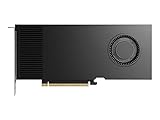
- Professional GPU with Blackwell Architecture
- Blackwell Architecture
- 24GB GDDR7 with PCIe 5.0 & Ray Tracing
- AI Workstation
What changed with the June 2025 Novo Nordisk collaboration
On June 11, 2025, NVIDIA announced a collaboration with Novo Nordisk connected to DCAI’s Gefion sovereign AI supercomputer. The companies said they aimed to create customized models and agents for early research and clinical development and to explore simulation and physical AI. The announced software included BioNeMo, NIM, NeMo and Omniverse.
This is a later example of NVIDIA’s work in drug discovery and development. It is separate from the four January partnerships and is not evidence that those earlier projects achieved their intended results.
What the announcements do—and do not—establish
Together, the announcements show how NVIDIA is positioning accelerated computing, model-development tools and AI software for institutional life-sciences work. The stated ambitions range from supporting trial workflows to analyzing genomic data and developing models of biological systems.
- They establish announced collaborations and intended work. The source material describes plans, integrations and development goals.
- They do not establish clinical efficacy. The cited announcements provide no independent evaluation demonstrating improved diagnosis, treatment, patient outcomes or drug-discovery success.
- They are not comparable performance trials. The partners address different workflows, data types and deployment environments; no head-to-head results are reported.
NVIDIA healthcare vice president Kimberly Powell said, “AI offers an exceptional opportunity to advance healthcare and life sciences with tools that help providers detect diseases earlier and discover new treatments faster.” The statement expresses the company’s view of AI’s potential; it should not be read as a report that the collaborations have already delivered those outcomes.
What’s actually slowing this PC down?
Pick the symptom - the matching free tool is one click away.
Quick Recap
Sources
- NVIDIA’s January 13, 2025 announcement of healthcare and life-sciences collaborations
- NVIDIA’s IQVIA blog on generative AI and clinical-trial workflows
- NVIDIA’s June 11, 2025 announcement of its Novo Nordisk collaboration
Product prices and availability are accurate as of the date/time indicated and are subject to change. Any price and availability information displayed on Amazon at the time of purchase will apply.




