Recommended Free Tools
Yes, Nvidia has begun shipping some AI chips to China, but this is a narrow, conditional reopening—not a return to unrestricted sales. As of July 14, 2026, a U.S. official said very few H200 chips had shipped to China or Hong Kong. The H200 shipments followed customer-specific U.S. licensing and other conditions; they do not establish that every Chinese buyer can purchase Nvidia products or that the company is again earning substantial revenue from China.
What has actually resumed?
The clearest evidence of a reopening is the reported start of H200 shipments. A U.S. official told Reuters on July 14, 2026, that very few H200 chips had begun shipping to China or Hong Kong. That confirms an initial physical movement of product, not a broad return to the market. Reuters reporting carried by Investing.com described the volume as very small.

Several milestones are easy to confuse: a policy signal is not a license; a license is not an order; an order is not a shipment; and a shipment is not necessarily a sale already recognized as revenue. Nvidia has crossed into limited H200 shipments, but public evidence does not establish the total number of licensed or delivered units, completed import clearance for all customers, or a material, recurring China revenue stream.
- Policy permission: Washington signals that a category of exports may be allowed.
- License: The government authorizes exports under specified customer and product conditions.
- Order: A customer commits to buying, subject to the applicable conditions.
- Shipment and import: Chips physically move and are permitted into the destination market.
- Revenue: Nvidia records the transaction under its accounting rules.
- Sustained business: Deliveries and revenue continue at commercially meaningful scale.
“China” in export-control reporting can include Hong Kong and Macau as covered destinations, but those places should not automatically be treated as identical markets. Nvidia’s filings describe controls that may turn on product performance and technical characteristics, customer location, and ultimate-parent ownership. Nvidia’s fiscal 2026 filing sets out the company’s account of these restrictions.
Do these 3 things before closing this tab:
1Clear out junk files and repair common Windows errors2Fix the driver behind crashes, sound loss and screen glitches3Repair Windows errors before they cause bigger problems#1 Best Overall

- Standard Memory: 40 GB
- Host Interface: PCI Express 4.0
- Cooler Type: Passive Cooler
- Product Type: Graphics Card
How the reopening unfolded
April 2025: H20 exports require licenses
On April 9, 2025, the U.S. government informed Nvidia that H20 exports to China and certain related destinations required a license. H20 was a China-focused, reduced-performance accelerator designed around earlier export-control limits. Nvidia recorded a $4.5 billion charge in fiscal Q1 2026 related to excess H20 inventory and purchase obligations. The charge illustrates the financial risk of building products for a market that can be cut off by policy changes. Nvidia’s filing for the period describes the restriction and charge.
July–August 2025: H20 licenses are signaled and granted
In July 2025, the U.S. administration told Nvidia it expected to approve H20 export licenses, reversing the effective blockage. Nvidia said it planned to resume sales once licenses were available. TechCrunch reported the July announcement. Licenses for certain shipments to specific China-based customers were granted in August, but the authorization was not a blanket approval for all buyers.
Nvidia later reported approximately $60 million in H20 revenue under those licenses. That figure is evidence of some completed business, not proof of a broad recovery. U.S. officials also expressed an expectation that the government would receive 15% or more of revenue from some licensed sales; Nvidia said that expectation was not codified in a regulation. It should not be described as a formal statutory tax or a universally applicable charge. Nvidia’s filing discusses both the reported H20 revenue and the revenue-sharing issue.
Rank #2

- GPU processor: NVIDIA RTX A5500
- CUDA cores: 10240
- 24GB GDDR6 ECC Graphics Memory
- System Interface: PCI-Express 4.0 x16
- 1 x DisplayPort to HDMI adapter
China’s response complicates H20 demand
U.S. permission did not guarantee Chinese customer acceptance. Nvidia’s filings say Chinese authorities questioned whether H20 products contained security vulnerabilities and discouraged purchases. Reports in August 2025 described guidance urging companies to avoid H20, particularly for government and national-security-related work. The scope should be treated as reported guidance, not as evidence of a universally applicable nationwide ban. Nvidia’s quarterly filing discusses the company’s account of Chinese concerns.
What’s actually slowing this PC down?
Pick the symptom - the matching free tool is one click away.
January–February 2026: H200 gets a conditional path
The U.S. authorized limited H200 exports subject to conditions that included adequate U.S. supply, inspection, and customer-specific licensing. Nvidia described its authorization as covering small amounts for specific China-based customers and said it had not generated revenue under the H200 program at the time of its fiscal 2026 filing. The approval was therefore a policy opening, not proof of sales. The Associated Press reported on the conditional approval, and Nvidia’s filing describes its licensing status.
March–July 2026: Production restarts; a few shipments follow
In March, CEO Jensen Huang said Nvidia was restarting H200 production for China and had orders and licenses from Chinese customers. That showed preparation for commercial deliveries, not substantial shipments or recognized revenue. Axios reported Huang’s comments. By July 14, a U.S. official said very few H200 chips had shipped to China or Hong Kong. The shift from production plans to a small number of shipments is meaningful, but it remains far short of a normal commercial flow.
H20 and H200 are not interchangeable
The product distinction matters because the H200 is a much more capable Hopper-generation accelerator than the H20. H20 was designed as a reduced-performance product for China under earlier controls; H200’s greater capabilities make its authorization more consequential and more politically sensitive. Media comparisons have described H200 as several times more capable in relevant AI workloads, but any ratio depends on the workload, memory configuration, software, and system design. It is not a universal performance multiplier. Tom’s Hardware’s coverage discusses the customer orders, licenses, and manufacturing restart.
Neither development means Nvidia can freely export all its GPUs or systems to China. The available evidence concerns specific H20 or H200 permissions. It does not establish general authorization for Blackwell, Rubin, or every other advanced Nvidia product. Export eligibility can depend on several technical measures—including processing performance, performance density, interconnect and memory bandwidth—as well as who will receive and ultimately own the product.
What the sales mean for Nvidia’s finances
The potential upside is access to some demand for AI infrastructure and a way to preserve customer and developer relationships. China has been an important market for AI computing, but policy restrictions have disrupted Nvidia’s sales there. The $4.5 billion H20-related charge shows how quickly inventory and purchase commitments can become costly when export rules change. The later $60 million H20 revenue figure shows that licenses did result in some recorded sales, while Nvidia’s filing said the H200 program had generated no revenue at the time of that filing.
Rank #4
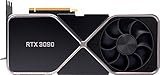
- Chipset: NVIDIA GeForce RTX 3090
- Video Memory: 24GB GDDR6X
- Memory Interface: 384-bit
- Output: DisplayPort x 3 (v1.4a) / HDMI 2.1 x 1
- Nvidia India 3 Year *
Those figures cannot be added together as if they describe the same product, period, or stage of the process: the charge related to H20 inventory and purchase obligations; the $60 million was H20 revenue under later licenses; the H200 filing statement concerned revenue under a separate, newer licensing program. The few H200 shipments reported in July do not by themselves establish how much Nvidia has recognized or will recognize in revenue.
Even if shipments grow, their financial importance will depend on licensed quantities, customer demand, import clearance, pricing, and the costs and conditions attached to sales. Inspections, compliance work, tariffs, support limitations, or a revenue-sharing arrangement could reduce the commercial value. If Nvidia’s supply is constrained, China deliveries could also compete with sales to customers in other regions. The company has warned that licensed sales may remain operationally difficult or commercially unattractive in some circumstances. Its fiscal 2026 filing discusses these risks.
For investors, total company growth is not a reliable proxy for a China recovery. Nvidia can report strong results overall while China sales remain restricted or small. The relevant evidence is China revenue disclosed by the company, H200 shipment scale, and whether those deliveries recur—not the mere existence of an export license or a global revenue increase.
The Tool Desk
Outbyte PC Repair FREEClear out junk files and repair common Windows errorsFree Scan →Outbyte Driver Updater FREEFix the driver behind crashes, sound loss and screen glitchesFind Drivers →Best Value

- Graphics Card Interface: Pci E
Why China’s choices matter as much as Washington’s
A U.S. export license permits a transaction under U.S. rules; it does not require a Chinese company to buy the chip or guarantee that Chinese authorities will allow its use in every setting. Reported discouragement of H20 purchases may push buyers toward domestic products even when U.S. permission exists.
Chinese firms have invested more heavily in domestic accelerators as restrictions continued. Huawei is among the prominent alternatives, but the evidence does not show that any one supplier has universally replaced Nvidia. Nvidia itself identifies semiconductor suppliers in China, Europe, and Israel as potential competitors. Switching involves more than comparing peak chip performance: buyers must weigh supply availability, power efficiency, software compatibility, developer tools, networking, and the cost of adapting systems. The Associated Press has reported on Nvidia’s stalled China sales and domestic competition.
For Nvidia, maintaining access could help preserve an installed base and its broader software and systems ecosystem. For China, H200 access could offer short-term computing capacity, while dependence on a politically controlled supply creates cutoff risk. For Washington, licensing may keep some U.S. technology and commercial relationships in the market, but it also raises the security question of whether more capable processors could advance Chinese AI development. The policy is therefore a trade-off, not a straightforward victory for any side.
What to watch next
- More licenses and their scope: Whether approvals expand beyond the specific customers and small amounts described so far.
- Deliveries and import clearance: Whether authorized buyers actually receive and can deploy H200 systems, and whether shipment volumes rise beyond the few reported in July.
- Company-reported revenue: Whether Nvidia reports meaningful, recurring China revenue or H200 sales in future filings and guidance.
- Conditions and costs: Whether inspection requirements, tariffs, support limits, or any revenue-sharing expectation become clearer or more burdensome.
- Policy on both sides: Whether Washington changes export rules again and whether Chinese procurement guidance favors domestic accelerators over Nvidia products.
- Competitive substitution: Whether Huawei and other local suppliers gain share as buyers adapt software and infrastructure to non-Nvidia chips.
The available reporting does not establish the full H200 customer list, total licensed or shipped units, whether every shipment has cleared Chinese import procedures, or whether the reported 15% revenue-sharing expectation is enforceable. It also cannot establish whether the current licensing approach will last.
Quick Recap
Product prices and availability are accurate as of the date/time indicated and are subject to change. Any price and availability information displayed on Amazon at the time of purchase will apply.




