Nike’s factories recovered faster than its end-to-end supply chain. In fiscal 2022, the company said nearly all suppliers were operating without restrictions and factory output had risen above pre-closure levels. But shipping delays, uneven product availability, rising inventory and elevated logistics costs persisted. That makes “recovered” accurate for manufacturing capacity, not a claim that every supply problem was fixed.
What happened to Nike’s supply chain?
In the first quarter of fiscal 2022, government-mandated COVID-19 closures affected most of Nike Brand and Converse’s contract manufacturers in Vietnam and Indonesia. Nike estimated that it lost approximately three months of production, affecting product supply throughout the fiscal year. The estimate describes production lost; it does not mean every factory was closed for exactly three months.
Nike’s sourcing concentration helps explain why closures in those countries mattered. In fiscal 2021, 51% of Nike Brand footwear and 30% of Nike Brand apparel were manufactured in Vietnam. Indonesia accounted for 24% of footwear and less than 12% of apparel. These are Nike-reported shares of its own production, not of global footwear or apparel manufacturing. (Nike FY2022 Form 10-Q)
Factory interruptions coincided with longer inventory transit times. Nike attributed the delays to port congestion, transportation disruption, and labor and container shortages. Together, lost production and slower shipping constrained product supply, particularly in wholesale, while transportation, logistics and fulfillment costs rose.
#1 Best Overall
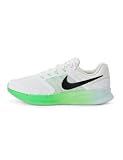
- Mesh on upper adds breathability.
- Flywire cables provide a supportive feel when you tighten the laces.
- Plush foam midsole cushions each step.
- Grooves on the rubber outsole help your foot move naturally.
- DR2695-114
Why were Nike shoes out of stock in some places but not others?
The disruption did not affect every market at the same time or in the same way. Nike said North America and EMEA entered FY2022’s second quarter with elevated inventory already in transit. Greater China and APLA had less available inventory; Nike linked revenue declines in those regions in part to lower inventory after factory closures. Goods already moving through the supply chain could temporarily soften shortages in some markets even as others faced tighter availability. That was a snapshot of regional inventory at a particular point, not a general rule that one region was better protected.
How did Nike respond to the factory shutdowns?
Nike said it applied its operational playbook, including shifting production capacity to other countries, using air freight strategically and taking a “seasonless” approach to products. In its fiscal 2022 year-end account, the company also cited balancing inventory across geographies and pricing actions. Nike did not quantify how much each measure contributed to the recovery, so their individual effects cannot be separated from the available company reporting. (Nike FY2022 Form 10-K)
Rank #2

- Mesh on upper adds breathability.
- Foam midsole delivers a soft ride.
- Flex grooves create a cushioned effect for your run.
- Waffle outsole is a made of a durable, flexible material that helps keep you on the move.
- HM9594-004
What recovered—and what problems remained?
The clearest sign of operational recovery came in Nike’s FY2022 Form 10-K: by fiscal year-end, nearly all of its supplier base was operational without restrictions, and factory production exceeded pre-closure levels. That is evidence that manufacturing capacity had rebounded. It does not establish that products were moving through ports and distribution networks at normal speeds.
In fact, extended transit times continued to leave inventory in transit. Nike reported $8.4 billion in inventory at the end of FY2022, up 23% from FY2021. Elevated transportation, logistics and fulfillment costs also partially offset margin improvement. Factory output had recovered, but inventory placement and delivery costs were still under pressure. (Nike FY2022 Form 10-K)
Rank #3
- Mesh on upper adds breathability.
- Foam midsole delivers a soft ride.
- Flex grooves create a cushioned effect for your run.
- Waffle outsole is a made of a durable, flexible material that helps keep you on the move.
- HM9594-004
Did Nike’s financial results prove the supply chain was fixed?
No. Nike reported FY2022 revenue of $46.7 billion, up 5%, and gross margin of 46.0%, an increase of 120 basis points. NIKE Direct revenue rose 14% on a reported basis, or 15% currency-neutral, and digital revenue grew 18%. Those results show the business grew during the disruption; they do not show that supply constraints were harmless or that any one recovery measure worked.
Nike attributed some margin improvement to direct-channel mix, full-price sales and foreign exchange. Higher freight and logistics costs, along with Greater China inventory obsolescence reserves, were among the offsets. Revenue and margin therefore need to be read alongside factory operations, inventory, availability and costs—not treated as a stand-alone supply-chain scorecard. (Nike FY2022 full-year results)
Rank #4

- Mesh on upper adds breathability.
- Foam midsole delivers a soft ride.
- Flex grooves create a cushioned effect for your run.
- Waffle outsole is a made of a durable, flexible material that helps keep you on the move.
- HM9594-001
How to judge whether a supply-chain recovery is complete
Nike’s FY2022 experience shows why a single recovery headline can be misleading. A practical assessment separates three measures:
- Production: Are suppliers operating, and has factory output returned to or exceeded its previous level?
- Availability and movement: Are goods reaching the right markets and sales channels on time, with inventory balanced rather than stuck in transit or scarce in particular regions?
- Cost and financial effects: Are freight and fulfillment costs, markdowns and inventory reserves easing, as well as revenue and margins holding up?
By the end of FY2022, Nike’s reporting supported recovery on the first measure, while its disclosures showed unresolved pressure on the second and third. Nike’s CFO Matt Friend described the challenge in December 2021 as “short-term supply challenges” while discussing the company’s Consumer Direct Acceleration strategy. That was Nike’s contemporaneous statement of its focus, not independent evidence that the strategy resolved the disruption. (Nike FY2022 second-quarter results)
Quick wins for a faster PC:
Clear out junk files and repair common Windows errorsFree Scan →Scan for outdated or missing drivers - takes under a minuteDriver Scan →Best Value

- The mesh upper offers a comfortable, breathable feel.
- The foam midsole delivers intuitive cushioning through comfort-focused rocker geometry.
- The outsole has an intuitive Nike design and flex grooves in the forefoot that create a comfortable and cushioned effect as you run.
- Touch points at the heel and tongue create a natural feel as you take the shoes on and off.
- HJ9198-002
What the evidence says about Nike’s recovery
The documented rebound is specifically a FY2022 story: after pandemic-related factory closures in Vietnam and Indonesia, Nike reported that supplier operations had largely resumed and factory output exceeded pre-closure levels. Its own filings also show why that was not the same as a fully normalized supply chain: transit delays, regional inventory differences and elevated logistics costs remained. These figures and explanations come primarily from Nike filings and investor releases; they do not establish that the problems were permanently resolved after FY2022.
Quick Recap
Product prices and availability are accurate as of the date/time indicated and are subject to change. Any price and availability information displayed on Amazon at the time of purchase will apply.




