NFTs can be used to represent education credentials, but they are not what makes a credential trustworthy. A verifiable education credential can be signed and checked under standards such as Open Badges 3.0 without being minted as an NFT or placed on a blockchain. For learners, schools, and employers, the key questions are who issued it, what achievement it records, whether its signature and status can be verified, and whether the receiving wallet or verifier supports its format.
What an education NFT does—and does not—mean
An NFT is one possible implementation choice for representing or anchoring a digital certificate. It is not synonymous with an education credential, a digital badge, or proof of learning. Open Badges 3.0 (OBv3), the current education and skills credential format aligned with the W3C Verifiable Credentials Data Model 2.0, defines signed credentials, identifiers, proofs, evidence, status mechanisms, and APIs. It does not prescribe an NFT minting process, token contract, blockchain network, wallet transaction, gas payment, or marketplace listing. See the Open Badges 3.0 specification and the W3C Verifiable Credentials overview.
That distinction matters when evaluating claims. A blockchain record may help preserve or point to data, but it does not, by itself, prove that a student completed a course, that a school is accredited, or that an achievement is accepted by employers. Cryptographic verification can establish that credential data has not been tampered with and that it was signed by the issuer associated with the credential; it cannot independently establish the truth or quality of the underlying education.
Open Badges can describe degrees, certificates, microcredentials, skills, competencies, participation, and professional certifications. The format is generally represented as JSON or JSON-LD and may also have a PNG or SVG visual image carrying badge data. A Comprehensive Learner Record (CLR) is a signed collection of achievement credentials and does not require a badge image. These are data formats and credential structures, not a requirement to issue tokens on a chain. See 1EdTech’s Open Badges overview and the OBv3 implementation guide.
Crashes, No Sound, or Screen Glitches?
Random freezes, missing sound and display glitches usually trace back to one bad driver. Find and replace yours safely.Free scan · under a minutePC Slower Than It Used to Be?
A free scan shows the junk files, broken settings and background clutter dragging Windows down - then fixes them in one click.Free scan · Windows 10 & 11#1 Best Overall

- Proven security at scale: Over 9 years and millions of cards issued with no known remote hacks, while military‑grade EAL6+ security keeps your private keys locked inside the chip. Your cryptocurrencies stay strongly protected from online attackers.
- Tap once to manage your entire crypto wallet across 90 blockchains - no USB cables or Bluetooth, no batteries, no setup. Access 14,100+ coins & tokens, DeFi, NFTs, and staking instantly from your phone
- Smart backup: Use your second Tangem Wallet as your Backup keys with end‑to‑end encryption; no more papers, pictures. If one card is lost, the remaining can still restore full access, with an optional seed phrase available for advanced users.
- Engineered to last up to 25 years: Waterproof (IP69K), shockproof and tested for extreme temperatures from −25°C to 50°C. A durable cold wallet with long‑term protection and independently audited security.
- Trusted by 6 million users worldwide - buy, sell, swap, stake, and spend cryptocurrency directly. The secure offline storage wallet designed for how people actually use crypto wallets
How a verifiable credential works
The issuer creates and signs it
An issuer defines its identity and the achievement, identifies the recipient, creates an individual credential, signs it using a supported proof method, and makes it available to the recipient. In OBv3, an individual achievement is represented as an OpenBadgeCredential or AchievementCredential with a single recipient in credentialSubject. The issuer’s signature makes later changes detectable and allows a verifier to check the credential against the issuer’s public verification information.
The recipient presents it
A Verifiable Credential (VC) is a tamper-evident credential that can be cryptographically verified against its issuer. A Verifiable Presentation (VP) is a presentation of one or more credentials whose authorship can also be checked. A learner might share the credential file or present it through a wallet; the receiving employer, school, or platform checks the proof and any applicable status information. The exact exchange depends on the issuer, wallet, and verifier rather than a universal NFT workflow. OBv3’s definitions and conformance details are in its conformance and certification guide.
The proof has limits
A valid signature supports claims about integrity and issuer control; it does not establish the issuer’s accreditation or the value of the program. OBv3 also supports EndorsementCredential for third-party endorsement of an issuer, program, or achievement, a separate signal from the signature on a credential. A verifier still needs to decide what issuer and achievement it accepts.
Rank #2

- EAL5+ CERTIFIED SECURE ELEMENT + FINGERPRINT PROTECTION — Your private keys stay encrypted offline on a certified EAL5+ chip, the same security tier used in EMV bank cards. Built by DCENT, securing crypto since 2018. Fingerprint authentication adds a second layer no PIN-only wallet can match.
- 10,000+ ASSETS NATIVE ON 100+ BLOCKCHAINS — Hold Bitcoin, Ethereum, XRP, Solana, Cardano, popular stablecoins (USDT, USDC), and NFTs in one wallet. No third-party apps, no fragmented setup — every supported asset works straight out of the box.
- TAP-TO-SIGN MOBILE EXPERIENCE — Pair your wallet with the DCENT mobile app over Bluetooth. Manage tokens, review transactions, and access in-app swap features directly from your phone — no cables, no desktop required.
- WEB3 & dAPP ACCESS VIA METAMASK — Connect to MetaMask and other browser extension wallets to manage NFTs, claim airdrops, and access dApps. A large screen and intuitive 4-button interface keep every transaction clearly visible before you sign.
- SEAMLESS FIRMWARE UPDATES & 30-DAY MONEY-BACK GUARANTEE — Apply security updates without resetting your wallet or migrating funds. Backed by Amazon's 30-day money-back guarantee — your purchase is risk-free.
Comparing the main credential approaches
| Approach | What it means | What it does not establish by itself |
|---|---|---|
| Open Badges 3.0 / Verifiable Credential | A standards-based, signed credential that can be independently verified using its proof and issuer information. | That every wallet accepts it, that the issuer is accredited, or that the data must be on a blockchain. |
| Blockchain-anchored credential | A credential or reference is associated with a blockchain implementation; it may still use VC or Open Badges structures. | That the credential is an NFT, that the underlying achievement is true, or that the record is impossible to revoke or update. |
| NFT certificate | A certificate is represented using a particular token contract and blockchain implementation. | Conformance with OBv3, a supported revocation mechanism, issuer legitimacy, wallet compatibility, or marketplace acceptance. |
These approaches are not mutually exclusive: a credential can use a VC standard and also be blockchain-anchored or NFT-based. Conversely, a signed credential can work without a public blockchain. The UNECE guidance on Verifiable Credentials describes digital signatures, privacy-preserving verification, independent verification, and revocation as properties that do not require the credential to be an NFT or stored on a public chain.
The Tool Desk
Outbyte PC Repair FREEClear out junk files and repair common Windows errorsFree Scan →Outbyte Driver Updater FREEFix the driver behind crashes, sound loss and screen glitchesFind Drivers →What changed with Open Badges 3.0
OBv3 is the current Open Badges version covered by the 1EdTech materials. Its implementation guide is Spec Version 3.0, Document Version 2.1, issued June 15, 2026; its conformance and certification guide is Spec Version 3.0, Document Version 1.5, also issued June 15, 2026. OBv3 and CLR 2.0 are major releases whose object models are not backwards-compatible with their predecessors. OB2’s terms also changed: the older “Assertion” maps to the newer credential structure, and “BadgeClass” maps to “Achievement.” The current terminology and migration discussion are in the implementation guide.
An OB2 credential does not automatically become an OBv3 credential. One migration approach can place an OBv3-formatted credential in a CLR 2.0 package and include a reference to the original OB2 credential as evidence; this is a conversion strategy, not native backward compatibility. An issuer that needs older systems to work may publish related OB2 and OB3 representations separately.
Rank #3

- Proven security at scale: Over 9 years and millions of cards issued with no known remote hacks, while military‑grade EAL6+ security keeps your private keys locked inside the chip. Your cryptocurrencies stay strongly protected from online attackers.
- Tap once to manage your entire crypto wallet across 90 blockchains - no USB cables or Bluetooth, no batteries, no setup. Access 14,100+ coins & tokens, DeFi, NFTs, and staking instantly from your phone
- Smart backup: Use your second Tangem Wallet as your Backup keys with end‑to‑end encryption; no more papers, pictures. If one card is lost, the remaining can still restore full access, with an optional seed phrase available for advanced users.
- Engineered to last up to 25 years: Waterproof (IP69K), shockproof and tested for extreme temperatures from −25°C to 50°C. A durable cold wallet with long‑term protection and independently audited security.
- Trusted by 6 million users worldwide (4.9 App Store, 4.8 Google Play) - buy, sell, swap, stake, and spend cryptocurrency directly. The secure offline storage wallet designed for how people actually use crypto wallets
Wallet support is also version-specific. MIT’s Learner Credential Wallet documentation says that wallet accepts only credentials following OBv3; that is a rule for that wallet, not a general rule for every wallet. Check the intended recipient’s format and proof-method requirements before issuing or sharing a credential. See MIT’s wallet and OBv3 guidance.
What an issuer needs to implement
There is no universal dashboard path or button for issuing an NFT education credential. Standards specify credential structures, APIs, proofs, status mechanisms, and conformance tests; individual issuing platforms choose their own user interfaces. For an OBv3 issuer, the core work is to:
Quick wins for a faster PC:
Fix the driver behind crashes, sound loss and screen glitchesFind Drivers →Clear out junk files and repair common Windows errorsFree Scan →- Define the issuer profile. Publish the issuer identity and the information verifiers need to associate the credential with that organization.
- Define the achievement. Describe what the credential recognizes, such as a skill, course completion, or certification.
- Identify the recipient and create the credential. Produce a valid
OpenBadgeCredentialwith the recipient represented incredentialSubject. - Sign it with a supported proof method. Keep the associated public verification information available where required.
- Deliver it in a usable form. Give the recipient a way to retrieve or present the credential and ensure the target wallet or verifier supports its version and proof.
The implementation guide’s quickstart illustrates a did:web issuer identifier. Its example for example.com is did:web:example.com:issuers:540e388e-2735-4c3e-9709-80142801c774, with the corresponding hosted resource at https://example.com/issuers/540e388e-2735-4c3e-9709-80142801c774. This is an example identifier, not a universal issuer address.
Rank #4
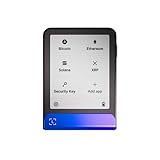
- Simply & securely take control of your digital assets and identity with the all-in-one Ledger Wallet crypto app and Ledger Flex touchscreen signer.
- Digital asset control at your fingertips: manage 15,000+ crypto across multiple chains. Earn rewards. Top up & share with ease. Explore DeFi with confidence. Collect and showcase NFTs. Make informed choices with clarity.
- Connect effortlessly with Ledger Wallet: pair your secure Ledger signer with the all in one Ledger Wallet crypto app to manage thousands of digital assets across multiple devices and accounts with Ledger Sync from a single, secure dashboard.
- Cutting-edge design: monitor the market, compare rates, and Clear Sign transactions on the secure, high resolution, 2.8'' E Ink touchscreen.
- This is what security feels like: Ledger touchscreen signers all come with a private, offline, PIN-protected backup, Ledger Recovery Key, to never lose access to your assets.
OBv3 also describes a REST-style API model using OAuth 2.0, dynamic client registration, authorization-code flow, granular scopes, and HTTP methods such as GET, POST, PUT, and DELETE. Its documentation includes example requests, but those are implementation details for systems using the API—not steps every school must follow to issue a badge, and not an NFT minting procedure. An issuer-only service can create and deliver credentials without implementing Service Consumer Write API requirements; 1EdTech calls this “Issuer Only” service conformance.
Certification is separate from merely producing a valid JSON credential or minting a token. 1EdTech certification distinguishes Open Badges Issuer, Displayer, and Host services, and certification for one role does not automatically certify the others. Applicants must be eligible 1EdTech members, pass the applicable tests, submit test results, and receive approval. The certification guide directs applicants to the “1EdTech Conformance Test Suite” and its onscreen instructions.
Independent reader supportYour contribution helps us test, update, and keep practical guides available for everyone.Verification and privacy problems to watch for
- Issuer keys unavailable: If the verifier cannot retrieve the issuer’s public JWK Set when checking a credential, it may reject an otherwise valid credential. Issuers using this approach need to keep that endpoint publicly available over time.
- Unsupported JSON-LD terms: Safe-mode validation can fail when a credential uses a term that is not defined by its associated context. Custom fields need correctly defined contexts and schemas.
- Status checks do not automatically travel everywhere: Revocation depends on issuer and verifier support for a common status mechanism. A status field alone does not guarantee that every wallet or verifier checks it.
- Refresh access may expose updated data: The cited implementation guidance does not define authentication or variable authorization for the Credential Refresh Service. If an implementation exposes a refresh URL, a client that knows it may be able to request the latest credential representation.
- Evidence can reveal sensitive information: Grades and evidence may contain personally identifiable information. Embedding them in a badge image, API payload, HTML link, or presentation can transmit the full payload unless it is protected.
- Selective disclosure depends on the proof method: The implementation guidance identifies BBS and SD-JWT methods as supporting selective disclosure or encryption; a Linked Data Proof does not itself provide selective disclosure.
- Evidence links can change: Ordinary video, photo-sharing, or document-sharing links may be editable by the learner or another party. Do not rely on those links where evidence must remain unchanged after issuance.
These implementation risks are covered in the OBv3 implementation guide and conformance and certification guide.
Best Value

- More than just crypto: confirm your device is authentic with Genuine Check, manage all your logins with Ledger Security Key, detect common scams with Transaction Check and more.
- Industry-defining security: battle-tested by the Donjon's white hat hackers, protected by the Secure Element, and powered by Ledger OS.
- Connect effortlessly with Ledger Wallet: pair your secure Ledger signer with the all in one Ledger Wallet crypto app to manage thousands of digital assets across multiple devices and accounts with Ledger Sync from a single, secure dashboard.
- Playful, user-friendly design: monitor the market, compare rates and Clear Sign all transactions on the secure 2.8'' anti-glare, scratch-resistant touchscreen.
- This is what security feels like: Ledger touchscreen signers all come with a private, offline, PIN-protected backup, Ledger Recovery Key, to never lose access to your assets.
How to assess an education token or credential
Before treating a tokenized certificate as evidence of a qualification, check the credential rather than relying on the NFT label or a marketplace display.
- Identify the issuer: Is the issuer named clearly, and can its signing identity be verified?
- Read the achievement claim: Does the credential say what learning or assessment was completed, rather than relying on vague promotional language?
- Verify the proof and status: Can a verifier validate the signature and check the credential’s status through a supported mechanism?
- Check acceptance: Does the receiving employer, school, licensing body, or wallet accept this version, proof method, and identifier method?
- Review privacy exposure: Does sharing reveal grades, evidence, or personal details beyond what the recipient needs?
- Separate qualification from token ownership: Does the credential’s actual issuer and achievement matter to the decision, irrespective of who controls a token?
A credential can be valid under its standard and still be rejected by a particular wallet or verifier because of version, proof suite, identifier method, presentation protocol, or status support. A token transfer or blockchain transaction is not a substitute for checking those factors.
Quick Recap
Product prices and availability are accurate as of the date/time indicated and are subject to change. Any price and availability information displayed on Amazon at the time of purchase will apply.




