Running a 24/7 YouTube live stream from a NAS or home server in your closet sounds cheaper than paying for cloud hosting. It’s one of those ideas that feels obvious until you look at the actual numbers. Your existing NAS costs you maybe fifty dollars a month in electricity and maintenance. Your internet bill is what it is. And that’s where the math stops for most people, which is exactly where it starts getting expensive.
Streaming from home hardware means your ISP is shipping terabytes of outbound data every month, and most ISPs charge for that. Even unlimited plans have soft caps—you hit 1-2 TB of egress and your connection gets deprioritized or throttled. If you’re streaming 1080p at 6 Mbps and you run it for 24 hours, that’s 6 gigabits per hour, or roughly 180 GB per day. In a month, that’s 5.4 TB of outbound traffic. Your ISP notices that, and they act on it.
The Egress Problem: The Real Cost Nobody Budgets For
Egress is the technical term for data leaving your network. When your home server streams to YouTube, YouTube is downloading that stream, which means your ISP sees massive outbound traffic. Most residential ISPs limit this. Comcast, Verizon, Spectrum—they all have caps or throttling thresholds.
If you exceed them, you get throttled (your stream quality drops because your speed is limited), deprioritized (other users’ traffic gets priority, so your stream becomes unstable), or charged. Comcast charges $10 per 50 GB over the limit. On 5.4 TB per month, you’d hit the cap almost immediately and pay hundreds in overage fees.
The Tool Desk
Outbyte PC Repair FREEClear out junk files and repair common Windows errorsFree Scan →Outbyte Driver Updater FREEScan for outdated or missing drivers - takes under a minuteDriver Scan →#1 Best Overall

- [Quad-Core Processor for Daily Tasks] Powered by Realtek RTD1619B quad-core 1.7GHz CPU, ensuring stable performance for file storage, backup, and personal cloud usage.
- [Fast 2.5GbE Network Upgrade] Equipped with 2.5-Gigabit Ethernet, delivering faster transfer speeds than traditional Gigabit NAS for home data management.
- [1GB DDR4 Efficient Memory] Optimized 1GB DDR4 memory ensures stable system performance for basic multitasking and background services.
- [Personal Cloud Backup Solution] Create your own private cloud to store, access, and manage files securely from anywhere with full data ownership.
- [Tool-Free Installation for Fast & Easy Setup] Designed for user convenience with tool-free drive installation, allowing quick HDD/SSD setup without screws—perfect for beginners and IT professionals.
Commercial internet plans don’t have these caps, but they cost $150-400 per month instead of $60-80. You’re paying more for the privilege of unlimited egress, and you’re paying it to the ISP, not to a cloud provider.
The Uptime Problem: You’re the One on Call
A NAS is a storage device that also runs some compute. It’s not built for 24/7 streaming—it’s built to be a backup box. Most NAS units are designed to run for 4-8 hours a day, tops. Run them around the clock and they overheat. The RAID controller fails faster. Drives die younger.
If your NAS crashes at 3 AM, nobody restarts it until you notice it’s down. If you’re lucky, that’s 4-5 hours later. If you’re not, it’s until you come home from work. YouTube doesn’t care why your stream stopped. The channel just goes dark.
You could add monitoring—a script that checks if the stream is still going and restarts it automatically. But now you’re managing uptime. That’s work. If the NAS itself dies (and it will eventually, because it’s consumer hardware), you’re down until you fix it. Cloud providers have redundancy built in. If one server dies, the stream continues on another. If your ISP goes down, the stream goes down with it, but at least the service provider is trying.
Free tools Windows power users keep installed
One-click scans. No signup required.
The Power Cost: It’s Not Just the NAS
A full NAS running 24/7 uses about 50-100 watts, depending on the model. That’s $40-80 per year in electricity. The streaming software on top (FFmpeg, OBS, etc.) might use another 20-40 watts. Your router and modem are also running continuously now—another 10-20 watts. By the time you add it all up, you’re running 100-150 watts constantly, which is about $100-150 per year.
Rank #2
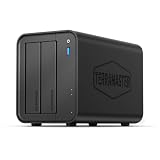
- Powerful Performance: Equipped with an Intel x86 quad-core processor and 4GB RAM, the F2-425 network attached storage effortlessly handles 4K transcoding and multitasking. The 2.5GbE port ensures ultra-fast file transfers and supports multi-user concurrent access
- Home Multimedia Hub: The F2-425 media server supports hardware-level 4K H.265 decoding, compatible with Plex, Emby, and Jellyfin for smooth HD video playback, with DLNA for seamless multi-device streaming. The Photos app features AI smart album and efficiently organizes millions of photos
- TNAS Mobile Full Control: Initialize setup for your F2-425 NAS storage via the TNAS Mobile app without a PC. The mobile app supports automatic photo and video backups, plus real-time local/remote synchronization, all managed through a single client
- Ultra-Quiet & User-Friendly: The F2-425 NAS server operates at just 19dB(A), suitable for quiet environments like bedrooms. Its tool-free Push-Lock design HDD trays enable to install HDDs in 10 seconds
- Massive Storage & Security: The F2-425 2-bay NAS supports up to 60TB storage (2 x 30TB for each bay), 50+ independent user accounts, and flexible TRAID arrays, saving 30% more storage space than traditional RAID while ensuring data redundancy. SPC security module and CloudSync (supporting Google Drive, OneDrive, Dropbox) guarantee worry-free data protection. Additionally, TerraSync enables two-way sync between the F2-425 and PCs/Macs
Compare that to a cloud server that runs the same workload: about $30-50 per month, all-in. The cloud provider absorbs the power cost, the cooling cost, and the real estate cost. You pay a usage fee.
The Equipment Failure Problem: RAID Doesn’t Prevent Failure
RAID is redundancy, not backup. If you set up a RAID-1 array (mirrored drives) on your NAS, you can survive one drive failure. But you’ll still have a service interruption while the failed drive is replaced. And if you accidentally delete a file or there’s a power surge that corrupts both mirrors simultaneously, RAID doesn’t help you.
With a cloud provider, you’re not managing RAID. The provider is, and they’re doing it across multiple data centers. Failure recovery is automatic.
When a Home NAS Actually Makes Sense
Home NAS streaming works if:
- You have a business-class ISP with no egress caps or throttling (enterprise fiber, for example)
- Your upload speed is very high (gigabit fiber, not cable broadband)
- The stream is short-term or intermittent (not 24/7 all month)
- You have technical skills to troubleshoot and monitor constantly
- Your tolerance for downtime is high (you’re okay if the stream goes dark for a few hours)
If none of those apply, you’re not saving money. You’re just transferring the cost from the cloud provider to your ISP, and adding operational burden on top.
The 5.4 TB / Month Bandwidth Reality
Let’s be concrete. If you stream 1080p at 6 Mbps for 24 hours straight:
Rank #3

- ARM Cortex-A55 quad-core 2.0GHz processor with 4 GB DDR4 RAM
- Built-in NPU for AI Acceleration to boost performance for high-speed face and object recognition.
- 2.5GbE (2.5G/1G/100M) ports accelerates file sharing across teams and devices or streamline large file transfers
- Budget-friendly Home NAS for file storage and multimedia streaming
- Centrally store and organize personal or family photos, music, and videos
- Day 1: 180 GB
- Week 1: 1.26 TB
- Month 1: 5.4 TB
That’s terabytes of outbound traffic from your home. A typical residential ISP handles this for about $60-80/month, but only if they don’t charge for overage or don’t deprioritize you. Most do one or both. You can call and ask, but the honest answer is: they don’t expect you to do this, so they’re not prepared to offer it at that price.
The Case for Not Self-Hosting at All
Instead of renting a cloud server for streaming, there’s a cleaner option: use a service that handles the streaming infrastructure for you. The pain with a NAS is that you’re managing two things—the media (your video file) and the delivery (the stream to YouTube). Most people think they can separate those concerns, but they can’t. The media server is also the streaming origin, so you’re still on the hook for uptime and bandwidth.
Do these 3 things before closing this tab:
1Fix the driver behind crashes, sound loss and screen glitches2Clear out junk files and repair common Windows errors3Scan for outdated or missing drivers - takes under a minuteKeep Your YouTube Stream Running Without the NAS
StreamNeo is designed for this 24/7 YouTube workflow: upload your prerecorded video, paste your YouTube stream key, and let the stream run in the cloud while your PC stays off. That keeps the home server from having to remain the streaming origin.
StreamNeo checks stream health every 30 seconds and automatically restarts dropped streams, addressing the monitoring and restart burden that makes self-hosting difficult. A practical next step is to upload the exact video you plan to use and verify the resulting YouTube broadcast before moving away from the NAS setup.
StreamNeo removes the infrastructure problem entirely. You upload a video once, paste your YouTube stream key, and the stream runs from cloud servers that are already optimized for this. Your home internet doesn’t carry any of the outbound traffic. Your computer stays off. If the stream drops, it restarts itself automatically. There is a free 24-hour trial and no card required, so you can test it with an actual upload and see whether it removes the NAS burden entirely.
Rank #4

- Entry-level NAS Personal Storage:UGREEN NAS DH2300 is your first and best NAS made easy. It is designed for beginners who want a simple, private way to store videos, photos and personal files, which is intuitive for users moving from cloud storage or external drives and move away from scattered date across devices. This entry-level NAS 2-bay perfect for personal entertainment, photo storage, and easy data backup (doesn't support Docker or virtual machines).
- Set Your Devices Free, Expand Your Digital World: This unified storage hub supports massive capacity up to 64TB.*Storage drives not included. Stop Deleting, Start Storing. You can store 22 million 3MB images, or 2 million 30MB songs, or 43K 1.5GB movies or 67 million 1MB documents! UGREEN NAS is a better way to free up storage across all your devices such as phones, computers, tablets and also does automatic backups across devices regardless of the operating system—Window, iOS, Android or macOS.
- The Smarter Long-term Way to Store: Unlike cloud storage with recurring monthly fees, a UGREEN NAS enclosure requires only a one-time purchase for long-term use. For example, you only need to pay $459.98 for a NAS, while for cloud storage, you need to pay $719.88 per year, $2,159.64 for 3 years, $3,599.40 for 5 years. You will save $6,738.82 over 10 years with UGREEN NAS! *NAS cost based on DH2300 + 12TB HDD; cloud cost based on 12TB plan (e.g. $59.99/month).
- Blazing Speed, Minimal Power: Equipped with a high-performance processor, 1GbE port, and 4GB RAM on Board, this NAS handles multiple tasks with ease. File transfers reach up to 125MB/s—a 1GB file takes only 8 seconds. Don't let slow clouds hold you back; they often need over 100 seconds for the same task. The difference is clear.
- Let AI Better Organize Your Memories: UGREEN NAS uses AI to tag faces, locations, texts, and objects—so you can effortlessly find any photo by searching for who or what's in it in seconds. It also automatically finds and deletes similar or duplicate photo, backs up live photos and allows you to share them with your friends or family with just one tap. Everything stays effortlessly organized, powered by intelligent tagging and recognition.
Comparing Real Costs: NAS vs Cloud vs Specialized Service
| Item | NAS at Home | Cloud Server | StreamNeo-Style Service |
|---|---|---|---|
| Hardware cost | $300-800 upfront | Included | Included |
| Monthly ISP overage | $50-300 (if over cap) | $0 | $0 |
| Commercial internet upgrade | $0 initially, $150+ if needed | $0 | $0 |
| Electricity | $100-150/year | $0 | $0 |
| Uptime monitoring | DIY (your time) | Automated | Automated |
| Bandwidth egress | You pay ISP | Included | Included |
| Total 1st year | $400-1800+ | $360-600 | Varies by service |
The cloud server option keeps egress cost within the provider’s infrastructure (they’ve already paid for it), and it includes monitoring. The specialized streaming service does the same but adds the convenience of not managing a raw server.
What’s actually slowing this PC down?
Pick the symptom - the matching free tool is one click away.
StreamNeo is the managed path in this comparison: upload the video and paste the YouTube stream key without maintaining a server configuration at home. Its free 24-hour 720p/30fps trial requires no card at signup, making it practical to test the workflow before committing to hardware or cloud-server management.
The Lesson: Egress Is the Hidden Cost
A NAS is great for backup and local storage. It’s terrible for 24/7 outbound streaming because the egress cost swallows any hardware savings. Your ISP will charge you, or throttle you, or both. A cloud server costs about the same as the overages would, and includes actual uptime guarantees. A specialized streaming service costs even less because it’s purpose-built for this workload and already has the infrastructure amortized across thousands of users.
If you decide to self-host anyway, go in with eyes open: you’re paying for the privilege of managing it, not saving money. The break-even point is only real if you have gigabit fiber with no caps and the technical skill to keep it running 24/7. For everyone else, cloud infrastructure exists for a reason.
Quick Recap
Product prices and availability are accurate as of the date/time indicated and are subject to change. Any price and availability information displayed on Amazon at the time of purchase will apply.
Recommended Free Tools




