The latest located Freddie Mac national averages, dated October 1, 2026, were 7.28% for a 30-year fixed mortgage and 6.60% for a 15-year fixed mortgage. These are weekly benchmarks for a defined group of purchase loans—not rates every borrower can obtain. The 6.38% figure in the original headline was a historical 30-year average from March 26, 2026, not a current October rate.
What are mortgage rates today?
Freddie Mac’s latest located Primary Mortgage Market Survey (PMMS), published October 1, 2026, reported these national averages:
| Mortgage type | National average | Change from prior week | Observation date |
|---|---|---|---|
| 30-year fixed | 7.28% | Up from 7.03% | October 1, 2026 |
| 15-year fixed | 6.60% | Up from 6.42% | October 1, 2026 |
These figures are Freddie Mac’s national survey averages, not a quote or guarantee. The survey focuses on conventional, conforming, fully amortizing home-purchase loans for borrowers with excellent credit who put 20% down. Its results draw on mortgage application data collected through Freddie Mac’s Loan Product Advisor from lenders nationwide, and are published weekly. See Freddie Mac’s October 1 release and survey description and its historical rate archive.
Is 6.38% a good mortgage rate?
It depends on when the rate was available, the loan terms, and the borrower’s costs. The 6.38% number was Freddie Mac’s 30-year fixed national average on March 26, 2026; it is not the latest located benchmark. Freddie Mac’s archived 30-year averages were 6.46% on April 2, 6.37% on April 9, 6.30% on April 16, 6.23% on April 23, and 6.30% on April 30, 2026. The archive has no April 15 weekly PMMS observation, so an “April 15” label should not be treated as the date of a Freddie Mac weekly rate reading.
#1 Best Overall
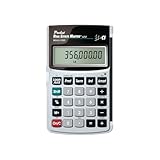
- Loan Amortization and Remaining Balances
- Instant Principal, Interest, Interest Only and Total Payments
- Future Values
- Date math function
A rate by itself cannot establish whether an offer is good. A lower note rate may require discount points or come with other costs; compare the annual percentage rate (APR), upfront charges, monthly payment, and loan structure against offers with the same assumptions.
How do I compare mortgage rates?
Request written Loan Estimates from at least three lenders, as the Consumer Financial Protection Bureau (CFPB) recommends. To make the comparison meaningful, use the same loan amount, property details, down payment, loan type, and lock timing when requesting each estimate.
Rank #2

- SPEAKS YOUR LANGUAGE: Keys clearly labeled in residential mortgage finance terms like Loan AMT, Int, Term, PMT. This industry-standard calculator is super easy to use on all realty financing matters from finding a loan that works for your client to considering trust deeds investments, or finding remaining balances or balloon payments and much more
- CONFIDENTLY AND EASILY SOLVES: All your clients' financial questions whether they are buyers, sellers, investors or renters. Increase your perceived professionalism as a new agent, experienced broker or seasoned loan officer. Close more home sales and impress your clients with fast, accurate answers to all their real estate finance questions
- DEDICATED BUYER QUALIFYING KEYS: Enter client's income, debt and expenses to pre-qualify them to only show properties they can afford. Include tax, insurance and mortgage insurance then compare loan options and payment solutions to give your client choices before they make an offer to buy
- FIGURE OUT THE RIGHT LOAN: At the press of a button for jumbo, conventional, FHA/VA, or even 80:10:10 or 80:15:5 combo loans; check to see if ARMs or bi-weekly loans, quarterly payments or if interest-only payments are the answer; giving your client more choices; easily perform what if loan or tvm calculations Find loan amount, term, interest or PITI or PI payments
- BECOME AN INVALUABLE RESOURCE: Reduce your clients' confusion and uncertainty; ensuring they are able to make a purchase offer; knowing they can afford the down payment; and determining which is the right loan for them. Date-math for listings and contracts too. Comes with a protective slide cover, quick reference guide, pocket User's Guide, and long-life batteries
- Line up the loan terms. Check that each offer uses the same loan amount, term, and fixed- or adjustable-rate structure. If the terms differ, note the difference before comparing costs.
- Compare note rate and APR. The interest rate determines interest charged on the loan; APR also includes the interest rate, points, broker fees, and certain other charges. APR is useful for comparing overall borrowing cost, but review the itemized fees too.
- Inspect points and lender charges. Identify any discount points and other upfront lender costs. If one lender advertises a lower rate in exchange for points, compare the cost of those points with the rate reduction and how long you expect to keep the loan.
- Compare the payment and recurring costs. Check the estimated principal-and-interest payment and other monthly costs shown in each estimate. The lowest rate does not necessarily mean the lowest total monthly housing cost.
- For an adjustable-rate mortgage, check the adjustment terms. Review when the rate can change and the caps that limit adjustments. A starting rate alone does not show how payments may change later.
- Check the rate lock. Compare how long each quoted rate is locked and ask the lender what happens if closing is delayed or the lock needs an extension or adjustment.
Why is my lender’s rate different from the average?
A Freddie Mac average describes a national survey sample; your lender’s quote is based on the specifics of your application and loan. The PMMS focuses on borrowers with excellent credit and 20% down on conventional, conforming, fully amortizing purchase loans. A quote for a different down payment, credit profile, property, loan type, or fee structure is not an apples-to-apples comparison with that benchmark.
Published rates also reflect a particular observation date, while a lender’s offer is tied to its own pricing and may depend on the rate-lock period and points. Freddie Mac’s weekly survey is useful context, but written Loan Estimates reveal the terms and costs actually offered to you. Its PMMS methodology description explains the application-data basis of the survey.
Rank #3

- DEDICATED FUNCTION KEYS for Quick Financial Solutions: Clearly labeled function keys enable you to quickly and confidently provide financial answers and options for your clients, whether in the office, in the car or at an open house. Compare loan options and provide payment solutions to give your client choices
- INSTANT FINANCIAL PROBLEM SOLVING: Solve the financial questions your clients have whether they are buyers, investors or renters; increase your perceived professionalism and close more home sales by quickly answering real estate finance problems including remaining balances
- RESIDENTIAL REAL ESTATE FINANCE TERMS: Keys labeled in residential real estate finance terms like Loan AMT, Int, Term, PMT; Calculator is super easy to use to determine a mortgage loan that works for your client
- VERSATILE LOAN CALCULATION OPTIONS: Calculate 80:10:10 or 80:15:5 combo loans at the press of a button; check to see if ARMs or bi-weekly loans, quarterly payments or if interest-only payments are the answer; giving your client more choices
- COMES COMPLETE: Comes with a protective slide cover, quick reference guide, pocket user's guide, two long-life batteries, and 1-year warranty
Why online rate examples may not match your quote
Rate tools are only comparable when their assumptions and data dates are clear. The CFPB’s Explore interest rates tool example assumes a $400,000 single-family primary residence, 10% down, a 700 credit score, a conventional 30-year fixed loan, a range of -0.5 to 0.5 discount points, and a 60-day rate lock unless otherwise specified. The page says the interest-rate data in those examples reflect April 1, 2025; they are not current quotes.
Quick Recap
Best Value

- Extra large 12-digit angled display.
- Loan Wizard.
- Automatic Tax Keys.
- Selectable decimal setting.
- Input any three loan variables to compute the fourth.
Rank #4

- SPEAKS YOUR LANGUAGE: Keys clearly labeled in residential mortgage finance terms like Loan Amt, Int, Term, Pmt; this industry-standard calculator is super easy to use on all realty financing matters from finding a loan that works for your client to considering trust deeds investments, or finding remaining balances or balloon payments and more
- CONFIDENTLY AND EASILY SOLVE: Clients' financial questions whether they're buyers, sellers, investors or renters. Increase your perceived professionalism as a new agent, experienced broker or seasoned loan officer. Close more home sales and impress your clients with fast, accurate answers to all their real estate finance questions from PITI Payments to IRR, NPV and Cashflows
- DEDICATED BUYER QUALIFYING KEYS: Enter client's income, debt and expenses to pre-qualify them to only show properties they can afford. Include tax, insurance and mortgage insurance then compare loan options and payment solutions to give your client choices before they make an offer to buy
- FIGURE OUT THE RIGHT LOAN: For your client at the press of a button for jumbo, conventional, FHA/VA, or even 80:10:10 or 80:15:5 combo loans; check to see if ARMs or bi-weekly loans, quarterly payments or if interest-only payments are the answer; giving your client more choices; easily perform what if loan or TVM calculations find loan amount, term, interest or PITI or PI payments
- BECOME AN INVALUABLE RESOURCE: To your clients by reducing their confusion and uncertainty; ensuring they are able to make a purchase offer; knowing they can afford the down payment; and determining which is the right loan for them. Date-math for listings and contracts too. Comes with a protective slide cover, quick reference guide, pocket user's guide, and long-life battery
Product prices and availability are accurate as of the date/time indicated and are subject to change. Any price and availability information displayed on Amazon at the time of purchase will apply.




