Recommended Free Tools
Micron has ended the Crucial consumer retail business, not its memory and storage operations. The company announced the decision on December 3, 2025, continued shipping Crucial products through the end of fiscal second quarter 2026—identified as February 2026—and said warranty support would continue. As of August 2026, the planned consumer-channel wind-down has passed, although sealed products may still be available through distributors and resellers.
The distinction matters for your money: existing Crucial owners do not need to replace working hardware, while new buyers should compare remaining Crucial stock with active alternatives based on compatibility, warranty, endurance, and total cost—not fear of an immediate disappearance.
![Micron 5300 5300 PRO 960 GB Solid State Drive - 2.5 Internal - SATA [SATA/600] - Read Intensive](https://m.media-amazon.com/images/I/31q7bNJwTfL._SL160_.jpg)
As an Amazon Associate I earn from qualifying purchases.
What Micron actually discontinued
Micron discontinued the Crucial consumer business: the retail, e-commerce, distributor, and consumer-support operation for Crucial-branded memory and storage sold worldwide. That included desktop and laptop RAM, internal consumer SSDs, and applicable external or removable storage products.
The Tool Desk
Outbyte Driver Updater FREEScan for outdated or missing drivers - takes under a minuteDriver Scan →Outbyte PC Repair FREEClear out junk files and repair common Windows errorsFree Scan →It did not announce that it had stopped making RAM, NAND, SSDs, or memory for every customer. Micron continues to serve cloud, enterprise, OEM, automotive, industrial, and data-center markets, including with Micron-branded memory and storage. Its announcement is available from Micron, while the Crucial products page explains the consumer-business wind-down and possible remaining reseller inventory.
#1 Best Overall

- PCIe 4.0 Performance: Delivers up to 7,100 MB/s read and 6,000 MB/s write speeds for quicker game load times, bootups, and smooth multitasking
- Spacious 1TB SSD: Provides space for AAA games, apps, and media with standard Gen4 NVMe performance for casual gamers and home users
- Broad Compatibility: Works seamlessly with laptops, desktops, and select gaming consoles including ROG Ally X, Lenovo Legion Go, and AYANEO Kun. Also backward compatible with PCIe Gen3 systems for flexible upgrades
- Better Productivity: Up to 2x faster than previous Gen3 generation. Improve performance for real world tasks like booting Windows, starting applications like Adobe Photoshop and Illustrator, and working in applications like Microsoft Excel and PowerPoint
- Trusted Micron Quality: Built with advanced G8 NAND and thermal control for reliable Gen4 performance trusted by gamers and home users
The timeline
- December 3, 2025: Micron announced that it would exit the Crucial consumer business.
- Through February 2026: Consumer products continued shipping through the end of fiscal Q2 2026.
- After February 2026: Availability shifted to remaining inventory, regional stock, and reseller activity rather than a normal, active product cycle.
- August 2026: The announced shipping window has ended. A Crucial product may still be new and sealed, but it should generally be treated as remaining stock.
“Crucial is gone” is therefore too broad: the active consumer program has been wound down, but individual products can remain available. Conversely, a listing that is still visible online does not prove that Micron is continuing fresh production of that model.
Why AI and enterprise customers influenced the decision
Micron said that data-center AI growth was increasing demand for memory and storage. Exiting Crucial, it said, would allow the company to improve supply and support for larger strategic customers in faster-growing segments. Read the official announcement for Micron’s stated rationale.
The commercial logic is straightforward, although not every part of it was quantified publicly. Enterprise, hyperscale, and OEM customers can provide larger purchase commitments, longer qualification cycles, and more predictable commercial relationships than a fragmented retail market. A consumer brand also requires product validation, retail relationships, inventory management, marketing, compatibility tools, and consumer support.
Do these 3 things before closing this tab:
1Scan for outdated or missing drivers - takes under a minute2Repair Windows errors before they cause bigger problems3Fix the driver behind crashes, sound loss and screen glitchesThat does not prove that every Crucial SSD or DRAM die is being physically converted into HBM. It means Micron is allocating strategic attention and supply toward customers and product categories it considers more attractive.
Is Micron pivoting specifically to HBM?
HBM is an important part of the pivot, but it is not replacing all conventional RAM and SSD production. High-bandwidth memory is packaged for specialized processors and accelerators used in data-center systems. It is not socketed desktop RAM and cannot be installed as a replacement for a laptop SO-DIMM.
Micron’s broader portfolio includes:
- HBM for AI accelerators and data-center systems;
- server DDR5 and other conventional DRAM;
- high-capacity memory for cloud infrastructure;
- NAND and enterprise/data-center SSDs;
- client and OEM SSD products;
- automotive and industrial memory; and
- specialized products such as SOCAMM-related memory.
Micron’s business-unit structure separates Cloud Memory—which includes HBM and large hyperscale customers—from Core Data Center, which includes enterprise memory and data-center storage. Its fiscal Q3 2026 reporting also described ongoing client SSD qualification work and HBM4E development, with HBM4E volume production expected in calendar 2027. See Micron’s business-unit reorganization, fiscal Q2 2026 filing, and fiscal Q3 2026 results.
What this means if you already own Crucial hardware
A working Crucial SSD or memory kit does not become obsolete or unusable because Micron ended the retail brand. For most owners, replacing it early would be an unnecessary expense.
Outdated Drivers Are Slowing You Down
One free scan finds every outdated or missing driver and matches the right update for your exact hardware.Free scan · exact hardware matchWindows Errors? Fix Them Before They Spread
Repair common Windows errors and clear accumulated junk for a smoother, more stable PC - no reinstall needed.Free scan · no reinstall- Back up important data. This is good SSD practice regardless of the manufacturer.
- Save the receipt and serial number. Keep them somewhere separate from the computer.
- Download needed utilities and firmware. Do this while official support pages and tools remain easy to access.
- Check the warranty before an issue occurs. Do not assume that a marketplace seller provides the same coverage as an authorized retailer.
- Follow the RMA process if necessary. Back up an SSD before sending it away and obtain authorization before shipping.
Micron said warranty and support would continue. Crucial’s warranty policy generally describes limited lifetime coverage for memory and three- or five-year coverage for SSDs, depending on the model and applicable total-bytes-written limit. Factory-recertified products may have different terms. Coverage can also depend on region, proof of purchase, seller authorization, and the exact product.
A warranty remedy is not necessarily a brand-new identical replacement. Depending on the circumstances, the remedy may be a refurbished equivalent, credit, or refund. Check the published terms rather than assuming replacement inventory will remain available indefinitely.
Rank #2
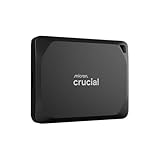
- Ultra-fast Speeds: Designed for professional creators, this external SSD delivers fast data access with up to 2,100MB/s read and 2,000MB/s write speeds for a seamless workflow. Unlike a hard drive, SSDs offer significantly faster performance
- Built to Last: Perfect for field work and all-weather shoots with IP55 water and dust resistance. Plus, drop resistant up to 7.5 ft (2 meters). This portable drive includes a lanyard loop, activity light, and SSD password protection for on-the-go security.
- Broad Compatibility: External drive connects effortlessly with Windows, Mac, iPad Pro, Chromebooks, Android, Linux, PS4, PS5, and Xbox via USB-C and USB-A for easy and fast file transfers
- Massive Storage Capacity: Store high-resolution photos, 4K/8K videos, and current projects with this compact 1TB SSD, offering secure and reliable storage for professionals and content creators
- Bonus Software Included: Enjoy three months of Mylio Photos plus and Acronis True Image when you purchase and register your external drive
Can you still buy Crucial products?
Potentially—but the financial question has changed. You are no longer buying into a normal, ongoing consumer product cycle; you are evaluating remaining stock.
A remaining-stock Crucial purchase can make sense when all of these are true:
- the product is sealed and sold by an authorized retailer;
- the price is competitive with current alternatives;
- the exact capacity, interface, form factor, and specifications fit your system;
- the warranty terms and seller responsibility are clear; and
- you are comfortable with potentially limited replacement inventory.
Avoid paying a scarcity premium simply because the Crucial logo is familiar. Marketplace listings may be used, opened, gray-market, or stored under unknown conditions. A low sticker price can also be misleading if warranty enforcement is difficult or if the product is a poor fit for your workload.
Buying RAM after the Crucial exit
For a desktop, verify the DDR generation, module capacity, speed, voltage, ECC status, and whether the module is registered or unbuffered. Also check the motherboard’s maximum supported capacity and, where relevant, its qualified-vendor list.
For a laptop, confirm that you need a SO-DIMM rather than a desktop DIMM, and check whether memory is removable at all. Some laptops use soldered memory or impose limits on capacity and speed.
Do not treat Micron server memory as a universal consumer replacement. Enterprise modules may be ECC, registered, or load-reduced, with different electrical requirements and server-only validation. A module can be labeled with the same DDR generation and still fail to work in a desktop motherboard or laptop.
Current consumer-oriented alternatives include catalogs from Kingston and other active memory vendors. Compare the exact module specification and system compatibility, not just brand name or advertised data rate.
Buying an SSD after the Crucial exit
Start with compatibility:
- Interface: SATA and NVMe are different technologies.
- Form factor: M.2 drives may be 2230, 2242, or 2280; laptops can have strict length or clearance limits.
- PCIe generation: Newer drives may work in older slots but will operate within the system’s limits.
- NAND type: TLC and QLC can differ substantially in sustained-write behavior and endurance.
- Thermals: High-performance drives may need more cooling than a thin laptop provides.
- Endurance and warranty: Compare TBW, warranty duration, and the conditions attached to both.
- Workload: Gaming, operating-system use, video editing, surveillance, NAS operation, and enterprise workloads stress drives differently.
For ordinary consumer purchases, active product lines from Samsung, SanDisk, Kingston, and Solidigm are reasonable places to compare. The best choice still depends on the individual model. Brand alone does not tell you the NAND type, controller, cache design, sustained-write behavior, or warranty conditions.
For management and firmware, use the manufacturer’s supported utility where applicable, such as Samsung Magician or the Western Digital Dashboard. Download software only from the manufacturer or another trusted source.
Rank #3
Why enterprise Micron products are not simple substitutes
Micron continues to sell enterprise memory and storage, but those products are aimed at different systems and budgets.
Enterprise memory may require ECC support, registered DIMM compatibility, different BIOS validation, and server-specific electrical characteristics. HBM is integrated into specialized packages rather than installed in standard memory slots.
Enterprise SSDs may use U.2, U.3, EDSFF, or add-in-card form factors. They can require different power, cooling, firmware, host support, or NVMe configuration. They may offer higher endurance and more predictable performance, but often at a price and complexity that make little sense for a home desktop or gaming laptop.
For a homelab or workstation, an enterprise drive can be appropriate if the chassis, backplane, controller, power budget, cooling, and operating system support it. For a typical consumer upgrade, a properly specified consumer NVMe or SATA SSD is usually the simpler and more economical choice.
What not to assume about prices
Micron’s announcement establishes the consumer-business exit, not a universal percentage increase in RAM or SSD prices. Retail prices vary by capacity, technology, region, inventory, exchange rates, and competing manufacturers.
Quick wins for a faster PC:
Repair Windows errors before they cause bigger problemsFix Now →Scan for outdated or missing drivers - takes under a minuteDriver Scan →Clear out junk files and repair common Windows errorsFree Scan →Prices could become less favorable for particular Crucial models as stock becomes scarce, but that is not a reason to panic-buy. Compare the complete cost of ownership: purchase price, seller reliability, warranty enforceability, expected endurance, and the cost of replacing a product that does not fit your system.
A practical decision guide
| Your situation | Best financial response |
|---|---|
| You already own a working Crucial product | Keep using it; back up data and preserve warranty records. |
| You found sealed Crucial stock at a normal price | Buy only after checking compatibility, authorized distribution, and warranty terms. |
| Crucial stock costs more than comparable current models | Choose the active alternative unless a specific feature justifies the premium. |
| You need laptop memory | Verify SO-DIMM support, capacity limits, speed, and whether memory is soldered. |
| You need a gaming or general-purpose SSD | Compare interface, form factor, NAND type, sustained writes, TBW, thermals, and warranty. |
| You need a server or homelab drive | Evaluate enterprise form factor, power, cooling, endurance, firmware, and host compatibility. |
| You see cheap HBM or server memory advertised for a PC | Do not assume it is compatible; HBM and many server modules are not consumer replacements. |
The bottom line
Micron has killed Crucial as an active consumer retail strategy, not memory and storage as product categories. The company is concentrating on HBM, cloud and enterprise customers, data-center storage, OEM products, and other commercial markets while continuing broader memory and SSD development.
For consumers, the sensible response is neither panic-buying nor an immediate hardware replacement. Keep working Crucial products, preserve your receipts and serial numbers, and treat remaining stock as a normal purchase only when its price, compatibility, seller, and warranty make sense. When replacing a drive or memory kit, compare current models by specifications and workload rather than assuming that a familiar brand—or an enterprise product—automatically represents better value.
Quick Recap
Product prices and availability are accurate as of the date/time indicated and are subject to change. Any price and availability information displayed on Amazon at the time of purchase will apply.
What’s actually slowing this PC down?
Pick the symptom - the matching free tool is one click away.




