In a Network World interview published April 4, 2011, Meru president and CEO Ihab Abu-Hakima argued that coordinated access points sharing a channel could help enterprises manage growing numbers of wireless devices. His account captures Meru’s pitch at the time—not a current buying guide or an independently verified comparison. The discussion centered on 802.11n, smartphones and iPads, and the challenge of carrying voice, video, and data over increasingly busy workplace networks.
What Abu-Hakima said made Meru different
Abu-Hakima described Meru’s design as a coordinated, single-channel WLAN. In his explanation, neighboring access points could operate on a shared channel and coordinate radio resources. He contrasted that with the channel and power planning he associated with conventional micro-cell WLANs, where adding access points could require more planning to avoid interference.
That distinction was Meru’s own account of its architecture. The interview does not provide an independent lab test or contemporary head-to-head benchmark establishing that Meru performed better than competing systems. Read the comparison as a vendor executive’s explanation of his company’s approach, not as a neutral technical verdict. Read the Network World interview.
Why wireless density worried enterprises in 2011
More devices and mixed applications
The interview framed the workplace as moving toward an “all-wireless” enterprise edge, while wired data-center and backbone infrastructure remained. Abu-Hakima said enterprises needed to accommodate growing numbers of mobile and stationary clients carrying voice, video, and data. The specific examples—802.11n, iPads, and smartphones—place the discussion firmly in its 2011 context; its forecasts should not be treated as present-day network guidance.
The Tool Desk
Outbyte PC Repair FREEClear out junk files and repair common Windows errorsFree Scan →Outbyte Driver Updater FREEScan for outdated or missing drivers - takes under a minuteDriver Scan →#1 Best Overall
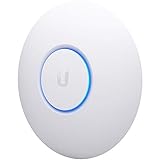
- Four stream 802.11AC Wave2 technology
- Supports 200+ concurrent users
- 802.3af PoE compatibility
- Optional covers (sold separately) allow the Unifi nanohd AP TO discreetyly blend into its setting
The conference-room congestion problem
Abu-Hakima used a crowded conference or seminar as an example of many devices competing for capacity. He warned that high-bandwidth applications could consume airtime needed by other traffic, and argued that simply adding access points might increase interference as well as cost and management work. His proposed response was coordinated radio resources and bandwidth allocation based on application needs.
“We call it Wi-Fi meltdown — we’ve seen this more at conferences, but I think more enterprises are going to start to experience this.”
Rank #2
Sale Ubiquiti UniFi HD 802.11ac Wave 2 Enterprise Wi-Fi Access Point (UAP-AC-HD-US)
- Connectivity technology: Ethernet
That was Abu-Hakima’s forecast in the April 4, 2011 interview, not a measured projection or a finding independently tested in the article.
What the interview says about security and management
Abu-Hakima discussed the period’s shift from WEP toward WPA and WPA2, wireless intrusion protection, and retail PCI considerations. He also described Meru’s E(z)RF management application and a service assurance manager intended to predict network bottlenecks. These are product and roadmap descriptions from 2011; they do not establish the capabilities, availability, or support status of any current product.
Rank #3

- FREE Omada Essential Platform Centralized Remote Management: Unlock numerous advanced features by integrating with Omada Cloud Management Platform, such as network monitoring, remote network configuration, AI features, ZTP (Zero Touch Provisioning) etc. More possibilities you can find with your network management
- Dual-Band 4-Stream Wi-Fi 7: Up to 5.0 Gbps, 4324 Mbps on 5 GHz + 688 Mbps on 2.4 GHz. Powered by Wi-Fi 7 technology, enjoy faster speeds with Multi-Link Operation, increased reliability with Multi-RUs, and 120% more data capacity with 4K-QAM, delivering enhanced performance for all your devices
- Future Proof 2.5G Port: Equipped with a 2.5 Gigabit Ethernet port to support high-speed networking and future broadband upgrades-no hardware replacement required when switching to multi-gig internet plans
- Abundant Networking Features Available to Develop: Network monitoring, VLAN segmenting, Bandwidth management, Schedule Setup, Security features, PPSK all seated and right there waiting to be developed for you
- Premium WiFi Experience: Seamless roaming, Mesh, Airtime fairness and other business level wifi experience features are provided here
How Meru positioned itself against Cisco
Abu-Hakima said Meru competed with Cisco and other WLAN vendors, while also describing Meru deployments alongside Cisco wired switches and voice systems. He characterized Meru as complementing Cisco in some customer environments. Those statements explain the company’s positioning as he presented it; the interview does not independently assess compatibility, relative performance, or which architecture was preferable for a given organization.
What the customer figures mean
Abu-Hakima said Meru had passed “more than 4,000 enterprise customers” and operated in “55 countries.” Both figures are statements he made in the 2011 interview; they are not independently audited there and should not be read as current customer or deployment counts.
Rank #4

- 【Ultra-Fast True Wi-Fi 6 Speeds】Designed with the latest wireless Wi-Fi 6 technology featuring 1024-QAM, HE60 and Long OFDM Symbol, the EAP653 boosts dual-band Wi-Fi speeds up to 2976 Mbps.
- 【Ultra-Slim Design】Compact design ensures simple installation while saving space. The elegant appearance makes EAP653 a perfect blend into any modern office, hotel, classroom, or café.
- 【Integrated into Omada SDN】Omada Software Defined Networking (SDN) platform integrates network devices including access points, switches & gateways with multiple control options offered - Omada Hardware controller, Software Controller or Cloud-based controller*(Contact TP-Link for Cloud-Based Controller Details). Standalone mode also supported.
- 【Cloud Access & Omada Compatibility】Remote Cloud access and Omada app enables centralized cloud management of the whole network from different sites – all controlled from a single interface anywhere, anytime.
- 【Advanced Wireless Tech】Supports Mesh WiFi, Seamless Roaming*(Omada Mesh & Seamless Roaming require the use of Omada SDN controllers), WPA3, Band Steering, Load Balancing, Airtime Fairness and Beamforming technologies.
What happened to Meru after the interview
Fortinet announced that it completed its acquisition of Meru Networks on July 8, 2015. Fortinet’s current documentation describes its FortiAP enterprise access-point family, with documentation organized by software version. That establishes present-day Fortinet product context, not that a particular FortiAP model is a direct equivalent to a Meru product described in 2011. Fortinet’s acquisition announcement · FortiAP / FortiWiFi 8.0 documentation.
A Fortinet Community response dated February 5, 2026 says legacy Meru AP832i units require a controller, Meru licenses are no longer available, and Fortinet has not supported Meru appliances since 2023. Because this is a community response rather than a formal lifecycle notice, confirm the status of any exact model, controller, license, or deployment with Fortinet before making operational or financial decisions. Read the February 2026 community response.
Recommended Free Tools
Best Value

- Up to 5X Faster with Dual-Radio 3x3 11AC MIMO Technology
- Ubiquiti Unifi AP AC PRO UAP-AC-PRO-US 802.11ac PRO Wireless Access Point - Enterprise Wi-Fi System (3-Pack)
- The UniFi AC Pro AP supports simultaneous dual-band, 3x3 MIMO technology in the 5 and 2.4 GHz radio bands.
- The UniFi AC Pro AP is a gigabit, 802.3af-powered access point suitable for indoor or outdoor use.
- Install, configure, and manage all of the UniFi APs with the intuitive and user-friendly UniFi controller user interface.
How to use this interview today
The interview is useful as a historical record of how one vendor framed enterprise Wi-Fi challenges during the early smartphone and tablet era. It raises useful comparison questions—capacity at high client density, channel and interference management, mixed-traffic handling, management and analytics, security, compatibility with existing systems, and lifecycle support—but supplies no independent scorecard for answering them. For a present-day deployment, assess the actual models, software, environment, and vendor support involved rather than treating Meru’s 2011 claims or legacy hardware as current recommendations.
Network World later described the IDG Enterprise CEO Interview Series as a series of executive conversations; that context does not change the interview’s status as a historical account. Series context from Network World.
Quick Recap
Product prices and availability are accurate as of the date/time indicated and are subject to change. Any price and availability information displayed on Amazon at the time of purchase will apply.




