On May 6, 2025, Lumen Technologies and IBM announced a collaboration to develop enterprise AI solutions that run inference closer to where business data is generated. The plan pairs Lumen Edge Cloud, edge data centers and network connectivity with IBM’s watsonx portfolio; IBM Consulting is the preferred systems integrator. It is a partnership and solution-development effort—not evidence of a standardized, generally available joint product with published specifications or pricing.
What Lumen and IBM announced
The companies said they would develop and offer solutions to joint customers, with pilots and proofs of concept focused on financial services, healthcare, manufacturing, retail and logistics. IBM described a retail scenario combining customer data and inventory systems with digital assistants and visual-inspection tools. The announcement did not name a customer or report production results. IBM’s announcement characterizes this as work to develop solutions, not a universal product launch.
Lumen’s proposed contribution is edge infrastructure, edge data centers, connectivity and integration with enterprise networks and multiple clouds. IBM brings watsonx technology and IBM Consulting’s implementation role. The phrase “network muscle” and “GenAI brain power” comes from Lumen CEO Kate Johnson’s interview with CRN; it is a metaphor, not a product name or technical specification.
How the proposed edge-AI setup works
Inference is the act of running a trained model to produce a prediction, classification or response. Training builds or fine-tunes a model and generally requires different, often greater, computing resources. Edge computing places compute closer to the data source or user; enterprise edge AI also requires data capture, connectivity, compute, model serving, security, governance and application integration.
Recommended Free Tools
#1 Best Overall
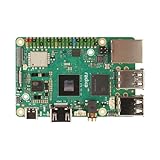
- POWERFUL COMPUTING: Advanced single board computer featuring high-speed LPDDR5 memory for superior processing capabilities and edge AI computing performance
- CONNECTIVITY: Multiple USB ports, HDMI output, and Ethernet connectivity provide versatile interface options for various applications
- COMPACT DESIGN: Space-efficient circuit board layout integrates powerful computing components in a single compact form factor
- DEVELOPMENT READY: Ideal platform for edge AI development, programming, and prototyping with comprehensive hardware interfaces
- EXPANDABILITY: Features multiple GPIO pins and standard connectors enabling extensive hardware expansion possibilities
- Generate data: A store, factory, hospital or other business site captures information through applications, sensors, cameras or transactions.
- Move it to suitable compute: Lumen connectivity can link the site to an edge location. The announcement does not specify a deployment topology or say every workload runs inside Lumen’s network.
- Run inference: A watsonx-based model or application processes the relevant data nearer to its source than a distant centralized service might.
- Return a result: The answer or alert goes to a worker, customer, machine or business system.
- Keep broader AI operations connected: Training, model management, backups and cross-site analytics may still rely on private, public or hybrid cloud services.
IBM describes watsonx as more than a chatbot: watsonx.ai provides AI development and lifecycle tooling; watsonx.data supports data management for AI; and watsonx.governance supports AI-risk and compliance workflows. The portfolio also includes assistants and agents such as watsonx Orchestrate. Which components would be used in a particular Lumen deployment is not specified in the announcement.
Why proximity may help—and what it cannot guarantee
Placing inference nearer to data can reduce network round trips, help interactive applications respond faster, limit the amount of raw or high-volume data sent to a central cloud, and potentially support operations where connectivity is constrained. These are potential benefits, not automatic outcomes: lower latency does not by itself lower total cost or make a system secure.
IBM’s announcement says Lumen’s edge network offers less than 5 milliseconds of latency, but provides no measurement boundary, geography, traffic conditions or indication of whether that figure is one-way or round-trip. CRN reported Lumen’s claim that 90% of U.S. businesses are within five milliseconds of its edge capabilities. That is a company-reported coverage statistic, not an independently established service-level guarantee. Neither number describes the full time an AI application takes to respond.
Rank #2

- [High performance] Quad-core ARM SoC up to 1. 8GHz with 3GB RAM- The Tinker Edge R features the Rockchip RK3399Pro SoC and Mali - T764 GPU along with 2GB of Dual Channel LPDDR4 memory for system, 1 GB LPDDR3 memory for NPU and 16GB eMMC flash
- [Gigabit Class networking]Tinker Edge R features a high speed GB LAN port for true Gigabit Class networking throughput along with 3x USB3.2 Gen1 Type-A. It also features onboard Wi-Fi & Bluetooth for robust IoT & Network connectivity
- [Open-source]The board will come with fully open-source kernel and support for multiple APIs, including OpenGL, Vulkan, OpenCL, OpenVX, TensorFlow Lite, Android NN, and Caffe
- [HD Audio & UHD video support] It supports 192/24bit HD Audio playback with automatic Audio jack detection as well as accelerated HD & UHD ( 4K ) video playback and supports HDMI CEC for seamless power on & off configurations
- [WiKi]For more information please refer to the product description, any technical issues after purchase please contact with our tech-support team: click "WayPonDEV" and ask a question. Package Content: 1x Tinker Edge R (3GB+16G eMMC); 2x Wi-FiVBT antenna cable; 1x Stand offset(4xScrew+4xHex); 2x Camera MIPI Convert cable (22P to 15P); 1 x Shielding bag; 1 x Quick start guide
End-to-end response time also includes data capture, preprocessing, queueing, model loading and execution, database retrieval, postprocessing and application rendering. A fast network segment cannot ensure a fast result if the model is large, the GPU is busy, a retrieval system is slow or the application adds delay. Likewise, processing near a site does not mean data never leaves it: models may need updates, while telemetry, backups, training data or aggregated analytics may move elsewhere.
Quick wins for a faster PC:
Scan for outdated or missing drivers - takes under a minuteDriver Scan →Clear out junk files and repair common Windows errorsFree Scan →Fix the driver behind crashes, sound loss and screen glitchesFind Drivers →Use cases that could justify edge inference
The strongest candidates are workflows where response time, data volume or control over data movement has material operational value. IBM names predictive maintenance and intelligent supply chains among possible edge uses; the retailer example includes digital assistants, inventory data and visual inspection. The following are potential applications, not confirmed production deployments from this collaboration.
Retail
- Store assistance: An inventory-aware digital assistant could answer questions using local or current stock information. Its usefulness depends on reliable integration with inventory and customer systems.
- Visual inspection: A model could flag shelf, product or process issues from images near the store. Camera throughput, model accuracy and false-alert handling matter as much as network latency.
- Customer interactions: Local processing may help with responsive service, but personalization still depends on appropriate data access, consent and governance.
Manufacturing and logistics
- Predictive maintenance: Sensor readings can be evaluated for signs of equipment failure so staff can investigate sooner.
- Quality inspection and anomaly detection: Machine-vision systems may need quick results on production lines, where delays can disrupt work.
- Supply-chain operations: Edge systems could support local decisions using operational data, while broader planning may remain centralized.
Healthcare
CRN’s coverage cites healthcare and real-time diagnostic assistance as examples raised by Johnson. Local processing could support facility or device monitoring and clinical workflows, but the announcement does not establish regulatory approval, clinical performance or autonomous diagnostic capability. Any use affecting care needs appropriate clinical oversight, privacy protections and validation.
Rank #3

- Supports access to online large model platforms and includes Edge Impulse object detection demo for real-time multi-object recognition
- Equipped with Xtensa dual-core LX7 processor (up to 240MHz), 8MB PSRAM, 16MB Flash, and dual-mode WF + BT LE
- Dual-microphone array with noise reduction and echo cancellation for high-quality voice processing
- Integrated audio input and output module, supporting AI speech interaction and voice recognition applications
- Onboard camera interface (DVP) and SPI / QSPI display interface for image capture, recognition, and external display connection
Financial services
Potential applications include transaction monitoring, fraud alerts, risk scoring and customer service. These uses require controls for explainability, auditability, data residency and model risk, as well as review against applicable regulation. Naming financial services as a target industry is not evidence that a particular model or deployment meets those obligations.
Why Lumen is pursuing AI infrastructure
Lumen has positioned itself around enterprise networking and infrastructure for AI, including fiber and transport, edge cloud, cloud connectivity, Network-as-a-Service, security and managed services. CRN describes the company’s strategy as moving away from legacy telecom services toward next-generation networking and partnerships with major cloud providers. Those are strategic aims, not proof of commercial success or evidence that this IBM collaboration has reached broad availability. Lumen’s press-resource center presents its enterprise and AI-related positioning but does not establish a generally available Lumen-IBM package.
What’s actually slowing this PC down?
Pick the symptom - the matching free tool is one click away.
What an enterprise buyer should evaluate
Compare the proposed architecture with centralized cloud inference, existing on-premises systems and other edge providers. The decision should be based on the complete workload and operating model, rather than a latency claim alone.
Rank #4
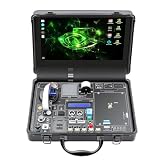
- 30-in-1 No-Solder Sensor Board, Plug and Play: Integrates 30 functional sensors including temperature & humidity, ultrasonic ranging, gas and motion sensors. Innovative common board design requires no soldering or complex wiring, and comes with a full set of accessories like 128G SD card, adapter board and acrylic mounting plates for zero-threshold experiments
- 8MP Gimbal Camera & Dual Servos for Professional Visual AI: The Starter Kit is equipped with an IMX219 8MP monocular camera and a dual-servo gimbal, supporting face and target tracking, and is ideal for AI edge computing scenarios such as intelligent monitoring, robot navigation, and automated recognition
- 38 Step-by-Step Python Tutorials, From Beginner to Practical Application: The Jetson Orin Nano Starter Kit comes with 38 well-designed Python tutorials progressing from basic programming to vision practice, covering all key knowledge of sensor control, embedded development and AI visual recognition for both beginners and advanced learners
- 11.6-inch IPS HD Screen & AI Voice Interaction System: Built-in 1366*768 resolution IPS screen eliminates the need for an external monitor, enabling one-device experimentation and visual feedback. The exclusive AI voice interaction system supports intelligent Q&A and voice command control for natural human-computer dialogue
- Rich Expansion Interfaces & Portable All-in-One Design: Features 2x I2C, 1x UART and 2 IO expansion interfaces to meet personalized experiment expansion needs; a custom carrying case integrates all components (11.81×7.87×3.94 inch), allowing AI experiments and demonstrations anytime and anywhere
- Latency need: Define the maximum acceptable response time and identify whether milliseconds affect safety, fraud loss, production output or customer experience. Asynchronous document summarization and overnight analytics may not need edge placement.
- Data location and control: Establish where raw inputs, prompts, outputs, logs, backups and telemetry are stored or processed; whether data can cross borders; and who controls encryption keys. The announcement does not provide a deployment-level data-flow diagram or jurisdictional guarantee.
- Total cost: Include connectivity, edge compute and GPU capacity, data transfer, inference or token charges, consulting, monitoring, support and lifecycle management. Lower latency does not prove lower total cost.
- Model fit: Specify model size, quantization, throughput, context needs, modality, retrieval requirements and update cadence. Confirm whether the required model can run on the available edge hardware.
- Operations and fault ownership: Assign responsibility for hardware, network, model serving, patching, security incidents, data pipelines, failover and capacity planning across Lumen, IBM and the customer.
- Governance and audit: Agree on access controls, retention, prompt and response logging, model-version tracking, quality testing, human review, rollback and regulatory reporting. A governance tool can support controls; it does not automatically make a deployment compliant.
- Portability and exit: Ask how models, containers, data and operational tooling can move if a provider, location or contract changes. A multi-vendor arrangement can simplify procurement but may create dependency and unclear fault boundaries.
How it compares with other deployment choices
| Approach | Often suits | Main trade-offs |
|---|---|---|
| Centralized public-cloud inference | Rapid experimentation, variable demand, large models and workloads without tight latency requirements. | May add network delay, data-transfer costs and dependence on cloud-region availability; residency needs require review. |
| Hyperscaler edge services | Organizations already committed to a cloud provider and its identity, data and AI ecosystem. | Compare existing contracts, regional footprint, private connectivity, model access, portability and support; current feature parity and pricing vary and are not established here. |
| Private or on-premises AI | Stable workloads, strict local control requirements, staffed sites and a need to continue operating during WAN outages. | Requires hardware investment, GPU procurement and refresh, capacity planning and in-house operational capability. |
| Managed edge-AI integration | Organizations seeking help combining network, compute, data engineering, model serving and governance. | Define scope, fees, staffing, deliverables and lock-in. IBM Consulting is the preferred integrator named for the Lumen collaboration, but buyers can compare other providers. |
IBM’s watsonx.ai pricing page lists separate software plans and usage charges, but those figures do not price a combined Lumen-IBM edge deployment. The page says prices are indicative, can vary by country, may exclude taxes and duties, and depend on offering availability. The public watsonx.ai trial or pricing information should not be mistaken for access to Lumen edge infrastructure or the joint customer pilots.
What has not been established publicly
The May 2025 announcement and the cited interview do not establish named production customers, a general-availability date, a standard product package, combined-offer pricing, edge GPU specifications, a model catalog for the deployment, geographic availability, independent benchmarks or service-level commitments. They also provide no measured customer latency, cost per inference, bandwidth savings or quantified business outcome. Until those details are available, buyers should treat the collaboration as a potential route to a customer-specific architecture and validate it through a scoped pilot with measurable acceptance criteria.
Quick Recap
Product prices and availability are accurate as of the date/time indicated and are subject to change. Any price and availability information displayed on Amazon at the time of purchase will apply.
Free tools Windows power users keep installed
One-click scans. No signup required.




