PC Slower Than It Used to Be?
A free scan shows the junk files, broken settings and background clutter dragging Windows down - then fixes them in one click.Free scan · Windows 10 & 11Crashes, No Sound, or Screen Glitches?
Random freezes, missing sound and display glitches usually trace back to one bad driver. Find and replace yours safely.Free scan · under a minuteLSSGB Project 3, “Improving Bank Call Center Operations,” is a Lean Six Sigma Green Belt course assignment—not independently verified reporting on a real bank or current call-center performance. Its case asks learners to assess First Wealth Bank’s outsourced customer-service operation using historical data, call-quality ratings, process-capability calculations, cause analysis, improvement proposals and FMEA.
What the project is about
The assignment presents a fictionalized or otherwise unverified case involving First Wealth Bank and Customer Calling Services (CCS), described as an outsourced customer-interaction provider. A search-indexed copy of the project PDF has a 2016 copyright line. The organizations, contract terms and operating figures should be read as case details, not as verified facts about an actual bank or vendor. The PDF is available through a SweetStudy-hosted copy; repository listings on Course Hero and SlideShare corroborate the basic course framing. These are secondary hosts, and the available material does not establish that the file is a current Simplilearn-hosted original.


Case targets and historical inputs
In the assignment scenario, First Wealth Bank is considering ending its CCS arrangement after service performance worsens. The case says the bank guaranteed at least 300,000 calls annually at $4.50 per call, and gives CCS six to eight months to improve or potentially lose the contract. These are figures stated in the educational case, not current or independently verified contract terms.
| Case element | What the assignment states |
|---|---|
| First-call resolution target | At least 75% of inquiries resolved on the first call (Simplilearn project PDF, 2016 copyright line). |
| Five-day resolution target | At least 90% of inquiries resolved within five days (Simplilearn project PDF, 2016 copyright line). |
| Average handle time | The case says CCS wants to maintain AHT while improving the other outcomes; it does not state a new AHT target in the supplied material. |
| Baseline period | Monthly observations from January 2014 through December 2015 (Simplilearn project PDF, 2016 copyright line). |
The historical table includes representative count, call volume, AHT, first-call resolutions, five-day resolutions and the corresponding resolution percentages. Its 2014–2015 figures are exercise inputs, not contemporary performance benchmarks.
#1 Best Overall
What learners are asked to analyze
Process capability
Students are asked to calculate process-capability indices for first-call and five-day resolution against the specification limits provided in the project. Treat the targets as assignment requirements; a capability result describes the supplied historical process data relative to those limits, not guaranteed future performance. The PDF’s specific data should be checked directly before calculating, since the figures are not reproduced here.
QA measurement reliability
The project provides two QA analysts’ ratings of 20 recorded calls for a repeatability-and-reproducibility exercise. The rating scale runs from 1, “Perfect response,” and 2, “Good response,” through 3, “Average response,” 4, “Poor response,” and 5, “Very bad response.” The task is to assess whether the measurement system produces consistent ratings; the assignment description alone does not establish the result of that analysis.
Rank #2
Causes and improvements
Learners must identify causes of inconsistent first-call resolution and propose improvements while considering the case’s aim of maintaining AHT. A useful project response should connect each proposed change to an observed cause and to the outcome it is intended to affect, rather than treating a target as proof that a particular cause exists.
FMEA
The assignment also asks students to evaluate proposed changes through Failure Mode and Effects Analysis (FMEA). That means considering how an improvement could fail or produce an unwanted effect, the consequences, and how the risk might be reduced. The project frames this as part of the improvement work; the available description does not prescribe a particular ranking outcome.
Quick Recap
Rank #4
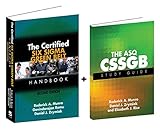
- The Certified Six Sigma Green Belt Handbook This reference manual is designed to help those interested in passing the ASQ's certification exam for Six Sigma Green Belts and others who want a handy reference to the appropriate materials needed to conduct successful Green Belt projects
- The Certified Six Sigma Green Belt Handbook + ASQ CSSGB Study Guide (Set)
Rank #3

- Six Sigma: A Complete Step-by-Step Guide: A Complete Training & Reference Guide for White Belts, Yellow Belts, Green Belts, and Black Belts
- Product Type: ABIS_BOOK
- The Council for Six Sigma Certification
How to approach the assignment
- Confirm the case definitions. Read the PDF’s specification limits and definitions for first-call and five-day resolution before using the monthly table. Do not substitute a different definition of “resolved” or infer a target not stated in the assignment.
- Check the baseline data. Preserve the monthly observations and verify how the project represents each percentage and denominator. Distinguish a count of resolved calls from a resolution rate.
- Calculate capability against the stated limits. Show the method and assumptions for each capability index, and make clear that the output applies to the historical case data and chosen calculation assumptions.
- Evaluate the rating system before interpreting ratings. Use the two analysts’ scores for the 20 recordings to examine consistency. If analysts disagree, account for that measurement variation before treating rating differences as evidence about service quality.
- Connect causes, changes and risks. Support cause claims with case evidence, link each improvement to a specific cause, consider its effect on AHT and resolution outcomes, then use FMEA to document potential failure modes and mitigations.
What the project does—and does not—establish
- It is coursework for a Lean Six Sigma Green Belt project, not independent verification of a bank operation.
- Its service goals are first-call resolution and resolution within five days, with AHT described as something to maintain during improvement.
- Its baseline covers January 2014–December 2015; that period is historical case data, not a present-day industry comparison.
- It calls for capability analysis, QA measurement-system analysis, cause analysis, improvement proposals and FMEA.
- It does not identify a required or endorsed Green Belt study guide. Supplementary material, if used, should be chosen for coverage of capability, measurement-system analysis and FMEA, with worked examples and clear assumptions.
Product prices and availability are accurate as of the date/time indicated and are subject to change. Any price and availability information displayed on Amazon at the time of purchase will apply.




