Being willing to change your mind is not the same as lacking conviction. Jeff Bezos’s 2016 Amazon shareholder letter argues for making decisions at a pace suited to their consequences, then correcting course when new information shows a choice was wrong. For personal finances, that means checking whether a decision is reversible, whether delay is costly, and whether the evidence has changed—not clinging to a plan just to appear consistent.
Why changing your mind can be part of good judgment
People often treat consistency as proof of sound judgment. But staying with a decision after its assumptions have failed can turn an initial mistake into a larger one. Bezos’s guidance is more nuanced: conviction and revision can coexist. Decide with the information reasonably available, then pay attention to what happens and adjust when the facts warrant it.


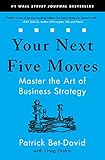

In his 2016 shareholder letter, Bezos describes decision-making as a balance between quality and speed. He says a leader needs to recognize and correct bad decisions quickly, rather than assuming every choice can be made perfectly in advance. That principle is useful for personal finance too, although a company leader’s advice is not proof that one process fits every household or financial choice.
First ask how hard the decision is to undo
Bezos distinguishes reversible choices—“two-way doors”—from decisions that are difficult to reverse. A decision that can be changed cheaply usually does not need the same amount of deliberation as one with lasting consequences. Applied to personal finances, this is a way to choose how much checking and advice a decision deserves, not a formula for what to buy or invest in.
Free tools Windows power users keep installed
One-click scans. No signup required.
#1 Best Overall
- Relatively easy to reverse: A choice with limited cost or commitment may allow a small trial, followed by a review. Keep the experiment small enough that an unfavorable result is manageable.
- Harder to reverse: A choice with large, long-term consequences deserves more scrutiny. Clarify the assumptions, alternatives, costs of changing course, and information you still need before committing.
These are applications of Bezos’s distinction, not categories he supplied for personal-finance products. The relevant question is how costly it would be for you to reverse a particular decision.
When should you act with incomplete information?
Bezos recommends making many decisions with “somewhere around 70%” of the information one wishes one had, rather than waiting for perfect information. That figure is his rule of thumb in the 2016 letter—not a scientifically established cutoff or a recommendation to make every financial decision after gathering exactly 70% of the facts.
Use the idea as a prompt to compare the cost of waiting with the value of more information. If a choice is reversible and delay has a meaningful cost, acting on a reasonable understanding may be better than waiting indefinitely. If a choice is difficult to undo, or a missing fact could materially change the outcome, further checking may be worth the time. The percentage itself cannot settle that judgment.
How to tell whether new evidence calls for a change
Changing course should respond to something more substantial than discomfort with an ordinary fluctuation or disagreement. A practical application of Bezos’s guidance is to revisit a decision when its underlying case changes, rather than changing it simply because the outcome is temporarily disappointing.
The Tool Desk
Outbyte PC Repair FREERepair Windows errors before they cause bigger problemsFix Now →Outbyte Driver Updater FREEScan for outdated or missing drivers - takes under a minuteDriver Scan →- Write down the reason for the decision. Identify the assumptions and information that made the choice seem sensible at the time.
- Check what has changed. Look for new evidence, a changed circumstance, or criticism that undermines an important assumption—not merely a different mood about the same facts.
- Compare the costs. Weigh the cost of staying with the current choice against the cost of changing it, including any cost of delay.
- Choose a response. Keep the decision if its case still holds; adjust it if the evidence has shifted; or seek qualified advice when the decision is consequential and you cannot assess the trade-offs confidently.
Bezos captures the importance of correction in the shareholder letter: “If you’re good at course correcting, being wrong may be less costly than you think, whereas being slow is going to be expensive for sure.” That is an argument for noticing and correcting errors, not for making risky choices casually.
How to disagree, decide, and then commit
Bezos’s “disagree and commit” principle concerns how a team handles a decision. In his description, people should express a genuine disagreement candidly and give the team a chance to weigh it. Once a direction is chosen, they should support it sincerely rather than continuing to resist it in practice. He also says genuine misalignment should be escalated early instead of being allowed to persist until people are worn down.
For a household decision, the useful distinction is between honest discussion before agreement and follow-through after an agreement. Commitment should not mean concealing material information or refusing to revisit a decision when circumstances change. Bezos’s description is about team decision-making; applying it at home is an analogy, not a guarantee that every group should use the same process.
Independent reader supportYour contribution helps us test, update, and keep practical guides available for everyone.What Bezos’s career story does—and does not—show
In his official statement to the U.S. House Committee on the Judiciary, Bezos recounts leaving an investment-firm job to pursue an internet business. He says the idea came to him in 1994 and that he considered the regret he might feel if he did not try. The story illustrates acting despite uncertainty; it does not show that every risky career or financial move is wise.
Quick wins for a faster PC:
Clear out junk files and repair common Windows errorsFree Scan →Fix the driver behind crashes, sound loss and screen glitchesFind Drivers →Best Value
In the same statement, Bezos writes, “When we think our critics are right, we change.” The point is not to accept every criticism automatically. It is to consider whether a critic has identified a real weakness in the reasoning and update when the criticism is persuasive.
A practical decision check
The following questions translate Bezos’s 2016 guidance into a personal decision aid. They are an application of his ideas, not a separate Bezos checklist.
- Reversibility: How much would it cost—in money, time, or other consequences—to undo this choice?
- Delay: What is the cost of waiting, and could waiting provide information that matters?
- Information: What do I know, and what missing fact could change my decision?
- New evidence: Has the case changed, or am I reacting to the same facts differently?
- Disagreement: Is this a normal difference of view that can be resolved, or a deeper misalignment that needs to be addressed directly?
Bezos’s later organizational framing is consistent with continuing to learn and challenging decisions respectfully before committing to a settled direction. Amazon CEO Andy Jassy—not Bezos—made that point in his 2024 shareholder letter. It is company guidance, not independent evidence that a particular decision rule will produce better outcomes for every person.
Quick Recap
Product prices and availability are accurate as of the date/time indicated and are subject to change. Any price and availability information displayed on Amazon at the time of purchase will apply.




