Free tools Windows power users keep installed
One-click scans. No signup required.
NFT analytics tools can help you check trading activity, compare collections, investigate wallet behavior, and estimate what an NFT may be worth. They do not remove the main risks: prices can change quickly, floor prices can be misleading, wash trading can inflate volume, and an estimated portfolio value may not be achievable in an actual sale.
The right tool depends on the question you are asking. CryptoSlam is suited to cross-chain market comparisons, NFTGo to collection and item research, Nansen to wallet intelligence, Dune to custom analysis, and Reservoir or marketplace APIs to building software. No single platform provides a complete, neutral view of the NFT market.
| # | Preview | Product | Price | |
|---|---|---|---|---|
| 1 |

|
Ledger Nano X - Classic Crypto Wallet with Bluetooth | $79.00 | Buy on Amazon |
| 2 |

|
Ledger Nano S Plus - Classic Crypto Wallet | Buy on Amazon | |
| 3 |
|
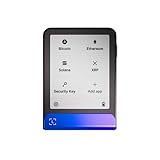
Ledger Flex Crypto Wallet Securely Manage All Your Digital Assets | $199.00 | Buy on Amazon |
Leading NFT analytics tools at a glance
| Tool | Best for | Main strength | Important limitation |
|---|---|---|---|
| CryptoSlam | Cross-chain market comparisons | Collection, blockchain, sales and wash-trading metrics | Less detailed wallet intelligence |
| NFTGo | Collection, item and portfolio research | Rarity, holders, whales, pricing and historical activity | Its v1.1 API is Ethereum-only; multichain access uses V2 |
| Nansen | Wallet and “smart money” research | Wallet labels, flows, holdings and trader behavior | Labels are proprietary and older NFT dashboard documentation may be outdated |
| DappRadar | Web3 discovery and portfolio tracking | Dapp rankings, NFT data and estimated values | Coverage and valuations vary by chain and collection |
| Dune | Custom, auditable research | SQL queries, dashboards and modeled blockchain data | Results depend on query design and data interpretation |
| OpenSea API | OpenSea-specific applications and data | Listings, offers, sales, transfers and collection statistics | Not a neutral index of every NFT marketplace |
| Reservoir | Developer infrastructure | Aggregated NFT metadata, ownership and market data | Designed for applications rather than casual research |
| Tensor | Solana NFT trading | Real-time marketplace activity and collection-wide bids | Solana-focused and marketplace-centric |
| Magic Eden API | Magic Eden collection statistics | 24-hour, 7-day, 30-day and all-time windows | Results depend on Magic Eden identifiers and scope |
1. CryptoSlam: best for cross-chain market rankings
CryptoSlam is a useful starting point when you want to compare NFT activity across blockchains. Its public interface includes NFT collection rankings, blockchain rankings, top sales and market-period filters for 24 hours, seven days, 30 days and all time.
Its global market index separates sales volume, total transactions, wash volume, wash transactions, trade profit, supply, wash percentage and average sale. That distinction matters for personal-finance research: a large headline sales figure does not automatically represent genuine buyer demand.
#1 Best Overall
- Effortlessly build your crypto portfolio via the all in one Ledger Wallet app: buy, sell, send, receive, swap, stake and more across popular blockchains. 15,000+ coins & tokens in a single dashboard. Keep a close eye on the market. Compare service providers. Track performance. Get timely alerts. Build your portfolio with confidence.
- Effortlessly build your crypto portfolio via the all in one Ledger Wallet app: buy, sell, send, receive, swap, stake and more across popular blockchains. 15,000+ coins & tokens in a single dashboard. Keep a close eye on the market. Compare service providers. Track performance. Get timely alerts. Build your portfolio with confidence.
- Enjoy Bluetooth connectivity, iOS access, and hours of battery use with this mobile-first, secure backup signer. Freedom you can depend on.
- Genuine Check: confirm your signer is authentic during setup with the Ledger Wallet app.
- Protect your signer: keep it in mint condition at all times with a bespoke Pod or Case to avoid scratches and everyday wear and tear.
Use CryptoSlam to:
- compare NFT activity on different blockchains;
- check collection sales volume and transaction counts;
- review historical market trends;
- see whether reported activity includes substantial wash trading.
CryptoSlam also offers a developer product branded CryptoSlam DeFi & NFT API through SLAMai resources. The documented data includes collections, sales, mints, wallet balances, top buyers and sellers, leaderboards, wallet reputation and cross-chain metrics. See the CryptoSlam homepage and its API documentation.
2. NFTGo: best for collection and item analysis
NFTGo provides a broader research set for someone examining a particular collection or token. Its documented analytics include floor price, total sales volume, market capitalization, holder counts, holder trends, whale activity, trader profitability, collection activity, rarity and individual-NFT analysis.
It also supports collection discovery, portfolio tracking, whale tracking, NFT pricing, trading aggregation, developer APIs and historical transaction data. This makes it useful for checking an NFT before buying, although the data should still be treated as research rather than a valuation guarantee.
NFTGo’s API version matters
NFTGo’s documentation says its v1.1 APIs support Ethereum only. Users seeking broader chain coverage are directed to the separate V2 Multichain API. Describing the entire NFTGo API as multichain without this qualification can lead to incomplete research.
Quick wins for a faster PC:
Fix the driver behind crashes, sound loss and screen glitchesFind Drivers →Clear out junk files and repair common Windows errorsFree Scan →The documented authentication pattern uses a request URL and an API key in the X-API-KEY header. The documented free-trial limit is five requests per second. See the NFTGo API overview.
3. Nansen: best for wallet and smart-money intelligence
Nansen is aimed at a different question: not just “what sold?” but “which labeled wallets are buying, selling, holding or accumulating?” Its current API documentation centers on Smart Money, Profiler and Portfolio areas.
Documented Smart Money endpoints include:
- /api/v1/smart-money/netflow
- /api/v1/smart-money/dex-trades
- /api/v1/smart-money/holdings
- /api/v1/smart-money/historical-holdings
Labels include Fund, Smart Trader, 30D Smart Trader, 90D Smart Trader and 180D Smart Trader. These classifications may help with wallet research, but they are proprietary labels, not objective facts about investment skill. A labeled wallet can still make a poor trade or be exposed through several addresses. See Nansen’s Smart Money API documentation.
Do not treat every balance change as a sale
An NFT appearing in or disappearing from a wallet does not prove that the wallet bought or sold it. It may have been transferred between related wallets, moved to an escrow address or sent for another operational reason. Check transaction history before drawing conclusions from a balance change.
Older Nansen research uses names such as NFT God Mode, NFT Paradise and NFT-specific Smart Money segments. Those materials can explain historical workflows, but they should not be assumed to describe the current interface or current API.
4. DappRadar: best for broad Web3 context and portfolios
DappRadar combines dapp discovery and rankings with NFT and wallet analytics. Its documentation says it tracks dapps across more than 90 chains and provides NFT portfolio and valuation functionality.
Its API covers collection trading volume, individual NFT sales, trader counts, NFT metadata, estimated individual-NFT values and dapp activity such as unique active wallets, transactions and volume.
DappRadar portfolio values may combine floor prices, last-sale prices and machine-learning estimates. That makes them useful for a rough overview, but not equivalent to cash you could obtain immediately. Thinly traded collections, unusual traits and stale sales can make an estimate especially unreliable.
Do these 3 things before closing this tab:
1Scan for outdated or missing drivers - takes under a minute2Repair Windows errors before they cause bigger problems3Fix the driver behind crashes, sound loss and screen glitchesRank #2
- All your digital assets in one place. You can manage thousands of crypto including Bitcoin, Ethereum, Solana, Tether and more.
- Defend your identity against hackers: secure your online accounts with passwordless, hardware backed, 2FA logins for all your favorite apps and websites.
- Connectivity: USB-C cable connection only. No Bluetooth.Compatible with the Ledger Wallet crypto app, both desktop (Windows, macOS, Linux) and mobile (Android only). Not compatible with iOS.
- Protect your digital assets with the industry's best security: keep your private keys offline in your private signer, battle-tested by the Donjon's white hat hackers, CC EAL 6+ certified Secure Element, constantly updated Ledger OS.
- Effortlessly build your crypto portfolio via the all in one Ledger Wallet app: buy, sell, send, receive, swap, stake and more across popular blockchains. 15,000+ coins & tokens in a single dashboard. Keep a close eye on the market. Compare service providers. Track performance. Get timely alerts. Build your portfolio with confidence.
Its older NFT Value Estimator documentation is marked deprecated or stopped. It should not be used as evidence that the older standalone estimator remains a current product. DappRadar also filters spam and fraudulent transactions algorithmically, so its totals may differ from raw blockchain counts.
5. Dune: best for custom and reproducible research
Dune lets users query supported blockchain data with SQL, create dashboards, schedule queries and publish visualizations. It is the strongest option when a standard dashboard does not define a metric in the way you need.
For example, a Dune query can be designed to examine:
- primary mints versus secondary-market sales;
- holder concentration above a chosen ownership threshold;
- royalty payments;
- marketplace-specific volume;
- wallet cohorts;
- transfers between related addresses;
- a custom wash-trading rule.
Dune’s flexibility is also its main weakness. Two dashboards can produce different sales-volume figures because they use different contracts, chains, marketplaces, time zones, USD price sources or wash-trading rules. A token transfer can also be mistaken for a sale if the query does not identify a marketplace execution.
Windows Errors? Fix Them Before They Spread
Repair common Windows errors and clear accumulated junk for a smoother, more stable PC - no reinstall needed.Free scan · no reinstallOutdated Drivers Are Slowing You Down
One free scan finds every outdated or missing driver and matches the right update for your exact hardware.Free scan · exact hardware matchFor published research, record the dashboard URL, query ID, execution date, chain coverage and SQL version. A public dashboard is not automatically current or methodologically sound.
6. OpenSea API: best for OpenSea-specific data
The OpenSea API supports NFT, collection, account, token, marketplace, event and analytics data. Documented collection statistics include floor price, volume and sales. Event data includes sales, transfers, listings and offers.
The current quick-start documentation shows that an instant free-tier API key can be requested through OpenSea’s API. The API overview also describes its collection statistics and event data.
OpenSea added API endpoints on May 13, 2026, including endpoints for top collections, collection floor prices, individual NFT analytics and account portfolios. The portfolio endpoint includes total value, NFT/token breakdown and P&L. See the OpenSea API changelog.
The Tool Desk
Outbyte Driver Updater FREEFix the driver behind crashes, sound loss and screen glitchesFind Drivers →Outbyte PC Repair FREEClear out junk files and repair common Windows errorsFree Scan →OpenSea is a sensible choice when you are building an application around OpenSea activity or need to inspect listings and offers on that marketplace. It is not a complete measure of the NFT market. A collection may trade on several venues, and OpenSea statistics describe the marketplace and supported ecosystem covered by its API.
7. Reservoir: best for building NFT applications
Reservoir is infrastructure for developers rather than a finished analyst dashboard. Its unified toolkit covers NFT metadata, ownership, activity, market data, aggregated mints, listings, bids, minting and trading.
It can support a portfolio application, collection page, trading interface, listing feed or custom analytics product. Developers may choose it when they need data from multiple NFT venues in a consistent application interface. A casual collector looking for rankings or wallet research will generally find a finished analytics platform easier to use.
8. Tensor: best for Solana-native traders
Tensor is a Solana NFT marketplace with real-time updates, advanced trading functionality, collection-wide bids and market-making orders. Its documentation says it covers more than 30,000 Solana collections.
Rank #3
- Simply & securely take control of your digital assets and identity with the all-in-one Ledger Wallet crypto app and Ledger Flex touchscreen signer.
- Digital asset control at your fingertips: manage 15,000+ crypto across multiple chains. Earn rewards. Top up & share with ease. Explore DeFi with confidence. Collect and showcase NFTs. Make informed choices with clarity.
- Connect effortlessly with Ledger Wallet: pair your secure Ledger signer with the all in one Ledger Wallet crypto app to manage thousands of digital assets across multiple devices and accounts with Ledger Sync from a single, secure dashboard.
- Cutting-edge design: monitor the market, compare rates, and Clear Sign transactions on the secure, high resolution, 2.8'' E Ink touchscreen.
- This is what security feels like: Ledger touchscreen signers all come with a private, offline, PIN-protected backup, Ledger Recovery Key, to never lose access to your assets.
Documented trading paths include BUY followed by a collection-wide bid, SELL followed by a listing, and MARKET-MAKE for market-making orders. Tensor is useful for monitoring Solana-native liquidity and marketplace activity, but it should not be treated as a general cross-chain market index.
Independent reader supportYour contribution helps us test, update, and keep practical guides available for everyone.9. Magic Eden API: best for marketplace collection statistics
Magic Eden’s collection statistics endpoint is GET https://api-mainnet.magiceden.dev/v2/collections/{symbol}/stats.
The documented timeWindow values are:
- 24h
- 7d
- 30d
- all
The optional listingAggMode parameter controls whether the result uses aggregated marketplace listings or only Magic Eden listings. When comparing Magic Eden data with another platform, preserve the collection symbol, time window and marketplace scope. Otherwise, apparently conflicting numbers may simply be measuring different things.
Metrics you should not compare blindly
Floor price
Floor price is the cheapest qualifying listing or offer under a platform’s rules. It is not the average sale price, fair value or guaranteed execution price. One unusually cheap listing in a thin market can move the floor without representing the price of most tokens in the collection.
What’s actually slowing this PC down?
Pick the symptom - the matching free tool is one click away.
Market capitalization
“Market cap” can mean floor price multiplied by total supply, floor price multiplied by circulating supply, an estimated aggregate portfolio value or another platform-specific formula. Identify the formula before comparing market caps.
Sales volume
Before relying on a volume figure, check:
- whether the period is a rolling 24 hours, calendar day, seven days or all time;
- whether the amount is shown in USD, ETH, SOL or another currency;
- whether primary mints are included;
- whether transfers are excluded;
- whether wash trading is filtered;
- which marketplaces and blockchains are covered.
Holder count
Holder totals can differ because platforms may count wallets and contracts differently, exclude burn addresses, exclude marketplace or escrow contracts, merge addresses associated with one entity, or treat wrapped and bridged assets differently.
Smart-money activity
Smart-money labels are models created by the provider. They can be useful leads, but copying a wallet’s transaction is not a reliable investment strategy. The wallet may have different costs, information, liquidity or risk limits, and the apparent transaction may have been a transfer rather than a purchase.
Practical tool stacks by use case
| Goal | Suggested combination | Why |
|---|---|---|
| Beginner collector | DappRadar + NFTGo + the relevant marketplace | Portfolio context, collection research and live listings |
| Cross-chain market research | CryptoSlam + Dune | Broad rankings with custom validation |
| Wallet-behavior research | Nansen + NFTGo | Wallet labels combined with collection and item data |
| Solana trading | Tensor or Magic Eden plus a cross-chain source | Marketplace activity with broader market context |
| Application development | Reservoir + OpenSea API; add NFTGo or CryptoSlam for historical analytics or rankings | Aggregated NFT infrastructure and OpenSea-specific data, with analytics sources as needed |
| Published analysis | Dune + CryptoSlam or another independent index | Reproducible definitions checked against an external source |
A safer workflow for using NFT analytics
- Define the decision. Decide whether you are checking liquidity, researching a collection, valuing a holding or investigating a wallet.
- Choose a source that matches the question. Do not use a marketplace dashboard as a cross-chain index or a portfolio estimate as a sale guarantee.
- Write down the measurement rules. Record the chain, marketplace coverage, currency, time window and treatment of mints, transfers and wash trades.
- Cross-check important figures. Compare a platform’s result with another provider or inspect the underlying transactions.
- Separate an estimate from available cash. A listed NFT can remain unsold, and a portfolio valuation can fall before you find a buyer.
- Include fees and taxes in any calculation. Gas, marketplace fees, creator royalties where applicable and taxes can materially change the result.
FAQ
What is the best NFT analytics tool?
There is no universal best tool. CryptoSlam is a strong choice for cross-chain rankings, NFTGo for collection and item analysis, Nansen for wallet intelligence, Dune for custom research, and Reservoir or marketplace APIs for software development.
Are NFT analytics platforms accurate?
They can be useful, but their results depend on coverage, data cleaning, pricing sources and metric definitions. Compare the time window, chains, marketplaces and treatment of transfers or wash trading before relying on a number.
Can an NFT portfolio estimate tell me what I can sell for?
No. Portfolio estimates may use floor prices, last-sale prices or models. A real sale depends on liquidity, the token’s traits, buyer demand, fees and market conditions.
How can I identify NFT wash trading?
Start with a provider that reports or filters wash trading, such as CryptoSlam, then inspect transaction histories. Repeated trades between related wallets, unusually rapid back-and-forth sales and volume unsupported by independent buyers are warning signs, not conclusive proof by themselves.
The Bottom Line
Use NFT analytics tools to improve the quality of your research, not to turn speculative assets into predictable investments. CryptoSlam and Dune work well for market measurement, NFTGo for collection and item research, Nansen for wallet behavior, DappRadar for portfolio context, and Reservoir or marketplace APIs for applications. Always check how a metric was calculated, verify important transactions, and treat floor prices and estimated values as imperfect indicators rather than money you can count on.
Recommended Free Tools
Quick Recap
Product prices and availability are accurate as of the date/time indicated and are subject to change. Any price and availability information displayed on Amazon at the time of purchase will apply.




