Do these 3 things before closing this tab:
1Scan for outdated or missing drivers - takes under a minute2Repair Windows errors before they cause bigger problems3Fix the driver behind crashes, sound loss and screen glitchesKTM did not disappear, but it was forced through a court-supervised restructuring after running short of cash in late 2024. The rescue involved two Austrian production shutdowns, major workforce reductions, inventory liquidation, asset sales, a narrower product strategy and a transfer of control to India’s Bajaj Auto.
As of August 10, 2026, the legal restructuring is complete and motorcycle sales and EBITDA are improving. But KTM is not debt-free or fully recovered: its 2025 profit was dominated by a one-time restructuring gain, Q1 2026 still showed a negative EBIT, and another 500-person workforce reduction was underway.
As an Amazon Associate I earn from qualifying purchases.
The short answer: KTM survived, but it was rebuilt
The phrase “KTM went bankrupt” is understandable shorthand, but it is not legally precise. On November 29, 2024, KTM AG, KTM Components GmbH and KTM Forschungs & Entwicklungs GmbH entered judicial restructuring proceedings with self-administration under Austrian insolvency law.
Outdated Drivers Are Slowing You Down
One free scan finds every outdated or missing driver and matches the right update for your exact hardware.Free scan · exact hardware matchPC Slower Than It Used to Be?
A free scan shows the junk files, broken settings and background clutter dragging Windows down - then fixes them in one click.Free scan · Windows 10 & 11Self-administration allowed the companies to continue operating while negotiating a restructuring plan with creditors. It was not the immediate liquidation of every KTM-related company, dealership or sales subsidiary around the world.
#1 Best Overall
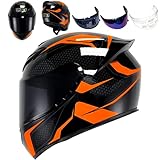
- 【Professional Safety Grade】HTLNUZD Series Motorcycle helmet meets DOT FMVSS-218 and ECE 22.05 Safety Standards complies with the required USA regulation, effectively protects the head, and ensures riding safety and comfort.
- 【Safety Protection】The high-density EPS buffer layer has excellent shock absorption effect, Visor lock keeps the outer visor firmly attached on the helmet while riding at High Speed, Is easy to remove or replace,and protects the riding eyes from damage.
- 【Easy to clean】The removable and washable inner lining makes cleaning more convenient, softer, more comfortable and better fit, prolongs the service life of the helmet.
- 【Excellent Safety】High strength ABS outer shell + high-quality EPS foam inner shell. Firm and durable, light weight, elastic design, providing the best impact absorption. Meetings or exceeds the DOT safety standard.
- 【Ventilation】The streamlined helmet design effectively reduces wind resistance,The ventilation holes can be opened and closed flexibly, dissipating the heat inside the helmet in summer and keeping warm in winter.
Creditors approved a plan requiring a 30% cash payment, the plan became legally binding on June 16, 2025, and KTM avoided liquidation. The group paid €525 million under the final restructuring arrangement and obtained substantial relief from its outstanding liabilities.
The rescue also changed who controlled the business. Bajaj Auto, which had already been KTM’s strategic partner and minority shareholder, exercised a call option in November 2025 and gained indirect control of approximately 74.9% of the listed parent. That parent was renamed Bajaj Mobility AG in January 2026. The KTM, Husqvarna and GASGAS brands continue to operate.
The most accurate current description is therefore: KTM has completed its legal restructuring and is showing an operational recovery, but it remains in the middle of a painful financial and organizational turnaround.
Recommended Free Tools
Why KTM ran out of liquidity
KTM’s crisis was not caused by one bad quarter or simply by motorcycles becoming unpopular. The company’s 2024 financial reporting describes a cash-flow problem produced by several decisions and market pressures arriving at the same time:
- Production and dealer shipments expanded faster than final-customer demand.
- Dealers accumulated too many motorcycles and began selling existing stock instead of ordering more.
- Very long dealer-payment terms tied up cash in receivables.
- Demand weakened in Europe and North America.
- Austrian wages, material costs and fixed production costs rose.
- Product-development spending increased substantially.
- Loss-making bicycle operations and MV Agusta required significant financing.
- Credit lines, factoring and supply-chain financing were already heavily used when liquidity needs peaked.
That combination explains why KTM could report substantial historical sales and still face a liquidity emergency. Revenue is not the same as cash collected, and shipments to dealers are not the same as motorcycles sold to riders.
Dealer shipments were not the same as consumer demand
KTM expanded production and sales to dealers through 2023, but dealer sales to final customers did not keep pace. By the end of that year, dealers held excessive inventory. During 2024, many dealers sold from that existing stock rather than accepting additional motorcycles from KTM.
This distinction matters. A manufacturer can record a motorcycle as sold when it ships to a dealer, even though the dealer may not yet have sold it to a consumer. If the dealer network becomes overstocked, future orders slow sharply. The manufacturer then faces falling production, discount pressure and a large amount of cash tied up in unsold inventory throughout the distribution chain.
The Tool Desk
Outbyte PC Repair FREERepair Windows errors before they cause bigger problemsFix Now →Outbyte Driver Updater FREEFix the driver behind crashes, sound loss and screen glitchesFind Drivers →KTM’s own explanation of the problem, including overproduction and inventory accumulation, is set out in its 2024 annual financial report.
Payment terms nearly doubled working-capital needs
To support its 2023 sales volumes, KTM offered some dealers payment terms of roughly 270 to 360 days. In other words, KTM could have to wait nine months to a year after a shipment before receiving the cash.
Those terms nearly doubled the company’s working-capital requirements, according to the annual report. KTM had to finance production, materials, labor and logistics long before the related dealer receivables were collected. When demand weakened and dealers stopped taking new stock, the cash cycle became even more difficult.
This is the central financial lesson in KTM’s collapse: strong reported sales can conceal a weakening balance sheet when growth depends on inventory financing and extended customer credit.
Demand weakened in key markets
Economic conditions weakened in Europe and motorcycle demand declined in the United States. KTM reported that 2024 group motorcycle sales fell 18.7% in Europe and 27.5% in North America.
The first-half 2024 figures already showed the pressure:
- Revenue of €1.007 billion, down 27.4% year over year.
- Motorcycle sales of 147,496 units, down 21.2%.
- EBIT of negative €195 million.
- Net loss of €172 million.
- Net debt of €1.469 billion, up 89.3% year over year.
The figures are from PIERER Mobility’s first-half 2024 report, published before the formal restructuring filing.
Higher costs in Austria
KTM’s annual report says Austrian wages and salaries rose by approximately 25% over three years, while material costs increased by about 15%. Lower production volumes then made it harder to spread fixed factory and administrative costs across each motorcycle.
The group had already been planning to shift selected production and research-and-development work to lower-cost partner locations. A December 2023 strategy announcement said Bajaj would expand production of smaller motorcycles in India, while CFMOTO would assemble certain 790–950cc street motorcycles in China. This was not a plan to move every KTM motorcycle out of Austria, but it did show the cost pressure facing the company before the insolvency process.
Rank #2
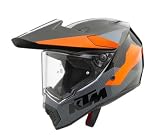
- Exclusively for KTM by AGV. Aerodynamic adventure helmet. Pinlock Max Vision anti-fog lens included. Weight 1,450 g (±50 g).
- Shell made of carbon/fiber glass mix. Three ways to wear it: peak and visor, peak only, visor only. Multi-part EPS core. Effective ventilation system.
- Double D-ring fastener. Removable, washable, moisture wicking inner lining and cheek pads. 82 % carbon / 11 % aramid / 7 % fibreglass.
- DOT Approved
- Breathable , high ventilation design contains reflective markings for visibility.
The 2023 production and R&D strategy announcement described the intended relocation of selected activities and a sharper focus on the core motorcycle brands.
Product complexity and development spending
KTM expanded a multi-brand portfolio covering KTM, Husqvarna, GASGAS, motorcycles, bicycles and other businesses. A broad portfolio can increase market reach, but it also requires more model development, tooling, inventory and marketing.
Capitalized research-and-development expenses increased by approximately €288 million over the two years covered by KTM’s annual report. That investment may support future products, but it also increased the amount of cash committed before the products generated returns.
What’s actually slowing this PC down?
Pick the symptom - the matching free tool is one click away.
Bicycles and MV Agusta added to the cash drain
The former PIERER Mobility group was more than a motorcycle manufacturer. Its bicycle operations suffered a particularly severe downturn in 2024:
- Bicycle revenue fell 53.7% to €111.5 million.
- Bicycle EBITDA was negative €256.4 million.
- Bicycle EBIT was negative €291.1 million.
KTM also provided approximately €220 million of financing support to MV Agusta. At the end of 2024, KTM AG had a financial claim of approximately €372 million against the PIERER New Mobility subgroup.
These businesses consumed financing at the same time that the core motorcycle operation was dealing with excess stock and weaker demand. The restructuring consequently moved toward a narrower motorcycle-focused group.
Debt and financing facilities became unsustainable
KTM’s net debt, excluding receivables from financing activities, rose from €444.8 million to €1.6071 billion in 18 months. The company attributed that increase principally to:
- Approximately €331 million for the new-mobility subgroup.
- Approximately €217 million for MV Agusta.
- Approximately €508 million of working-capital financing.
- Additional research-and-development investment.
By autumn 2024, KTM expected that it might breach financial covenants. Existing working-capital credit lines, factoring arrangements and supply-chain financing were already heavily used, leaving limited room to raise more money outside a formal restructuring.
The result was a classic liquidity crisis: the company had valuable brands, factories and products, but not enough immediately available cash to meet all obligations as they came due.
What drastic measures did KTM take?
Two Austrian production shutdowns
KTM halted production in Austria from December 13, 2024, to March 17, 2025. Production stopped again from April 28, 2025, to July 27, 2025.
The shutdowns were not a permanent closure of the Austrian factories. They were intended to reduce inventory, conserve cash and bring production into better alignment with dealer demand. Production resumed on all four Austrian lines at the end of July 2025.
Free tools Windows power users keep installed
One-click scans. No signup required.
The scale of the reduction was substantial. In the first half of 2025, the Mattighofen and Munderfing sites produced only 4,943 motorcycles, compared with 76,386 in the first half of 2024. Group motorcycle production fell to 55,423 units from 168,165, according to the first-half 2025 report.
Inventory liquidation released cash
Reducing stock was one of the most important survival measures. During the first half of 2025, KTM sold 50,334 motorcycles to dealers and importers, while dealers and importers sold more than 100,000 motorcycles to end customers. KTM said inventory reduction released approximately €166 million of liquidity.
By the end of 2025, reported vehicle inventories had fallen by 101,153 units, from 248,580 to 147,427.
There is an apparent discrepancy in public figures: a European Commission document referred to approximately 265,000 motorcycles in stock during the crisis. That number should not be combined mechanically with the 248,580 figure. The difference may reflect a different date, group scope or inventory definition. The company’s comparable year-end figures show the direction clearly: inventory was reduced materially.
Quick wins for a faster PC:
Fix the driver behind crashes, sound loss and screen glitchesFind Drivers →Repair Windows errors before they cause bigger problemsFix Now →Scan for outdated or missing drivers - takes under a minuteDriver Scan →For KTM, selling down inventory did more than clear showroom space. It converted motorcycles and parts already on hand into cash, reduced storage and financing costs, and gave the company a chance to restart production without immediately recreating the excess-stock problem.
Rank #3

- Genuine KTM Kids Helmet
- Authorized KTM Dealer
- Developed for younger person's anatomy
- Removable, washable, moisture wicking inner lining and cheek pads
- Exclusively for KTM by TLD
Layoffs, shorter hours and lower compensation
KTM’s workforce reductions happened in several waves, so there is no single reliable “KTM layoffs” number without specifying the date and scope.
| Period or program | What it represents |
|---|---|
| Earlier relocation program | Approximately 300 Austrian jobs were associated with moving selected mid-range production and R&D activities. |
| Late 2024 restructuring | Planned redundancies were filed across KTM AG, KTM Components GmbH and KTM Forschungs & Entwicklungs GmbH. |
| By June 2025 | Group headcount had fallen to 4,303, a year-over-year reduction of 1,721 people. |
| January 2026 program | KTM announced a further reduction of approximately 500 employees, mainly in salaried roles and middle management. |
| Expected timing | The Q1 2026 report said the 500-person reduction was expected to be completed by Q3 2026. |
During the restructuring, KTM also used temporary reductions in working hours and compensation. Those measures were designed to retain employees while lowering payroll costs during the production stoppages.
The January 2026 efficiency program and Q1 2026 report provide the latest information on the additional workforce reduction.
Non-core businesses were sold or wound down
The restructuring narrowed the group around its principal motorcycle brands and operations. Measures included:
- The sale of MV Agusta.
- The sale of the KTM X-BOW/Sportcar operations.
- The wind-down of the bicycle business.
- The sale of FELT Bicycles.
- The termination of CFMOTO distribution.
- A simpler motorcycle model range.
- Fewer layers of management and less organizational complexity.
These actions involve trade-offs. Divestitures can generate cash and eliminate future funding demands, but they also reduce diversification and may shrink the group’s revenue base. A simpler product range can reduce manufacturing and inventory complexity, although it may leave dealers with fewer models to sell.
Motorsport remained a strategic trade-off
KTM’s annual report acknowledged that motorsport spending was relatively high. From a strict short-term cash perspective, racing is an obvious area to question. However, motorsport also supports product development, brand visibility and dealer interest.
The group retained its racing presence and reported 29 championship titles in 2025. The decision reflects a trade-off rather than proof that racing either caused or solved the crisis: cutting it could save cash, while maintaining it may protect brand equity and engineering capabilities.
What did “self-administered restructuring” mean?
Under Austrian law, self-administration meant that the affected companies remained involved in managing their businesses while operating under court supervision. The objective was to continue trading, preserve value and negotiate an approved plan rather than immediately sell assets through liquidation.
The process covered three legal entities:
- KTM AG, the core motorcycle operating company.
- KTM Components GmbH.
- KTM Forschungs & Entwicklungs GmbH.
KTM AG was a wholly owned subsidiary of the former PIERER Mobility AG. The proceeding did not mean that every KTM-branded sales company, importer or dealership worldwide entered the same Austrian court process.
Creditors approved a restructuring plan on February 25, 2025. The plan provided for a 30% cash quota. An initial announcement said €548 million had to be deposited by May 23; later reporting put the final amount paid for the three affected companies at €525 million.
The restructuring became legally binding on June 16, 2025. Approximately €1.695 billion of liabilities were derecognized, and the group recorded a restructuring profit of approximately €1.1865 billion in the first half of 2025. The final 2025 reported restructuring gain was approximately €1.193 billion.
Quick wins for a faster PC:
Fix the driver behind crashes, sound loss and screen glitchesFind Drivers →Clear out junk files and repair common Windows errorsFree Scan →That accounting relief was critical to avoiding liquidation, but it should not be confused with cash profit from selling motorcycles. Creditors accepted the plan because receiving 30% through a continuing business was considered preferable to the likely recovery from a disorderly liquidation.
How Bajaj financed the rescue and took control
Bajaj’s role developed in stages. It was already KTM’s strategic partner and minority shareholder, and its manufacturing relationship with KTM had existed before the insolvency crisis.
During the restructuring period, Bajaj-related financing included:
- A €50 million liquidity facility that helped restart production in March 2025.
- A €450 million loan from Bajaj Auto International Holdings B.V. to KTM AG.
- A further €150 million provided to PIERER Mobility AG to help meet the restructuring funding requirement.
In November 2025, Bajaj exercised its call option and became the sole shareholder of the intermediate holding company. This gave Bajaj indirect control of approximately 74.9% of the listed parent, according to Bajaj’s control announcement.
That does not mean Bajaj bought 100% of every KTM-related company or that all listed shares disappeared. Approximately 74.9% refers to indirect control of the listed holding company; the remaining shares remain in free float. The corporate parent changed its name from PIERER Mobility AG to Bajaj Mobility AG, with the change entered in Austria’s commercial register on January 13, 2026.
Rank #4

- Ultra light weight durable aerodynamic thermoplastic alloy shell;
- 3-level top ventilation control and 5-position ventilation channel;
- Heavily cushioned and comfortable interior, Removable and washable;
- Beautiful glossy UV protective finish;
- Aerodynamic rear venturi-effect exhaust spoiler; DOT Approved; Meets Federal Motor Vehicle Safety Standard 218 (FMVSS 218);
Bajaj also arranged a new €550 million unsecured, five-year refinancing loan from an international banking consortium in February 2026. That refinancing replaced the earlier €450 million Bajaj loan to KTM AG. It is evidence that the company regained access to institutional financing, but it is not evidence that KTM became debt-free.
Shareholders and prospective investors can find the current ownership information in Bajaj Mobility’s shareholder structure disclosure.
The numbers: crisis, restructuring and early recovery
The financial figures need to be read in context. The 2024 figures show the crisis. The 2025 figures show balance-sheet repair, but include a very large accounting gain. The 2026 figures provide early evidence of better operating momentum, although the complete first-half report was not yet available as of August 10.
| Measure | 2024 crisis year | 2025 restructuring year | 2026 latest available as of Aug. 10 |
|---|---|---|---|
| Revenue | Approximately €1.879 billion | €1.009 billion | Q1: €331.3 million; Q2 preliminary: approximately €370 million |
| Motorcycle sales | 292,497 units | 209,704 units | H1 preliminary: 147,572 units |
| Net debt | €1.643 billion | €798 million | Full H1 figure pending |
| Profitability | Motorcycle EBIT: negative €887 million | EBITDA: €874 million; EBIT: €748 million | Q1 EBITDA: positive €5.5 million; Q1 EBIT: negative €26.1 million |
| Equity | Negative €194 million | €385 million | Q1: €350.7 million; equity ratio 22.2% |
| Vehicle inventory | Elevated | Down 101,153 units to 147,427 | Further reduction remains a key indicator |
Sources for the comparison include the 2024 annual report, the audited 2025 annual report announcement, the Q1 2026 report and the company’s preliminary Q2 2026 figures.
Why the €590 million 2025 profit is misleading without context
Bajaj Mobility reported 2025 net profit of €590 million, alongside €874 million of EBITDA and €748 million of EBIT. Those numbers look like a dramatic turnaround from 2024’s €1.080 billion net loss.
But the 2025 result included approximately €1.193 billion of restructuring gain, primarily reflecting the derecognition of liabilities under the creditor plan. That gain improved reported profit and equity, but it was not recurring revenue from motorcycle sales.
For assessing the underlying business, investors should give more weight to:
Do these 3 things before closing this tab:
1Repair Windows errors before they cause bigger problems2Fix the driver behind crashes, sound loss and screen glitches3Clear out junk files and repair common Windows errors- Motorcycle sales to consumers, not only shipments to dealers.
- Dealer inventory and discounting.
- Operating cash flow.
- EBITDA excluding restructuring effects.
- EBIT after depreciation and other operating costs.
- Net debt and refinancing requirements.
The 2025 profit was an important balance-sheet event, but it should not be interpreted as KTM suddenly earning €590 million annually from normal operations.
What the 2026 results show
Q1 2026 offered clearer evidence of operating improvement. Group revenue reached €331.3 million, up 70.2% year over year. Motorcycle sales rose to 40,332 units, up 125.1%, and motorcycle revenue rose 151.6% to €272.4 million. EBITDA was positive at €5.5 million.
However, Q1 EBIT remained negative at €26.1 million. That distinction matters because EBITDA excludes depreciation and certain other costs. Positive EBITDA is encouraging, but it does not by itself prove that the complete business is profitable or generating enough cash to reduce debt.
Preliminary Q2 figures released July 15, 2026 showed:
- Q2 motorcycle sales outside India of 48,672 units, up 71% year over year.
- H1 worldwide motorcycle sales of 147,572 units, up 81%.
- H1 motorcycle revenue of approximately €700 million, compared with €373 million in H1 2025.
- A Q2 EBITDA margin of approximately 8.7%.
- An H1 EBITDA margin of approximately 5.4%, excluding the restructuring gain.
These figures were preliminary and unaudited. The full H1 2026 report was scheduled for August 27, 2026, after the status date of this article. The rebound is therefore real in the available sales and EBITDA data, but it is too early to call the turnaround complete.
Independent reader supportYour contribution helps us test, update, and keep practical guides available for everyone.What happened to KTM’s Austrian identity?
KTM retains its Austrian headquarters, brand heritage and core Austrian production sites. But the group is now more internationally integrated than the “Made in Austria” image alone suggests.
Selected mid-range manufacturing and R&D activities had already been planned for India and China before the crisis. Bajaj now controls the parent company, and the organization has reduced Austrian staffing and production volumes. At the same time, the Austrian plants remain strategically important and were restarted across all four lines in July 2025.
The most accurate description is a hybrid structure:
Outdated Drivers Are Slowing You Down
One free scan finds every outdated or missing driver and matches the right update for your exact hardware.Free scan · exact hardware matchWindows Errors? Fix Them Before They Spread
Repair common Windows errors and clear accumulated junk for a smoother, more stable PC - no reinstall needed.Free scan · no reinstall- Austrian engineering, headquarters, brand history and major production facilities.
- Indian ownership and manufacturing partnerships.
- Chinese production of selected motorcycles through the CFMOTO relationship announced before the restructuring.
- KTM, Husqvarna and GASGAS as the core consumer-facing brands.
It is inaccurate to say every KTM motorcycle is now made in Asia. It is equally inaccurate to treat KTM as an entirely Austrian-owned and Austrian-produced company.
Best Value

- Meets or exceeds FMVSS-218 and DOT Safety Standards.
- Visor lock keeps the outer visor firmly attached on the helmet while riding at High Speed, ensures safety.
- Multiple vents for optimum ventilation, quick release and metal buckle offers solid protection.
- Removable, replaceable and washable inner liner with Comtex Technology, softer, more comfortable and better fit.
- Full face helmet comes with 2 visors(Clear and Mirrored Visors), both are compatible with Pin-lock anti-fog visor(Not Included) and 2 fins(Tinted Black and Mirrored Fins).
What the crisis means for owners, dealers and investors
For motorcycle owners
The Austrian restructuring applied to specific legal entities, not automatically to every global KTM sales company or dealer. A restructuring filing also does not mean that every dealership or warranty arrangement immediately failed.
Owners should treat practical questions—parts availability, warranty claims, recalls and dealer support—as matters that may depend on the relevant country, importer and contract. Keep purchase records and maintenance documentation, and contact the selling dealer or official local KTM importer for warranty-specific answers. The company’s legal restructuring status alone is not enough to determine an individual customer’s rights.
For dealers
The inventory correction is both an opportunity and a risk. Lower stock can improve dealer cash flow and reduce discounting, but the company must rebuild orders without repeating the earlier problem of sending more motorcycles into the channel than customers are buying.
The most meaningful recovery signal is therefore not simply a surge in factory shipments. It is sustained consumer sell-through, healthier dealer inventories and fewer forced discounts.
For investors
Bajaj’s control and the €550 million refinancing materially reduce the immediate risk of a disorderly collapse. They do not eliminate execution risk. Investors still need to monitor debt, interest costs, operating cash flow, recurring EBIT, factory utilization and whether motorcycle demand remains strong after the post-restructuring rebound.
The 2025 accounting profit should be separated from the underlying operating recovery. A company can improve its balance sheet through creditor concessions while still needing several years of profitable operations to demonstrate that its business model is durable.
Is KTM financially healthy now?
The answer depends on what “healthy” means:
- Legally: Yes, the Austrian restructuring plan became binding in June 2025 and KTM avoided liquidation.
- Operationally: There are encouraging signs. Motorcycle sales, revenue, inventory and EBITDA improved in the latest available periods, and Austrian production resumed.
- Financially: The turnaround is not complete. KTM still carries debt, used a major refinancing facility, continued reducing its workforce and had negative EBIT in Q1 2026.
- As a recurring-profit business: Not yet proven. The 2025 profit was heavily inflated by the restructuring gain, while the complete H1 2026 figures were still pending as of August 10.
“Saved from collapse” is defensible. “Debt-free,” “fully recovered” and “back to record profitability” are not.
What’s actually slowing this PC down?
Pick the symptom - the matching free tool is one click away.
What to watch next
The next meaningful checkpoints are:
- The full H1 2026 report: Scheduled for August 27, 2026, it should provide more complete information on EBIT, cash flow, debt and the balance sheet.
- Positive EBIT and cash flow: Positive EBITDA is a useful step, but depreciation, interest and working-capital movements determine whether the group is truly generating cash.
- Dealer inventory: KTM needs to maintain strong consumer sell-through without recreating excess stock or relying on heavy discounting.
- Workforce reduction: The additional 500-person program was expected to be completed by Q3 2026.
- Post-rebound demand: Sales growth following a shutdown and inventory correction can look exceptionally strong. The test is whether growth continues once comparisons normalize.
- Austrian competitiveness: Reduced volumes must be matched with a cost structure that makes the Austrian plants economically viable.
- Bajaj’s strategy: Investors will want to see whether Indian ownership leads to more efficient production, product development and financing without weakening KTM’s premium positioning.
- Model simplification and quality: A narrower range could improve margins and reduce complexity, but execution and customer confidence remain important.
Bottom line
KTM’s 2024 crisis was a liquidity failure created by excess dealer inventory, unusually long payment terms, falling demand, high costs, heavy development spending and cash-consuming side businesses. The company responded with measures that were drastic but logical for a manufacturer trying to avoid liquidation: it stopped Austrian production twice, sold down stock, cut jobs, sold or closed non-core operations and negotiated creditor relief.
Bajaj supplied the financing needed to keep the company operating and ultimately became its controlling shareholder. The legal restructuring is over, and 2026 results show an early operational recovery. But the company still has to prove that it can produce recurring operating profit and cash flow without relying on one-time debt relief, exceptional sales comparisons or further financial support.
Frequently Asked Questions
Did KTM actually go bankrupt?
KTM AG and two Austrian subsidiaries entered court-supervised restructuring with self-administration in November 2024. The process was completed in June 2025, and the companies avoided liquidation. Calling the event an unqualified bankruptcy is therefore imprecise.
Does Bajaj own 100% of KTM?
Bajaj gained indirect control of approximately 74.9% of the listed parent, now called Bajaj Mobility AG. It became the controlling shareholder, but that is not the same as owning 100% of every KTM-related company or eliminating the listed company’s remaining free-float shareholders.
The Tool Desk
Outbyte PC Repair FREEClear out junk files and repair common Windows errorsFree Scan →Outbyte Driver Updater FREEFix the driver behind crashes, sound loss and screen glitchesFind Drivers →Why did KTM report a €590 million profit in 2025 after its crisis?
The 2025 result included approximately €1.193 billion in restructuring gain from liabilities being derecognized under the creditor plan. The reported profit therefore does not represent recurring profit from motorcycle operations.
Are KTM motorcycles still being made in Austria?
Yes. Austrian production resumed on all four lines at the end of July 2025. However, selected mid-range manufacturing and R&D activities had already been planned for India and China, so KTM now operates with a hybrid Austrian and international production structure.
Is KTM fully recovered in 2026?
Not yet. Sales and EBITDA improved substantially in the preliminary 2026 figures, but Q1 EBIT was still negative, the group still carries debt and another workforce reduction was underway. The full H1 2026 report was scheduled for August 27, 2026.
The Bottom Line
KTM survived its insolvency crisis, but survival is not the same as full recovery. Bajaj’s financing, creditor settlement and aggressive cost-cutting stabilized the group, while 2026 sales and EBITDA suggest an operating rebound. The decisive test is whether KTM can turn that rebound into sustainable EBIT and positive cash flow after the one-time restructuring gain disappears.
Recommended Free Tools
Quick Recap
Product prices and availability are accurate as of the date/time indicated and are subject to change. Any price and availability information displayed on Amazon at the time of purchase will apply.




