What’s actually slowing this PC down?
Pick the symptom - the matching free tool is one click away.
On March 18, 2025, U.S. District Judge Theodore Chuang ruled that Elon Musk likely exercised authority at the Department of Government Efficiency (DOGE) that required a constitutionally valid appointment. The finding came in a preliminary injunction in a case brought by USAID employees and contractors—not a final judgment that Musk’s role was unconstitutional.
What Judge Chuang found
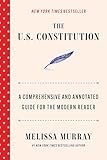
The central question was what Musk actually did, not simply what title he held. The Appointments Clause governs the appointment of federal officers. Chuang concluded at the preliminary-injunction stage that evidence of Musk’s operational authority at DOGE likely made him an officer exercising powers that required a proper appointment.



The administration disputed that Musk was DOGE’s head and described him as a presidential adviser. The judge’s analysis focused on the evidence of actual control and public statements, rather than accepting that characterization as decisive. TechCrunch reported Chuang’s conclusion this way: “Musk has exerted actual authority at USAID that only a properly appointed Officer can exercise.”
What the preliminary injunction required
The order addressed access to USAID systems and further DOGE activity at the agency. It required restoration of email and computer access for USAID employees, including employees placed on administrative leave, and restricted further DOGE actions at USAID unless authorized by a legally authorized official.
Do these 3 things before closing this tab:
1Repair Windows errors before they cause bigger problems2Scan for outdated or missing drivers - takes under a minute3Clear out junk files and repair common Windows errors#1 Best Overall
It did not reverse firings or fully restore USAID. The Associated Press reported Chuang’s observation that “Taken together, these facts support the conclusion that USAID has been effectively eliminated.” That description of the agency’s condition is distinct from the injunction’s specific relief.
Why “likely” matters
A preliminary injunction is interim relief while a case proceeds. At this stage, the court assesses whether the plaintiffs have shown, among other requirements, a likelihood of success; it does not issue a final merits judgment after trial. Chuang therefore found that the plaintiffs were likely to prevail on their Appointments Clause claim, not that the claim had been finally decided.
Independent reader supportYour contribution helps us test, update, and keep practical guides available for everyone.What the later Fourth Circuit order did—and did not decide
On March 4, 2026, the Fourth Circuit issued an order in the same case concerning discovery, specifically whether certain officials could be deposed. It granted mandamus relief on the record then before it, directing protective relief because the plaintiffs had not yet shown extraordinary circumstances for the depositions. The court expressly said that its decision did not bar depositions for the remainder of the proceedings.
That discovery ruling did not decide whether Musk’s DOGE role violated the Appointments Clause. The sources available here do not establish a later appellate disposition of the March 2025 preliminary injunction or a final merits judgment. Accordingly, the injunction should not be described as currently in force or vacated without consulting the controlling docket and order.
Quick Recap
Best Value
Rank #3

- 25 pocket sized copies of the United States Constitution
- Each book measures 3.25" X 6.5"
- Also includes the Bill of Rights, Amendments 11-27, The Declaration of Independence, and a complete index
- Proofed word-for-word against the original Constitution housed in the Archives in Washington, D.C. and identical in spelling, capitalization and punctuation.
Product prices and availability are accurate as of the date/time indicated and are subject to change. Any price and availability information displayed on Amazon at the time of purchase will apply.




