Crashes, No Sound, or Screen Glitches?
Random freezes, missing sound and display glitches usually trace back to one bad driver. Find and replace yours safely.Free scan · under a minuteWindows Errors? Fix Them Before They Spread
Repair common Windows errors and clear accumulated junk for a smoother, more stable PC - no reinstall needed.Free scan · no reinstallShort answer: Blue Origin has entered the orbital-data-center race through two different initiatives, but it has not deployed a functioning hyperscale data center in space. Its TeraWave project is a planned connectivity network for enterprise, government and data-center customers. Separately, an FCC public notice describes Project Sunrise, an application for up to 51,600 satellites intended to operate as a data center in space. That filing is not proof of final approval, mass production, launches or commercial availability.
What Blue Origin has actually announced
The headline is supportable only if “enters” means announces infrastructure and files a regulatory application. The evidence does not show a production cloud region operating in orbit.
TeraWave: connectivity and backhaul
Blue Origin announced TeraWave on January 21, 2026, as a space-based network aimed at enterprise customers, data centers and government users. Its announced design contains 5,280 low-Earth-orbit satellites and 128 medium-Earth-orbit satellites, or 5,408 satellites in total.
Blue Origin claims optical inter-satellite links, radio-frequency and optical customer connections, aggregate network access of up to 6 Tbps and individual connections of up to 144 Gbps. Deployment is planned to begin in Q4 2027. Those are announced design and performance claims, not independently verified operating results. TeraWave is primarily a communications and route-diversity system; it is not, by itself, a confirmed orbital server farm.
#1 Best Overall

- Save valuable floor space: 6U wall mount server cabinet Dimensions: 13.78" H x21.65" W x17.72" D.Maximum mounting depth is 14.2"
- Keep critical network equipment secure: glass door and side panels are lockable to prevent unauthorized access. Front door can be installed on either side of the front of the cabinet to satisfy your door swing orientation preference
- Easy equipment configuration: Fully adjustable mounting rails and numbered U positions, with square holes for easy equipment mounting with top and bottom punch-out panels for easy cable access
- Durability: Made of high quality cold rolled steel holds up to 110lb (50kg) (Easy Assembly Required)
- PCI & HIPPA and EIA/ECA-310-E compliant
Project Sunrise: the proposed orbital data center
An FCC public notice dated March 19, 2026 describes Blue Origin’s separate Project Sunrise application. It proposes up to 51,600 satellites in circular, sun-synchronous orbits between 500 and 1,800 kilometers, with roughly 300 to 1,000 satellites per orbital plane. The filing says the system is intended “to operate as a data center in space.”
The notice is a regulatory document describing an application. It does not establish that the FCC has granted final authorization, that Blue Origin has funded the full constellation, that satellites are being mass-produced, or that customers can buy compute capacity. The application also requests waivers involving FCC rules 25.155(b), 25.157(c), 25.164, 25.165 and 25.112(a), showing that spectrum, deployment and space-safety questions are part of the review.
TeraWave and Sunrise are not the same system
| Initiative | Primary role | Announced scale | Status |
|---|---|---|---|
| TeraWave | Enterprise, government and data-center connectivity, backhaul and route resilience | 5,408 satellites: 5,280 LEO and 128 MEO | Announced; deployment planned from Q4 2027 |
| Project Sunrise | Proposed orbital computing and data-center constellation | Up to 51,600 satellites | FCC application/public notice; not established as authorized or operational |
| Blue Ring | Payload delivery, hosting and in-space infrastructure services | Individual spacecraft platform | In development and mission demonstrations |
| Amazon Leo | Amazon’s separate satellite-broadband network | More than 3,000 satellites planned | Separate Amazon business, formerly Project Kuiper |
TeraWave could connect ground facilities or orbital nodes, but public material does not confirm that it is the compute layer for Sunrise. Blue Ring may provide adjacent logistics or hosting capabilities, yet it is not identified as the Sunrise architecture. Treating all three as one deployed platform would overstate what has been confirmed.
Why put computing in orbit?
Proponents see several possible advantages, especially for artificial-intelligence and satellite-generated data:
The Tool Desk
Outbyte PC Repair FREEClear out junk files and repair common Windows errorsFree Scan →Outbyte Driver Updater FREEFix the driver behind crashes, sound loss and screen glitchesFind Drivers →- Data locality: Earth-observation, scientific and military satellites could process imagery or sensor data before sending every raw file to Earth.
- Power potential: Selected orbits can provide frequent or near-continuous sunlight, although arrays, storage and power-management hardware add mass.
- Terrestrial constraints: Orbital facilities avoid buying large terrestrial sites and may reduce dependence on local grids and water supplies.
- Network resilience: Optical links between spacecraft could create alternative routes when terrestrial fiber is unavailable or damaged.
- Edge AI: In-orbit inference could reduce the amount of data that must be downlinked for a decision to be useful.
These are potential benefits, not established economic results. Space does not automatically make computing cheaper, greener or lower-latency for ordinary Earth-based applications.
The engineering and business obstacles
Launch and replacement economics
Every processor, storage device, radiator, solar array and replacement unit must reach orbit. AI accelerators can become obsolete faster than spacecraft can be launched, tested and replaced. A viable system must beat the cost of expanding a terrestrial data center, renewable-powered campus or edge deployment after launch, insurance and replacement are included.
Rank #2

- Universal 19” Rack Mount Compatibility – Perfect for pro audio, video, IT, and network gear. Compatible with mixers, routers, patch panels, servers, power amps, and more.
- Heavy-Duty Load Capacity – Built to support up to 550 lbs. Ideal for studio gear, DJ setups, server equipment, and AV components that demand serious stability.
- Robust Steel Frame & Design – Made with 1.5mm thick steel and weighs 36 lbs for maximum durability, reduced vibration, and long-term reliability in any setting.
- Mobile & Secure – Preinstalled with 3” industrial-grade caster wheels (lockable), making it easy to move and position your rack exactly where you need it.
- All-In-One Setup Kit Included – Comes with 34 rack screws (5mm & 6mm), a 1U blank spacer, and an assembly tool—ready for fast installation out of the box.
Heat rejection in vacuum
Space is cold, but vacuum eliminates ordinary air convection. High-density compute must reject heat through radiators, which can become a major spacecraft-design constraint. Solar power availability does not solve thermal management.
Radiation and reliability
Processors may need shielding, error correction, redundancy or radiation-tolerant components. A failed orbital server cannot be swapped like a rack-mounted machine unless the architecture includes repair, docking or rapid replacement.
Quick wins for a faster PC:
Repair Windows errors before they cause bigger problemsFix Now →Fix the driver behind crashes, sound loss and screen glitchesFind Drivers →Clear out junk files and repair common Windows errorsFree Scan →Networking, security and regulation
Large constellations require spectrum coordination, collision avoidance, debris mitigation, command-system security and international licensing. The attack surface spans spacecraft, optical links, gateways, ground stations, cloud-control planes and supply chains. Tens of thousands of satellites also create substantially more coordination and space-sustainability risk.
Blue Origin’s strategic position
Blue Origin brings more than a constellation proposal. Its New Glenn launch vehicle, satellite-system work and Blue Ring spacecraft could support a vertically integrated strategy covering launch, spacecraft, connectivity and orbital hosting. The company also has a close relationship with Amazon founder Jeff Bezos.
AWS says it worked with Blue Origin on the Blue Origin Ground System Architecture and used AWS GovCloud, high-performance computing and AI technologies for New Glenn’s first orbital mission. That demonstrates cloud and mission-operations cooperation, not a public AWS commitment to operate Sunrise as a commercial cloud region. Blue Origin’s Mars Telecommunications Orbiter concept likewise mentions edge processing, storage and AI as future capabilities, not a deployed general-purpose cloud.
How the competition compares
SpaceX
The FCC has also accepted for filing a SpaceX proposal for an orbital-data-center system of up to one million satellites, with proposed operations approximately 500 to 2,000 kilometers above Earth and extensive optical networking. That is a proposed maximum, not a deployed count or proof of commercial viability. Blue Origin’s Sunrise plan is therefore part of a broader regulatory and engineering contest.
Rank #3

- ADJUSTABLE DEPTH: 4- Post 22U 19" server rack enclosure with 4 vertical rails and adjustable mounting depth 5.7" to 33.0" (14,4cm to 83,8cm); IT rack is compatible with various servers / switches / data / video / AV and other IT networking equipment
- EASY SHIPPING AND ASSEMBLY: Enclosed 22U data rack cabinet ships compact flat-packed to avoid damage and facilitate installation; Include wheels & levelling feet to offer more stability; Home server rack cabinet is only 46.6in (118,3cm) in height
- DESIGN AND VENTILATION: Half height server rack cabinet has lockable and removable door and side panels with vented top allowing airflow; 4 Post 19" rack with 1764lb (800kg) weight capacity (stationary); Computer cabinet rack is EIA/ECA-310-E Compliant
- HARDWARE INCLUDED: Rolling home network rack includes rack mounting and equipment mounting hardware, such as 20 M6 cage nuts / screws, PVC cup washers; Front/rear doors and side panels Keys, 2x allen keys; Rack assembly hardware; Casters and leveling feet
- THE IT PRO'S CHOICE: Designed and built for IT Professionals, this 22U IT Server Cabinet is backed for life, including free lifetime 24/5 multi-lingual technical assistance
Axiom Space
Axiom’s approach is smaller and more incremental. It says an AWS Snowcone was launched and operated aboard the International Space Station in 2022, and it has announced Orbital Data Center nodes for national-security, civil and commercial users. This gives Axiom a publicly described station-based demonstration path, while Sunrise proposes a far larger constellation. See Axiom’s Orbital Data Centers overview.
Starcloud and other projects
Starcloud is pursuing smaller orbital-computing demonstrations, but specific claims about workloads, launch dates or constellation size should not be treated as established here without stronger primary documentation. Google and other technology companies are also exploring space-based computing, but their designs and maturity are not necessarily comparable.
Amazon Leo and AWS
Amazon Leo is Amazon’s renamed Project Kuiper broadband constellation, separate from Blue Origin’s Sunrise proposal. Amazon says Leo will use launches from Arianespace, Blue Origin, SpaceX and ULA. Amazon ownership, AWS collaboration and Blue Origin operations should not be collapsed into a single company or product.
What has happened so far?
| Milestone | What the public evidence supports |
|---|---|
| Announced | TeraWave’s 5,408-satellite connectivity design and Q4 2027 deployment target |
| Filed | Project Sunrise application for up to 51,600 satellites |
| In development | New Glenn, Blue Ring and related space infrastructure |
| Demonstrated | AWS/Blue Origin mission-operations cooperation; Axiom’s ISS Snowcone demonstration |
| Operational | No confirmed Blue Origin orbital data-center service |
| Commercially available | No public Sunrise ordering path or standard TeraWave customer pricing |
Who could buy this first?
If orbital compute becomes practical, early customers are more likely to be institutional than consumer users:
What’s actually slowing this PC down?
Pick the symptom - the matching free tool is one click away.
- Government and defense agencies needing resilient or sovereign processing
- Earth-observation operators processing imagery before downlink
- Satellite operators and scientific missions
- Remote industrial sites and disaster-response networks
- Cloud providers seeking specialized space connectivity or edge capacity
For most businesses today, a terrestrial cloud region, colocation facility, renewable-powered campus, local edge appliance or existing satellite link is a more immediate option. AWS provides ground-based cloud and space-data services now; its published Blue Origin collaboration does not establish an orbital AWS region.
Independent reader supportYour contribution helps us test, update, and keep practical guides available for everyone.What this means for investors and customers
Blue Origin is privately held, and the public material reviewed here does not establish Project Sunrise’s budget, financing, expected revenue or profitability. Satellite counts should not be mistaken for orders, launches or paying customers. TeraWave’s 6 Tbps figure is network capacity, not computing throughput, and an FCC filing is not an approval.
Rank #4
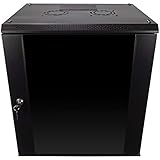
- DURABLE BUILD: Constructed from high-quality Cold Rolled Steel, the NavePoint Consumer Series 12U network cabinet boasts a sturdy, welded frame. Fitting EIA standard 19” networking equipment, this server cabinet confidently supports up to 110 lbs, providing a resilient base for your vital IT gear and equipment
- CONVENIENT DESIGN: This 12U cabinet features a reinforced, heat-treated, tempered glass front door with a security lock. Perfect for applications requiring both security and accessibility, its compact design of 17.72"L x 21.65"W x 24.42"H offers a practical solution for space-constrained settings.
- EASY & CUSTOMIZABLE EQUIPMENT SET UP - The 12U IT cabinet, with removable side panels and security locks, offers customization at its finest. Whether it's for an efficient device or cable management, this data cabinet ensures secure, adaptable configurations that suit your networking server requirements
- ENHANCED VENTILATION & SECURITY - Built-in fans and flow-through ventilation work to prevent overheating, ensuring optimal operation of your equipment. The reinforced, lockable tempered glass front door not only boosts security but also facilitates easy monitoring of installed equipment.
- SAFETY & COMPLIANCE - All NavePoint products are built to industry standards.
The strategic interpretation is more credible than the product claim: Blue Origin is positioning itself across launch, spacecraft, connectivity and possible orbital infrastructure. Whether that becomes a viable business depends on authorization, launch cadence, thermal design, hardware-refresh economics, cybersecurity and customers willing to pay more—or gain capabilities unavailable—from compute in orbit.
Bottom line: a serious proposal, not a space cloud you can use yet
Blue Origin has entered the space-data-center race by combining a planned enterprise network, TeraWave, with an ambitious Project Sunrise filing. But the decisive milestones remain ahead: regulatory approval, hardware production, launches, in-orbit demonstrations, sustainable operations and paying customers. Calling Blue Origin’s orbital data center “built” or “approved” goes beyond the available evidence.
Frequently Asked Questions
Can customers buy Project Sunrise computing today?
No. The available public material identifies an FCC application, not a customer-ready service or public ordering channel.
Is TeraWave Blue Origin’s data center in space?
No. TeraWave is announced primarily as a high-capacity connectivity and backhaul network. Project Sunrise is the initiative explicitly described as a proposed data center in space.
Does AWS operate Blue Origin’s orbital data center?
AWS has documented cloud and mission-operations work with Blue Origin, but no reviewed source confirms that AWS has committed to operating Project Sunrise as a public cloud region.
Quick Recap
Product prices and availability are accurate as of the date/time indicated and are subject to change. Any price and availability information displayed on Amazon at the time of purchase will apply.
Recommended Free Tools




