The Tool Desk
Outbyte Driver Updater FREEScan for outdated or missing drivers - takes under a minuteDriver Scan →Outbyte PC Repair FREEClear out junk files and repair common Windows errorsFree Scan →UPI can be used for a large payment, but it is not risk-free: the key safeguard is confirming the recipient and amount before you authorize the transfer. A UPI PIN approves a payment, and an initiated payment cannot simply be stopped. Before sending a large sum, check the limit for the transaction category and your bank or app, then verify the beneficiary through a trusted channel.
This guidance is for UPI users in India. Limits and app or bank restrictions vary; a higher category ceiling does not mean every bank or app enables it for every user.
What UPI limits apply to large payments?
NPCI’s UPI FAQ states a general ceiling of up to ₹1 lakh per transaction. It lists higher ceilings for specified transaction categories, not as universal limits for every transfer. Your bank or app may also apply relevant restrictions, so check its current terms before relying on a ceiling.
| Transaction category | Per-transaction ceiling | Qualification |
|---|---|---|
| General UPI transfers | Up to ₹1 lakh | NPCI UPI FAQ, reviewed October 4, 2026; bank or app limits may apply. |
| Specified categories, including capital markets, collections, insurance, and foreign inward remittances | Up to ₹2 lakh | NPCI UPI FAQ lists exceptions; it does not establish that every bank or app enables the ceiling for every user. |
| IPO and Retail Direct Scheme transactions | Up to ₹5 lakh | NPCI UPI FAQ lists these as specified exceptions; bank or app limits may apply. |
| Tax payments | Up to ₹5 lakh | RBI announced this category-specific ceiling on August 8, 2024, raising it from ₹1 lakh per transaction. It is not the ordinary person-to-person limit. |
For a payment above the applicable limit, do not split it into multiple transfers unless your bank or app confirms that is permitted and appropriate. Check the specific transaction category and current bank or app limit first.
#1 Best Overall

- POWERFUL SECURITY KEY: The Security Key C NFC is the essential physical passkey for protecting your digital life from phishing attacks. It ensures only you can access your accounts.
- WORKS WITH 1000+ ACCOUNTS: Compatible with Google, Microsoft, and Apple. A single Security Key C NFC secures 100 of your favorite accounts, including email, password managers, and more.
- FAST & CONVENIENT LOGIN: Plug in your Security Key C NFC via USB-C and tap it, or tap it against your phone (NFC) to authenticate. No batteries, no internet connection, and no extra fees required.
- TRUSTED PASSKEY TECHNOLOGY: Uses the latest passkey standards (FIDO2/WebAuthn & FIDO U2F) but does not support One-Time Passwords. For complex needs, check out the YubiKey 5 Series.
- BUILT TO LAST: Made from tough, waterproof, and crush-resistant materials. Manufactured in Sweden and programmed in the USA with the highest security standards.
What makes a large UPI payment risky?
The official guidance cited here focuses on deception that persuades someone to approve a payment. The PIN is an authorization step: entering it sends money from your account. A large transfer also leaves less room for error if you have not checked the beneficiary and amount carefully. No probability or loss rate specific to large UPI payments is established by the official sources cited here.
Fake buyer or collect-request scam
A fraudster posing as a buyer may send a “request money” or collect request and tell a seller to enter the UPI PIN to receive sale proceeds. Approving the request authorizes a payment to the requester; it does not collect money from them. RBI’s Be(A)ware booklet describes this scam pattern. Receiving money does not require entering a UPI PIN, as the Government of India’s cyber-safety manual also states.
Rank #2
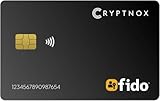
- FIDO2 CERTIFIED: FIDO Alliance Certified FIDO2 v2.1 and CTAP Level 1 for 2FA and MFA on Google Microsoft Apple GitHub login.gov AGOV SwissID and any WebAuthn service
- PASSKEY READY: Works as a hardware passkey for passwordless sign-in where the service enables it and as a U2F and WebAuthn security key everywhere else
- CERTIFIED SECURITY: NXP JCOP 4.5 secure element rated Common Criteria EAL6+ (augmented)
- TAP OR INSERT: Dual NFC ISO 14443 and contact ISO 7816 interface in an ID-1 format smart card that is passive and battery-free
- BUILT TO LAST: Passive smart card made in Switzerland designed by Swiss company Cryptnox and backed by a 2 year manufacturer warranty
Decline unexpected requests. Confirm incoming funds in your own bank or app transaction record, not through a screenshot or another person’s claim.
Unexpected refund, prize, or deposit request
Do not approve an unexpected collect request to receive a refund, prize, sale proceeds, or deposit. Read the action shown in the app; if it asks you to pay or enter your PIN, stop and verify through a separate, trusted contact method.
Rank #3

- 100 encrypted contactless cards for security access control
- DESFire technology ensures secure, encrypted communication
- ISO 14443-A compliant (13.56 MHz) for compatibility with most access control systems
- Reliable, fast, and secure contactless entry
- Perfect for use in both residential and commercial settings
Recipient impersonation or a misdirected payment
A scammer can manipulate a payer into sending money to the wrong person, even when the payer initiates the transfer. NPCI’s April 24, 2025 circular directed UPI apps, for covered person-to-person and person-to-merchant-person transactions, to show the ultimate beneficiary’s bank (CBS) name on the pre-transaction details screen and in transaction history. Names extracted from QR codes or entered by users should not replace that bank name; the circular’s implementation deadline was June 30, 2025. Check the displayed beneficiary information and stop if it does not match the person you intend to pay.
Claims about “jumped deposits”
NPCI’s January 13, 2025 clarification said, “Simply opening a UPI or bank application does not automatically approve a transaction.” It said a user must open the request, choose “pay,” and authorize with the UPI PIN. NPCI also stated at that time that it had observed no instances of the specific jumped-deposit scam described in contemporary media reports on the UPI platform. That statement concerns that reported scam and that date; it is not a claim that UPI fraud generally does not occur.
Rank #4
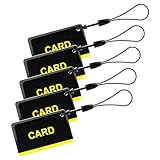
- These are 5 pcs 13.56Hz key fobs (tags). Only support the frequency 13.56MHz.
- Read only. Not re-writable. Each key fob is already pre-programmed. You cannot re-program them by a card writer.
- Great for 13.56Hz RFID proximity access control system and ID management system. For example, register them to your RFID lock as new keys if applicable.
How to check a large payment before authorizing it
- Verify the payment instructions independently. Confirm the recipient’s UPI ID or account details using a known, trusted contact method, especially when instructions came through a text, email, marketplace chat, or unexpected call.
- Check the recipient and amount in the app. Read the beneficiary information displayed before authorization and compare it with the details you confirmed. Check the amount and purpose. Stop if anything conflicts or the recipient is pressuring you.
- Confirm the relevant limit. Check the category, bank, and app limit for this transaction before depending on a higher ceiling.
- Authorize only a payment you intend to send. Keep your UPI PIN, OTP, screen-sharing access, and device passcode private. Never enter the PIN merely to receive money or approve an unexpected collect request.
- Keep the transaction record. Save the reference and check your bank or app record for the payment status. For a very large transfer to an unfamiliar recipient, independently confirm receipt using a known phone number before treating the matter as settled.
What if the payment is pending or went to the wrong person?
NPCI says that once a payment is initiated, it cannot be stopped. Check the transaction record in your app and contact your bank or app through its official support route if the status is pending or unclear. Do not send a second payment solely because the recipient says the first one failed. NPCI’s FAQ notes that confirmation delays can occur and advises contacting the bank if confirmation has not arrived within an hour.
If the transfer appears fraudulent, unauthorized, or sent to the wrong recipient, contact your bank promptly and retain the transaction details. NPCI’s complaint page directs complaints about fraudulent, unidentified, or unauthorized transactions to the customer’s bank for redressal. A report does not guarantee that the payment will be reversed or recovered.
Best Value

- HARDWARE 2FA AND MFA: FIDO Alliance Certified FIDO2 v2.1 with CTAP2 plus legacy U2F and CTAP1 for strong two-factor login and passwordless sign-in on services that support security keys
- BUILDING ACCESS ON ONE CARD: MIFARE DESFire EV2 4K applet with AES encryption adds office door and physical access control alongside digital authentication
- CERTIFIED SECURE ELEMENT: An NXP Common Criteria EAL6+ certified secure controller and Java Card platform protects your keys on a tamper-resistant chip
- DUAL INTERFACE SMART CARD: Contactless NFC ISO 14443 plus ISO 7816 contact reader support in an ISO 7810 ID-1 format that is passive and needs no battery
- SWISS ENGINEERED DESIGN: Built by Cryptnox as a single card for authentication and access control and backed by a 2 year warranty
What UPI safety guidance establishes—and what it does not
The cited official sources provide practical guidance on authorization, limits, beneficiary display, and reporting. They do not establish how likely fraud is for large UPI payments or show that UPI is inherently safer or less safe than another payment method. Treat verification before authorization as the main safeguard, not a guarantee of recovery afterward.
Quick Recap
Product prices and availability are accurate as of the date/time indicated and are subject to change. Any price and availability information displayed on Amazon at the time of purchase will apply.




