Is the U.S. job market really that bad right now? The latest available official figures show a subdued month, not a broad collapse: nonfarm payrolls rose by 29,000 in September 2026 and unemployment was 4.2%. Meanwhile, August data still showed millions of openings and hires. Reddit threads describe the other side of that picture—slow responses, rejections, intense competition and, sometimes, surprisingly quick offers. Those accounts explain how a search can feel difficult, but they are not a representative survey.
What the latest U.S. employment figures say
The U.S. Bureau of Labor Statistics’ September 2026 Employment Situation reported 29,000 more nonfarm payroll jobs and an unemployment rate of 4.2%. The agency described both as little changed; employment in all major industries also changed little over the month. That is evidence of a subdued monthly snapshot, not proof that hiring has stopped or that every field is in the same condition. BLS, Employment Situation Summary — September 2026.
| # | Preview | Product | Price | |
|---|---|---|---|---|
| 1 |
|
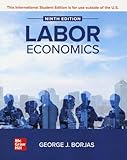
Labor Economics ISE | $56.75 | Buy on Amazon |
| 2 |

|
Handbook of Labor Economics (Volume 6) | $149.99 | Buy on Amazon |
| 3 |

|
Labor Economics, second edition (Mit Press) | $130.00 | Buy on Amazon |
| 4 |

|
Labor Economics | $90.85 | Buy on Amazon |
| 5 |

|
Modern Labor Economics: Theory and Public Policy | $225.00 | Buy on Amazon |
The BLS’s August 2026 Job Openings and Labor Turnover Survey (JOLTS) counted 7.1 million job openings, 5.2 million hires, 3.1 million quits and 1.6 million layoffs and discharges. These measures describe different events: openings are positions available on the last business day of August, while hires and separations count payroll changes during the month. The number of openings is not a count of jobs that any particular applicant can readily get. BLS, Job Openings and Labor Turnover Summary — August 2026.
Why openings and a hard search can coexist
An opening is not an interview, an offer or a suitable job for a particular person. The role may require different skills or experience, be in another location, or offer conditions a candidate cannot accept. A job seeker may also be measuring success by the quality of the eventual role, not simply by whether a vacancy exists. Openings, hires and individual outcomes therefore answer different questions.
Recommended Free Tools
#1 Best Overall
Worker circumstances matter, too. Someone searching while employed, someone recently laid off and someone trying to enter a field face different constraints. National figures combine industries, occupations, regions and experience levels; they cannot tell an individual exactly how many viable opportunities are available to them.
What Reddit users say the search feels like
In a January 2026 r/jobs thread, a poster asked what was happening with hiring and described quick automated rejections in some cases, much slower rejections in others, and little contact even after referrals. That is a useful example of how opaque the process can feel. It does not establish that a particular rejection was automated, or how common that experience is. r/jobs, “What is actually happening in the job market now?”.
Other Reddit discussions describe long searches, layoffs and intense competition. In a June 2026 r/jobsearch thread, one poster characterized entry-level openings as drawing more than 100 applicants. That figure is the poster’s description, not a verified applicant count. Yet the discussions are not uniformly bleak: an August 2026 r/jobmarket thread includes one commenter’s account of getting through a multi-stage interview and another’s report of receiving two offers after two interviews during a casual search. These are individual experiences, not a poll, and they illustrate why a thread cannot stand in for the whole market. r/jobsearch, “The 2026 job market feels absolutely brutal”; r/jobmarket, “The job market changed”.
One person’s application history is not a benchmark
In a May 2026 r/jobs discussion, one user compared applying to nine jobs in 2023—leading to two interviews and one hire—with 178 applications in 2025–26, which led to five interviews and no hire. It is a striking personal comparison, but it cannot establish a typical application-to-interview rate or predict another person’s results. r/jobs, “Is the job market REALLY that bad right now?”.
Free tools Windows power users keep installed
One-click scans. No signup required.
What job seekers reported in a 2025 survey
Lever’s 2025 Job Seeker Nation Report is a survey of perceptions and expectations, not a measure of actual job placements or current 2026 labor conditions. Lever says the survey was conducted March 25–28, 2025. In it, 44% of respondents said finding a job was easy, down from 50% in 2024; 56% expected they could land a job within three months, and 57% expected to receive an interview when applying. Those responses show that people can report a tougher search while still expecting to find opportunities. Lever, 2025 Job Seeker Nation Report.
The same survey found that 81% considered training in new technologies such as AI important to securing a job in 2025, while 89% agreed that addressing employer skills gaps could improve their odds of moving into a role. These are respondents’ views about possible advantages, not evidence that a particular course or credential will lead to an offer.
Rank #4
Lever’s report quotes Tim Sackett, Talent Acquisition & HR Analyst at HRU Technical Resources, describing the skills market as a kind of matchmaking: hiring managers look for different things, and candidates benefit from recognizing and communicating their distinctive strengths. The practical point is to connect relevant skills and experience to a role’s needs, rather than assume a single credential or generic application will suit every employer.
Independent reader supportYour contribution helps us test, update, and keep practical guides available for everyone.How to read older claims about market leverage
Some commentary about job seekers’ bargaining power draws on earlier data. Indeed Hiring Lab’s September 3, 2025 analysis of BLS JOLTS data reported a 2% quits rate for July 2025 and described the market as low-churn. Its author, Allison Shrivastava, wrote that job seekers had “definitively lost the negotiating leverage they enjoyed in the immediate post-pandemic period as the market has cooled.” That is Indeed Hiring Lab’s interpretation of a July 2025 measure—not a September 2026 BLS finding or a statement that applies equally to every worker. Indeed Hiring Lab, “July 2025 JOLTS Report: Limited Churn, Lackluster Wage Growth”.
Outdated Drivers Are Slowing You Down
One free scan finds every outdated or missing driver and matches the right update for your exact hardware.Free scan · exact hardware matchWindows Errors? Fix Them Before They Spread
Repair common Windows errors and clear accumulated junk for a smoother, more stable PC - no reinstall needed.Free scan · no reinstallWhat the numbers and anecdotes can—and cannot—tell you
| Evidence | What it measures or reports | What it cannot establish |
|---|---|---|
| BLS Employment Situation, September 2026 | Monthly payroll change and unemployment rate for the U.S. | Whether a particular occupation, location or applicant is having an easy search. |
| BLS JOLTS, August 2026 | Openings at month-end and hires and separations during the month. | Whether the listed openings are suitable or accessible to a particular job seeker. |
| Lever survey, March 25–28, 2025 | Respondents’ views about job-search ease, expectations and skills. | Observed hiring outcomes or current 2026 labor-market conditions. |
| Reddit threads, 2026 | Individual accounts of application and interview experiences. | How common those experiences are among U.S. job seekers. |
Even within one person’s search, milestones differ: getting a response is not the same as getting an interview; an interview is not an offer; and an offer is not necessarily a role with acceptable pay or conditions. The evidence points to an uneven experience, but it does not let a national statistic or a handful of posts diagnose an individual search.
Quick Recap
Product prices and availability are accurate as of the date/time indicated and are subject to change. Any price and availability information displayed on Amazon at the time of purchase will apply.




