Free tools Windows power users keep installed
One-click scans. No signup required.
U.S. stock market holiday schedules determine when investors can trade equities and when transactions officially settle, making them operationally significant even for long-term investors. Around year-end, Christmas and New Year’s create predictable closures, but observed holiday rules and early closing sessions add complexity. Understanding these nuances helps avoid order rejections, settlement delays, and liquidity surprises.
Christmas Day
U.S. stock exchanges, including the New York Stock Exchange (NYSE) and Nasdaq, are fully closed on Christmas Day, December 25. If Christmas Day falls on a weekend, the closure is observed on the nearest weekday, typically Friday if December 25 is a Saturday or Monday if it is a Sunday. No equity trading, clearing, or settlement occurs on the observed holiday.

New Year’s Day
U.S. stock markets are also closed on New Year’s Day, January 1, with the same observed holiday rules applying when the date falls on a weekend. When January 1 occurs on a Saturday, markets close on the preceding Friday; when it falls on a Sunday, markets close on the following Monday. As with Christmas, all regular trading activity is suspended on the observed day.
Early Closing Days and Exchange Differences
The NYSE and Nasdaq typically close early at 1:00 p.m. Eastern Time on Christmas Eve when it falls on a weekday, although this is not a full holiday. New Year’s Eve is usually a normal trading day with standard market hours, unless it falls on a weekend. While major U.S. equity exchanges follow the same calendar, bond markets often differ; the U.S. bond market, guided by the Securities Industry and Financial Markets Association, commonly recommends early closures on both Christmas Eve and New Year’s Eve.
#1 Best Overall
Why Holiday Schedules Matter
Holiday closures reduce market liquidity, meaning fewer buyers and sellers are active, which can widen bid-ask spreads and increase price volatility. They also affect settlement timing; U.S. equities settle on a T+1 basis, meaning one business day after the trade date, so holidays can delay when ownership and cash officially change hands. For investors placing trades around year-end, awareness of these schedules is essential to avoid unexpected execution or settlement issues.
Which Markets Are We Talking About? NYSE vs. Nasdaq vs. Bond Markets
When discussing whether “the stock market” is open or closed on holidays, it is important to specify which market is being referenced. U.S. financial markets are not a single unified system; they consist of multiple exchanges and trading venues, each with its own calendar, governance, and operational rules. The most relevant for retail investors are the NYSE, Nasdaq, and the U.S. bond market.
NYSE and Nasdaq: U.S. Equity Markets
The New York Stock Exchange and Nasdaq are the two primary U.S. equity exchanges, meaning they facilitate the buying and selling of stocks. Despite differences in structure—NYSE uses a hybrid auction system with designated market makers, while Nasdaq operates as a fully electronic dealer market—their holiday calendars are closely aligned. On major federal holidays such as Christmas Day and New Year’s Day, both exchanges are fully closed, including trading, clearing, and settlement.
For holiday-adjacent days, such as Christmas Eve, the NYSE and Nasdaq typically announce coordinated early closures, most commonly at 1:00 p.m. Eastern Time. These early closes are operationally significant because order entry, executions, and liquidity all compress into a shorter trading window. Importantly, New Year’s Eve is usually treated as a normal trading day for equities, unless it falls on a weekend.
The U.S. Bond Market: A Separate Calendar
The U.S. bond market, which includes trading in Treasury securities, corporate bonds, and municipal bonds, does not operate under the authority of a single exchange. Instead, its holiday schedule is guided by recommendations from the Securities Industry and Financial Markets Association, often referred to as SIFMA. These recommendations are widely followed by banks, broker-dealers, and institutional trading desks.
SIFMA’s calendar often differs from equity markets around holidays. For example, while stock exchanges may be open for a full or shortened session, the bond market may recommend a full closure or an early close on Christmas Eve or New Year’s Eve. This divergence can affect investors holding bond funds or placing fixed-income trades, as pricing and liquidity may be limited even when stock markets appear open.
Why These Differences Matter in Practice
Understanding which market is open is critical because different asset classes settle and trade independently. A stock trade executed on an open equity exchange cannot settle if the bond market or banking system is closed, potentially delaying cash movements. Additionally, reduced participation in one market can spill over into others, affecting pricing efficiency and volatility.
For retail investors, the key takeaway is that “market open” is not a universal condition. Equity markets, bond markets, and related clearing systems may follow different holiday rules, especially around Christmas and New Year’s. Recognizing these distinctions helps explain why liquidity, execution quality, and settlement timing can vary noticeably during the final weeks of the year.
Recommended Free Tools
Christmas Day Trading Schedule: Closures, Observed Holidays, and Early Closes
Following the broader discussion of year-end market calendars, Christmas Day represents one of the few holidays when U.S. equity markets fully align. The New York Stock Exchange and Nasdaq both treat Christmas as a core federal holiday, resulting in a complete halt of equity trading. This uniform closure has implications not only for stock transactions but also for settlement and cash movement across the financial system.
Christmas Day: Full Market Closure
When Christmas Day falls on December 25, U.S. stock exchanges are closed for the entire session, with no trading, order matching, or price discovery. This closure applies equally to listed stocks, exchange-traded funds, and equity options. Clearing and settlement systems tied to equity markets are also inactive, meaning trades cannot settle on that date.
This full closure is predictable and widely communicated well in advance, allowing market participants to plan liquidity needs accordingly. For retail investors, any trade orders entered for execution on Christmas Day are queued for the next open trading session.
Observed Christmas Holidays When December 25 Falls on a Weekend
When Christmas Day falls on a Saturday, U.S. stock markets observe the holiday on the preceding Friday, December 24, and remain closed for that entire day. When Christmas falls on a Sunday, the holiday is observed on Monday, December 26, with markets closed on that date instead. These observed holidays are treated identically to December 25 itself, with no trading activity permitted.
Windows Errors? Fix Them Before They Spread
Repair common Windows errors and clear accumulated junk for a smoother, more stable PC - no reinstall needed.Free scan · no reinstallOutdated Drivers Are Slowing You Down
One free scan finds every outdated or missing driver and matches the right update for your exact hardware.Free scan · exact hardware matchObserved holiday rules are particularly important because they can shift a market closure away from the calendar date investors expect. This can affect settlement timing, as trades executed late in the prior week may take longer to finalize due to the added non-trading day.
Christmas Eve: Early Closures and Key Exceptions
Christmas Eve, December 24, is not a full market holiday in most years, but U.S. stock exchanges typically close early at 1:00 p.m. Eastern Time when it falls on a weekday. This early close usually applies when Christmas Eve occurs Monday through Thursday. Trading hours are shortened, but settlement clocks continue to follow normal business-day conventions.
Rank #2

- 𝐍𝐞𝐯𝐞𝐫 𝐌𝐢𝐬𝐬 𝐚 𝐊𝐞𝐲 𝐓𝐫𝐚𝐝𝐢𝐧𝐠 𝐃𝐚𝐭𝐞 𝐀𝐠𝐚𝐢𝐧 - Stay ahead of market movements with our comprehensive trading 2026 desk calendar, featuring FOMC meetings, PPI & CPI, Jobs Report (Non-Farm Payroll) triple witching Fridays, banking and stock market holidays. Designed for traders who need to track crucial economic events that impact market trends.
- 𝐈𝐦𝐩𝐫𝐨𝐯𝐞 𝐓𝐫𝐚𝐝𝐢𝐧𝐠 𝐒𝐭𝐫𝐚𝐭𝐞𝐠𝐲 - Timing is everything in trading! Our 2026 stock market calendar for desk helps you plan ahead by providing economic indicators, inflation trend data, and critical financial schedules. Empowering you to make informed, strategic trading decisions.
- 𝐂𝐨𝐦𝐩𝐚𝐜𝐭, 𝐏𝐫𝐚𝐜𝐭𝐢𝐜𝐚𝐥 & 𝐃𝐞𝐬𝐤-𝐅𝐫𝐢𝐞𝐧𝐝𝐥𝐲 - With a space-saving 10 x 5 inch size, this trading desk calendar fits perfectly on any workstation without clutter. Its easy-to-read layout ensures quick access to market-moving dates without the need for digital searches.
- 𝐏𝐫𝐞𝐦𝐢𝐮𝐦 𝐐𝐮𝐚𝐥𝐢𝐭𝐲 & 𝐄𝐚𝐬𝐲 𝐭𝐨 𝐑𝐞𝐚𝐝 𝐃𝐞𝐬𝐢𝐠𝐧 - Made of durable, high-quality materials, this finance planner calendar offers clear printing and a sleek aesthetic that complements any professional workspace. Built to last through the trading year, it’s both functional and stylish.
- 𝐏𝐞𝐫𝐟𝐞𝐜𝐭 𝐆𝐢𝐟𝐭 𝐟𝐨𝐫 𝐓𝐫𝐚𝐝𝐞𝐫𝐬 & 𝐈𝐧𝐯𝐞𝐬𝐭𝐨𝐫𝐬 - Whether you’re a day trader, stock market enthusiast, or finance professional, this financial desk calendar is an essential tool. It also makes an ideal gift for Wall Street traders, hedge fund managers, or investment analysts looking to stay ahead in 2026.
An important exception occurs when Christmas Day falls on a Saturday. In that case, December 24 is treated as the observed Christmas holiday, and markets are closed for the full day rather than closing early. If Christmas Eve falls on a Friday in years without an observed holiday, equity markets often operate on a full trading schedule, underscoring the need to check the specific calendar year.
Why Christmas Trading Schedules Matter for Liquidity and Settlement
Holiday closures and early closes materially affect market liquidity, which refers to the ease with which assets can be bought or sold without significantly affecting prices. Shortened sessions concentrate trading activity into fewer hours, often leading to wider bid-ask spreads and more volatile price movements, especially in less actively traded securities.
Settlement timing is also influenced by these schedules. Equity trades in the U.S. generally settle on a T+1 basis, meaning one business day after execution. A Christmas-related market closure can extend settlement timelines, delaying the availability of cash or securities. For investors managing year-end transactions, these timing effects can be just as important as knowing whether the market is open.
New Year’s Day Trading Schedule: How January 1 Is Handled When It Falls on a Weekend
Following the Christmas trading calendar, New Year’s Day introduces a similar set of observed holiday rules that directly affect U.S. stock market operations. January 1 is classified as a full market holiday by major U.S. exchanges, including the New York Stock Exchange (NYSE) and Nasdaq. When it falls on a weekend, the closure shifts to an adjacent weekday, altering expected trading and settlement timelines.
Standard Treatment When January 1 Falls on a Weekday
When New Year’s Day occurs on a Monday through Friday, U.S. equity markets are fully closed for the entire trading session. No regular trading, after-hours trading, or settlement processing occurs on that day. This mirrors the treatment of Christmas Day and reflects New Year’s Day’s status as a federal holiday.
In these cases, the first trading session of the year begins on the next business day. Any trades executed on the final trading day of December will settle later than usual due to the intervening non-trading day.
Do these 3 things before closing this tab:
1Clear out junk files and repair common Windows errors2Scan for outdated or missing drivers - takes under a minute3Repair Windows errors before they cause bigger problemsObserved Holiday Rules When January 1 Falls on a Weekend
If January 1 falls on a Saturday, U.S. stock markets are typically closed on the preceding Friday, December 31, as the observed New Year’s Day holiday. This creates a full market closure on the final business day of the calendar year rather than an early close. As a result, the last trading session of the year occurs earlier in the week than many investors expect.
When January 1 falls on a Sunday, markets are usually closed on the following Monday, January 2. In this scenario, trading proceeds as normal on the preceding Friday, but the first trading day of the new year is delayed until Tuesday. This can compress trading activity into fewer sessions during the transition between years.
Differences Between New Year’s Day and New Year’s Eve Trading
Unlike Christmas Eve, New Year’s Eve is not consistently treated as an early-closing day. In years when December 31 is not the observed New Year’s Day holiday, U.S. equity markets generally operate on a full trading schedule. Early closures on New Year’s Eve are not standard practice and should not be assumed without verifying the specific year’s exchange calendar.
This distinction is particularly important because an observed New Year’s Day on December 31 converts what might otherwise be a full trading day into a complete market closure. That shift can materially affect year-end portfolio rebalancing, tax-related trades, and liquidity planning.
What’s actually slowing this PC down?
Pick the symptom - the matching free tool is one click away.
Implications for Liquidity and Settlement Around Year-End
As with Christmas, New Year’s Day closures influence both market liquidity and settlement timing. Liquidity often thins in the final trading sessions of December as institutional participants reduce activity, and an observed holiday can further limit available trading opportunities. Reduced liquidity may increase price sensitivity, especially for smaller or less frequently traded securities.
Settlement timing is also affected by the observed holiday. With U.S. equities settling on a T+1 basis, a Friday market closure due to a Saturday New Year’s Day can delay settlement into the following week. Understanding how January 1 is handled when it falls on a weekend is therefore essential for accurately anticipating cash availability, delivery of securities, and the true timing of year-end transactions.
Observed Holiday Rules Explained: What Happens When Holidays Fall on Weekends
Observed holiday rules exist to ensure that federal holidays are recognized even when their calendar date falls on a weekend. U.S. stock exchanges, including the New York Stock Exchange (NYSE) and Nasdaq, follow standardized observation practices that determine whether markets close on the preceding Friday or the following Monday. These rules directly affect which days are available for trading, settlement, and liquidity around major holidays such as Christmas and New Year’s Day.
The Core Rule Used by U.S. Stock Exchanges
When a fixed-date holiday falls on a Saturday, U.S. equity markets typically observe the holiday on the preceding Friday. When the same holiday falls on a Sunday, markets usually observe it on the following Monday. This convention aligns market schedules with federal holiday observance and banking system closures.
Rank #3
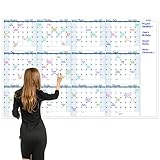
- 🗓 EXTRA-LARGE DRY ERASE CALENDAR – This dry erase wall calendar covers 12 months calendar for an easier year-round planning, easily keeping track of your important events, special deadlines, appointments, activities and more. Blue and white design is very simple and business style.
- 🗓 AMPLE WRITING SPACE – Our wall calendar dry erase monthly planner with 12-month of undated blank calendar, offers plenty of room for jotting down your tasks, to-do lists, daily schedules. Long Notes section is for your detailed schedules, highlighting important things.
- 🗓 ENHANCE YOUR PRODUCTIVITY – The giant 37" x 57.9" Yearly wall calendar with 1.73" x 1.77" daily blocks provides enough room to make your plans clear all at one page. Notes section on the right side and each month for annual and monthly planning, marking your important things. Blue columns for marking weekends.
- 🗓 UNIQUE FEATURES – This reusable calendar uses special treated dry erase reusable & rewritable, giving smooth surface, well dust-proof and wipe very clean. Bright simple background and clear printing make it easier to view and read. This undated wall calendar applies to many kinds of whiteboard marker, wet/dry erase marker, etc.
- 🗓 BONUS 8 ROUND STICKERS – Bonus 8 double-sided round sticks makes this erasable calendar to stick nicely and steadily. The large wall calendar is made of layered poster laminated coating, and can be reused for many years. A great yearly calendar organizer for your home, office and school to make your life more efficient.
For example, if Christmas Day (December 25) falls on a Saturday, markets are generally closed on Friday, December 24. If Christmas Day falls on a Sunday, markets typically close on Monday, December 26, while trading proceeds normally on the prior Friday.
How Observed Rules Apply to Christmas Day
Christmas Day is always a full market holiday for U.S. equities, regardless of the day of the week on which it occurs. The observed holiday rule determines which weekday absorbs that closure when December 25 falls on a weekend. This can unexpectedly eliminate what might otherwise appear to be a normal trading day late in December.
The impact is especially relevant because Christmas-related closures often coincide with already reduced trading activity. When a Friday or Monday closure is added due to observation, the number of viable trading sessions in the final week of the year can shrink materially.
How Observed Rules Apply to New Year’s Day
New Year’s Day follows the same observation framework as Christmas Day, but its position at the very start of the calendar year creates unique timing effects. If January 1 falls on a Saturday, markets are typically closed on Friday, December 31, turning the last calendar day of the year into a full holiday. If January 1 falls on a Sunday, markets usually close on Monday, January 2.
The Tool Desk
Outbyte Driver Updater FREEScan for outdated or missing drivers - takes under a minuteDriver Scan →Outbyte PC Repair FREEClear out junk files and repair common Windows errorsFree Scan →These adjustments can shift the first trading day of the new year later than expected. As a result, both year-end and early-January trading windows may be shorter than the calendar alone would suggest.
Consistency Across Major U.S. Equity Exchanges
Observed holiday rules are applied consistently across the NYSE and Nasdaq for U.S. equities. This means that, for stocks and most exchange-traded funds, investors do not face conflicting schedules between the two primary U.S. stock exchanges. Options markets and futures exchanges may have related but distinct calendars, which should be checked separately.
Because these observation practices are standardized, deviations are rare and typically announced well in advance. Nonetheless, relying on assumptions rather than official exchange calendars can lead to missed trading opportunities or settlement miscalculations.
Why Weekend Observation Rules Matter for Investors
Weekend-based holiday observation changes the actual number of trading and settlement days available in a given period. This affects liquidity, defined as the ease with which assets can be bought or sold without materially affecting price, and settlement, the formal exchange of cash and securities after a trade is executed.
Around Christmas and New Year’s, observed holidays can compress activity into fewer sessions, amplify the effects of thin liquidity, and delay settlement under the T+1 framework. Understanding these rules allows investors to interpret market schedules accurately rather than relying on the calendar date alone.
Early Closing Days Around the Holidays: Christmas Eve and New Year’s Eve Trading Hours
In addition to full market closures on Christmas Day and New Year’s Day, U.S. stock exchanges often operate on shortened schedules immediately before these holidays. These early closing days reduce the number of trading hours but do not constitute full market holidays. Understanding the distinction is essential, as trading, liquidity, and settlement processes remain active, albeit within a compressed timeframe.
Christmas Eve: Typically an Early Close, Not a Full Holiday
Christmas Eve is not a federal holiday, and U.S. equity markets are usually open. However, when December 24 falls on a weekday and Christmas Day is observed on December 25, the NYSE and Nasdaq typically close early at 1:00 p.m. Eastern Time. This abbreviated session is formally classified as an early close rather than a holiday.
If Christmas Eve falls on a Friday, the early close often precedes a full market closure on Saturday, December 25. If it falls on a Monday through Thursday, normal trading resumes the following business day, subject to standard holiday observation rules. In years when Christmas Day is observed on a weekday other than Friday, early closing on Christmas Eve is common but not guaranteed, making confirmation through official exchange calendars essential.
Quick wins for a faster PC:
Clear out junk files and repair common Windows errorsFree Scan →Scan for outdated or missing drivers - takes under a minuteDriver Scan →Repair Windows errors before they cause bigger problemsFix Now →New Year’s Eve: Conditional Early Closings Based on the Calendar
New Year’s Eve follows a more conditional pattern than Christmas Eve. When December 31 falls on a weekday and New Year’s Day is observed on January 1, U.S. equity markets often close early at 1:00 p.m. Eastern Time. This is most common when New Year’s Day falls on a Saturday and the holiday is observed on Friday, December 31.
In contrast, when January 1 falls on a Sunday and the market holiday is observed on Monday, January 2, New Year’s Eve trading on Friday, December 31, is usually a full session rather than an early close. As a result, the same calendar date can represent either a shortened session or a normal trading day, depending entirely on how the holiday is observed.
Rank #4

- ONE BOARD FOR MEALS, CHORES AND EVERY OTHER LIST: With 42 blank date squares and a Notes panel, this magnetic fridge calendar doubles as a meal planner, a menu board for the kitchen, a chore chart and a grocery list. Each row is a full Sunday-to-Saturday week, so one row holds this week's dinners while the next tracks who is doing what. One magnetic whiteboard on the refrigerator door instead of three separate boards.
- LONG LASTING STAIN RESISTANT PERFORMANCE: With edge cutting material science, this dry erase calendar for refrigerator has a stain resistant high-performance PET surface. You can erase for countless times without any smudgy "ghosting" or staining, so the board still looks new after a year of weekly menus and to do lists.
- GET EVERYONE ON THE SAME PAGE: Turn the fridge door into your family command center. Getting your family, roomies or co-workers informed "bright" and clear, no more arguing what would've could've should've been done, the action needed is clear publicized for everyone.
- TEACH SMART HABITS FROM A YOUNG AGE: Give each kid their own row and let them check off the chore list themselves. This dry erase chore chart teaches children the value of getting organized and always being on time, and it wipes clean the moment the week is done.
- WRITE IN ANY MONTH, USE IT ANY YEAR: The month and dates are yours to fill in, so this undated monthly planner never expires and never needs replacing in January. At 16.9 x 11.8 inches it covers a fridge door panel without crowding it, and this magnet board holds itself on any steel fridge door, so there is no tape, no hooks and no holes in the wall. A great gift for her, for a new home or for the back to school season.
Exchange Consistency and Product-Level Differences
Early closing schedules for Christmas Eve and New Year’s Eve are generally aligned between the NYSE and Nasdaq for equities. This consistency reduces operational confusion for stock and exchange-traded fund trading. However, options, futures, and fixed-income markets may follow different early close times or remain open longer, reflecting the distinct regulatory structures of those markets.
Because of these variations, an investor trading across asset classes cannot assume uniform hours. Official exchange notices and annual holiday calendars provide the definitive source for early close times, including the precise cutoff for order entry and trade execution.
Free tools Windows power users keep installed
One-click scans. No signup required.
Why Early Closing Days Matter for Trading, Liquidity, and Settlement
Early closing days compress trading activity into fewer hours, which can reduce liquidity and widen bid-ask spreads, particularly in less actively traded securities. Liquidity constraints tend to be more pronounced in the final hour before an early close, as institutional participants reduce activity and market makers adjust risk exposure.
From a settlement perspective, early closes do not pause the settlement clock under the T+1 framework. Trades executed on a shortened session still settle one business day later, provided the following day is not a holiday. As a result, early closing days around Christmas and New Year’s can interact with observed holidays to create longer gaps between execution and settlement than the calendar alone might suggest.
Independent reader supportYour contribution helps us test, update, and keep practical guides available for everyone.Why Holiday Schedules Matter for Investors: Liquidity, Volatility, and Trade Settlement (T+1)
Holiday schedules influence more than whether trading is possible on a given date. They affect how easily securities can be bought or sold, how prices behave during abbreviated sessions, and when cash and securities formally change hands. For investors, these mechanics are especially relevant around Christmas and New Year’s, when early closes and observed holidays cluster together.
Liquidity Effects Around Christmas and New Year’s
Liquidity refers to the ability to transact quickly without causing a significant change in price. Around major holidays, many institutional investors, market makers, and international participants reduce activity or step away entirely. This reduction can materially lower liquidity, even on days when the market is technically open.
Outdated Drivers Are Slowing You Down
One free scan finds every outdated or missing driver and matches the right update for your exact hardware.Free scan · exact hardware matchWindows Errors? Fix Them Before They Spread
Repair common Windows errors and clear accumulated junk for a smoother, more stable PC - no reinstall needed.Free scan · no reinstallLower liquidity often results in wider bid-ask spreads, which represent the difference between the highest price a buyer is willing to pay and the lowest price a seller is willing to accept. Wider spreads increase implicit transaction costs, particularly for less actively traded stocks. These effects tend to intensify during early closing sessions, when normal trading volume is compressed into fewer hours.
Volatility During Shortened and Low-Participation Sessions
Volatility measures the degree of price fluctuation over a given period. Holiday-adjacent trading days can experience unusual price movements, not necessarily because of new information, but because fewer participants are available to absorb trades. A relatively small order can move prices more than expected when overall market depth is thin.
This dynamic is most visible late in early closing sessions, such as Christmas Eve when markets close at 1:00 p.m. Eastern Time. With reduced oversight and thinner order books, price discovery can become less efficient. As a result, short-term price swings may not reflect broader market sentiment.
Trade Settlement Timing Under the T+1 Framework
Trade settlement is the process by which securities are delivered to the buyer and payment is delivered to the seller. Under the T+1 settlement cycle, U.S. equity trades settle one business day after execution. Importantly, early closing days count as full business days for settlement purposes.
Observed holidays, such as Christmas Day or New Year’s Day when markets are fully closed, are not business days. If a trade occurs immediately before a holiday, settlement may be delayed beyond what the calendar date alone implies. For example, a trade executed on Christmas Eve may not settle until several days later if followed by a holiday and a weekend.
Cash Management and Operational Considerations
Extended settlement gaps can affect cash availability, margin requirements, and the timing of reinvestment. This is particularly relevant for investors who rely on proceeds from sales to fund subsequent purchases. The interaction between early closes, holidays, and weekends can temporarily lock up capital longer than expected.
Holiday schedules also matter for dividend reinvestments, corporate actions, and options expiration timing, all of which depend on precise business-day calculations. Understanding these mechanics helps investors interpret account balances and transaction dates accurately, even when markets appear quiet.
Why Calendar Awareness Is a Core Market Skill
The Christmas and New Year’s period illustrates how market structure, not just market direction, influences outcomes. Whether markets are closed, open for a full session, or operating under early close rules shapes liquidity conditions and settlement timelines. These structural details apply uniformly across the market, regardless of investment strategy.
Best Value

- 2027 CALENDAR - Covers January 2027 to December 2027 as a 12 month wall calendar, a hanging wall calendar 2027 and calendar 2027 for long range office calendar planning
- HIGH QUALITY THICK PAPER - Thick paper resists ink bleed for a durable paper calendar 2027, with clear 2027 monthly calendar blocks and Julian date calendar details for quick reference
- ENHANCED ORGANIZATION - Large paper calendar for wall in 11.5" x 14.6" size, a green large wall calendar 2027 with roomy writing space for monthly calendar, planner calendar and notes
- MAKES YOUR LIFE PRODUCTIVE - Designed as a wall calendar 2027 for office, home and family wall calendar needs, ideal as an office calendar 2027, academic wall calendar 2027 or student calendar
- MONTHLY OVERVIEW - Clean monthly layout works as a monthly wall calendar 2027 and monthly planner 2027, helping track appointments, deadlines and plans on a green wall calendar
For beginner investors, awareness of holiday schedules is less about predicting returns and more about understanding how markets function. Knowing when trading is limited, when liquidity may be impaired, and when settlement clocks continue to run is foundational to navigating U.S. stock markets effectively during year-end periods.
Holiday Trading Calendar Cheat Sheet and Key Takeaways for Beginner Investors
This final section consolidates the mechanics discussed above into a practical reference. It summarizes when U.S. stock markets are open or closed around Christmas and New Year’s, how observed holidays and early closes work, and why these details matter for execution, liquidity, and settlement timing.
Christmas and New Year’s Trading Status at a Glance
U.S. equity markets, including the New York Stock Exchange (NYSE) and Nasdaq, are fully closed on Christmas Day and New Year’s Day when those dates fall on a weekday. These closures apply to all regular trading sessions, and no settlement processing occurs on those days.
When either holiday falls on a weekend, markets observe the holiday on an adjacent weekday. If Christmas Day or New Year’s Day falls on a Saturday, the observed holiday is typically the preceding Friday. If it falls on a Sunday, the observed holiday is usually the following Monday.
What’s actually slowing this PC down?
Pick the symptom - the matching free tool is one click away.
Early Closing Days You Should Know
Christmas Eve is commonly an early closing day for U.S. equity markets when it falls on a weekday that is not already a market holiday. On these days, trading typically ends at 1:00 p.m. Eastern Time rather than the standard 4:00 p.m. close.
Early closing days are full business days for settlement purposes, even though trading hours are shortened. Orders can still be executed, but liquidity is often thinner as institutional participation declines later in the session.
Differences Across Exchanges and Market Segments
NYSE and Nasdaq follow nearly identical holiday calendars, which reduces complexity for equity investors. However, related markets such as bonds, futures, and foreign exchanges may operate on different schedules or close earlier.
For example, the U.S. bond market often closes early on Christmas Eve and may observe additional holidays not recognized by equity exchanges. Investors holding multi-asset portfolios should be aware that “the market” does not always operate uniformly across asset classes.
The Tool Desk
Outbyte Driver Updater FREEScan for outdated or missing drivers - takes under a minuteDriver Scan →Outbyte PC Repair FREERepair Windows errors before they cause bigger problemsFix Now →Why Holiday Schedules Matter for Trading and Liquidity
Holiday periods tend to coincide with reduced trading volume, meaning fewer shares are available to buy or sell at any given price. This can widen bid-ask spreads, which represent the difference between the highest price a buyer is willing to pay and the lowest price a seller is willing to accept.
Lower liquidity does not prevent trading, but it can affect execution quality. Prices may move more abruptly in response to relatively small orders, particularly during early closes or in the days immediately surrounding holidays.
Settlement Timing and Cash Availability Recap
Under the T+1 settlement cycle, trades settle one business day after execution. Market holidays delay settlement because they are not counted as business days, even if they fall between a trade date and the expected settlement date.
As a result, trades executed just before Christmas or New Year’s may take longer to settle due to the combined effect of holidays and weekends. This can temporarily delay access to cash proceeds and affect the timing of reinvestment or withdrawals.
Key Takeaways for Beginner Investors
U.S. stock markets are closed on Christmas Day and New Year’s Day, with observed holidays applied when those dates fall on weekends. Christmas Eve is often an early closing day, and early closes still count as business days for settlement.
Holiday schedules influence more than convenience. They affect liquidity conditions, execution dynamics, and the timing of settlement and cash movement. Understanding these structural features helps investors interpret account activity accurately and sets realistic expectations during year-end trading periods.
For beginner investors, mastering the holiday calendar is not about forecasting performance. It is about understanding how market infrastructure operates. That foundational knowledge supports clearer decision-making and reduces confusion when markets appear quiet but underlying processes continue to shape outcomes.
Quick Recap
Product prices and availability are accurate as of the date/time indicated and are subject to change. Any price and availability information displayed on Amazon at the time of purchase will apply.




