Nike’s latest results show a business still working through weaker sales, channel and regional pressure, and a costly reset—not a demonstrated bargain. The company’s filings provide operating results but no dated share price or valuation multiple, so they cannot establish that NKE is cheap. For value investors, the key question is whether earnings and cash generation can recover without relying on one-time benefits or a return to past peak performance.
What Nike’s latest quarter says about the recovery
Nike’s latest available quarter is Q1 fiscal 2027, ended August 31, 2026. Revenue was $11.2 billion, down 4% year over year as reported and 5% on a currency-neutral basis. Nike Direct revenue fell to $4.1 billion from $4.5 billion in the year-earlier quarter. Gross margin improved, but inventory also increased from the prior quarter. Taken together, those figures point to some improvement in a profitability measure alongside continued sales and inventory challenges—not an unambiguous operating turnaround. Nike Q1 FY2027 Form 10-Q
Margin improvement needs context
Gross margin was 42.8%, up 60 basis points year over year. Inventory was $7.8 billion at August 31, 2026, up 5% from May 31. Nike’s filing describes ongoing work to manage markdowns and marketplace inventory. A higher gross margin is encouraging, but it does not by itself show that full-price demand has returned or that the company has resolved inventory pressure. Investors should look for sustained improvement in sales and inventory as well as margin.
Fiscal 2026 earnings need a sustainability check
For fiscal 2026, Nike reported $46.4 billion in revenue, essentially flat as reported and down 2% currency-neutral, and $3.1 billion in net income, down 3%. The channels moved in different directions: Nike Direct revenue declined 6% as reported and 8% currency-neutral, while wholesale revenue rose 6% as reported and 4% currency-neutral. This is a change in channel mix, not evidence that every part of the business contracted. Nike FY2026 Form 10-K
Free tools Windows power users keep installed
One-click scans. No signup required.
#1 Best Overall

- Leather and synthetic leather are durable with a classic look.
- Full-length Nike Air unit adds cushioning to your step.
- Solid rubber sole is durable and provides traction over various surfaces.
One unusual item makes the earnings baseline especially important. Nike’s fiscal 2026 fourth-quarter diluted EPS of $0.72 included a $0.52 benefit from the expected recovery of IEEPA tariffs. The company recorded a $986 million cost-of-sales benefit from that recovery for the full fiscal year. Investors evaluating a price-to-earnings ratio should not treat that benefit as ordinary, recurring earnings power. Nike’s June 30, 2026 results release
Why Nike could recover—and why the stock could be a value trap
The recovery case rests on Nike’s ability to convert its global footwear and apparel business, brand portfolio, and product pipeline into renewed demand and healthier full-price sales. Nike says it is focusing on sport, product innovation, consumer connection, and retail experience. Its stated actions include rebalancing footwear supply, repositioning Nike Brand Digital as a full-price platform, investing in wholesale and physical retail, and increasing sports and brand marketing. Those are plausible levers for improvement, but they are plans, not proof that consumers will respond or margins will recover. Nike Q1 FY2027 Form 10-Q
Rank #2

- Leather and synthetic leather are durable with a classic look.
- Full-length Nike Air unit adds cushioning to your step.
- Solid rubber sole is durable and provides traction over various surfaces.
The value-trap risk is that investors anchor on earnings from a stronger period while the business’s sustainable earning power is lower. The tariff recovery makes recent earnings less straightforward to extrapolate; meanwhile, Nike’s filing describes continuing marketplace pressure and corrective work that will take time. If discounting, channel weakness, regional declines, or competition persist, a low multiple based on past profits could be misleading.
| Question for investors | What would support the recovery case | What would strengthen the value-trap case |
|---|---|---|
| Are consumers buying at healthier prices? | Full-price demand improves and markdown pressure eases. | Sales rely on sustained promotions or margin gains prove temporary. |
| Are channels contributing sustainably? | Direct and wholesale both show durable demand, with inventory aligned to sell-through. | Weakness shifts between channels or inventory builds faster than demand. |
| Are regional and brand resets working? | Greater China, Converse, and the Sportswear and Jordan businesses show progress in demand and execution. | Regional traffic, promotions, or brand-specific weakness persist despite corrective actions. |
| Are restructuring costs producing results? | Costs are followed by measurable operating improvements and realized savings. | Charges arrive without evidence that the changes improve the business. |
What needs to improve for Nike stock to recover?
Nike’s own disclosures make several useful checkpoints for tracking execution. They are more informative than relying on a single quarter’s headline margin or a past earnings peak.
Rank #3

- Leather and synthetic leather are durable with a classic look.
- Full-length Nike Air unit adds cushioning to your step.
- Solid rubber sole is durable and provides traction over various surfaces.
- Revenue: Look for reported and currency-neutral growth to stabilize and then improve across more than one quarter. Currency-neutral results help separate underlying sales trends from exchange-rate effects.
- Channel health: Track Nike Direct and wholesale separately. A shift in mix can help one channel while masking continued weakness in another.
- Margins and pricing: Check whether margin progress accompanies healthier full-price sales, rather than depending on temporary benefits or changes that cannot be sustained.
- Inventory: Compare inventory trends with revenue and management’s discussion of marketplace stock and markdowns. Inventory growth is more concerning when demand remains weak.
- Greater China and Converse: Watch for evidence of improved traffic, reduced promotional intensity, and progress in Converse’s strategic reset. Nike says Greater China corrective actions are expected to extend beyond fiscal 2027, while the Converse reset is expected to continue throughout fiscal 2027. Nike Q1 FY2027 Form 10-Q
- Cash generation and capital allocation: Assess operating cash generation, inventory demands, and capital returns alongside reported earnings; profits alone do not show how much cash is available to support the business and shareholders.
Restructuring creates both a possible lever and an execution risk
Nike reported plans for a multiyear Pace enterprise program with approximately $1.0 billion in expected pretax charges. About $0.3 billion was expected in fiscal 2027, with the remainder expected through fiscal 2031. Nike cautions that the actual amounts and timing may differ because the estimates depend on assumptions. The filing does not establish realized savings, so investors should distinguish the announced costs from benefits that have yet to be demonstrated. Nike Q1 FY2027 Form 10-Q
Independent reader supportYour contribution helps us test, update, and keep practical guides available for everyone.How to judge whether Nike is cheap
A valuation depends on the price investors pay relative to future earnings or cash flow—not on how far a share price has fallen. A practical assessment should use a dated share price and explicitly state the assumptions behind sustainable earnings or cash generation.
Rank #4
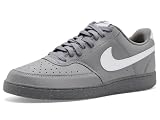
- Made with at least 20% recycled material by weight.
- Using synthetic materials, the design features materials that echo mid-1980s basketball shoes.
- Padded, low-cut collar looks sleek and feels great while the perforations on the toe and sides add comfort and breathability.
- Choose a normalized starting point. Separate recurring operating performance from unusual items such as the fiscal 2026 tariff-recovery benefit. Do not simply carry a reported EPS figure forward as if every component recurs.
- Build more than one recovery scenario. Consider what earnings could look like if demand and margins improve, if the reset takes longer, or if current weaknesses persist. State the sales, margin, and time assumptions for each case.
- Compare valuation with those scenarios. Apply the dated share price to the earnings or cash-flow estimates, rather than calling the stock cheap based on a price decline or a multiple built on an unsustainable denominator.
- Update as evidence arrives. Revisit the assumptions when Nike reports channel trends, inventory, regional performance, margins, cash generation, and restructuring outcomes.
Nike CEO Elliott Hill described fiscal 2026 as a period of decisive action to strengthen the company’s foundation and reposition it for long-term growth. That statement explains management’s intended direction; whether the strategy succeeds depends on operating results, not the description of the plan. Nike’s June 30, 2026 results release
Quick Recap
Product prices and availability are accurate as of the date/time indicated and are subject to change. Any price and availability information displayed on Amazon at the time of purchase will apply.
Do these 3 things before closing this tab:
1Scan for outdated or missing drivers - takes under a minute2Clear out junk files and repair common Windows errors3Fix the driver behind crashes, sound loss and screen glitches



