Yes, a virtual contact center can work well for a busy company—especially one facing seasonal peaks, missed calls, multiple service channels, distributed teams, or the cost of adding another physical site. But cloud software does not make service effortless or automatically cheaper. The decision depends on whether the company can support the required staffing, integrations, connectivity, security, and management—and whether the full cost is justified by measurable improvements.
What “virtual contact center” means
A virtual contact center is customer-service software delivered through the cloud, with agents working remotely, across multiple offices, or in a mixture of locations. “Virtual” describes the operating model; it does not mean the service is handled only by AI. A center may combine human agents with phone, email, chat, SMS, social messaging, IVR, self-service, chatbots, and AI-assisted tools.
A full platform may bring together cloud telephony, queues, skills-based routing, an agent workspace, CRM or help-desk context, recording, quality assurance, analytics, workforce scheduling, and supervisor controls. Microsoft, for example, describes unified routing, IVR, AI agents, conversation summaries, live transcription and translation, reporting, and collaboration through Teams in its Dynamics 365 Contact Center overview. Five9 describes digital channels, virtual agents, CRM integrations, workforce tools, and AI assistance on its product and pricing page. Features and availability vary by product, plan, region, and configuration.
How a virtual center handles a customer contact
- Entry: A customer calls a business number or starts a chat, email, SMS, or other supported interaction.
- Identification and self-service: An IVR or digital flow may offer information, authenticate the customer, collect a reason for contact, or resolve a routine request without an agent.
- Routing: The system places the contact in a queue or routes it according to skills, language, priority, customer segment, or other rules.
- Agent handling: The agent uses a browser-based workspace or softphone. A CRM or help-desk integration can display customer history and let the agent update the case.
- Escalation and follow-up: The agent may transfer the interaction, arrange a callback, create a ticket, or hand it to a specialist.
- Measurement: Recording, quality review, reporting, and workforce tools can help supervisors assess service and plan staffing.
The software can make these steps easier to coordinate, but it cannot replace a clear service process, reliable customer records, trained agents, or an owner responsible for maintaining workflows.
#1 Best Overall

- 360° Coverage: 6 microphones arranged in a 360° array pick up voices from all directions to instantly transform any space at home or the office into a meeting room.
- Voice Radar 3.0 Technology: Powered by AI deep learning capabilities to reduce noise, cancel echo, and detect multiple speakers.
- Optimized Clarity and Volume: Your voice is automatically balanced to make up for differences in volume and distance from the Bluetooth speakerphone.
- Perfect For Home Offices: Connect to your phone via Bluetooth or to your computer with a USB-C cable—without needing to install drivers. PowerConf Bluetooth speakerphone is Zoom certified and is compatible with all popular online conferencing platforms.
- 24 Hours of Call Time: A built-in 5,200mAh battery gives you the option to go wireless and hold meetings virtually anywhere. Integrated Anker PowerIQ technology allows you to charge other devices via PowerConf at optimized speeds.
When it can make sense for a busy company
Demand changes by season, day, or hour
A cloud system can make it easier to add queues, users, operating hours, or channels than a center dependent on fixed on-site hardware. This can be useful for seasonal businesses, e-commerce, travel, logistics, subscriptions, and other operations with recurring peaks. Technical capacity is not the same as affordable capacity, however: staffing, usage, licenses, and support still have to scale.
Customers need more than one service channel
When callers also use email, chat, SMS, or social messaging, a connected contact-center workflow can help route and track those interactions alongside voice. A company should still check whether the platform supports the channels and countries it needs, and whether agents can see enough customer history to avoid fragmented service.
The company needs broader staffing coverage
Remote or distributed agents can widen the hiring pool and help cover more time zones without opening another office. That advantage depends on recruitment, training, scheduling, coaching, privacy controls, and reliable home-office equipment; remote work does not solve those management tasks by itself.
One location is a continuity risk
Agents in several locations may keep working when one office is inaccessible. Yet a cloud center also relies on other systems: the provider, telecom carriers, identity services, CRM, electricity, agent devices, and internet connections. Amazon Connect Customer publishes a 99.99% monthly uptime service commitment for each AWS Region, subject to the SLA’s terms and definition of downtime. That is a provider commitment for the covered service, not an availability guarantee for every dependency in a company’s operation.
Crashes, No Sound, or Screen Glitches?
Random freezes, missing sound and display glitches usually trace back to one bad driver. Find and replace yours safely.Free scan · under a minuteWindows Errors? Fix Them Before They Spread
Repair common Windows errors and clear accumulated junk for a smoother, more stable PC - no reinstall needed.Free scan · no reinstallRank #2

- Crystal-Clear Conference Calls: The SP92 speakerphone delivers exceptional audio quality with real-time AI noise cancellationthat filters over 1,000 noises (like keyboard taps or AC hum etc.) for accurate speech reproduction.
- 360° Room Coverage: Equipped with an omnidirectional mic and 50mm speaker for clear audio pickup within a 13ft (4m) radius, designed for 4-8 person conference rooms.
- Enhanced Audio Experience: Features built-in full-duplex microphones for natural multi-person simultaneous conversation, Virtual Bass for balanced voice clarity and deep music, and echo cancellation technolog.
- Microsoft Teams Certified: Compatible with Zoom, Google Meet, Cisco Webex, and other UC platforms. Runs seamlessly on Windows, macOS, Android.
- 20-Hour Battery Life: Built-in rechargeable battery supports up to 20 hours of calls or music per charge — enough for all-day meetings. Fully recharges in 2.5 hours with 5V/2A source. Standby time to 20 days.
The operation needs better visibility or routine automation
Routing, dashboards, and connected customer records can help a company investigate missed contacts, queues, transfers, workload, and repeat interactions. AI may summarize conversations, suggest knowledge articles, transcribe interactions, classify intent, or handle some self-service requests. These are potential productivity and containment tools, not guaranteed labor savings. Their usefulness depends on the contact mix, source information, integrations, escalation rules, and ongoing evaluation.
What a virtual contact center costs
Do not compare vendors using a single per-minute or per-seat figure. A useful estimate includes every recurring and launch cost that changes the cost of resolving a contact:
- Platform licenses, usage charges, or contract minimums.
- Voice minutes, numbers, carrier charges, SMS, messaging, and email usage.
- AI, automation, transcription, recording, and storage fees.
- CRM, help-desk, workforce management, quality, analytics, and integration costs.
- Implementation, consulting, custom API work, data migration, and number porting.
- Agent devices, headsets, broadband, backup connectivity, and endpoint management.
- Identity, security, compliance review, training, change management, supervisor time, and support.
- Overages, premium support, outage contingencies, and contract exit or data-portability constraints.
Amazon’s pricing appendix describes charges that may apply beyond basic contact usage, including telephony, AI, tasks, screen recording, forecasting and scheduling, performance evaluation, and messaging. The company’s cost-optimization guidance is also relevant when modeling usage-based spend.
Public prices are signals, not like-for-like quotes. As displayed on vendor pages on August 18, 2026, Amazon Connect Customer listed usage rates of $0.038 per voice minute, $0.010 per chat message, $0.080 per email, and $0.014 per SMS or third-party messaging message; regional telephony or other charges may apply. Genesys listed Cloud CX 4 at $240 per user per month when billed annually, alongside other plans and custom pricing. Twilio Flex listed $1 per active user hour or $150 per named user per month, and showed a 5,000-hour free-start offer; voice, messaging, and other services may be billed separately. Confirm current prices, currency, availability, plan entitlements, and add-ons with each provider before making a budget. See the Amazon Connect pricing page, Genesys pricing page, and Twilio pricing page.
Rank #3
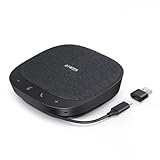
- Smart Voice Enhancement: Eliminate background noise while simultaneously enhancing voices for a professional meeting experience in any environment.
- Plug and Play: Connect via USB-C (includes standard USB adapter) and join meetings in an instant. A wired connection offers a stable and reliable USB speakerphone experience.
- 360° Voice Coverage: A USB speakerphone with 4 high-sensitivity microphones to pick up all voices within 3m in super-high clarity.
- Superior Sound: A 1.75” driver paired with 2 passive bass-radiators adds body and depth to both meeting audio and music.
- What’s In The Box: PowerConf S330 USB Speakerphone, USB-C to USB-A adapter.
Five9’s page is primarily quote-oriented rather than a universal public seat-price list. Its published ROI claims, like vendor-promoted ROI figures from other providers, are study-specific and should not be treated as a forecast for a particular company. A company should build its own cost and outcome model using its volumes, billing basis, staffing, and implementation needs.
Build a total-cost estimate
Estimated monthly total cost = platform fees + voice and messaging usage + AI and automation + CRM/help-desk/integration costs + recording, storage, quality, and workforce tools + amortized implementation + devices and connectivity + security and compliance + support and management overhead.
Estimated monthly value = avoided facilities and telecom costs + reduced losses from missed or abandoned contacts + recovered agent time + reduced after-call work + self-service savings + increased conversion or retention + avoided disruption costs.
Count a benefit only when it can be tied to a defensible baseline. For example, a reduction in abandoned calls is not automatically revenue recovered: the company must estimate how many abandoned callers would otherwise have converted, renewed, or received a resolution.
Free tools Windows power users keep installed
One-click scans. No signup required.
Rank #4

- Exclusive DSP Algorithm Voice AI: This conference speaker and microphone have built-in Echo Cancellation, Voice Enhancement, Full Duplex, and deep learning to isolate your voice from the background noise, ensuring that only your voice is heard.
- Fit for Small and Extra-Large Rooms: This conference speakerphone has a flexible Daisy Chain. Its composition is simple and efficient, by daisy-chaining multiple speakerphones based on different meeting scenarios to optimize your meeting experience.
- Sensitive Expansion Microphone: The speakerphone is equipped with a 1.8m long extension microphone. It has the same 360-degree sound pickup function as the host microphone, noise reduction, and voice enhancement, and the pickup range is easily identified within a radius of 3-5m.
- Various Connection Methods & Wide Compatibility: The conference speaker and microphone can connect to various methods, including Bluetooth, USB, Wireless Dongle, and Daisy Chain. Compatible with all popular conference software on the market, such as ZOOM, Teams, Skype, GoToMeeting, and more.
- RayBit POD4 Meeting Kit: Bluetooth Speakerphone X1, 1.8M Expansion Microphone X1, Wireless Dongle X1, 3M Daisy Chain Cable X1, 1.5M USB-C to A Cable X1, User Manual X1.
Benefits and trade-offs to weigh
| Potential benefit | What can limit it | What to measure |
|---|---|---|
| Scale capacity as demand changes | More users or usage can still raise staffing and platform costs. | Cost per resolved contact; peak queue performance. |
| Recruit across locations and time zones | Hiring, coaching, privacy, and performance management remain necessary. | Coverage, schedule adherence, quality, and attrition. |
| Reduce dependence on local contact-center hardware | Cloud subscriptions, integrations, devices, security, and support add costs. | Total operating cost against the current setup. |
| Route contacts to the right agent and surface customer context | Poor routing rules or incomplete CRM integration can add friction. | Transfers, first-contact resolution, repeat contacts. |
| Coordinate voice and digital channels | Channel coverage and reporting vary by plan and configuration. | Backlog, response time, resolution by channel. |
| Automate routine work or reduce after-call tasks | Weak knowledge, incorrect answers, and poor escalation can create rework. | Containment, escalation accuracy, recontacts, and agent time saved. |
| Continue service when one site is unavailable | Carrier, identity, CRM, power, endpoint, or provider failures can still interrupt service. | Recovery time and results of end-to-end failure tests. |
Cloud delivery can reduce some capital and facilities needs while increasing subscription, usage, integration, storage, security, and management expense. Compare total cost per resolved contact—not just software cost or average handle time.
Which operating model fits?
| Option | Most suitable when | Main trade-off |
|---|---|---|
| Full CCaaS platform | There is meaningful volume, complex routing, multiple channels, workforce needs, or a need for detailed service analytics. | More implementation, administration, and feature-selection work than a basic phone system. |
| Business phone or unified communications system | A small team needs a receptionist, shared lines, voicemail, auto-attendant, or a simple queue. | May lack deeper routing, workforce management, quality, and omnichannel tools. |
| CRM or help-desk-native service tool | Most work is email and ticket handling, with modest voice requirements. | Voice routing and real-time contact-center controls may be less sophisticated. |
| Outsourced or managed center | Recruiting, scheduling, extended hours, multilingual coverage, or rapid staffing is the main constraint. | Less direct control and added dependence on the provider; compare cost per resolved contact, not only hourly rates. |
| Hybrid internal and outsourced operation | Sensitive or high-value work needs internal ownership, but overflow or extended coverage is needed. | Routing, training, reporting, and accountability span organizations. |
| Programmable platform | The company has engineering capability and needs custom or embedded workflows. | Flexible pricing may shift work into architecture, telecom setup, integrations, and ongoing administration. |
For programmable options, Amazon Connect may suit companies with AWS expertise and variable usage, while Twilio Flex may suit product-led or software teams that need custom workflows. Genesys Cloud CX and Five9 are options for more involved contact-center operations; the right plan and implementation depend on the company’s requirements, not a universal ranking.
Microsoft Dynamics 365 Contact Center may be a natural candidate for a company already invested in Microsoft products, but buyers should confirm current plan names, country availability, licensing prerequisites, AI entitlements, and telephony requirements through Microsoft’s product page and documentation. A 40% promotional saving shown for October 1, 2025 through June 30, 2026 is past; it should not be treated as a current offer.
Check fit before selecting a platform
Strong-fit signs
- Demand has peaks, multiple time zones, or extended-hour coverage needs.
- Agents work across several locations, or one physical site creates a continuity risk.
- Customers use multiple channels or require skill-, language-, priority-, or segment-based routing.
- The company has an established CRM or help desk and a clear case-handling process.
- Management can assign an accountable owner for workflows, reporting, permissions, and vendor oversight.
- The company can measure service outcomes and fund implementation, security, training, and support.
Conditional-fit signs
- The company is replacing old phone infrastructure but has not yet mapped its call flows or integrations.
- Some queues are complex or sensitive while others are suitable for self-service or outsourcing.
- Contact volume is irregular, but it is not yet clear whether usage pricing or seat-based licensing is cheaper.
- Remote work is possible, but broadband, endpoint controls, or supervisor processes need improvement.
- AI could help with repetitive requests, but knowledge content and escalation rules need cleanup first.
Poor-fit signs
- Volume is very low and a basic business phone system already meets the need.
- Work requires secure on-site equipment, physical identity verification, or premises the agents cannot access remotely.
- Agents lack reliable internet, suitable devices, or private workspaces, and the company cannot address the gaps.
- The company has no accountable service owner, no reliable customer-data process, or no capacity to monitor service quality.
- A vendor cannot meet applicable data-residency, contractual, or regulatory requirements.
- The business expects AI or remote work to replace process design, staffing, escalation, or quality assurance.
Security, compliance, and remote-work requirements
“Cloud” is not synonymous with “secure.” Responsibility is shared among the contact-center provider, the company, identity and CRM systems, carriers, endpoints, and agents. Ask vendors to document the controls and contract terms that apply to the exact service and region:
Do these 3 things before closing this tab:
1Fix the driver behind crashes, sound loss and screen glitches2Repair Windows errors before they cause bigger problems3Scan for outdated or missing drivers - takes under a minuteBest Value

- Wireless Microphone System: Includes 2 DECT 6.0 wireless microphones and 1 central fixed microphone for comprehensive conference room coverage
- Display and Storage Features: 2-line backlit display with date and time saves up to 50 caller ID entries and 50 name/number phonebook entries
- Full-Duplex Speakerphone Technology: Central full-duplex speakerphone in base allows callers to speak and be heard at the same time, just as they would in a face-to-face meeting
- Convenient Charging Solution: Magnetic charging bays built into the base keep wireless microphones together and ready for the next call
- Extended Battery Performance: Wireless microphones feature up to 70 hours of battery life with 8 hours of talk time
- Encryption in transit and at rest, identity-provider integration, single sign-on, multifactor authentication, and role-based permissions.
- Call-recording and transcript controls, retention periods, access logs, and administrator activity records.
- Payment-data handling, PCI controls, and redaction where relevant; for health information, whether a suitable business associate agreement is available.
- Applicable assurance reports or certifications, subprocessors, AI-model data handling, data residency, and cross-border transfers.
- Incident notification, breach response, support escalation, and contractual responsibilities.
- Number portability and emergency-calling capabilities where required for the company’s geography and service.
- Remote-agent endpoint requirements, managed-device controls, secure authentication, private workspace expectations, and restrictions on local storage.
A provider’s general security or compliance claims do not establish that a particular configuration or company workflow meets its obligations. Have the relevant security, privacy, legal, and compliance owners review the service before production data or recordings are moved.
Connectivity and equipment agents need
- Business-grade broadband; consider a backup connection for critical roles.
- Wired Ethernet where practical, tested headsets and microphones, and a quiet, private work area.
- Supported browsers and operating systems, managed endpoints, and current security updates.
- Battery backup for networking equipment where short power interruptions would disrupt critical service.
- Quality-of-service monitoring and documented mobile, callback, or alternate-routing procedures.
Platform availability and agent availability are different. A provider can be operating while an individual agent’s home internet, laptop, headset, identity service, or CRM connection is not.
Stage implementation to limit risk
- Baseline current operations. Record contact volumes, peak intervals, staffing, service levels, abandonment, handle time, transfers, backlog, and current costs.
- Define the use cases. Separate support, sales, collections, appointment scheduling, outbound campaigns, technical support, and emergency contacts.
- Map customer journeys. Document entry points, authentication, routing, escalation, transfers, callbacks, handoffs, and closure.
- Inventory integrations. Include CRM, help desk, billing, order management, identity, knowledge base, workforce tools, and reporting.
- Set non-negotiable requirements. Specify channels, countries, compliance, recording, data residency, uptime, number portability, APIs, and support needs.
- Shortlist two or three realistic providers. Compare the billing basis and included features, not only the advertised starting price.
- Run a proof of concept. Test representative contacts, CRM screen pops, transfers, recording, reporting, agent workflows, and recovery paths.
- Pilot one queue or customer segment. Keep a controlled comparison with the existing operation and define success thresholds in advance.
- Train agents and supervisors. Cover privacy, authentication, remote-work expectations, escalation, quality review, and outage procedures.
- Load-test and failure-test. Test peak volume, carrier failure, CRM or identity outages, agent disconnections, and misrouted contacts.
- Review results weekly. Adjust staffing, routing, scripts, and self-service based on measured outcomes.
- Roll out in phases. Keep a fallback route until the new operation has demonstrated stable service under realistic conditions.
Plan for failure, not just normal operation
A continuity plan should name who can act, what customers hear, and how service resumes when a dependency fails. Include:
- Secondary contact numbers or carrier routes, overflow rules, and emergency announcements or status messages.
- Backup-connectivity procedures and a way for agents to contact supervisors if the platform is unavailable.
- Offline access to essential scripts and escalation contacts, plus a manual case-logging procedure.
- Defined recovery-time and recovery-point objectives, vendor incident contacts, and escalation tiers.
- Tested restoration and rollback steps for the platform, CRM, identity service, carrier, and key integrations.
Distributing agents can reduce dependence on a single office, but relying on one cloud provider, carrier, identity provider, CRM, or region may create a different single point of failure. Test the whole customer path rather than relying on the platform SLA alone.
Quick wins for a faster PC:
Clear out junk files and repair common Windows errorsFree Scan →Scan for outdated or missing drivers - takes under a minuteDriver Scan →Repair Windows errors before they cause bigger problemsFix Now →Measure whether the operation is working
Compare the pilot with the baseline, using the same definitions and comparable contact types. Track measures across cost, service, customers, agents, reliability, and automation:
- Cost and efficiency: cost per contact and resolved contact, average handle time, occupancy, and schedule adherence. Do not optimize handle time alone.
- Access and resolution: service level, average speed of answer, abandonment, first-contact resolution, transfers, repeat contacts, and backlog.
- Customer outcomes: satisfaction, NPS, or customer-effort score; revenue per sales contact where relevant.
- Workforce: workload, adherence, quality scores, coaching needs, and staffing coverage.
- Automation: self-service containment, escalation accuracy, AI errors, hallucinations, and recontact rates.
- Reliability and security: availability across dependencies, incident recovery time, security events, and failed authentication attempts.
A lower average handle time is not proof of better service if it comes with more transfers, unresolved cases, or repeat contacts. Judge efficiency alongside resolution, quality, customer effort, and total cost.
Make the decision on the operating problem
Choose full cloud contact-center software when contact volume, distributed staffing, channel complexity, or continuity needs justify its added implementation and management work. Choose a lighter phone or help-desk tool when the operation is small and simple. Consider outsourcing or a hybrid model when staffing, multilingual coverage, or extended hours—not software—is the main constraint. Delay a rollout if customer data, service processes, connectivity, or ownership are not ready. The practical test is whether a measured pilot improves the service outcome that prompted the project at a sustainable total cost.
Quick Recap
Product prices and availability are accurate as of the date/time indicated and are subject to change. Any price and availability information displayed on Amazon at the time of purchase will apply.
The Tool Desk
Outbyte Driver Updater FREEFix the driver behind crashes, sound loss and screen glitchesFind Drivers →Outbyte PC Repair FREEClear out junk files and repair common Windows errorsFree Scan →



