Free tools Windows power users keep installed
One-click scans. No signup required.
The title points to the Chevrolet Volt, GM’s discontinued plug-in hybrid, though it does not name the model. A used Volt can still fit a driver’s routine, but its advertised electric range and broad battery statistics cannot tell you whether a particular car is a sound purchase. Check its service history, charging operation, diagnostic status and VIN-specific coverage before deciding.
What the Volt’s advertised range can—and cannot—tell you
GM Authority reported a 53-mile electric range and 106 MPGe combined efficiency figure for the second-generation Volt. Those are published ratings, not a promise of the range a used example will deliver today. EPA says cold weather, air conditioning and high-speed driving can significantly reduce EV range, and it describes its estimates as general guidance for comparing vehicles. GM Authority’s March 2025 report and the EPA’s PHEV guidance provide that context.
When assessing a car, treat the displayed electric range as one clue, not a battery-health diagnosis. Compare observations under similar conditions, and account for temperature, climate-control use and speed. PHEVs also have separate electric-mode MPGe and gasoline-mode MPG measures, so neither number alone describes every trip.
What battery-failure statistics say about longevity
In 2025, EPA summarized a Recurrent analysis of about 15,000 EVs and PHEVs through model year 2023. The analysis reported an average failure-related battery replacement rate of 2.5%, excluding major recalls; for vehicles from model year 2016 onward, the rate was under 0.5%. These are fleet-wide figures, not a Chevrolet Volt failure rate. They do not measure ordinary range loss or establish the condition of any one car. EPA notes that batteries can lose range over time. EPA’s summary of the battery analysis is useful context, not a guarantee of longevity.
#1 Best Overall

- High density negative paste, improves performance and increases battery life
- Enhanced life alloy or Silver Calcium stamped alloy increases cycle life and improves performance
- Calcium lead positive grid, maximizes conductivity and allows for low resistance
- Robust envelope separator with puncture resistant back, allows for increased acid circulation and prevents shorts. Improved acid circulation, helps the battery to remain cool, and extend battery life
- Vent cap design that resists acid leakage
Why second-generation buyers should check BECM history
The battery energy control module (BECM) has a documented history of reduced-power and no-start complaints in second-generation Volts. A March 2025 GM Authority report says NHTSA closed its investigation into those complaints for 2016–2019 Volts. It also describes GM special coverage for certain 2016–2018 cars, extending coverage from eight years/100,000 miles to 15 years/150,000 miles.
That report does not establish that every car, VIN or regional configuration qualifies. Ask Chevrolet to check the specific VIN and confirm any coverage in writing. Request repair records showing whether BECM work was completed, and have warning messages or diagnostic codes assessed rather than assuming an old repair or coverage will resolve a present fault. See the GM Authority report for the investigation and coverage context.
Rank #2

- Battery Dimensions --- BCI Group size 47 (H5 L2), 9.53 x 6.89 x 7.48 inches, Terminal Layout: Left: - Right: +. Battery dimensions, cold cranking amps, terminal location and battery type are key factors in getting the right unit. Please measure your old battery and compare the size with this battery, if the measurements are the same, the positive and negative positions are the same, there is not much difference in CCA and it will fit your vehicle.
- 4 TIMES EXTRA CYCLING --- High density negative paste and Enhanced life alloy or Silver Calcium stamped alloy.Uplus Start and Stop AGM battery has 4 times extra cycle life compared to standard conventional batteries.
- DESIGNED FOR VEHICLES WITH START-STOP --- International standard size BCI Group 47 (H5/L2), easy to install.Ideal for vehicles with large electrical loads (DVD players, navigation systems, heated seats, power doors, etc.), vehicles used for frequent short trips or in stop-n-go traffic and vehicles that sit unused for days or weeks at a time.
- DEEP-CYCLE AND CRANKING POWER --- Calcium lead positive grid, maximizes conductivity and allows for low resistance.Highest cold cranking amperes (660CCA) for engine starts, even reliable during cold winter temperatures.
- TOP-LEVEL SAFETY --- 15 times more vibration-resistant.Vent cap design that resists acid leakage.Top-level safety features and absolutely no free acid.Original Spare Parts ensure the replacement battery has the same quality as the original one.
What to inspect before buying a used Volt
- Gather the records. Ask for service and repair documents, including any BECM diagnosis or replacement. Check the VIN with Chevrolet for applicable special coverage and consult the car’s warranty documents.
- Check for warnings and faults. Review dashboard messages and have a qualified technician assess relevant diagnostic codes. A clean-looking dashboard alone does not establish battery or control-module health.
- Test charging. Confirm the vehicle connects and charges with compatible equipment. If possible, observe a charging session rather than relying only on the seller’s description.
- Assess electric range in context. Note the displayed estimate and how it behaves during a drive, but consider weather, speed and climate-control use. Compare cars under similar conditions where possible.
- Compare the whole deal. Weigh model year, mileage, documented maintenance, observed range, BECM history, VIN-specific coverage and price against the possibility of repairs. The available figures do not establish a universally best model year or a Volt-specific failure rate.
Home charging: match the equipment to the car and circuit
A Level 2 EVSE can be convenient for home charging, but more powerful equipment cannot make a vehicle charge faster than its own capability. Before buying equipment or arranging installation, confirm the Volt’s model-year and trim charging capability and the capacity and safety of the home electrical circuit. EPA notes that many small and medium plug-in vehicles can recharge overnight using lower-power charging; the right setup depends on the vehicle and your routine. Its charging guidance explains charger capability and home-installation considerations.
EPA says federal emissions-control warranties apply to used vehicles and begin on the date the vehicle was sold to its original owner. That is not a blanket battery warranty. For any warranty question, check the VIN, state, in-service date and vehicle warranty booklet; do not assume emissions coverage or BECM special coverage guarantees battery repairs.
Rank #3

- Please confirm compatibility using the fitment guide located in the product images**
- Avoid expensive dealer service charges and easily replace your key fob battery yourself - only takes a few minutes - no programming required - simple guide to changing your key fob battery available in the description
- Compatible with most Chevy & GMC models/years including ✔ Silverado (1999-2021), ✔ Equinox (2005-2023), ✔ Malibu (1997-2024), ✔ Traverse (2009-2024), ✔ Cruze (2010-2019), ✔ Sierra (1999-2021), ✔ Acadia (2007-2023), ✔ Colorado (2004-2022), ✔ Terrain (2010-2024), ✔ Impala (2000-2020), ✔ Trax (2013-2026), ✔ Camaro (2010-2024), ✔ Express (1997-2026), ✔ Tahoe (1997-2020), ✔ Yukon (1997-2020), ✔ Suburban (1997-2010), ✔ Trailblazer (2002-2026), ✔ Blazer (2019-2023, select 2024-2026 trims), ✔ Canyon (2004-2022), ✔ Spark (2013-2022), ✔ Savana (1997-2026), ✔ Cobalt (2005-2010), ✔ Corvette (1998-2019), ✔ Bolt (2017-2024), ✔ Avalanche (2002-2013), ✔ Volt (2011-2019) and even more!
- Not compatible with ✘ Silverado (certain 2022-2023 models, all 2024-2026 models), ✘ Sierra (certain 2022-2023 models, all 2024-2026 models), ✘ Tahoe (2021-2026), ✘ Equinox (2025-2026), ✘ Terrain (2025-2026), ✘ Traverse (2025-2026), ✘ Suburban (2021-2026), ✘ Yukon (2021-2026), ✘ Colorado (2023-2026), ✘ Corvete (2020-2026), ✘ Canyon (2023-2026), ✘ Acadia (2024-2026), ✘ Blazer (certain trims 2024-2026),✘ Hummer EV, ✘ Silverado EV, ✘ Sierra EV, ✘ Equinox EV ✘ City Express, ✘ Aveo
- Includes (2) original premium Deluxe CR2032 3V batteries. Does not include actual key fob
Is a Volt a fit for your driving and emissions priorities?
A Volt can run on electricity and use gasoline when that is needed, but it is not a zero-tailpipe-emission vehicle in every mode. The EPA states: “PHEVs produce tailpipe emissions when gasoline is being used as a fuel source.” Charging source also affects overall emissions. If your aim is to avoid gasoline use on particular trips, consider whether you can charge regularly and whether your daily driving fits the car’s real-world electric range. EPA’s PHEV overview explains operating modes and emissions.
Quick Recap
Best Value
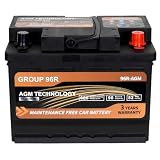
- ✅ Battery Dimensions: 9.53" L x 6.89" W x 6.89" H, Terminal: Tapered terminal (Left negative (-), Right positive (+)). ✅ Please ensure to verify the dimensions and terminal position before making a purchase to guarantee compatibility with your vehicle to avoid any fitment issues.
- ✅ With a 52AH capacity and 600 cold cranking amps (CCA). weize group 96R car battery provides reliable performance and long service life, Up to 2 times the cycle life of conventional batteries. If your car's original battery is an AGM type, you must continue using an AGM battery, as your car will not accept a "downgrade" to a flooded battery. Nominal Voltage: 12V. Charging Voltage: 14.4~15.0V. Acceptable Charging Current: 0~15A. Operating Temperature Range: -22°F~158°F.
- ✅ Heat / Cold Resistance: The materials used in the construction of AGM batteries (such as glass fiber mats and specialized separators) have better heat resistance. This allows AGM batteries to maintain their performance and capacity even in the hottest climates, They are also more resistant to extreme temperatures, making them ideal for hot or cold regions.
- ✅ Low Self-Discharge: AGM car batteries have lower self-discharge rates compared to flooded batteries. Self-discharge refers to the loss of capacity that batteries experience over time when not in use. In hot climates, when the battery may need to be stored for extended periods or not frequently used, AGM batteries can better maintain charge, providing higher voltage output and easier engine start-up in any climate.
- ✅ Enhanced Safety: weize AGM batteries have a lower risk of acid leaks and spills compared to flooded batteries. This is because the acid is absorbed and held within the glass fiber mats, reducing the risk of corrosion or damage to surrounding components,this makes AGM batteries more durable and long-lasting, is also two to three times longer than flooded batteries. AGM batteries also have a lower risk of explosion and are safer to handle, making them ideal for high-performance vehicles.
Rank #4

- High density negative paste, improves performance and increases battery life
- Enhanced life alloy or Silver Calcium stamped alloy increases cycle life and improves performance, High density plate oxide provides for maximum power-per-pound and dependable high cycling service
- Calcium Lead positive grid, maximizes conductivity and allows for low resistance
- Robust Envelope Separator with puncture-resistant back, allows for increased acid circulation and prevents shorts. Improved acid circulation, helps the battery to remain cool, and extend battery life
- Vent cap design that resists acid leakage
Product prices and availability are accurate as of the date/time indicated and are subject to change. Any price and availability information displayed on Amazon at the time of purchase will apply.




