The six changes Intel CEO Pat Gelsinger outlined on September 16, 2024, were a cost-and-strategy reset—not a completed turnaround. They paired an AWS custom-chip framework and up to $3 billion in announced Secure Enclave funding with a proposed Intel Foundry subsidiary, slower factory expansion, an x86-and-AI reorganization, and workforce and real-estate cuts. By August 18, 2026, Intel had reported progress on some programs, but its filings also showed factory delays, canceled European expansions and complex financing. The AWS framework and the proposed subsidiary should not be mistaken for a guaranteed revenue stream or a spin-off.
What Intel announced in September 2024
Gelsinger’s September 16, 2024 employee message came as Intel pursued a previously announced $10 billion savings target after weak financial performance. The six initiatives combined customer development, U.S. government support, governance changes, lower or deferred capital spending, portfolio simplification and cuts to operating costs. Intel framed the priorities as building momentum in Foundry and reaching Intel 18A, delivering the savings target, and refocusing on its x86 business while pursuing AI. Intel’s announcement described plans and expectations; it did not establish that every initiative had already delivered results.
| Initiative | What Intel said in 2024 | What later information shows |
|---|---|---|
| AWS custom chips | A multiyear, multibillion-dollar framework for co-investment and custom designs. | The announcement specified planned chips and process nodes; it did not disclose production volumes, revenue or margins. |
| Secure Enclave | Up to $3 billion in direct funding for trusted manufacturing for the U.S. government. | Intel’s 2025 filing later reported $3.2 billion in Secure Enclave disbursements, alongside other CHIPS Act and equity-linked arrangements. |
| Intel Foundry structure | A plan for an independent subsidiary within Intel, with separate reporting and governance. | This was not an announced sale or immediate legal spin-off; the 2025 filing also described ownership conditions tied to government support. |
| Factory footprint | Pause or defer selected overseas projects while prioritizing demand and existing capacity. | Intel later discontinued Germany and Poland expansions, slowed Ohio construction and disclosed Ireland Fab 34 delays. |
| Products and organization | Reorganize around x86, AI, networking and telecommunications. | The changes altered organizational placement and reporting, not proof of AI-market success. |
| Costs and Altera | Target about 15,000 job reductions, reduce real estate and consider an Altera stake sale and IPO path. | The 2024 target and intention should not be treated as a verified final head-count or completed Altera transaction. |
What was in the AWS chip framework?
Intel and Amazon Web Services described a multiyear, multibillion-dollar framework under which the companies would co-invest in custom designs. The announced plans included an AWS AI fabric chip manufactured on Intel 18A and a custom Xeon 6 chip on Intel 3. The companies also left open broader collaboration involving Intel 18A, 18A-P and 14A. The announcement extended an existing Intel-AWS relationship involving Xeon processors. Intel’s announcement and its 2024 filing describe the framework and planned designs.
“Framework” matters. The public announcement did not break out a contract value, guarantee that every contemplated design would enter high-volume production, or provide a revenue forecast. It is therefore inaccurate to describe the whole multibillion-dollar figure as a booked AWS order or completed production. Intel’s claims about leapfrogging competitors were management aspirations, not independently verified results.
Free tools Windows power users keep installed
One-click scans. No signup required.
#1 Best Overall

- Next‑Gen Platform Support: Compatible with Intel 800 Series Chipset‑based motherboards with LGA1851 Socket enabling PCIe 5.0/4.0 and high‑speed DDR5 memory (up to 7200 MT/s).
- High‑Performance Core Configuration: Features up to 24 cores (8 P‑cores + 16 E‑cores) for demanding gaming and creator
- Ultra‑Fast Boost Clocks: Reaches up to 5.5 GHz max turbo frequency for top‑tier responsiveness and performance
- Built for Enthusiasts: Unlocked for performance tuning when paired with Intel Z‑series chipsets, making it ideal for overclockers and power users.
- Robust Power & Thermal Design: Engineered with 125W base power and 250W max turbo power to sustain high‑intensity
Why AWS mattered—and what it did not prove
A large, technically sophisticated cloud customer could validate Intel’s ability to provide both custom-chip design support and foundry manufacturing. If the announced designs reached production and generated repeat orders, they could help establish an anchor relationship for advanced nodes. But the announcement alone does not show whether the chips entered volume production, what volumes or margins they achieved, or whether AWS expanded beyond the named designs. Those operating details are essential to judging whether the deal became repeatable commercial demand rather than a strategically important framework.
Secure Enclave: government funding with conditions
In September 2024, Intel said it had received up to $3 billion in direct funding under the CHIPS and Science Act for Secure Enclave, a program intended to expand trusted leading-edge semiconductor manufacturing for the U.S. government. The award, announced during the Biden-Harris administration, was distinct from Intel’s broader CHIPS Act manufacturing-funding agreement and built on defense-related work including RAMP-C. Contemporaneous coverage of the announcement described the up-to-$3-billion figure.
Intel’s 2025 annual filing later reported $3.2 billion in Secure Enclave disbursements and $5.7 billion in accelerated remaining CHIPS Act disbursements during 2025. The filing also described equity issuance and warrants associated with the U.S. government agreement, so the support should not be characterized as a simple, unconditional grant. Intel’s 2025 filing sets out those later disclosures.
Rank #2

- Game Without Compromise. Play harder and work smarter with Intel Core 14th Gen processors
- 20 cores (8 P-cores plus 12 E-cores) and 28 threads. Integrated Intel UHD Graphics 770 included
- Up to 5.6 GHz with Turbo Boost Max Technology 3.0 gives you smooth game play, high frame rates, and rapid responsiveness
- Compatible with Intel 600-series (with potential BIOS update) or 700-series chipset-based motherboards
- DDR4 and DDR5 platform support cuts your load times and gives you the space to run the most demanding games
On July 28, 2026, Intel said its RAMP-C work had advanced from ecosystem enablement to validated prototypes and production-readiness pathways using Intel 18A and advanced packaging. That is evidence of program progress, but it does not by itself show that Secure Enclave made the commercial foundry business profitable. Intel’s RAMP-C update describes the program milestone.
Windows Errors? Fix Them Before They Spread
Repair common Windows errors and clear accumulated junk for a smoother, more stable PC - no reinstall needed.Free scan · no reinstallCrashes, No Sound, or Screen Glitches?
Random freezes, missing sound and display glitches usually trace back to one bad driver. Find and replace yours safely.Free scan · under a minuteWhat “independent Intel Foundry” meant
Intel proposed placing Foundry in an independent subsidiary that would remain inside Intel Corporation. The company had already separated Foundry and Intel Products in its financial reporting. The proposed structure was meant to add an operating board with independent directors, make the business more legible to outside customers and suppliers, and give Intel flexibility to seek external funding. The 2024 announcement did not describe an immediate legal separation, sale or public offering of Foundry. Intel’s explanation of the plan is the source for its intended structure and rationale.
- Financial separation: reporting Foundry’s results separately from Intel Products.
- Governance separation: the proposed operating board with independent directors.
- Operational independence: the degree to which Foundry could serve outside customers on terms distinct from Intel’s internal product groups.
- Legal spin-off or sale: a change in ownership or corporate control, which was not what the 2024 announcement proposed.
Intel’s 2025 filing added an ownership constraint: the government agreement included shares and warrants tied in part to continued ownership of at least 51% of Intel Foundry. That makes the proposed independence a question of governance and customer confidence within an Intel-controlled structure, not evidence that Intel had committed to relinquish control. The filing describes the condition.
Rank #3

- Get ultra-efficient with Intel Core Ultra desktop processors that improve both performance and efficiency so your PC can run cooler, quieter, and quicker.
- Core and Threads 24 cores (8 P-cores plus 16 E-cores) and 24 threads. Integrated Intel Graphics included
- Performance Hybrid Architecture Integrates two core microarchitectures, prioritizing and distributing workloads to optimize performance
- Performance Unlocked Up to 5.7 GHz unlocked. 40MB Cache
- Compatibility Compatible with Intel 800 series chipset-based motherboards
Factory delays: what changed after the original plan
The 2024 adjustments
In the September 2024 plan, Intel said it would pause construction of its Germany fab campus and Poland assembly-and-test facility for approximately two years. It planned to continue construction of its Malaysia advanced-packaging factory but align its startup with market demand and utilization of existing capacity. Intel positioned Ireland as its lead European hub. At that time, it said the announcement did not change plans for Arizona, Oregon, New Mexico or Ohio. The original announcement is specific to that 2024 decision; it should not be read as a lasting status report on every site.
The later footprint and Ireland developments
Intel’s 2025 annual filing said it streamlined its manufacturing footprint, slowed construction at the Ohio fab and discontinued planned expansions in Germany and Poland. It also said Intel might pause or discontinue Intel 14A and later leading-edge nodes if it could not secure a significant external foundry customer for Intel 14A. The filing reported that Arizona factories remained partly under construction, with some manufacturing assets placed into service by the end of 2025. The 2025 filing documents those changes.
The Tool Desk
Outbyte PC Repair FREERepair Windows errors before they cause bigger problemsFix Now →Outbyte Driver Updater FREEScan for outdated or missing drivers - takes under a minuteDriver Scan →Intel’s first-quarter 2026 filing disclosed expected construction delays at Ireland’s Fab 34 and potential delay-related damages of up to $1.1 billion. It also said that in April 2026 Intel reacquired Apollo’s 49% interest in Ireland SCIP for approximately $14.2 billion, including estimated transaction costs. These are distinct items: the filing described potential delay-related damages, not a statement that the full amount had already been paid. The buyout also shows why the Ireland story cannot be reduced to the original decision to prioritize the site. Intel’s first-quarter 2026 filing provides the terms and timing.
Rank #4
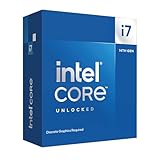
- Game Without Compromise. Play harder and work smarter with Intel Core 14th Gen processors
- 20 cores (8 P-cores plus 12 E-cores) and 28 threads. Discrete graphics required
- Up to 5.6 GHz with Turbo Boost Max Technology 3.0 gives you smooth game play, high frame rates, and rapid responsiveness
- Compatible with Intel 600-series (with potential BIOS update) or 700-series chipset-based motherboards
- DDR4 and DDR5 platform support cuts your load times and gives you the space to run the most demanding games
How Intel reorganized around x86 and AI
The product changes moved Edge and Automotive into the Client Computing Group, narrowed Network and Edge toward networking and telecommunications, and moved Integrated Photonics Solutions into the Data Center and AI Group. Intel also integrated software and incubation operations into core business units. It said AI would complement its x86 franchise through AI PCs, Xeon and accelerator products. The 2024 announcement outlines the changes.
This was an organizational and portfolio reset, not evidence that Intel had solved its AI accelerator challenge or won market share. Assessing the strategy requires product demand, performance and total-cost evidence, as well as traction for Xeon, accelerators and their software ecosystem. Separately, Intel’s 2025 filing said Intel 18A was used in Core Ultra Series 3 and was expected to expand in 2026 and beyond; that establishes product use, not independent proof of process leadership or foundry profitability. The annual filing describes that 18A status.
Independent reader supportYour contribution helps us test, update, and keep practical guides available for everyone.Layoffs, property cuts and Altera
Intel’s 2024 plan set an approximately 15,000-person workforce-reduction target. The company said further notifications would follow early-retirement and voluntary-separation programs. It also planned to reduce or exit about two-thirds of its global real-estate footprint by year-end and described a possible partial sale of Altera alongside an IPO path. Intel’s announcement presented these as plans and targets.
Do these 3 things before closing this tab:
1Clear out junk files and repair common Windows errors2Scan for outdated or missing drivers - takes under a minute3Repair Windows errors before they cause bigger problemsBest Value

- Game without compromise. Play harder and work smarter with Intel Core 14th Gen processors
- 24 cores (8 P-cores plus 16 E-cores) and 32 threads. Integrated Intel UHD Graphics 770 included
- Leading max clock speed of up to 6.0 GHz gives you smoother game play, higher frame rates, and rapid responsiveness
- Compatible with Intel 600-series (with potential BIOS update) or 700-series chipset-based motherboards
- DDR4 and DDR5 platform support cuts your load times and gives you the space to run the most demanding games
A target is not the same as a completed reduction. Voluntary departures, involuntary layoffs and subsequent restructuring decisions are different measures, and the cited 2024 announcement does not establish Intel’s final workforce outcome. Similarly, an intended Altera stake sale or IPO path is not proof that either transaction occurred. These measures were intended to reduce costs and simplify the portfolio; their actual financial contribution must be judged against later reported results, not inferred from the announcement.
How to judge whether the turnaround was working
The six initiatives are best judged by operating evidence rather than by their announcement-day scale. Relevant indicators include:
- Foundry customer conversion: customers in production, repeat orders, wafer volumes, customer concentration and use of leading-edge rather than mature nodes.
- 18A execution: design tape-outs, yield and defect-density progress, high-volume manufacturing, launch timing and customer qualification.
- Foundry economics: operating losses, capital needs, outside financing, internal-versus-external wafer allocation and the potential for sustainable margins.
- Factory utilization: utilization across Arizona, Ohio, Ireland and New Mexico, alongside delays, contractual exposure and whether capacity was built ahead of demand.
- AI competitiveness: adoption of AI PCs, Xeon demand, accelerator traction, software support, inference performance and total cost.
- Balance-sheet effects: cash use, government disbursements, dilution, asset transactions and financing obligations.
Those measures also reveal the strategy’s trade-offs. More domestic capacity can support supply-chain resilience but consume capital if utilization is low. A more distinct Foundry structure could reassure outside customers while Intel’s product groups still benefit from shared technology and internal access. An anchor customer such as AWS can validate a platform but may have bargaining power; government defense programs can support capability without guaranteeing a profitable commercial business. Pausing overseas investment can lower near-term spending while reducing geographic diversification.
What the six changes amount to by 2026
Gelsinger’s plan was a coherent attempt to preserve Intel’s integrated-device-manufacturer model while making Foundry more credible to outside customers and reducing costs. By August 18, 2026, Intel had reported 18A product use and progress in defense-related work, while its later filings documented canceled or slowed projects, Ireland construction and financing complications, and the importance of securing external demand for future leading-edge nodes. Those developments make the plan an unfinished strategic reset—not proof that Intel’s foundry economics, AI position or turnaround had been secured.
What’s actually slowing this PC down?
Pick the symptom - the matching free tool is one click away.
Quick Recap
Product prices and availability are accurate as of the date/time indicated and are subject to change. Any price and availability information displayed on Amazon at the time of purchase will apply.




