Quick wins for a faster PC:
Clear out junk files and repair common Windows errorsFree Scan →Fix the driver behind crashes, sound loss and screen glitchesFind Drivers →Repair Windows errors before they cause bigger problemsFix Now →Intel cancelled its planned chip projects in Germany and Poland, then announced a €5 billion expansion at its Leixlip site in Ireland in July 2026. The change shifts Intel’s European expansion from a large, subsidy-backed buildout toward a smaller, demand-led commitment. For taxpayers, the key distinction is between a project’s announced public support and money actually spent; for Europe, the cancellation is a setback, not the end of its semiconductor strategy.
What happened to Intel’s European projects?
Intel’s plans moved from a proposed two-fab complex in Magdeburg and a planned integration-and-test facility near Wrocław to a pause, then cancellation. Ireland remained its European anchor. The announcements describe different kinds of facilities: the German plan was for wafer fabs, while the Polish project was for later-stage integration and testing.
| Date | Location and plan | Investment and employment announced | Outcome |
|---|---|---|---|
| March 2022 | Two planned fabs in Magdeburg, Germany | Intel announced an initial €17 billion plan, with 7,000 projected construction jobs and 3,000 projected permanent Intel jobs. | The initial plan was later revised. |
| June 2023 | Two planned fabs in Magdeburg | Intel and the German government announced a revised scope of more than €30 billion. The project was expected to begin production four to five years after European Commission approval of incentives. | The project did not proceed to construction. |
| 2023 announcement, reported in July 2025 | Planned integration-and-test facility in the Wrocław area, Poland | The project was announced at $4.6 billion and 2,000 jobs, as reported by PAP. | Intel later cancelled the planned project. |
| September 2024 | Germany and Poland projects | Intel gave no revised investment total in its pause announcement. | The company said it would pause the projects for approximately two years, citing anticipated market demand. |
| July 2025 | Germany and Poland projects | A July 25 PAP report described the Magdeburg project as a €30 billion investment with €10 billion in German government support. | CEO Lip-Bu Tan said Intel would not move forward with either previously planned project. |
| July 2026 | Leixlip, Ireland | Intel announced a €5 billion expansion. | The expansion is intended to increase Intel 3 production for Xeon 6 and next-generation Xeon. |
These are announced plans and reported figures, not a ledger of completed spending. In particular, the €10 billion figure is described in the 2025 PAP report as German government support associated with Magdeburg; it does not establish how much public money was ultimately disbursed.
Why did Intel cancel the Magdeburg and Wrocław projects?
Intel’s stated rationale changed from a pause to a cancellation, but both decisions point to the company’s assessment of demand and capital priorities. In September 2024, Intel said it was pausing Germany and Poland for approximately two years because of anticipated market demand. In July 2025, Tan linked the company’s direction to correcting its course, cost reduction and capital efficiency. He said: “With that in mind, we have decided not to move forward with previously planned projects in Germany and Poland.”
Do these 3 things before closing this tab:
1Scan for outdated or missing drivers - takes under a minute2Clear out junk files and repair common Windows errors3Fix the driver behind crashes, sound loss and screen glitches#1 Best Overall

- Next‑Gen Platform Support: Compatible with Intel 800 Series Chipset‑based motherboards with LGA1851 Socket enabling PCIe 5.0/4.0 and high‑speed DDR5 memory (up to 7200 MT/s).
- High‑Performance Core Configuration: Features up to 24 cores (8 P‑cores + 16 E‑cores) for demanding gaming and creator
- Ultra‑Fast Boost Clocks: Reaches up to 5.5 GHz max turbo frequency for top‑tier responsiveness and performance
- Built for Enthusiasts: Unlocked for performance tuning when paired with Intel Z‑series chipsets, making it ideal for overclockers and power users.
- Robust Power & Thermal Design: Engineered with 125W base power and 250W max turbo power to sustain high‑intensity
A large fab needs customers and sustained utilization, not just a construction budget. Intel’s 2023 Magdeburg plan depended on substantial incentives and was also tied to its foundry strategy. Public support can reduce the cost of building capacity, but it cannot by itself ensure that customers will use that capacity at commercially viable levels. Intel’s cancellation indicates that the company no longer judged the planned projects to fit its demand and capital plans; it does not, by itself, establish that the projects were technically impossible or that every proposed incentive had been paid.
Where is Intel expanding in Europe now?
The verified active expansion in the announcements covered here is at Leixlip, Ireland. On July 13, 2026, Intel announced a €5 billion investment to expand Intel 3 production there for Xeon 6 and next-generation Xeon. That makes Leixlip the practical Intel anchor for this European expansion story, while Magdeburg and Wrocław are no longer part of Intel’s planned buildout.
Rank #2

- Get ultra-efficient with Intel Core Ultra desktop processors that improve both performance and efficiency so your PC can run cooler, quieter, and quicker.
- Core and Threads 24 cores (8 P-cores plus 16 E-cores) and 24 threads. Integrated Intel Graphics included
- Performance Hybrid Architecture Integrates two core microarchitectures, prioritizing and distributing workloads to optimize performance
- Performance Unlocked Up to 5.7 GHz unlocked. 40MB Cache
- Compatibility Compatible with Intel 800 series chipset-based motherboards
The Irish announcement is not a like-for-like replacement for the cancelled proposals. Magdeburg was planned as two new fabs, and Wrocław as an integration-and-test facility; Leixlip is an expansion of Intel 3 production. The published figures do not establish a direct comparison of eventual output, capacity, or employment across the three sites.
Does Europe still have a semiconductor strategy?
Yes, but Intel’s decision shows why policy goals and commercial investment have to be assessed separately. In 2026 the European Commission’s proposed Chips Act 2.0 emphasized strategic projects spanning advanced manufacturing, chip design and packaging. A proposal is not the same as enacted policy, and a strategy covering several parts of the semiconductor supply chain is broader than any one company’s fab plans.
Rank #3

- Game Without Compromise. Play harder and work smarter with Intel Core 14th Gen processors
- 20 cores (8 P-cores plus 12 E-cores) and 28 threads. Integrated Intel UHD Graphics 770 included
- Up to 5.6 GHz with Turbo Boost Max Technology 3.0 gives you smooth game play, high frame rates, and rapid responsiveness
- Compatible with Intel 600-series (with potential BIOS update) or 700-series chipset-based motherboards
- DDR4 and DDR5 platform support cuts your load times and gives you the space to run the most demanding games
Other projects also continued after Intel’s cancellation. In October 2025, the Commission granted IPF/OEF status to four projects. That status offers streamlined permitting and pilot-line access, and can carry potential obligations to accept crisis orders. These measures may support resilience, but they do not guarantee that any specific project will be built, reach volume production, or be profitable.
What does Intel’s retreat mean for taxpayers and investors?
For taxpayers
The Magdeburg figures illustrate why headline project value and public exposure should not be treated as the same number. Intel and Germany announced a project worth more than €30 billion in 2023; a 2025 PAP report described €10 billion in government support associated with it. Neither figure alone shows final public expenditure, the terms attached to support, or what costs may have been incurred before cancellation. Those questions require project-level information beyond the announcement figures.
Rank #4
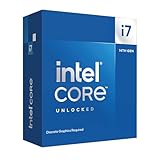
- Game Without Compromise. Play harder and work smarter with Intel Core 14th Gen processors
- 20 cores (8 P-cores plus 12 E-cores) and 28 threads. Discrete graphics required
- Up to 5.6 GHz with Turbo Boost Max Technology 3.0 gives you smooth game play, high frame rates, and rapid responsiveness
- Compatible with Intel 600-series (with potential BIOS update) or 700-series chipset-based motherboards
- DDR4 and DDR5 platform support cuts your load times and gives you the space to run the most demanding games
For public policy, the practical test is not whether a project has a large announced budget. It is whether incentives result in useful, reliably supplied capacity at a cost justified by its economic and resilience benefits. A project that fails to attract enough demand can leave governments with a strategic objective but less productive capacity than planned.
For investors
Intel’s announcements show a shift toward capital discipline and capacity aligned with demand, but they do not provide enough information to calculate the financial return on the cancelled European projects or the Leixlip expansion. Project announcements are not earnings guidance, and the stated investment amounts should not be read as a forecast of production, revenue, or shareholder returns. Anyone assessing Intel’s financial outlook needs company filings and later operating results, not the project headlines alone.
Windows Errors? Fix Them Before They Spread
Repair common Windows errors and clear accumulated junk for a smoother, more stable PC - no reinstall needed.Free scan · no reinstallOutdated Drivers Are Slowing You Down
One free scan finds every outdated or missing driver and matches the right update for your exact hardware.Free scan · exact hardware matchBest Value

- Game without compromise. Play harder and work smarter with Intel Core 14th Gen processors
- 24 cores (8 P-cores plus 16 E-cores) and 32 threads. Integrated Intel UHD Graphics 770 included
- Leading max clock speed of up to 6.0 GHz gives you smoother game play, higher frame rates, and rapid responsiveness
- Compatible with Intel 600-series (with potential BIOS update) or 700-series chipset-based motherboards
- DDR4 and DDR5 platform support cuts your load times and gives you the space to run the most demanding games
What the cancellation does—and does not—show
The clearest conclusion is that a sovereignty strategy cannot rely on construction plans and subsidies alone: the capacity must also have credible customers, utilization and operating economics. Intel’s retreat is a setback for the particular German and Polish projects, while its Ireland announcement and the Commission’s wider policy activity show that semiconductor investment and resilience efforts in Europe continue. The available figures do not establish Europe’s exact share of global chip manufacturing after the cancellations, Intel’s final sunk cost in Magdeburg, or a quantified cost premium against Taiwan.
Quick Recap
Product prices and availability are accurate as of the date/time indicated and are subject to change. Any price and availability information displayed on Amazon at the time of purchase will apply.




