Recommended Free Tools
Intel’s comeback plan has reached its first important checkpoint, but it is not complete. CEO Lip-Bu Tan’s original roadmap called for Panther Lake to arrive in the second half of 2025 and Nova Lake to follow in 2026. Panther Lake became Intel Core Ultra Series 3, with broad market availability beginning in January 2026. Nova Lake remains the more consequential test: can Intel repeat that execution while turning its 18A manufacturing process into a profitable, competitive business?
For investors and anyone considering an Intel-powered PC, the distinction matters. One successful client processor can demonstrate progress in product design and manufacturing. It cannot, by itself, prove that Intel has regained overall CPU leadership, fixed its economics, or made Intel Foundry a major external competitor.
What Lip-Bu Tan actually promised
When Intel presented its 2025–2026 client roadmap, the message was broader than a new processor launch. Tan’s priorities included simplifying Intel’s operations, reducing costs, improving execution and reconnecting product design with process technology, packaging and manufacturing.
Intel’s January 2025 earnings-call material identified Panther Lake as the company’s lead 18A client product for the second half of 2025 and placed Nova Lake, the next-generation client family, in 2026. The original guidance is documented in Intel’s Q4 2024 earnings-call comments.
#1 Best Overall

- Next‑Gen Platform Support: Compatible with Intel 800 Series Chipset‑based motherboards with LGA1851 Socket enabling PCIe 5.0/4.0 and high‑speed DDR5 memory (up to 7200 MT/s).
- High‑Performance Core Configuration: Features up to 24 cores (8 P‑cores + 16 E‑cores) for demanding gaming and creator
- Ultra‑Fast Boost Clocks: Reaches up to 5.5 GHz max turbo frequency for top‑tier responsiveness and performance
- Built for Enthusiasts: Unlocked for performance tuning when paired with Intel Z‑series chipsets, making it ideal for overclockers and power users.
- Robust Power & Thermal Design: Engineered with 125W base power and 250W max turbo power to sustain high‑intensity
That sequence created visible proof points for Tan’s strategy. Rather than asking investors to judge Intel only on distant promises, the company would have to deliver successive generations of products on a defined schedule.
However, “comeback” is an interpretation, not an established financial fact. A genuine recovery would require sustained product execution, competitive performance per watt, adequate supply, improving margins and meaningful foundry adoption.
Panther Lake became Core Ultra Series 3
Panther Lake was the codename for Intel’s next client processor family. Intel later launched it commercially as Intel Core Ultra Series 3, which the company describes as its first AI-PC platform built on Intel 18A. The transition from codename to retail product is important because it moves Panther Lake from roadmap evidence to an actual product family.
Intel previewed the architecture in October 2025. The company said the first SKU would ship before the end of that year, while broad market availability would begin in January 2026. Intel’s Panther Lake announcement and its later CES 2026 Core Ultra Series 3 announcement establish that distinction.
Crashes, No Sound, or Screen Glitches?
Random freezes, missing sound and display glitches usually trace back to one bad driver. Find and replace yours safely.Free scan · under a minuteWindows Errors? Fix Them Before They Spread
Repair common Windows errors and clear accumulated junk for a smoother, more stable PC - no reinstall needed.Free scan · no reinstallThat means “Panther Lake launched in 2025” needs qualification. A limited first shipment or announcement in 2025 is different from broad consumer availability in January 2026.
What Intel says the platform delivers
Intel’s published specifications and comparisons include:
Rank #2

- Get ultra-efficient with Intel Core Ultra desktop processors that improve both performance and efficiency so your PC can run cooler, quieter, and quicker.
- Core and Threads 24 cores (8 P-cores plus 16 E-cores) and 24 threads. Integrated Intel Graphics included
- Performance Hybrid Architecture Integrates two core microarchitectures, prioritizing and distributing workloads to optimize performance
- Performance Unlocked Up to 5.7 GHz unlocked. 40MB Cache
- Compatibility Compatible with Intel 800 series chipset-based motherboards
- Up to 16 performance and efficiency cores in selected configurations.
- An integrated Arc GPU with up to 12 Xe cores.
- Up to 180 platform TOPS for AI workloads in the architecture announcement.
- Later Series 3 messaging that highlighted up to 50 NPU TOPS on selected models.
These are Intel’s claims, and “up to” figures apply to particular SKUs and configurations. The 180 TOPS figure is a platform-level maximum, not necessarily NPU-only performance. Intel also compared Panther Lake with Lunar Lake for power efficiency and with Arrow Lake for performance; those comparisons should not be treated as independent benchmark results.
Intel’s ARK database lists multiple Panther Lake-derived products with different core counts, frequencies and graphics configurations. Buyers should therefore evaluate the complete PC, not assume every Core Ultra Series 3 system has the capabilities of the highest-end model.
Why Intel 18A is the central test
Intel 18A matters on two separate levels.
For products, Intel says the process combines RibbonFET transistor technology with PowerVia backside power delivery. These technologies are intended to improve density and power efficiency. For manufacturing, Panther Lake is a public test of whether Intel can deliver a leading-edge client product using its own process at useful volume.
Intel said 18A entered production in 2025. In a June 2026 process update, the company said its 18A-P enhancement entered risk production in 2026. Those milestones are reported in Intel Foundry’s process update.
Node names are not standardized measurements that can be compared directly across companies. Calling 18A advanced does not automatically prove that it is superior to every process used by TSMC, AMD’s manufacturing partners or Apple’s suppliers. The meaningful questions are yield, capacity, cost, power efficiency, performance and the ability to manufacture products consistently.
What Panther Lake proves—and what it does not
Panther Lake is evidence of progress in at least two areas: Intel reached an 18A-based client product milestone, and it converted the product from a roadmap codename into Core Ultra Series 3 systems.
Quick wins for a faster PC:
Scan for outdated or missing drivers - takes under a minuteDriver Scan →Clear out junk files and repair common Windows errorsFree Scan →Fix the driver behind crashes, sound loss and screen glitchesFind Drivers →Rank #3

- Game Without Compromise. Play harder and work smarter with Intel Core 14th Gen processors
- 20 cores (8 P-cores plus 12 E-cores) and 28 threads. Integrated Intel UHD Graphics 770 included
- Up to 5.6 GHz with Turbo Boost Max Technology 3.0 gives you smooth game play, high frame rates, and rapid responsiveness
- Compatible with Intel 600-series (with potential BIOS update) or 700-series chipset-based motherboards
- DDR4 and DDR5 platform support cuts your load times and gives you the space to run the most demanding games
It does not yet prove all of the following:
- That Intel has regained overall x86 performance leadership.
- That its laptops consistently match Apple silicon or Qualcomm Snapdragon X systems in battery life.
- That the highest platform TOPS number translates into useful applications for ordinary buyers.
- That Intel can manufacture 18A products at attractive margins.
- That Intel Foundry can win external customers at meaningful scale.
- That Intel can deliver multiple major generations without another schedule reset.
The commercial test is especially important. A technically strong processor can still disappoint financially if OEM systems are scarce, expensive, poorly cooled or difficult to support. Early firmware, graphics drivers, Windows scheduling and AI software support can also affect real-world results.
Nova Lake is the harder test
Intel officially identified Nova Lake as its next-generation client family for 2026. That timing came from company earnings-call material, not merely from leaks. But the available official information does not establish a final launch quarter, retail lineup, pricing, socket, performance, desktop-versus-mobile segmentation or production split.
Reports have discussed possible Nova Lake core counts, architectures and mixed manufacturing arrangements. Those details should be treated as reports or forecasts rather than confirmed Intel specifications. In particular, claims about a 52-core configuration or the use of an outside foundry are not established by the official roadmap cited here.
Nova Lake matters because the second product tests repeatability. Intel does not need only one successful demonstration. It needs a process in which the next product arrives on time, at volume and with enough performance and efficiency to remain competitive after AMD, Apple and Qualcomm respond.
Free tools Windows power users keep installed
One-click scans. No signup required.
Nova Lake will also show whether Panther Lake’s benefits can scale across more products and whether 18A-related progress improves Intel’s financial performance rather than remaining an isolated engineering achievement.
The foundry bet behind the client roadmap
Intel’s recovery plan has a manufacturing dimension that is easy to miss in a CPU headline. Using Intel 18A for internal products gives Intel an anchor customer for its own foundry. It can help validate the process, packaging and production systems.
Rank #4
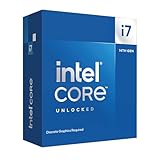
- Game Without Compromise. Play harder and work smarter with Intel Core 14th Gen processors
- 20 cores (8 P-cores plus 12 E-cores) and 28 threads. Discrete graphics required
- Up to 5.6 GHz with Turbo Boost Max Technology 3.0 gives you smooth game play, high frame rates, and rapid responsiveness
- Compatible with Intel 600-series (with potential BIOS update) or 700-series chipset-based motherboards
- DDR4 and DDR5 platform support cuts your load times and gives you the space to run the most demanding games
But internal use is not the same as external foundry success. Intel Foundry would still need to prove that outside customers trust the process, receive adequate capacity and obtain competitive economics. Keeping key tiles on Intel 18A may strengthen process validation, but it can also increase capacity and yield risk. Using external foundries can provide flexibility, but it makes the simple “all-Intel” comeback narrative less straightforward.
Chiplet-based designs create a similar trade-off. Multiple tiles can let Intel mix process technologies and tailor products to different markets, but they add packaging, interconnect, latency and validation challenges.
The phrase “U.S.-made chip” also needs precision. It may refer to wafer fabrication, packaging, design or only part of a product’s supply chain. It does not necessarily mean that every component and assembly step occurs in the United States.
The server-side milestone is separate
Panther Lake and Nova Lake are client-PC products. Intel’s parallel data-center 18A effort is Clearwater Forest, later associated with the Xeon 6+ branding. It is relevant to Intel’s broader recovery because data-center products affect margins, enterprise credibility and foundry utilization, but it should not be treated as part of the same client product line.
A strong Intel recovery therefore requires progress on both fronts: competitive client systems and credible data-center execution. Panther Lake alone cannot answer the server or foundry questions.
Independent reader supportYour contribution helps us test, update, and keep practical guides available for everyone.How Intel must compete
| Competitor | What Intel must answer |
|---|---|
| AMD Ryzen | Can Intel offer competitive performance, gaming results, efficiency and value across comparable systems? |
| Apple silicon | Can Intel narrow the performance-per-watt and battery-life gap despite Apple’s hardware-software integration? |
| Qualcomm Snapdragon X | Can Intel compete on battery life while preserving broad Windows application compatibility? |
| Nvidia-linked platforms | Can Intel’s integrated graphics and AI capabilities deliver enough value where buyers might otherwise choose discrete or accelerated platforms? |
The relevant comparison is not a single core-count or TOPS figure. Buyers and investors should look at complete systems, including sustained performance, battery life, cooling, drivers, software compatibility, pricing and availability.
Do these 3 things before closing this tab:
1Fix the driver behind crashes, sound loss and screen glitches2Clear out junk files and repair common Windows errors3Scan for outdated or missing drivers - takes under a minuteBest Value

- Game without compromise. Play harder and work smarter with Intel Core 14th Gen processors
- 24 cores (8 P-cores plus 16 E-cores) and 32 threads. Integrated Intel UHD Graphics 770 included
- Leading max clock speed of up to 6.0 GHz gives you smoother game play, higher frame rates, and rapid responsiveness
- Compatible with Intel 600-series (with potential BIOS update) or 700-series chipset-based motherboards
- DDR4 and DDR5 platform support cuts your load times and gives you the space to run the most demanding games
A practical scorecard for Intel’s comeback
| Measure | What would count as evidence |
|---|---|
| Schedule discipline | Panther Lake and Nova Lake arrive close to their stated windows without repeated resets. |
| Product availability | Systems are broadly available rather than limited to a small showcase group. |
| Independent performance | Retail reviews show competitive results across CPU, graphics, battery and sustained workloads. |
| Efficiency | Intel closes the practical gap with Apple and Qualcomm while remaining competitive with AMD. |
| Pricing | OEM systems offer enough value to overcome Intel’s recent execution reputation. |
| Manufacturing | 18A reaches adequate yield, volume and economics, not merely risk-production status. |
| Roadmap follow-through | Nova Lake becomes a second delivered generation, not just another promised milestone. |
| Foundry validation | External customers adopt Intel processes at meaningful scale. |
| Financial results | Product improvements contribute to healthier margins, cash generation and sustainable investment. |
What this means for PC buyers
Panther Lake/Core Ultra Series 3 is worth evaluating when a buyer is purchasing a new laptop, commercial PC, gaming handheld or AI PC and the complete system performs well in independent testing. Intel’s 18A process and integrated Arc graphics may be meaningful advantages, but the processor name alone is not enough to justify a purchase.
Compare the actual machine’s price, battery life, cooling, display, memory, storage, warranty and benchmark results. Commercial buyers should also weigh manageability, security, fleet support and warranty terms. Intel’s ARK database is useful for specifications, but it is not necessarily a retail buying channel.
Waiting for Nova Lake may make sense for buyers who can tolerate uncertain timing and specifications. Existing Core Ultra, AMD Ryzen, Apple silicon and Snapdragon X systems may offer better value depending on the workload. A Panther Lake system is a poor fit for someone who needs an upgrade compatible with an existing motherboard, requires a discrete GPU for demanding rendering, or relies on software that does not behave well with hybrid-core scheduling or Intel’s integrated AI stack.
What this means for investors
The roadmap is best viewed as a set of operating tests rather than a reason to declare Intel recovered. Panther Lake supports the thesis that Intel reached an important product-and-process milestone. It does not settle whether Intel Foundry can attract outside customers, whether 18A can generate attractive returns, or whether Intel can sustain competitive products through Nova Lake and beyond.
Investors should watch product availability, independent reviews, Intel’s manufacturing commentary, foundry customer disclosures, client and data-center margins, capital requirements and the timing of Nova Lake. A strong launch with weak supply or poor economics would be less significant than a repeatable product pipeline that improves financial results.
Quick Recap
Product prices and availability are accurate as of the date/time indicated and are subject to change. Any price and availability information displayed on Amazon at the time of purchase will apply.




