The Tool Desk
Outbyte Driver Updater FREEFix the driver behind crashes, sound loss and screen glitchesFind Drivers →Outbyte PC Repair FREEClear out junk files and repair common Windows errorsFree Scan →Intel announced the opening of Intel Research Cambridge on March 6, 2003, at the University of Cambridge in England—not in Cambridge, Massachusetts. The collaborative research lab was based in the William Gates Computer Laboratory and focused on networking, distributed systems, software and pervasive computing. It operated from 2003 to 2006.
Where was Intel Research Cambridge?
The lab was housed in the William Gates Computer Laboratory on the University of Cambridge’s West Cambridge campus. It was a university–industry research collaboration, not a chip-fabrication plant or a conventional Intel product-development office. Contemporary research papers give the building’s address as the William Gates Building, 15 JJ Thomson Avenue, Cambridge CB3 0FD, UK. The University of Cambridge’s announcement describes the institutional setting and collaboration.
What was the lab set up to do?
Intel Research Cambridge was designed to bring Intel scientists into sustained work with Cambridge academics, graduate students and visiting researchers. Intel presented the lab as part of its Intel Research Network, alongside university-linked laboratories in Seattle, Berkeley and Pittsburgh. The broader aim was to investigate how computing and communications could work together as networks and connected devices became more pervasive. Intel’s March 6, 2003 announcement described the mission and network.
“Open collaborative research” meant exploratory projects involving both corporate and university researchers, with an emphasis on broad investigation and prototyping. Cambridge highlighted the value of an industrial partner willing to place research results in the public domain. That framing does not establish that every project, patent or piece of software was freely available or open source; the work could also have strategic relevance to Intel.
PC Slower Than It Used to Be?
A free scan shows the junk files, broken settings and background clutter dragging Windows down - then fixes them in one click.Free scan · Windows 10 & 11Crashes, No Sound, or Screen Glitches?
Random freezes, missing sound and display glitches usually trace back to one bad driver. Find and replace yours safely.Free scan · under a minute#1 Best Overall

- Next‑Gen Platform Support: Compatible with Intel 800 Series Chipset‑based motherboards with LGA1851 Socket enabling PCIe 5.0/4.0 and high‑speed DDR5 memory (up to 7200 MT/s).
- High‑Performance Core Configuration: Features up to 24 cores (8 P‑cores + 16 E‑cores) for demanding gaming and creator
- Ultra‑Fast Boost Clocks: Reaches up to 5.5 GHz max turbo frequency for top‑tier responsiveness and performance
- Built for Enthusiasts: Unlocked for performance tuning when paired with Intel Z‑series chipsets, making it ideal for overclockers and power users.
- Robust Power & Thermal Design: Engineered with 125W base power and 250W max turbo power to sustain high‑intensity
What did researchers study?
The announced agenda ranged from practical network engineering to a more ambitious vision of computing embedded throughout everyday environments. The initial topics included networking, computer systems and software for distributed systems, along with mathematical modeling of network traffic and optical switching.
- Networks and distributed systems: How to connect many computers and devices reliably, and how to build the systems and software that coordinate them.
- Network modeling and optical switching: Research into traffic behavior and ways to move data efficiently, including optical techniques.
- Sensor networks and application development: Work on connected devices and on giving application developers access to new communications capabilities.
What Intel meant by proactive computing
Intel also described “proactive computing”: a research vision in which numerous small wireless or embedded devices could sense their surroundings, communicate and anticipate users’ needs. In 2003, this was an aspiration, not a claim that such an environment had already been built. The engineering questions included how to organize and network large numbers of distributed devices and how to program systems that could respond to context. The contemporary framing centered on pervasive computing, sensing and distributed systems, rather than today’s broader use of the term artificial intelligence.
Rank #2

- 【Performance-Driven Efficiency】The KAIGERR laptop is powered by the latest Intel Twin Lake N150 processor (4C/4T, 6MB cache, up to 3.6GHz), delivering enhanced multitasking capabilities and improved graphics performance. Designed to elevate your computing experience, this traditional laptop ensures seamless performance for both everyday tasks and more demanding applications.
- 【16GB RAM & 512GB ROM】Equipped with 16GB of DDR4 RAM and a fast 512GB M.2 SSD, this windows laptop delivers up to 50% better performance than DDR3 models, ensuring smooth system operation and efficient handling of personal files. With expandable storage options—supporting a 128GB TF card and upgradable to 2TB SSD—you’ll never run out of space for your important documents and media.
- 【Stunning Full HD Display】Experience stunning visuals on the 15.6-inch thin-bezel display, which offers an expanded screen area for a more immersive Full HD experience. The slim design fits a larger screen into a more compact body, making the laptop sleek and portable. A front-facing webcam, perfectly centered above the screen, ensures convenient access for photos and video calls anytime.
- 【Stay Connected Anytime, Anywhere】The laptop computer is equipped with a versatile array of ports, including HDMI Type A x1, USB 3.2 x3, Type-C (Data) x1, 3.5mm Headphone jack x1, 128GB TF Card Socket x1, and Type-C DC Jack x1. Lightning-fast 802.11ac WiFi offers download speeds up to three times faster than previous generations, while Bluetooth 5.0 ensures stable, reliable connections to all your wireless devices—whether you're streaming, gaming, or working.
- 【KAIGERR: Quality Laptops, Exceptional Support.】Enjoy peace of mind with unlimited technical support and 12 months of repair for all customers, with our team always ready to help. If you have any questions or concerns, feel free to reach out to us—we’re here to help.
Who led the lab, and how large was it planned to be?
The director was Derek “Mac” McAuley, then an affiliated lecturer at Cambridge’s Computer Laboratory. Intel said he had been a founding member of research laboratories associated with Microsoft and Marconi in Cambridge. The planned facility was sized for about 50 researchers: 20–25 Intel scientists and a roughly equal university contingent of faculty, graduate students and visitors. These were planned figures, not a confirmed day-one headcount. Cambridge’s 2003 Computer Laboratory newsletter later described about 20 Intel researchers working alongside a similar number of university researchers, students and visiting faculty.
What work is associated with Intel Research Cambridge?
Cambridge project records show activity beyond the launch announcement. The Computer Laboratory’s 2003 student-project listings include sensor-network, distributed-service and wireless-networking work. A Cambridge project explored transmitting data through audio hardware for location- and context-aware applications; its project page describes the approach.
What’s actually slowing this PC down?
Pick the symptom - the matching free tool is one click away.
Rank #3

- Game and multitask without compromise powered by Intel’s performance hybrid architecture on an unlocked processor.
- Discrete graphics required
- Compatible with Intel 600 series and 700 series chipset-based motherboards
- Intel and reg; Core and reg; i5 processor offers hyper-threading architecture that delivers high performance for demanding applications with improved onboard graphics and turbo boost
- The processor features Socket LGA-1700 socket for installation on the PCB
A 2003 paper on the Xen virtualization system lists Intel Research Cambridge among its affiliations, evidence of a connection to systems research rather than proof that the lab alone originated Xen. The paper documents that affiliation. Cambridge also reported collaboration with the lab on an optically switched network for short-distance data transport in its account of a student research project.
When did the lab close?
The University of Cambridge’s computing history records Intel Research Cambridge as operating from 2003 to 2006, when it was abruptly closed during a major Intel reorganization. The account does not establish a more precise closure date or say that the lab closed because its research had failed. Cambridge’s computing history provides the operating period and closure context.
Rank #4

- Get ultra-efficient with Intel Core Ultra desktop processors that improve both performance and efficiency so your PC can run cooler, quieter, and quicker.
- Core and Threads 24 cores (8 P-cores plus 16 E-cores) and 24 threads. Integrated Intel Graphics included
- Performance Hybrid Architecture Integrates two core microarchitectures, prioritizing and distributing workloads to optimize performance
- Performance Unlocked Up to 5.7 GHz unlocked. 40MB Cache
- Compatibility Compatible with Intel 800 series chipset-based motherboards
Why the opening mattered
The lab reflected a shift in technology research beyond processor design alone: Intel and Cambridge were investigating the systems, software and communications needed for increasingly connected computing. Its open, university-linked model gave researchers a shared setting for exploratory work, while connecting Intel with Cambridge expertise and students. The lab was short-lived, but its agenda captured early-2000s interest in pervasive wireless devices, sensor networks and distributed computing.
Quick Recap
Best Value
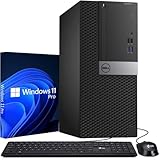
- Storage: 256GB SSD – Quick Boot Speeds and Responsive Storage
Product prices and availability are accurate as of the date/time indicated and are subject to change. Any price and availability information displayed on Amazon at the time of purchase will apply.




