Insurers are exploring and, in some cases, using policy exclusions for AI-related risks. But the available reporting does not verify that insurers have refused to pay a huge settlement against an AI firm. A proposed exclusion, an exclusion attached to a specific policy, and a decision on an individual claim are three different things.
What the headline does—and does not—establish
Recent coverage describes insurers’ concern about the potential cost and accumulation of AI-related losses, and efforts to limit some exposures through policy wording. It does not document a specific huge settlement against an AI firm that an insurer refused to pay. Nor does it establish that insurers broadly refuse to cover AI-related claims.

That distinction matters because an insurer’s response depends on the policy in force, its endorsements, the facts of the loss, and the coverage being claimed. A proposal or regulatory filing is not itself a claim denial; a denial or settlement payment is a claim-specific outcome. The reporting reviewed here does not establish such an outcome.
What insurers are changing in policy language
Insurance Journal reported on July 22, 2026, that carriers were showing increased interest in three optional ISO generative-AI endorsements and filing them with state regulators for potential use. The report described the forms as addressing different parts of commercial general liability (CGL) and products/completed operations coverage:
What’s actually slowing this PC down?
Pick the symptom - the matching free tool is one click away.
#1 Best Overall
| Form described in the report | Coverage area it targets |
|---|---|
| Generative-AI exclusion covering multiple injury categories | Bodily injury, property damage, and personal and advertising injury arising from generative AI |
| Personal and advertising injury exclusion | Personal and advertising injury |
| Products/completed operations exclusion | Bodily injury and property damage in products/completed operations coverage |
These are descriptions of optional forms, not proof that every insurer adopted them or that they appear in every policy. The July 2026 report said uptake and breadth remained uncertain. A form’s actual effect depends on whether it was approved where required, issued by the insurer, and attached to the particular policy.
Broader exclusions in other policy lines
The same Insurance Journal report described a Berkley “absolute AI exclusion” for directors and officers (D&O), errors and omissions (E&O), and fiduciary liability products. The reported description said its language reaches AI use or development, AI-generated content, failure to identify third-party AI content, and AI-related policies or duties. That is a description of a form, not a finding that every Berkley policy contains it or that a claim has been denied under it.
A 2025 legal year-in-review also described AI exclusions entering traditional insurance lines, including ISO CGL exclusions and a London Market exclusion. Such summaries indicate market activity; they do not replace the wording of the policy and endorsement that govern a particular insured.
Rank #2
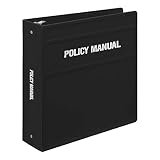
- Bold Policy Manual Labeling – Hot foil stamped silver “Policy Manual” on the cover and spine for high visibility; imprint won't peel or fade.
- Built to Last – Constructed from heavy-duty copolymer polypropylene that resists bending, tearing, and surface damage. These round ring binders are BPA/BPF/BPS-free and 100% recyclable.
- Precision No-Gap Rings tested for over 50,000 uses to hold tight and stay aligned
- Silver lettering is hot-foil stamped onto the cover and spine – no peeling or wearing
- BPA/BPF/BPS free – proudly made in the USA of US and imported parts
Why insurers are concerned about AI losses
Insurers are assessing more than the possibility of one expensive lawsuit. If a widely used model or vendor fails in a way that affects many businesses, claims could arise across multiple insureds at once. A 2025 report relaying Financial Times coverage described this as a systemic, correlated risk and quoted an Aon executive distinguishing one large loss from many simultaneous losses. These are risk scenarios, not evidence of measured industry-wide insured losses.
Crashes, No Sound, or Screen Glitches?
Random freezes, missing sound and display glitches usually trace back to one bad driver. Find and replace yours safely.Free scan · under a minutePC Slower Than It Used to Be?
A free scan shows the junk files, broken settings and background clutter dragging Windows down - then fixes them in one click.Free scan · Windows 10 & 11Gallagher Re’s 2026 Q1 report identifies several lines that could be affected by AI liability risk. Depending on what happened and what a business does, the relevant coverage might involve:
- CGL: certain bodily injury, property damage, or personal and advertising injury allegations.
- D&O: claims concerning directors’ or officers’ conduct and corporate oversight.
- E&O or professional liability: allegations tied to professional services or errors and omissions.
- Employment practices liability: employment-related claims involving the use of AI in workplace decisions or processes.
- Product liability: alleged injury or damage connected to a product, including products/completed operations coverage where applicable.
Those are possible coverage lines, not a promise that a particular policy covers a particular AI-related loss. Coverage depends on the policy language and the claim’s facts.
Rank #3
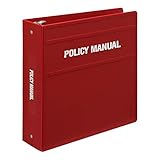
- Bold Policy Manual Labeling – Hot foil stamped silver “Policy Manual” on the cover and spine for high visibility; imprint won't peel or fade.
- Built to Last – Constructed from heavy-duty copolymer polypropylene that resists bending, tearing, and surface damage. These round ring binders are BPA/BPF/BPS-free and 100% recyclable.
- Reliable Performance – No-Gap 3-inch steel rings tested for 50,000+ open/close cycles to ensure lasting strength and alignment. Round ring binder measures: W12.2" x H11.6" x D3.1". Covers extend to protect index tabs.
- Ample Capacity – Holds approximately 400 standard US letter-size sheets punched on the 11" side
- Made in the USA: Proudly made in the USA by Carstens, a WBENC certified Woman-Owned Small Business with over 130 years of trusted quality and innovation.
What the lawsuit figures show—and what they do not
Gallagher figures reported by Insurance Journal in 2026 point to rapid growth in AI-related litigation. Gallagher reported a 978% increase in AI-related lawsuits from 2021 to 2025 and a 137% increase from 2024 to 2025. Its reported case categories included patent infringement (11.9%), copyright infringement (11.2%), and personal injury (10.2%).
These figures describe lawsuits and case categories. They are not settlement totals, insurance payouts, claim-denial rates, or proof that an insurer refused to pay a particular amount.
When an existing policy might respond
Traditional insurance can sometimes provide what the industry calls “silent” coverage: a policy may potentially cover an AI-related loss if no applicable exclusion expressly removes it. “Silent” does not mean automatic or guaranteed coverage. The insurer and policyholder may still disagree about whether the claim falls within the coverage grant, whether an exclusion applies, or whether the policy’s conditions have been met.
Rank #4

- EVERY FINANCIAL DOCUMENT IN ONE PLACE — This financial records organizer includes six pre-labeled tab dividers — Investments, Bank Statements, Insurance, Legal Documents, Taxes, and Retirement — so every important paper has a clear home. No more hunting through file boxes, drawers, and shoeboxes when you need a tax return or insurance policy.
- PEACE OF MIND FOR YOU, CLARITY FOR THE PEOPLE YOU LOVE — Whether it is a CPA appointment, a tax filing, a retirement decision, or a family member stepping in to help, every account number, policy, and statement is in one clearly-labeled financial binder — accessible in minutes, not hours. Designed to hold the financial records you actually need at hand — current policies, recent tax returns, key statements, beneficiary forms — not a replacement for your full file cabinet.
- PREMIUM LINEN CONSTRUCTION, MADE IN THE USA — Refined linen cover with silver foil detailing, rigid hardcover, and a 1.5-inch D-Ring that holds up to 350 sheets of standard 8.5 x 11 paper. Includes a heavyweight water-resistant document pocket, media sleeve for USB drive backups, and a business card holder for your CPA or financial advisor.
- A THOUGHTFUL GIFT WITH LASTING PURPOSE — Getting financial records organized is something most people mean to do one day. This portfolio makes starting easier — an ideal gift for aging parents, newly retired couples, adult children managing household finances, or anyone preparing for tax season, a financial advisor meeting, or retirement.
- FOR THE WAY HOUSEHOLDS ACTUALLY ORGANIZE — Built for the household record-keeper getting financial papers in one place, the adult child helping aging parents centralize accounts and policies, and anyone preparing a spouse, executor, or financial advisor with everything they would need to step in and find what matters.
The July 2026 Insurance Journal report noted that some insurers may choose to underwrite and price AI risks instead of applying broad exclusions. As a result, coverage can vary across insurers, policy lines, jurisdictions, policy periods, and renewals. The sources reviewed identify no bellwether court decision that settles how AI exclusions apply generally.
Independent reader supportYour contribution helps us test, update, and keep practical guides available for everyone.What businesses should check before buying or renewing
For a business evaluating AI-related insurance, the practical question is not simply whether the insurer “covers AI.” Review the policy and endorsements that will actually apply, and ask the broker or insurer to explain how they treat the business’s specific uses of AI. Useful points to compare include:
- Definitions and causation: How does the wording define “AI” or “generative AI,” and how broadly does it describe a loss as arising from or involving AI?
- Coverage parts and loss types: Which policy sections are affected, and which allegations or damages are excluded?
- Defense costs and indemnity: Does the wording address the cost of defending a claim as well as any covered damages or settlement?
- Third-party tools and embedded AI: Does the wording treat a model bought from a vendor, third-party AI-generated material, or AI features embedded in ordinary business software differently from a system the business develops itself?
- Policy-specific details: Is the exclusion attached to this policy, for this jurisdiction and policy period, or is it only an optional form or a filing?
- Alternatives: Can the insurer offer narrower wording, affirmative coverage, or a separately priced option?
These are discussion prompts, not legal or insurance advice. A commercial insurance broker or qualified coverage lawyer can help interpret the wording for a particular business and claim scenario.
Recommended Free Tools
Quick Recap
Product prices and availability are accurate as of the date/time indicated and are subject to change. Any price and availability information displayed on Amazon at the time of purchase will apply.




