Recommended Free Tools
India’s defence industrial complex is a mixed public- and private-sector network, not a single state-owned manufacturer. It brings together the Ministry of Defence and military buyers, research organisations such as DRDO, public-sector manufacturers, private firms, startups, and smaller suppliers. The Department of Defence Production reports ₹1.78 lakh crore in defence production and ₹38,424 crore in exports for FY 2025–26; those are separate measures of output and overseas sales, not contract awards or future targets.
What the latest production and export figures show
The Department of Defence Production’s homepage, last updated 30 September 2026, reports the following headline figures. They are official reported totals, not an independent assessment of product quality, delivery performance, or domestic content.
| Measure | Reported figure | How to read it |
|---|---|---|
| Defence production | ₹1.78 lakh crore in FY 2025–26 | The Department of Defence Production reports this as 15.6% above its FY 2024–25 figure of ₹1.54 lakh crore. |
| Defence exports | ₹38,424 crore in FY 2025–26 | The department also reports exports reaching more than 80 nations. Exports measure overseas sales, not total domestic production. |
| Defence production | ₹1,27,434 crore in FY 2023–24 | The Ministry of Defence’s 29 March 2025 overview compared this with ₹46,429 crore in FY 2014–15 and described the rise as 174%. |
| Defence exports | ₹23,622 crore in FY 2024–25 | The Ministry of Defence’s 29 March 2025 overview attributed ₹15,233 crore to private companies and ₹8,389 crore to DPSUs. This sector split is for FY 2024–25, not the later FY 2025–26 total. |
The figures span different fiscal years and should not be combined as if they described the same period. Production is not exports; neither is the same as the value of contracts signed, orders announced, or items approved for procurement. The government’s reported output totals also do not, by themselves, establish how much technology or how many components were sourced domestically.
Who makes India’s defence equipment
The ecosystem includes established public-sector manufacturers such as Hindustan Aeronautics Limited (HAL) and Bharat Electronics Limited (BEL), alongside private defence firms, startups, academic and research institutions, licensed manufacturers, and micro, small and medium enterprises (MSMEs). The Ministry of Defence’s March 2025 overview cited 16 Defence Public Sector Undertakings (DPSUs), more than 430 licensed companies, and approximately 16,000 MSMEs. Treat those as figures from that dated overview, not as a live census.
PC Slower Than It Used to Be?
A free scan shows the junk files, broken settings and background clutter dragging Windows down - then fixes them in one click.Free scan · Windows 10 & 11Crashes, No Sound, or Screen Glitches?
Random freezes, missing sound and display glitches usually trace back to one bad driver. Find and replace yours safely.Free scan · under a minute#1 Best Overall

- QUICK SNAP-FIT ASSEMBLY — No glue, no mess: every precision-engineered piece clicks firmly into place so builders of all skill levels may complete their A-10 Thunderbolt II Warthog in one satisfying session without extra tools or adhesives.
- AUTHENTIC WARBIRD DETAIL — Faithfully recreates the iconic twin-engine, straight-wing attack jet with raised panel lines, movable control surfaces, and characteristic GAU-8 cannon nose for a display-ready replica straight out of the box.
- STEM-FRIENDLY BUILDING EXPERIENCE — The numbered part system and illustrated step-by-step guide introduce basic aerospace engineering concepts, supporting spatial reasoning and fine-motor development for builders ages 8 and up.
- DURABLE ABS CONSTRUCTION — High-impact ABS plastic parts resist warping and breakage, ensuring the finished model withstands shelf display, light handling, and proud show-and-tell moments for years to come.
- GREAT VALUE GIFT UNDER $25 — Thoughtfully packaged and priced at $21.99, this building set makes an ideal birthday, holiday, or any-occasion gift for aviation fans, military history enthusiasts, and hobbyist model builders alike.
A separate Ministry policy overview in 2025 reported 788 industrial licences issued to 462 companies. That is a different licensing measure and should not be read as a directly comparable update to the “over 430 licensed companies” figure: the sources describe the figures differently and do not establish that their counting methods match.
How requirements become equipment
There is no single route followed by every defence product, but the broad chain helps explain the system:
Rank #2

- 1/35 scale kit
- Includes driver figure in relaxed sitting pose
- Decals for five vehicles
- Government sets requirements and procurement rules. The armed forces identify operational needs, and acquisition decisions determine what is sought and under what procurement category.
- Research and industry develop or adapt solutions. DRDO and other research bodies contribute technologies; public- and private-sector companies may design, develop, manufacture, or partner on a system.
- Suppliers provide components and services. Licensed firms and MSMEs can contribute parts, subsystems, engineering, and other support to larger manufacturers or government buyers.
- Orders support production and delivery. A contract award is a commitment to buy, not proof that the contracted equipment has already been produced or delivered.
- Export approvals enable overseas sales. Export authorisations are a regulatory step; they are not the same as completed exports or export revenue.
For scale, the Ministry of Defence reported 193 ministry contracts worth ₹2,09,050 crore in FY 2024–25. Of those, 177 domestic awards totalled ₹1,68,922 crore. These are contract values for that year, not a production total or a measure of equipment already delivered. The Ministry also reported 1,762 export authorisations in FY 2024–25; authorisations should not be mistaken for completed sales.
Which policies are intended to deepen domestic industry
Domestic procurement preference
The Defence Acquisition Procedure 2020 gives priority to domestic procurement categories for eligible capital acquisitions, including Buy Indian (Indigenously Designed, Developed and Manufactured), or Buy Indian (IDDM). This is a preference within procurement rules, not a guarantee that any particular domestic product will win a contract.
Rank #3
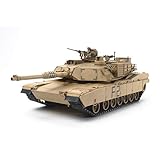
- 1/48 scale plastic model assembly kit. Length: 205mm, width: 77mm.
- Anti-slip surface details molded into the main sections of the model.
- Assembly type tracks feature straight sections for a highly realistic finish.
- Kit includes a weight for creating a heavy feel model.
- 2 marking options are included to recreate U.S. Army 3rd Armored Cavalry Regiment M1A2s from 2003 in the Iraq War.
Positive Indigenisation Lists
Positive Indigenisation Lists identify items for which procurement is to be restricted to domestic manufacturers after specified timelines. The Ministry of Defence reported that five lists covered more than 5,500 items, with more than 3,000 reported indigenised as of February 2025. That status does not establish that every component, underlying technology, or supply-chain input for an item is domestic.
Investment and licensing
The Government of India’s Defence Investment Portal describes foreign direct investment provisions of up to 74% through the automatic route, with higher investment possible through the government route, alongside licensing simplification and offset reforms. Rules can change and the applicable route depends on the investment and regulatory context; anyone making an investment or compliance decision should check the current rules rather than rely on this general summary.
Rank #4
![ACA12127 1:35 Academy USMC AH-1Z Cobra 'Shark Mouth' [Model Building KIT]](https://m.media-amazon.com/images/I/51n+69EWuVL._SL160_.jpg)
- This is a plastic model kit. Assembly and painting is required.
- Paint and glue is NOT included.
- Contains parts to build one of each model.
Startups, innovators, and supplier matching
The Ministry’s 29 March 2025 overview describes iDEX as a programme engaging startups, MSMEs, individual innovators, research institutions, and academia. That overview reports grants of up to ₹1.5 crore and says solutions from supported startups have been purchased. iDEX is an innovation and development channel; a grant or programme participation is not itself evidence of a completed procurement or fielded capability.
The SRIJAN portal is intended to connect industry, including MSMEs, with defence items identified for domestic sourcing. It is a supplier-indigenisation mechanism, not proof that every listed item has already been replaced by a fully domestic supply chain.
Best Value

- Experience the legendary F-14 Tomcat through a highly detailed model designed for aviation collectors and hobby enthusiasts. The finished model becomes a striking desktop or showcase centerpiece.
- This 3D puzzle is designed for beginner-level assembly enthusiasts, offering an immersive hands-on building experience that helps cultivate patience, concentration, and mechanical problem-solving skills.
- This product is manufactured using high-quality, environmentally friendly plastic and employs an ultra-fine etching process to ensure durability, structural precision, and realistic aircraft details.
- Encourages understanding of aircraft engineering concepts while improving hand-eye coordination and spatial thinking through engaging mechanical assembly.
- Ideal gift for childs, engineers, collectors, model builders, and puzzle lovers for birthdays, Children’s Day, Christmas, or special hobby occasions.
What the defence corridors do—and what their figures mean
India’s two named Defence Industrial Corridors are in Uttar Pradesh and Tamil Nadu. A Ministry of Defence policy overview dated October 2025 reported ₹9,145 crore in investment attracted across the corridors and 289 memoranda of understanding. It separately reported ₹66,423 crore in potential opportunities. The potential figure is not realized investment or confirmed spending, and an MoU is not the same as a completed project.
Examples of products and industrial capabilities
Official Ministry material names Dhanush artillery, ATAGS, the Arjun tank, Tejas aircraft, Dhruv and LUH helicopters, the Akash missile system, radars, and naval vessels among domestic systems. For exports, it lists bulletproof jackets, Dornier (Do-228) aircraft, Chetak helicopters, fast interceptor boats, and lightweight torpedoes. These examples show the range of the sector; they do not establish that every system is exported or that every component is domestically sourced.
Where to be careful when judging growth claims
- Check the period. Keep each fiscal year attached to its production, export, or contract figure; totals from different years are not interchangeable.
- Separate industrial stages. A target, procurement approval, contract award, production total, delivery, and export sale describe different points in the process.
- Keep public-private splits dated. The Ministry’s private-company and DPSU export breakdown here is for FY 2024–25; it does not establish the split for FY 2025–26.
- Distinguish indigenisation from self-sufficiency. An item counted as indigenised does not prove that all of its inputs, technology, or lifecycle support are domestic.
- Read corridor claims by category. Attracted investment, signed MoUs, and potential opportunities are not equivalent measures of realized activity.
Official figures are useful for tracking the government’s reported scale and direction of the sector. They are not a substitute for company-level data or an independent evaluation of quality, delivery, import content, or long-term maintenance and support.
Quick Recap
Product prices and availability are accurate as of the date/time indicated and are subject to change. Any price and availability information displayed on Amazon at the time of purchase will apply.
Quick wins for a faster PC:
Repair Windows errors before they cause bigger problemsFix Now →Scan for outdated or missing drivers - takes under a minuteDriver Scan →



