PC Slower Than It Used to Be?
A free scan shows the junk files, broken settings and background clutter dragging Windows down - then fixes them in one click.Free scan · Windows 10 & 11Outdated Drivers Are Slowing You Down
One free scan finds every outdated or missing driver and matches the right update for your exact hardware.Free scan · exact hardware matchIndia’s Electronics Component Manufacturing Scheme (ECMS) became operational in stages: the Union Cabinet approved it on March 28, 2025, the government notified it on April 8, and MeitY published the detailed guidelines and online portal on April 26, 2025. The scheme offers turnover-linked, capital-expenditure and hybrid incentives to companies manufacturing specified components, subassemblies, supply-chain inputs and electronics manufacturing equipment in India.
For a prospective applicant, the important distinction is between the Cabinet announcement and the operative rules. Product classification, investment thresholds, employment conditions, application windows and claim documentation determine whether an approved project can actually receive support.
What ECMS is—and what the April 2025 release changed
ECMS is intended to deepen India’s electronics manufacturing base beyond final assembly. The government says it aims to increase domestic value addition, build manufacturing capability, attract Indian and global investment, and connect Indian suppliers with global value chains serving mobile devices, IT hardware, telecom, consumer electronics, automotive electronics, medical equipment, industrial products and power equipment.
The Cabinet approved a ₹22,919 crore outlay. The scheme runs for six years, including one year of gestation, across FY2025–26 to FY2031–32. Government projections envisage ₹59,350 crore of investment, ₹4,56,500 crore of production and 91,600 direct jobs over the scheme’s tenure; these are targets, not achieved results. See the [Cabinet release].
The Tool Desk
Outbyte PC Repair FREEClear out junk files and repair common Windows errorsFree Scan →Outbyte Driver Updater FREEScan for outdated or missing drivers - takes under a minuteDriver Scan →#1 Best Overall

- 35+ Guided Electronics Projects: Progress from LEDs and buttons to RFID access, real-time clocks, motion and distance sensing, environmental monitoring, motor control and interactive displays for STEM learning, coding clubs and maker projects
- More I/O and Memory for Larger Builds: The MEGA 2560 R3 provides 54 digital I/O pins, including 15 PWM outputs, 16 analog inputs, 4 hardware serial ports and 256 KB flash for projects that combine more sensors, controls and displays
- 200+ Components for Prototyping: Includes LCD1602, RC522 RFID, RTC, DHT11, HC-SR501 PIR, ultrasonic and water-level sensors, GY-521, MAX7219, keypad, joystick, rotary encoder, relay, SG90 servo, stepper motor, DC motor, breadboard and more
- Learn, Modify and Create: Follow 35+ guided lessons with example code, then adjust sensor thresholds, timing, display text, motor behavior and control logic to turn structured exercises into access systems, monitors, alarms and interactive projects
- Organized for Repeatable Learning: Pre-soldered modules, a solderless breadboard, storage case and small-parts box reduce setup time and keep sensors, LEDs, ICs, wires and other components easy to find between projects
The scheme was notified through Gazette Notification No. CG-DL-E-08042025-262341 on April 8, 2025. MeitY’s detailed guidelines are dated April 26, 2025, and state that the Gazette notification prevails if an inconsistency arises. The [official MeitY page] links to the scheme information and portal; the [guidelines PDF] is the operative reference for detailed conditions.
ECMS timeline and application-window reality
- March 28, 2025: Cabinet approval.
- April 8, 2025: Gazette notification.
- April 26, 2025: Detailed guidelines and portal launch.
- May 1, 2025: Online applications were scheduled to begin in the launch release.
- September 30, 2025: An amendment extended specified application windows for Segments A, B and C and related categories. See [MeitY Amendment-2].
- April 30, 2027: The MeitY Annual Report 2025–26 states that the Segment D window remained open until this date. Applicants should verify the live portal and latest notification before relying on that date.
The original three-month and two-year windows in the launch release therefore cannot be treated as a universal, still-open application period.
Which products and activities are covered?
The April 2025 Cabinet material divided eligible activity into four target segments. Later MeitY reporting refers to additional segment coding, including Segment E, so businesses should use the current guideline or amendment—not an old summary—to classify a product.
Target Segment A: display and camera subassemblies
- Display-module subassemblies
- Camera-module subassemblies
These use a turnover-linked incentive model.
Target Segment B: specified bare components
- Non-surface-mount-device (non-SMD) passive components for electronic applications
- Electromechanicals for electronic applications
- Multilayer printed circuit boards (PCBs)
- Lithium-ion cells for digital applications, excluding storage and mobility
- Enclosures for mobile, IT-hardware and related products
These also use turnover-linked incentives.
Target Segment C: selected advanced components
- HDI, MSAP and flexible PCBs
- SMD passive components
These categories combine turnover-linked and capital-expenditure support.
Rank #2
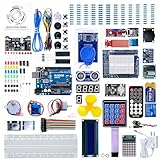
- 30+ Guided Electronics Projects: Start with LEDs and build toward LCD1602 displays, RFID access, motion detection, distance sensing, motor control and environmental monitoring for STEM learning, coding clubs, classrooms and hobby projects
- 200+ Components Across 63 Types: Includes an ELEGOO UNO R3 controller, LCD1602, RC522 RFID, RTC, HC-SR501 PIR sensor, ultrasonic sensor, DHT11, GY-521, MAX7219, keypad, joystick, relay, SG90 servo, stepper motor, breadboard and more
- Begin Without Soldering: Pre-soldered modules, a solderless breadboard, organized storage case and small-parts box reduce setup time and help beginners move from lesson to lesson while keeping LEDs, ICs, wires and sensors easy to find
- Learn, Modify and Create: Program the ELEGOO UNO R3 board with Arduino IDE using the included PDF tutorial and example code, then adjust sensor thresholds, timing, display text and motor behavior to turn guided lessons into original projects
- Flexible Power and Project Setup: Includes a 9 V, 1 A power supply, breadboard power module, 9 V battery and USB cable to support controller, breadboard and module experiments without sourcing basic setup accessories separately
Target Segment D: supply-chain inputs and capital equipment
- Parts and components used to make the covered subassemblies and bare components
- Capital goods used in electronics manufacturing, including their subassemblies and components
Segment D uses a capital-expenditure incentive. A machinery supplier can therefore be relevant to ECMS even when it does not manufacture an electronic component itself, provided its product fits the applicable definition.
Why product mapping matters
ECMS does not automatically cover every semiconductor, display, battery or electronic good. For example, a lithium-ion cell project for energy storage or mobility is outside the Segment B description above, while a digital-application cell is listed. A PCB manufacturer must also identify the applicable layer category. If the product is commercially similar to an eligible item but not expressly covered, obtain a classification decision before committing capital.
How the three incentive models work
Turnover-linked incentive
Turnover-linked support rewards qualifying production and sales over the incentive period. It suits a project that can achieve customer qualification and scale, but it is not an upfront grant: receipts depend on eligible performance, claim approval and the calculation rules in the guidelines.
Capital-expenditure incentive
Capex support is tied to eligible expenditure on approved plant, machinery and related manufacturing infrastructure. It can reduce the effective cost of building a facility, but only expenditure that satisfies the scheme’s definitions and evidence requirements should be included in a financial model.
Free tools Windows power users keep installed
One-click scans. No signup required.
Rank #3

- TURN CODE INTO REAL-WORLD RESULTS — Follow 22+ guided lessons to make LEDs blink, read temperature and distance, move servo and stepper motors, control an LCD and respond to joystick or IR input; ideal for a family weekend build, homeschool unit, coding club or STEM classroom
- MORE PROJECT VARIETY IN ONE ORGANIZED KIT — Includes the UNO R3 controller, LCD1602 with pre-soldered header, breadboard power module, ultrasonic and DHT11 sensors, joystick, IR receiver and remote, SG90 servo, stepper motor, relay, DC motor, fan blade, displays, LEDs, buttons, resistors and jumper wires
- START WITHOUT SOLDERING — Plug-in modules, a solderless breadboard and the pre-soldered LCD help beginners focus on wiring, code and testing; the illustrated component list makes it easier to find each part and move from one lesson to the next
- LEARN THE LOGIC, THEN CREATE YOUR OWN — Use Arduino IDE and the included example code to understand digital input and output, analog sensing, timing, motor control and display functions, then change thresholds, speeds and sequences for alarms, environmental monitors, reaction games and motion projects
- CLEAR SETUP SUPPORT FOR FIRST-TIME BUILDERS — Download the latest tutorial and code, select the UNO board and correct computer port, check component polarity and breadboard rows, and keep power-module input at 9V or below; younger learners should work with an experienced adult
Hybrid incentive
The hybrid model combines both approaches for HDI/MSAP/flexible PCBs and SMD passive components. It may provide stronger support to a project that both installs substantial capacity and reaches commercial scale, while exposing the applicant to both investment and sales-performance risk. The government described this combination as first-of-its-kind in this policy context. See the [April 26 PIB release].
Part of turnover-linked and capex-linked support is linked to employment performance. A project must therefore model capital deployment, production or turnover, direct hiring and the records needed to prove each condition.
Investment thresholds and indicative rate schedules
The launch release lists the following minimum or cumulative-investment thresholds and year-by-year rate schedules. A sequence such as “8/7/7/6/5/4%” is not a flat 8% payment. The eligible base, ceilings, claim timing, employment tests and other conditions must be checked in the operative guidelines before estimating receipts.
| Segment or product | Minimum or cumulative investment | Turnover-linked schedule | Capex incentive |
|---|---|---|---|
| Display-module subassembly | ₹250 crore | 4/4/3/2/2/1% | Not applicable |
| Camera-module subassembly | ₹250 crore | 5/4/4/3/2/2% | Not applicable |
| Non-SMD passive components | ₹50 crore | 8/7/7/6/5/4% | Not applicable |
| Electromechanicals | ₹50 crore | 8/7/7/6/5/4% | Not applicable |
| Multilayer PCB, up to six layers | ₹50 crore | 6/6/5/5/4/4% | Not applicable |
| Multilayer PCB, eight layers or more | ₹50 crore | 10/8/7/6/5/5% | Not applicable |
| Li-ion cells for digital applications | ₹500 crore | 6/6/5/5/4/4% | Not applicable |
| Enclosures | ₹500 crore | 7/6/5/4/4/3% | Not applicable |
| HDI, MSAP and flexible PCB | ₹1,000 crore | 8/7/7/6/5/4% | 25% |
| SMD passive components | ₹250 crore | 5/5/4/4/3/3% | 25% |
| Segment-D supply chain | ₹10 crore | Not applicable | 25% |
| Capital goods for electronics manufacturing | ₹10 crore | Not applicable | 25% |
These figures come from the launch release’s indicative schedule. The [source table] should be read alongside the detailed guidelines, subsequent amendments and any approval letter.
Quick wins for a faster PC:
Clear out junk files and repair common Windows errorsFree Scan →Scan for outdated or missing drivers - takes under a minuteDriver Scan →Rank #4

- All-in-One Starter Kit for Beginners: Part of the Powered by Arduino program, this kit includes an original Arduino UNO R4 WiFi, 300+ high-quality components, 50+ hands-on projects (30 basic, 13 fun, and 8 IoT), and 100+ free video lessons co-created with renowned educator Paul McWhorter. Designed for beginners ages 8+, it provides a complete, step-by-step path to learn Arduino, electronics, coding, and IoT. RoHS compliant for added safety and quality, it also makes a thoughtful gift for tech enthusiasts, students, and aspiring makers for birthdays, holidays, and special occasions
- Powerful Arduino Uno R4 WiFi Board: Upgraded from the Arduino Uno R3, the Arduino Uno R4 WiFi features a 32-bit processor, more memory, and built-in WiFi and Bluetooth, enabling connection to third-party apps for more interactive and practical projects.
- 300+ Components for Endless Possibilities: With 300+ components and sensors, this kit is perfect for portable projects. It features step-by-step tutorials, open-source code, and compatibility with other Arduino boards like Uno R3 and Nano, offering endless customization and learning opportunities.
- Engaging Projects for Every Skill Level: Featuring 50 projects (30 basic, 13 fun, 8 IoT) with IoT app integration like Arduino IoT Cloud , this kit supports Arduino C++ programming, making it perfect for students, teachers, and engineers to learn, code, and create at any skill level.
- Dedicated Support for Beginners: Alongside online resources and video tutorials, SunFounder provides technical support and troubleshooting forums to help beginners solve programming challenges with ease.
Who can apply?
The April 2025 guidelines define an applicant as either a company incorporated in India under the Companies Act, 2013, or a limited liability partnership registered under the Limited Liability Partnership Act, 2008. The applicant must manufacture eligible target-segment goods in India, submit the prescribed online application and supporting documents, and pay the application fee.
The framework can accommodate greenfield projects and brownfield expansion. An Indian subsidiary of a global company can apply if the locally incorporated entity and its manufacturing project meet the rules. Joint ventures and contract manufacturers need to establish which entity owns the eligible investment, operates the plant, sells the qualifying output and carries the reporting obligations. Importing a finished component, relabelling it or performing insubstantial assembly is not the same as manufacturing an eligible product.
The India Science, Technology & Innovation portal says applicants must file separate applications for each target-segment product and may submit only one application for a single target-sector product. It also warns that withdrawing and resubmitting can result in loss of the application fee. See [its ECMS guidance].
Independent reader supportYour contribution helps us test, update, and keep practical guides available for everyone.Practical application path
- Map the product: Match the actual bill of materials, manufacturing process and end use to a target-segment definition.
- Select the incentive model: Identify whether the product is turnover-linked, capex-linked or hybrid.
- Test the threshold: Confirm the required investment and whether the project can meet it within the permitted period.
- Build the compliance model: Forecast production or turnover, eligible expenditure, direct employment, customer qualification and claim timing.
- Prepare evidence: Assemble corporate, financial, technical, land, plant, machinery, production and employment records.
- Submit online: Use the ECMS portal at ecms.meity.gov.in, pay the prescribed fee and retain the submitted version and acknowledgement.
- Respond to scrutiny: Address clarification requests and preserve the approval terms.
- File claims and maintain records: Support every claim with investment, production, turnover, employment and eligible-expenditure evidence for the relevant reporting period.
Application deadline, approval date, investment period, gestation period and incentive-claim period are different concepts. A project should put each on a separate schedule rather than treating approval as an immediate cash payment.
Best Value

- BUILD BREADBOARD CIRCUITS AND MINI PROJECTS - Create LED indicators, button inputs, traffic-light sequences, light-activated circuits, RGB effects and buzzer alarms for electronics practice, classroom demonstrations and maker projects
- 235 PARTS FOR REPEATABLE EXPERIMENTS - Includes a 400-tie-point solderless breadboard, power module, jumper wires, Dupont wires, potentiometer, buttons, LEDs, resistors, capacitors, diodes, transistors, buzzers and light-sensitive components
- LEARN HOW CORE COMPONENTS WORK - Use the 74HC595 to expand outputs, the 4N35 optocoupler to explore signal isolation, PN2222 transistors to switch loads and 1N4007 diodes for polarity protection and rectification experiments
- POWER AND REWIRE PROJECTS QUICKLY - Use the breadboard power module for selectable 3.3 V or 5 V rails, while rigid jumpers and female-to-male leads simplify connections; use a suitable 6.5–9 V DC input and do not exceed 9 V
- COMPONENT KIT WITH CLEAR EXPECTATIONS - A controller board, programming cable and wall power adapter are not included; use a compatible microcontroller for coded projects and follow the current tutorial, datasheets and wiring guidance
What employment-linked support means in practice
Employment linkage means that a portion of support depends on achieving specified hiring outcomes. The precise employee definitions, formulas, reporting periods and consequences of a shortfall come from the detailed guidelines, not the Cabinet summary. Applicants should budget for payroll, statutory records, attendance or other accepted evidence and periodic reporting. A project that reaches its investment target but misses an employment condition cannot assume that the full indicative incentive will be paid.
Implementation status: what has actually been reported
The latest figures below are government-reported applications, approvals and projections. They are not proof that the projected factories, production or jobs have already been delivered.
- By September 30, 2025: MeitY’s Annual Report 2025–26 said ECMS had received 249 applications.
- By December 31, 2025: The report said 24 applications had been approved across nine states, representing projected investment of ₹12,704 crore, projected production of ₹1,09,517 crore and 17,003 direct jobs.
- January 5, 2026: NeGD reported a further tranche of 22 approved proposals with projected investment of ₹41,863 crore, projected production of ₹2,58,152 crore and 33,791 direct jobs.
The 24-application and 22-proposal releases should not be added together unless the government confirms that the datasets are non-overlapping. Sources: [MeitY Annual Report 2025–26] and [NeGD’s January 5, 2026 update].
Which businesses are most likely to fit?
- PCB manufacturers able to meet the relevant layer or technology definition
- Passive-component and electromechanical manufacturers with enough scale to meet the thresholds
- Camera- and display-module subassembly producers with customer qualification plans
- Digital-application battery-cell projects that are outside storage and mobility use cases
- Enclosure manufacturers serving covered mobile and IT-hardware products
- Suppliers producing parts, components or capital equipment used in eligible electronics manufacturing
Smaller firms below the applicable threshold, import-led traders, and projects whose products cannot be mapped to a listed category may not fit. A large threshold does not make a weak business case attractive: customers, quality certification, technology, supply security, working capital and claims administration remain critical.
Recommended Free Tools
ECMS compared with adjacent schemes
| Scheme | Basic focus | Why it is different from ECMS |
|---|---|---|
| ECMS | Specified electronics components, subassemblies, supply-chain inputs and capital equipment | Uses turnover-linked, capex-linked and hybrid models with employment-linked elements |
| SPECS | Earlier support for identified electronic goods and semiconductor-related investments | Provides a 25% capital-expenditure incentive under its own product and eligibility rules |
| PLI 2.0 for IT Hardware | Eligible IT-hardware manufacturing | Incentives are based on net incremental sales under that programme |
| Electronic Manufacturing Clusters | Manufacturing-cluster infrastructure | Infrastructure-oriented support rather than ECMS’s direct component-manufacturing incentive |
Eligibility under one scheme does not establish eligibility under another. The same expenditure or output should not be claimed twice without checking the applicable rules.
Pre-commitment checklist for an applicant
- Have the product, end use and manufacturing process been matched to the current target-segment definition?
- Is the applicant an eligible Indian company or LLP, and is the correct entity making the investment and filing the claim?
- Can the project meet the threshold without treating a future incentive as upfront capital?
- Can the plant achieve customer qualification, quality and reliability requirements on schedule?
- Are the investment, production, turnover and employment records designed before construction begins?
- Is a separate application required for each product, and has the fee-risk of withdrawal been considered?
- Has the current application window been verified on the portal and latest amendment?
- Have central and state incentives, tax treatment, import arrangements and possible double-claim restrictions been reviewed?
- Are projections clearly separated from realized investment, production and jobs?
What ECMS does not yet prove
Official releases establish the scheme’s design, applications, approvals and projected outcomes. They do not, by themselves, establish that ECMS has already reduced import dependence, increased domestic value addition, lowered component costs or made approved plants commercially competitive. Those outcomes require operating data and independent assessment.
The Bottom Line
ECMS is a targeted manufacturing incentive, not a universal electronics subsidy. A project’s result depends on exact product classification, the applicable investment threshold and incentive model, employment compliance, the live application window and evidence-backed claims. Use the April 26, 2025 guidelines and subsequent amendments—not the Cabinet headline alone—before committing funds.
Quick Recap
Product prices and availability are accurate as of the date/time indicated and are subject to change. Any price and availability information displayed on Amazon at the time of purchase will apply.




