The Tool Desk
Outbyte Driver Updater FREEFix the driver behind crashes, sound loss and screen glitchesFind Drivers →Outbyte PC Repair FREERepair Windows errors before they cause bigger problemsFix Now →HP announced the Z1 G3 All-in-One Workstation in April 2016 as the third generation of its Z1 workstation line. It paired a 23.6-inch 3840×2160 display with selected Intel Core or Xeon processors and optional NVIDIA Quadro graphics. Compared with the Z1 G2, it occupied a smaller, lighter footprint—but traded the predecessor’s 27-inch screen for a more compact 4K panel.
What HP announced in 2016
The Z1 G3 was a workstation-class all-in-one: computer, display, speakers and cabling integrated into one unit. HP positioned it for professional work where certified graphics drivers, supported workstation hardware and software compatibility mattered. Its platform reflected the time: Intel Skylake-era processors and NVIDIA Maxwell-generation Quadro graphics. HP’s 2016 materials listed Windows 10 Pro, Windows 7 Professional through downgrade rights, and Linux-ready configurations. The Z1 G3 is now a discontinued historical product; HP’s surviving support page provides setup and maintenance documentation, not a current retail listing.
How it differed from the Z1 G2
| Area | Z1 G3 | What changed for users |
|---|---|---|
| Display | 23.6-inch, 3840×2160 UHD | More pixels, but a smaller physical screen than the Z1 G2’s 27-inch QHD panel. |
| Processor era | Intel Skylake Core and Xeon options | A 2016 platform, not a current workstation generation. |
| Graphics | Integrated Intel graphics or optional Quadro M1000M/M2000M | Professional-driver options were available, but not in every configuration. |
| Memory | Up to 64 GB DDR4 | ECC was supported with compatible Xeon configurations. |
| Chassis | Smaller and lighter than the Z1 G2 | Less desk space and easier deployment, with less display area. |
DisplayDaily reported the G3 as 47% smaller, 51% lighter and 21% cheaper than the Z1 G2; those are contemporary reported comparisons, not independently measured results. Its account of the display and redesign is at DisplayDaily.
Display and all-in-one design
The panel measured 23.6 inches diagonally and displayed 3840×2160 pixels at 60 Hz—about 8.3 million pixels. HP’s product material confirms the panel size and resolution; contemporary display coverage reported 300 cd/m² brightness, 100% sRGB coverage and an anti-glare finish. See HP’s product specifications and DisplayDaily’s contemporary report.
#1 Best Overall

- AI-powered Technology: Advanced artificial intelligence capabilities integrated into the system for enhanced performance and productivity
- Processor Manufacturer: Intel processor technology delivers reliable and powerful computing performance
- Processor Type: Core Ultra 9 processor provides exceptional speed and multitasking capabilities for demanding applications
- Processor Model: 285 model featuring cutting-edge architecture for superior computational power
- Processor Core: Tetracosa-core (24 Core) configuration with 24 threads enables seamless handling of intensive workloads and parallel processing tasks
The practical compromise was straightforward: sharper detail and a tidier workstation footprint, but less physical room for windows and timelines than on the 27-inch predecessor. A single integrated unit also simplified deployment, but tied the computer’s useful life to a built-in display that could not be replaced independently like a separate monitor.
Processor, memory and graphics choices
Core or Xeon
HP offered selected configurations with Intel Core i3, i5 or i7 processors, as well as Xeon E3-1200 v5-series processors. Contemporary specifications include Xeon E3-1245 v5 and E3-1270 v5 examples. Xeon was an option, not a standard feature of every Z1 G3. These were entry-level workstation-oriented processors from the Skylake period, not today’s Xeon W platform. Exact CPU support and features depended on the factory configuration. HP’s family data sheet is available at HP Z Workstations Family Data Sheet.
Memory and ECC
The system had four SODIMM slots and supported up to 64 GB of DDR4. HP’s original 2016 material specifies DDR4-2133; a later datasheet lists DDR4-2400, so the speed depends on the document version and installed configuration. ECC memory was available with supported Xeon processors; other configurations used non-ECC unbuffered memory. ECC can detect and correct certain single-bit memory errors, which can help in long-running professional workloads, but it does not make the whole computer fault-tolerant or increase application speed by itself. Consult the Z1 G3 QuickSpecs and the later HP datasheet when identifying a particular unit.
Integrated and Quadro graphics
Integrated graphics options included Intel HD Graphics 530 and, with supported Xeon processors, HD Graphics P530. Discrete options were the NVIDIA Quadro M1000M with 2 GB of graphics memory and Quadro M2000M with 4 GB. HP’s QuickSpecs describe one MXM graphics expansion position; installing a discrete GPU disabled integrated graphics. This was not a conventional desktop tower with a standard user-accessible PCIe graphics-card slot.
Recommended Free Tools
Rank #2
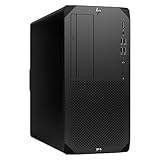
- Experience responsive performance, built-in security and remote management capabilities with the core i9 2 GHz processor
- Windows 11 Pro OS makes you more productive and creative
- 1 TB SSD capacity offers amazing storage room for all your critical data
- With 32 GB of memory, run as many programs as you want without losing the execution performance
- Gigabit Ethernet can be useful in circumstances when a large number of file transfers are needed, such as when you perform backups over the network to a server
Quadro’s 2016 professional appeal was certified drivers and compatibility testing for selected CAD, design, engineering and visualization applications—not a promise to beat every gaming GPU. A Quadro label also does not establish that a current application supports the Z1 G3’s old driver stack.
Storage, connectivity and expansion
Factory storage options included 500 GB to 1 TB SATA hard drives, SATA SSDs, self-encrypting SATA SSDs and HP Z Turbo Drive G2 NVMe PCIe SSDs. The system also supported integrated RAID 0 and RAID 1 for SATA drives, with exact combinations dependent on the configuration and controller. RAID 0 combines drives for throughput but offers no redundancy; RAID 1 mirrors data and reduces usable capacity. Neither replaces a separate backup. The maximum 64 GB figure refers to system memory, not storage capacity.
- Internal expansion: Three M.2 positions were identified, two for storage and one for WLAN, alongside the MXM graphics position and four SODIMM slots.
- Networking: Intel I219LM PCIe Gigabit Ethernet was listed; Intel 8260 802.11ac Wi-Fi with Bluetooth 4.2 was optional.
- Other connections: The product material lists an SD 4.0 card reader and USB connectivity, including USB 3.0. An external slim optical drive was optional.
- Remote use: HP Remote Graphics Software was supported.
These were meaningful configuration options for an all-in-one of its era, but they did not provide the serviceability and broad component choice of a Z-series tower.
Professional positioning and workloads
The Z1 G3’s workstation case rested on the combination of selectable Xeon processors, ECC memory options, Quadro graphics and ISV certification for selected professional software. HP also promoted Performance Advisor, Remote Graphics Software and its Total Test Process. A contemporary HP-related report cited more than 115,000 hours in that test process; this was HP’s manufacturer testing claim, not an independent reliability benchmark. Details appeared in HP’s contemporary announcement.
Rank #3
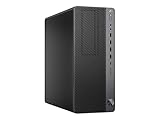
- 9th Generation Intel Eight Core i7 9700 3.0Ghz
- 32GB DDR4 RAM Installed | 1TB NVMe PCIe SSD Installed
- Fresh install and activated Windows 10 with zero bloatware. Windows 10 will be activated via your unit's unique digital license and ready to go right out of the box.
- NOT Included: Keyboard, Mouse and WiFi (Sold Seperately)
- Connectivity Technology: Ethernet
In its original context, configured Z1 G3 systems could suit CAD, 3D modeling, engineering visualization, design, photo work and video work when the particular application and configuration were supported. The available evidence does not establish benchmark performance, and the workstation name alone cannot predict how a specific unit will handle a modern workload.
Independent reader supportYour contribution helps us test, update, and keep practical guides available for everyone.Launch pricing and regional availability
There was no single price that applied to every country or configuration. TechRadar reported a UK lower configuration at £1,558, including VAT, delivery and a three-year onsite warranty; it had a Xeon E3-1225, 8 GB of memory, a 256 GB SSD and Quadro M1000M. The review also described a higher-end configuration with Xeon E3-1270 v5, 64 GB ECC memory, two 512 GB HP Z Turbo Drive SSDs in RAID 0 and Quadro M2000M. See TechRadar’s review.
HP Japan listed the Z1 G3 at ¥190,000, with availability dated June 23, 2016. That is a regional launch figure, not a universal MSRP. The Japanese announcement is at HP Japan. No reliable U.S. launch price is established here, so the British and Japanese figures should not be converted into one.
What to check before buying a used Z1 G3
In 2026, a Z1 G3 is principally a historical machine or a possible low-cost option for legacy software—not a sensible default for demanding new workstation workloads. Before considering one, verify the exact configuration and condition rather than relying on the model name:
What’s actually slowing this PC down?
Pick the symptom - the matching free tool is one click away.
- Processor and ECC: Check the exact CPU and whether installed SODIMMs are ECC. Do not assume Xeon or ECC from the Z1 G3 name alone.
- Graphics: Confirm whether it has integrated graphics, the 2 GB M1000M or the 4 GB M2000M, and check compatibility with the applications you intend to run.
- Storage: Inspect SSD health and determine whether two drives are configured as RAID 0. RAID 0 makes a current independent backup especially important.
- Screen and cooling: Look for dead pixels, uneven brightness, backlight aging or image retention; listen for abnormal fan noise and check for overheating.
- Parts and documentation: Confirm that the stand, power adapter and any needed proprietary cooling or graphics parts are present and obtainable. Use the model-specific HP setup and maintenance documentation, rather than generic Z-series instructions.
- Software support: Check operating-system security support, drivers and certification for each intended application. A historical ISV certification does not guarantee current certification.
For a new purchase, a workstation tower with a separate 4K monitor generally offers more upgradeability and repair flexibility at the cost of desk space and a multi-part setup. A mini workstation can save space while retaining more upgrade options than an all-in-one, though GPU size and cooling may be constrained. A docked mobile workstation prioritizes portability, while a professional all-in-one prioritizes simple deployment and an integrated display; both retain trade-offs in sustained performance, repair and upgrades.
Quick Recap
Product prices and availability are accurate as of the date/time indicated and are subject to change. Any price and availability information displayed on Amazon at the time of purchase will apply.




