Under the framework announced on 15 September 2026, a covered standard UPI person-to-merchant (P2M) payment above ₹2,000 carries a merchant discount rate (MDR) of 0.4% of the transaction value, capped at ₹300 for payments of ₹75,000 or more. Payments up to ₹2,000 are described as MDR-free. The framework is scheduled to take effect on 15 October 2026; as of 7 October 2026, that date has not yet arrived. The merchant pays the charge to its acquiring bank, while the official materials say the proceeds are distributed among payment-ecosystem participants. The Department of Financial Services FAQ and the Ministry of Finance announcement set out the announced rates and categories.
How to calculate the announced standard UPI MDR
For a covered standard P2M transaction above ₹2,000, multiply the transaction value by 0.4%. For a transaction of ₹75,000 or more, the resulting amount cannot exceed ₹300. Transactions up to ₹2,000 carry no MDR under the announced framework.
| Transaction value | Calculation | Announced MDR |
|---|---|---|
| ₹2,000 or less | No MDR | ₹0 |
| ₹3,000 | ₹3,000 × 0.4% | ₹12 |
| ₹5,000 | ₹5,000 × 0.4% | ₹20 |
| ₹50,000 | ₹50,000 × 0.4% | ₹200 |
| ₹75,000 | 0.4% would be ₹300 | ₹300 |
| ₹1,00,000 | 0.4% would be ₹400; the cap applies | ₹300 |
These are the calculation examples and thresholds in the Department of Financial Services FAQ, for the framework scheduled to take effect on 15 October 2026. The key variables are not just payment amount: the merchant’s category and payment type can change the applicable treatment.
Which transactions have different rates or exemptions?
The standard 0.4% calculation is not a universal rate for every UPI payment. The Ministry of Finance announcement distinguishes among payment types and merchant categories:
What’s actually slowing this PC down?
Pick the symptom - the matching free tool is one click away.
#1 Best Overall

- All-in-One NFC & QR Code Multi-Payment Stand: Enable your customers to pay instantly with a simple tap or QR scan. This versatile stand supports Venmo, PayPal, Cash, Zelle, Cash App, and more, providing a professional contactless payment solution for counters, cafés, restaurants, retail stores, and pop-up shops
- No App or Fees – Easy Contactless Payments: Customers can complete payments directly via NFC or QR code without downloading apps, creating accounts, or paying subscription fees. This Scan to Pay sign ensures fast, seamless, and secure transactions, enhancing convenience and customer satisfaction
- No App or Fees – Easy Contactless Payments: Customers can complete payments directly via NFC or QR code without downloading apps, creating accounts, or paying subscription fees. This Scan to Pay sign ensures fast, seamless, and secure transactions, enhancing convenience and customer satisfaction
- Acrylic Desktop Stand: Crafted from high-quality acrylic, this NFC QR code payment stand is compact, self-standing, and perfect for counters, desks, or reception areas. Its sturdy tabletop design ensures visibility and professional presentation while customers tap or scan to pay effortlessly
- Acrylic Desktop Stand: Crafted from high-quality acrylic, this NFC QR code payment stand is compact, self-standing, and perfect for counters, desks, or reception areas. Its sturdy tabletop design ensures visibility and professional presentation while customers tap or scan to pay effortlessly
| Transaction or merchant category | Announced treatment |
|---|---|
| Person-to-person (P2P) | Free regardless of amount. |
| P2M transaction up to ₹2,000 | No MDR. |
| Small P2PM merchant receiving payments through UPI QR | Zero MDR on all transactions while in the exempt P2PM category, including a payment above ₹2,000. |
| Specified essential and thin-margin sectors | Flat ₹5 MDR on covered transactions above ₹2,000. Examples named in the release are railways, telecommunications, insurance, fuel and agricultural inputs. |
| Payments relating to mutual funds, securities, stockbrokers and dealers | 0.02% MDR, capped at ₹300. |
| RuPay credit card linked to UPI or a credit line | Do not assume the direct bank-account UPI rates apply; separate credit-linked mechanics and terms require separate confirmation. |
How the P2PM exemption works
The release describes the P2PM small-merchant category as merchants receiving up to ₹1 lakh per month through UPI QR. The FAQ says a single payment above ₹2,000 does not itself trigger MDR if the merchant remains in that exempt tier. It also says merchants whose monthly inward UPI credits exceed ₹1 lakh for three consecutive months transition to P2M. That is the FAQ’s stated rule; precise account treatment should be checked against implementing instructions and the merchant’s acquirer.
Utility and education payments
The FAQ also gives detailed treatment for utility bills and educational payments. Because eligibility turns on the official category assigned to a transaction, do not infer a rate for every bill or education payment from the general standard rule; confirm the classification with the acquirer or payment service provider.
Rank #2

- ✅ ALL-IN-ONE SCAN TO PAY QR CODE SIGN:Accept payments effortlessly with our custom QR code stand! Perfect for Venmo, Cash App, PayPal, Zelle, or any payment app you use. Just add your QR codes, set it up, and let customers scan and pay in seconds—no more fumbling with cash or card readers at your small business, vendor booth, salon, or shop.
- ✅ HIGH-QUALITY ACRYLIC & STURDY WOODEN STAND:Made with premium, clear acrylic (thick and durable, no easy scratches) and a solid wooden base, this QR payment sign stays stable on your countertop, table, or checkout desk. The smooth, glossy finish keeps your QR codes clear and scannable, even with daily use at busy markets or shops.
- ✅ FULLY CUSTOMIZABLE TO YOUR NEEDS:Upload your own QR codes, choose your background design, and add custom text to make your payment sign unique. Whether you need 1, 2, 3 or 4 QR codes for payments, social media, or Wi-Fi, we’ll print it exactly how you want—great for branding your small business or side hustle.
- ✅ PERFECT FOR EVERY BUSINESS & EVENT:Ideal for small businesses, pop-up shops, craft fairs, farmers markets, food trucks, salons, boutiques, and even yard sales. Whether you’re a vendor, freelancer, or local shop owner, this QR code stand makes contactless payments easy for you and your customers.
- ✅ EASY TO USE & LONG-LASTING:Setting up your custom QR code sign is simple: just remove the protective film, place it in the wooden stand, and start accepting payments. The high-quality print won’t fade, so your QR codes stay scannable for years. If you have any questions about customization or your order, our support team is here to help!
Who pays MDR—and can a merchant pass it to customers?
MDR is a merchant-side ecosystem charge, not a tax. In the FAQ’s ₹3,000 example, the merchant pays ₹12 to its acquiring bank. The Ministry of Finance says MDR is not collected by the Government or NPCI, and directs banks to ensure merchants do not pass it to customers. The release also says UPI application providers may not impose platform fees or hidden charges. A customer should therefore not be charged a separate MDR surcharge under the announced framework.
How banks, payment aggregators and UPI apps fit into the fee chain
The acquiring bank is the merchant-facing institution identified in the FAQ’s calculation example. The Ministry of Finance release says MDR is distributed among ecosystem participant categories, including banks, payment service providers and UPI application providers. It does not publish a rupee or percentage split for each participant, so the 0.4% headline rate should not be treated as an amount any one bank, aggregator or app necessarily keeps.
Do these 3 things before closing this tab:
1Clear out junk files and repair common Windows errors2Fix the driver behind crashes, sound loss and screen glitches3Repair Windows errors before they cause bigger problemsRank #3

- [ VERSATILE DISPLAY ] - The Skywin QR Code Business Social Media Sign Stand is an elegant acrylic stand, perfect for showcasing your social media app, custom business cards, cash app, or any acrylic signs in your home office, hair salon decor, beauty salon decor, or for small business shop space for their google review tap card. A must-have for a guest room essentials
- [ PROFESSIONAL APPEAL ] - Enhance your cute office decor with a sleek, modern touch. The QR Code Business Social Media Sign Stand adds a polished look to your desk or reception area, making it an essential item for a well-organized and professional esthetician decor environment. Best for guest room must-haves!
- [ DURABLE DESIGN ] - Crafted from high-quality materials, the Skywin QR Code Business Social Media Sign Stand offers a sturdy base for your display needs, ensuring your acrylic sign holders remain stable and visible. [ IMPORTANT REMINDER] - Inside the box, you will receive the manual QR code to scan.
- [ DIMENSION OF THE PLAQUE ] - The dimensions of this Skywin QR Code Business Social Media Icon Sign Stand are 7.9 x 7.9 inches (upper part) and 7.1 x 2.3 inches (lower part). The package includes some of the known social media icons and cash app icons with a matching customized mirror border base to hold it.
- [ CUSTOMIZABLE AESTHETIC ] - The white acrylic material of the Skywin QR Code Business Social Media Sign Stand complements any decor, from simple office decor to minimalist home office decor, providing a subtle yet stylish backdrop whether white, black, pink or rose gold for your custom signs and display stands
The Reserve Bank of India’s discussion paper describes the broader payment chain: it can involve the customer, customer bank, merchant, acquiring bank and payment intermediaries. A payment aggregator accepts payments for a merchant and transfers the funds to that merchant; a payment gateway provides routing or processing technology without handling the funds. Merchants may also use aggregators for transaction management, consolidation, reconciliation and support. These roles explain how participants may be involved, but the RBI paper is background—not the 2026 rate or a participant-level allocation schedule. Read the RBI discussion paper on payment gateways and aggregators.
The FAQ says the UPI and Services Steering Committee, headed by NPCI, decides operational parameters, fee-distribution models and category caps. The reviewed official announcement and FAQ do not state the precise allocation among acquiring banks, other banks, payment aggregators or app providers. Merchants should use their acquirer’s settlement statement and contract to identify actual deductions and reconciliation details.
Rank #4
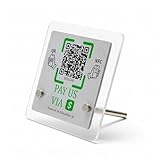
- 【Dual-Payment Technology: QR Code & NFC Tap】Customers can pay instantly by scanning the high-resolution QR code or simply tapping their NFC-enabled phones. No app download required—compatible with all smartphones.
- 【No Monthly Fees & Unlimited Scans】One-time purchase, lifetime use. No hidden subscriptions or per-scan charges. Enjoy unlimited payment scans forever.
- 【Acrylic Design】Crafted with frosted acrylic stand, it adds a professional touch to your counter while securely holding your payment tag. Size: 10x10CM.
- 【Easy Setup】You don't need to download any App, you can easily set up the stand on our website, and it can be set up in a few minutes. And our backend provides the service of changing the settings at any time.
- 【Data Statistics】You can view the data of a single stand or multiple stands through your backend. If you have multiple stores, you can also view the data of a single store or multiple stores. This makes it easier for you to analyze data and formulate business strategies.
What the announced figures say about how many payments are affected
The Ministry of Finance release estimates that approximately 96% of P2M transactions remain unaffected. Separately, the Department of Financial Services FAQ says transactions up to ₹2,000 comprise more than 95% of P2M volume. These are different official figures with different wording; neither should be substituted for the other. The release also describes 5% of total MDR collections as a contribution to a dedicated small-merchant promotion fund.
How merchants should check a UPI MDR deduction
- Identify the payment type. Establish whether the transaction is P2P, P2M, P2PM or credit-linked; a credit card or credit line linked to UPI should not automatically be assessed using direct bank-account UPI terms.
- Confirm the merchant category. Check whether the account is treated as an exempt small P2PM merchant, a specified essential-sector or capital-market category, or standard P2M. For a claimed P2PM transition, ask how the FAQ’s three-consecutive-month threshold is being applied to the account.
- Apply the announced threshold and rate. For standard covered P2M, payments up to ₹2,000 are free; above that, calculate 0.4%, applying the ₹300 cap from ₹75,000 upward. Use the category-specific flat fee or rate where applicable.
- Compare the settlement record with the contract. Ask the acquiring bank or payment service provider to identify the MDR debit, the transaction category used, any other contract charges, and how settlement and reconciliation are handled. The general government FAQ does not establish every provider’s individual settlement mechanics.
- Check the effective date. The announced framework is scheduled for 15 October 2026. The materials cited here were published on 15 September and describe a future effective date as of 7 October 2026; later implementation instructions or amendments may affect actual treatment.
Why older UPI MDR statements may conflict with the 2026 announcement
Zero-MDR statements can refer to earlier policy periods rather than the announced framework. The Department of Financial Services’ 2025–26 annual report says no charge, including MDR, was payable on RuPay debit-card and BHIM-UPI payments from 1 January 2020, while government incentive schemes supported specified low-value BHIM-UPI P2M activity. NPCI also published an earlier BHIM UPI MDR schedule effective 1 October 2019. Those historical rules are not the September 2026 announcement. DFS Annual Report 2025–26 and NPCI’s 2019 release provide that historical context.
Free tools Windows power users keep installed
One-click scans. No signup required.
Best Value
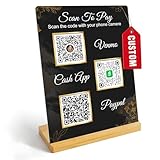
- Create a cleaner checkout experience with a custom scan-to-pay sign that keeps your payment QR codes in one visible tabletop display for faster customer action.
- Personalize the title, app labels and bottom text to match your business, event or booth setup while keeping the payment options easy to identify at a glance.
- Designed for counters, salon desks, pop-up markets, bakeries, cafes and small business front desks where customers need a simple scan-and-pay prompt.
- Choose from multiple size options to fit compact counters or larger display areas, and pair the sign with stand for stable tabletop presentation.
- High-definition printing, this custom QR code plaque is designed for sharp details and reliable scanning. The smooth, scratch-resistant surface keeps your sign looking clean and professional.
For credit-linked UPI, NPCI’s 2022 circular describes distinct mechanics, including interchange and PSP/app reimbursement provisions at that time. It does not establish current terms for every credit-linked product. See NPCI’s 2022 RuPay credit-card-linked UPI circular.
Quick Recap
Product prices and availability are accurate as of the date/time indicated and are subject to change. Any price and availability information displayed on Amazon at the time of purchase will apply.




