A UPI credit line lets an eligible customer use a bank-approved credit facility as a funding source for supported UPI payments. The bank provides and sets the credit; UPI is the payment channel. There is no single UPI-wide credit limit, interest rate, billing cycle or due date: check the issuing bank’s current terms before linking or borrowing.
What a UPI credit line is—and what it is not
A UPI credit line is a pre-sanctioned credit facility from a bank that can be linked to a supported UPI app and used for eligible payments. It is borrowing, not money held in a deposit account. The bank assesses and sanctions the facility, sets its terms, and handles the resulting credit obligation. UPI carries the payment instruction.

As an Amazon Associate I earn from qualifying purchases.
In August 2023, the Reserve Bank of India announced that it proposed to expand UPI to enable transfers to and from pre-sanctioned bank credit lines as well as deposit accounts. That change made a bank credit line an additional possible funding source; it did not create one standard loan product for all UPI users. NPCI’s guidance likewise describes a bank-issued facility and tells customers to ask their issuer about applicable rates and charges.
Availability depends on whether a bank has offered a line to you and whether both that issuer and your UPI app support linking and use. Seeing a credit-line option in an app does not mean every bank customer qualifies, every payment is eligible, or every merchant accepts it.
#1 Best Overall
How the credit line and UPI limits fit together
There are two separate constraints to check before making a payment:
- Your available credit: the amount the issuing bank has sanctioned, less any amount already used or otherwise unavailable under its terms. The bank determines this figure; NPCI does not set a universal UPI credit-line amount.
- The payment limit: the transaction ceiling that applies to the UPI payment. NPCI says standard UPI transaction limits apply to credit-line transactions. The applicable ceiling can depend on the payment, app and merchant, so confirm the current rule with the issuer and relevant UPI guidance.
A credit line larger than the applicable UPI transaction ceiling does not let you send a single payment above that ceiling. Conversely, a payment ceiling does not mean the bank has granted you that much credit. The amount you can actually use is subject to both the bank’s available line and the transaction rules that apply to that payment.
NPCI’s general credit-line overview does not establish a single sanctioned amount or a universal transaction figure for all cases. For a specific purchase, check the available line displayed by the app and ask the bank which transaction ceiling applies. Do not assume a limit quoted for a different UPI payment type applies to your credit-line transaction.
Quick wins for a faster PC:
Scan for outdated or missing drivers - takes under a minuteDriver Scan →Clear out junk files and repair common Windows errorsFree Scan →Rank #2
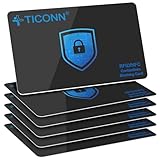
- RFID Protection: An electromagnetically opaque layer helps block unauthorized scans, protecting credit card, debit card, and passport information from nearby readers; This RFID blocking card helps prevent digital skimming by shielding your wallet from electronic theft
- Threats Stay Outside: Digital pickpockets use hidden readers to skim contactless cards in crowds, transit and checkout lines; This credit card protector works as an RFID blocker the moment it's placed in your purse or wallet, stopping electronic theft before it occurs
- Invisible Yet Active: Ultra-thin and sized to fit any wallet slot, this rfid blocking card adds no bulk; Invisible protection helps shield your debit cards and IDs from electronic skimming without changing the way you carry your wallet
- One Card Protects All: Forget slipping every card into a separate RFID sleeve, just one RFID blocking card protects every contactless card, passport, and license all at once; Carry it in a purse, travel pouch or cardholder and stay shielded at airports, transit hubs and during daily commutes
- Drop and Defend: Keep the RFID blocking card in your wallet or travel bag, or save it as a backup; Simply insert it alongside your credit and debit cards for immediate protection against identity theft — no charging, no setup
How to find, link and use an eligible line
NPCI describes a process in which a customer registers in a UPI app, selects the credit-line option, identifies the issuing bank, and follows the app’s steps to link the facility. The app can show a masked available line based on the mobile number registered with that bank. You select the account or facility and generate a dedicated UPI PIN for credit-line transactions.
- Open a UPI app that supports the feature. Use an app in which your bank supports credit-line linking; availability is not guaranteed across every app or issuer.
- Choose “Credit Line” and select the issuing bank. Follow the in-app discovery steps. The line shown is masked, and the bank-linked mobile number is used to identify an eligible facility.
- Review the facility and its terms before linking. Confirm the available amount and obtain the bank’s current disclosures for interest, fees, billing, due dates and late-payment consequences. Do not treat linking as evidence that the facility is free or has a particular repayment period.
- Select the line and set its UPI PIN. NPCI says users generate a UPI PIN for credit-line transactions. Follow the bank and app’s security prompts; do not share the PIN with anyone.
- Choose the credit line as the payment source when paying. Confirm that the recipient or merchant and the transaction are supported, then check the amount and funding source on the payment screen before authorizing it.
NPCI says the facility can be used for allowed beneficiaries, including merchants and users. That does not establish that every recipient, merchant category or transaction is permitted. Issuer and app support, payment eligibility and transaction limits still matter. If the credit option is absent, the line cannot be discovered or linked, or a payment is declined, contact the bank and app provider to check eligibility, support and the reason for the restriction.
Interest, fees and the true cost of borrowing
There is no standard UPI credit-line interest rate. NPCI says fees may vary by bank and advises customers to ask the issuer about interest rates, processing fees and other charges before applying. Its general product guidance does not establish a universal rate, interest-free period or method of calculating interest.
Rank #3

- Ultra-Slim Design: Measuring just 3.9 x 2.1 x 0.3 in (9.8 x 6 x 0.8 cm), this minimalist wallet holds 1-6 credit cards, striking the balance between size and functionality. It is very convenient to carry in back or front pocket. Note: The actual capacity depends on the card thickness
- RFID Wallet: Our mens wallet is equipped with state-of-the-art RFID blocking technology, providing a robust shield for your personal information, protecting your business or credit cards from unauthorized scanning. In today's increasingly digital world, you can enjoy the peace of mind that comes with knowing your property is well-protected
- Perfect Gift: Looking for a sophisticated gift for your dad, boyfriend, brothers, friends, or co-workers? Look no further! Our credit card holder is the ideal choice. Each ultra thin wallet for men arrives in a premium gift box. So it is a perfect gift for your loved ones on special occasions like Valentine's Day, Birthday, Father's Day, New Year, Christmas
Before linking or drawing on a line, get the issuer’s current product terms and identify the following:
Do these 3 things before closing this tab:
1Clear out junk files and repair common Windows errors2Fix the driver behind crashes, sound loss and screen glitches3Repair Windows errors before they cause bigger problems- Interest rate and calculation: ask what rate applies, how interest is calculated, and when it starts accruing on an amount used.
- Fees: check for processing fees and any other charges, including when each is imposed.
- Billing cycle and due date: establish when transactions are billed and when payment must reach the bank. Do not assume another credit product’s cycle applies.
- Late or missed payment consequences: confirm the issuer’s charges and other consequences if you do not pay on time.
- Repayment methods: find out which payment route applies to your facility and whether an e-mandate or AutoPay is available.
These details determine what borrowing costs you, not the fact that you made the payment through UPI. A payment may be convenient at checkout while still creating a bank debt with its own billing and repayment rules. If the bank’s disclosures do not make a term clear, ask the issuer to explain it before spending from the line rather than relying on a general UPI description.
How repayment works
NPCI describes two repayment mechanisms: making an inward payment to the specific UPI ID provided for credit-line repayment, and using an e-mandate (AutoPay) where applicable. These are not necessarily available in the same way for every issuer. NPCI does not set one common due date or repayment cycle; the bank’s terms govern.
Rank #4

- RFID/NFC SECURITY: Works on 13.56MHz frequency, protect your credit cards, debit cards and ID cards away from fraud scanning.
- SMART IDEA & HARDCORE FEATURES: Advanced RFID blocking technology 24/7/365 alll days working. No batteries required, no charging, no manual operation.
- CARD PROTECTION VALID RANGE: Effective within diameter of 2.4inches/ 6cm of the card protector. One card protector for one wallet. Recommend one per side if you use a bulky bi-fold/tri-fold wallet.
- SLIM SIZE FOR BUSINESS & TRAVEL: ONLY 0.09 cm thick. Fits well for slim wallets, card holders, badge holders or passport wallets.
- GIFT IDEAS: Premium matte textured apperance, stable and powerful function, packaged with VULKIT gift package. The best gift for you.
Use the repayment instructions supplied for your own facility. Before relying on an automatic debit, verify that the issuer offers it, that the mandate is active, and that the linked payment account can cover the required amount on the relevant date. An e-mandate is a repayment method, not a change to the amount owed or the bank’s due date.
- Check the bill and due date in the bank’s channel. Confirm the billed amount, payment deadline and any issuer-specific instructions.
- Use the specified repayment route. If paying by UPI, send the inward payment to the specific UPI ID the issuer provides for credit-line repayment; do not send it to a guessed or unrelated ID.
- Allow time for the payment to be processed and verify receipt. Keep the transaction confirmation and check that the bank has credited the repayment to the facility.
- If using AutoPay, monitor the mandate and payment outcome. Check that the mandate applies to this credit line and that the issuer records the payment. If an automatic debit fails, use the issuer’s stated alternative and contact the bank promptly.
Because due dates and consequences are issuer-specific, a customer should not assume that making a payment on the date it is initiated is sufficient in every case. Check the bank’s instructions for when repayment must be received and how it confirms the account is current.
The Tool Desk
Outbyte PC Repair FREEClear out junk files and repair common Windows errorsFree Scan →Outbyte Driver Updater FREEFix the driver behind crashes, sound loss and screen glitchesFind Drivers →UPI Reserve Pay: a blocked amount is not automatically a billed amount
UPI Reserve Pay involves an amount being blocked for a later payment, which is distinct from an amount actually used to complete a purchase. In its circular dated October 8, 2025, NPCI said reserve details should be shown to customers and that issuer banks should send notifications for block creation, modification, debit, revocation and expiry. The circular also says that, as applicable to credit accounts on UPI, only the utilized amount after purchase is considered for bill generation.
For a Reserve Pay transaction, pay attention to both the reservation and the later transaction outcome. A block notification tells you that an amount has been reserved; it is not by itself proof that the full blocked amount was spent. Check the issuer’s account and bill records to see what was ultimately debited and included for billing. The circular’s requirements should not be read as a promise that every issuer, app or merchant supports Reserve Pay.
A practical checklist before borrowing
Use this checklist before choosing a credit line at checkout or relying on it for a planned payment:
- Is the line offered by your bank, visible in the supported app, and available for the payment you intend to make?
- How much credit is currently available, and what separate UPI transaction ceiling applies?
- What interest rate, calculation method, fees and billing cycle does the issuer disclose?
- What is the exact due date, and what happens if payment is late or missed?
- Which repayment route does the bank require or support, and how can you verify that payment was credited?
- If the transaction uses Reserve Pay, what amount was blocked, what amount was actually used, and what does the bank show as billable?
For comparing actual offers, use the same criteria for each bank: sanctioned amount, interest rate and calculation, processing and other fees, billing cycle and due date, repayment methods, late-payment consequences, eligible payment categories and any transaction ceiling. The terms need to come from each issuer’s current disclosures; a general UPI page cannot establish or rank bank offers.
Quick Recap
Product prices and availability are accurate as of the date/time indicated and are subject to change. Any price and availability information displayed on Amazon at the time of purchase will apply.




