A strong company description quickly explains what your business does, whom it serves, what customer problem it addresses, and what makes its offer credible or distinctive. Shape the details for where the description will appear: a business plan needs a fuller explanation, while a website About page or company profile has a different audience and its own rules.
What a company description should explain
Start with the information a reader needs to understand the business. The U.S. Small Business Administration (SBA) advises business-plan writers to provide detailed information, be specific about intended customers, and explain the problems the company solves and its competitive advantages. SBA business-plan guidance



- What the company does: Name its main product or service in plain language.
- Whom it serves: Identify the consumers, organizations, or businesses the company plans to reach.
- What need it addresses: Explain the customer problem or need the offer is meant to solve.
- What supports its advantage: Include a specific, supportable strength, such as relevant expertise or a suitable location.
Keep the company description focused on making the business understandable. In a business plan, it is one section—not a substitute for the separate sections on market analysis, organization and management, products or services, and marketing and sales listed in SBA guidance.
Adapt the description to where it will appear
The audience and purpose change by destination, so the same copy may not work everywhere.
Recommended Free Tools
#1 Best Overall
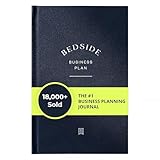
- TURN IDEAS INTO REALITY – Feeling stuck with your idea and not sure where to start? This guided journal helps you write a complete business plan so you can gain clarity and move forward with confidence as an entrepreneur.
- SIMPLE DAILY PRACTICE – 13 guided journaling sections with over 100+ business planning prompts. Make this business planner part of your routine to build momentum and work toward your business goals in just 5 minutes a day.
- BUSINESS PLANNER FOR ENTREPRENEURS – Use this guided journal to define your vision, understand your customers, evaluate competitors, plan expenses, and create a clear roadmap for launching your business.
- PERSONAL GROWTH – Designed as a personal growth workbook to help you reconnect with your purpose, prioritize well-being, and build a business plan centered around meaningful impact.
- PREMIUM ECO-FRIENDLY JOURNAL – Crafted with 100% FSC-certified recycled paper, a recycled cardboard cover, and wrapped in luxurious linen. This entrepreneur planner blends sustainability with thoughtful design.
| Destination | What to emphasize | Important boundary |
|---|---|---|
| Business plan | The business, customer problem, intended customers, and concrete competitive advantages. | Keep this section distinct from the plan’s other sections. SBA guidance |
| Website About page | The people behind the company, its experience, ethos, or goals, connected to what it does for customers. | Keep the page readable rather than lengthy or dull; a short origin story should clarify the offer, not obscure it. SBA website guidance |
| Google Business Profile | Relevant information about products or services, mission, and business history. | Google says the description must be honest and useful. Do not put links, special promotions or prices, or irrelevant and distracting copy in the description field. Use the designated profile fields for items such as address, service area, hours, and category. Google Business Profile guidelines |
| LinkedIn Page overview | Consider vision, mission, values, positioning, and core products or services as prompts for selecting relevant content. | These are prompts, not a requirement to create five labeled paragraphs. Add website, headquarters, locations, industry, organization type, and size to their Page fields rather than relying on the overview to carry them all. LinkedIn Pages SMB Playbook |
Draft the description in a practical sequence
- Choose the reader and destination. Decide whether you are writing for a plan reviewer, a prospective customer browsing your website, or people viewing a company profile.
- Write the opening sentence. State what the company does and whom it serves.
- Explain the customer need. Describe the problem or need the business addresses without relying on broad claims such as “we provide the best service.”
- Name the offer and benefit. Say what the product or service is and how it helps the intended customer.
- Add a substantiated differentiator. Use a relevant capability, experience, location, or history only if it is specific and supportable.
- Adjust the copy to its destination. Add enough detail for a business plan; keep an About page engaging and focused; follow Google’s profile-field restrictions when writing a Google description.
- Review it from the reader’s perspective. Remove vague superlatives, unrelated facts, and unsupported claims. Check that a reader can tell what the company does and whether it serves them.
This is a practical drafting sequence based on SBA plan guidance and Google profile rules, not a checklist formally prescribed by either organization. No universal ideal word count is established across business plans, websites, and platform fields, so check the current field limit for the destination before publishing.
Use a simple structure, then make it specific
A useful starting structure is:
[Company] helps [specific customer] solve [specific problem] through [product or service]. It serves [customer group or market] by [how the offer works or is delivered]. [Relevant evidence, expertise, history, or specific advantage] supports its approach.
Replace each bracket with facts the business can substantiate, and remove any sentence that does not fit. The structure is a drafting aid, not a claim template. For a business plan, develop the explanation enough to make the customer problem, intended market, and competitive advantage clear. For an About page, a concise account of the company’s people or origins can add context when it remains connected to the customer offer.
Independent reader supportYour contribution helps us test, update, and keep practical guides available for everyone.Keep claims credible and platform details in their place
Specificity makes the description more useful; unsupported claims make it less trustworthy. Prefer a concrete explanation of the service, customer, and relevant capability to unverified superlatives or promises. On a Google Business Profile, Google’s rules are especially explicit: keep the description honest and relevant, and leave links, prices, promotions, and distracting content out of that field. Put operational profile details in their designated fields instead. Google Business Profile guidelines
LinkedIn’s 2026 small-business Pages guide says completed Pages get 30% more weekly views. That is a claim made by LinkedIn, not an independently verified causal estimate; the guide’s figure should not be treated as a guarantee that completing a Page or changing its description will produce a particular result. LinkedIn Pages SMB Playbook
An older 2013 LinkedIn playbook discussed keyword-rich descriptions and preview length, but that material should not be treated as a current field limit. Check the live requirements for the platform where you are publishing. LinkedIn, Establish your presence
Quick Recap
Product prices and availability are accurate as of the date/time indicated and are subject to change. Any price and availability information displayed on Amazon at the time of purchase will apply.




