Recommended Free Tools
Value a construction company from the earnings it can sustain, then test whether its backlog, project margins, and cash conversion make those earnings dependable. Turnover or a large order book alone cannot establish what the business is worth: the work must be profitable, deliverable, and fundable. Buyers also examine assets, risk, and deal adjustments, so there is no universal valuation formula or multiple. Mergers.co.uk’s construction valuation guide, last reviewed 27 September 2026, and Wipfli’s overview of construction-company valuation describe complementary approaches and the factors that shape them.
Choose a valuation method that fits the business
Valuation methods answer different questions. A buyer may use more than one as a cross-check, depending on the company’s earnings history, assets, and the availability of credible comparison data.
| Method | What it examines | When it can help |
|---|---|---|
| Income-based | Expected cash flows or a maintainable earnings estimate, adjusted for risk and prospects. | When the company has an operating history that can support a forecast or normalized earnings view. |
| Market-based | Relevant peer-company or transaction evidence. | When comparable information is sufficiently reliable and similar in trade, scale, geography, and timing. Private-company comparisons may be limited. |
| Asset-based | Assets less liabilities, with attention to the nature and condition of the assets. | When owned equipment or other fixed assets are material to the business. |
These approaches do not produce interchangeable answers. An asset-based view may help assess the value of owned equipment, for example, while an income-based view asks what the operating business can earn. Wipfli discusses these valuation approaches and construction-specific considerations.
Build a maintainable earnings figure from project results
Buyers commonly start with reported EBITDA—earnings before interest, taxes, depreciation, and amortization—and assess whether it represents profit that can reasonably continue under new ownership. Turnover is not a substitute: two contractors with similar revenue may generate different profit because their project mix, cost control, and contract terms differ. CohnReznick’s 7 April 2026 discussion of construction deals covers EBITDA validation and transaction analysis.
What’s actually slowing this PC down?
Pick the symptom - the matching free tool is one click away.
#1 Best Overall

- ADVANCED CONSTRUCTION MATH SOLUTIONS: Solve all your dimensional math quickly and accurately with the award-winning CM Pro construction calculator's powerful built-in solutions for completing layouts, plans, bids, estimates and more, directly in the building units you prefer
- EFFORTLESS UNIT CONVERSION: Work in and convert between all common building dimension formats including feet-inch-fractions, decimal feet-inches, yards and metric, with area and volume calculations, plus weight-per-volume and D:M:S to decimal degree conversions
- TIME-SAVING RIGHT ANGLE FUNCTIONS: Built-in functions for right angles provide instant solutions for square-ups, rafters (common, hip, valley, jacks), rake-walls, slopes, angles and more, plus complete stair layout and advanced solutions for arcs, arches, circles, and columns
- PREVENTS COSTLY MATERIAL WASTE: Built-in solutions for roofing, drywall, studs, blocks, concrete footings and board-feet lumber estimating, plus compound miter functions help you avoid errors when working with crown molding and other pricey millwork
- COMES COMPLETE: Comes with a rugged Armadillo Gear protective case, pocket reference guide, two long-life batteries and a full one-year limited warranty for daily professional use
Review adjustments, not just the headline
Potential adjustments include unusual or nonrecurring costs and owner compensation that differs from a market level. Each adjustment needs evidence; labeling an expense “one-time” does not establish that a buyer will accept its removal. Consider whether the cost would recur, whether a replacement role is needed, and how the proposed adjustment fits the company’s recent results.
Test whether the margin is repeatable
A reporting period can be distorted by a high-margin closeout, a loss-making project, an estimating revision, or work-in-progress (WIP) timing. Compare tendered margins with estimated final margins, and examine cost overruns, cost-to-complete revisions, and whether change orders were priced and recovered. Break results down by project, customer, division, and contract type so that strong jobs do not conceal recurring losses elsewhere. Margin expectations vary by trade and contract type; a single industry-wide benchmark is not established by the available sources.
Rank #2

- LCD DISPLAY WITH FRACTIONS & DECIMALS: The LCD screen displays numbers in fractions or decimals, for clearly viewing the results of the construction-related equations.
- BATTERY POWERED: Operates on a battery-powered system requiring 2 LR44 batteries, keeping the calculator ready to use on the job site.
- MATERIALS & COST ESTIMATOR: Solves construction equations to find costs and estimate items needed to complete a project, including bricks/blocks, concrete, gravel, boards, fencing, lumber, flooring, studs, drywall, tiles, and paint.
- UNIT CONVERSIONS & PROTECTIVE CASE: for working with imperial or metric units to save time and convert between units of measurement like feet, inches, yards, and meters, all while housed in a shock-resistant and spill-proof protective case.
- CONSTRUCTION SOLUTIONS: With a plastic/rubber enclosure, this yellow calculator includes an online manual PDF, video series, and a pocket user guide that stores in a back pocket.
Assess backlog as evidence about future earnings
Backlog can support an earnings forecast, but it is not value by itself. Separate signed, binding work from tenders, quotes, preferred-bidder positions, and anticipated repeat business. Those pipeline items may lead to contracts, but they are not the same as secured work.
For executed work, estimate the profit contribution and assess the conditions under which it must be delivered. Check:
Quick wins for a faster PC:
Repair Windows errors before they cause bigger problemsFix Now →Fix the driver behind crashes, sound loss and screen glitchesFind Drivers →Clear out junk files and repair common Windows errorsFree Scan →Rank #3

- Construction Calculator with Writing Tablet:Equipped with a flip-page writing pad for quick note-taking, it requires no paper or pen, making it both eco-friendly and convenient. The thick, phone-like material provides strong, phone-level protection, keeping your calculator safe from drops and harsh construction environments
- 200+ Engineer Functions: For Mixed Dimension Calculations and Conversions,Area & Volume,Brick and Block,Concrete, Boards, Flooring, and Wall Stud,Drywall Sheet Count,Circle Area, Circumference, and Arc Properties,Compound Miter,Polygon Tiling,Roofing Material,Foundation Correction,Right Angle and Rafter,Roof Pitch and Angle Conversions,Common Rafter Length,Common/Hip/Jack Rafter and Spacing,Stair Layout,Rake Wall Calculations
- Precision for Every Construction Mind: More than 200 functions, designed specifically for engineering professionals, has 45 fast rebound hard PC buttons are reasonably distributed, more than other engineering calculator.It supports custom parameters.and has 3 storage registers for more convenient and smooth use
- Big Screen & Energy-Saving:With a 3" 12 digits large screen,Higher clarity and lager than other calculators.Clearer reading, fewer errors,8-12 minutes of no operation automatically shut down without worrying about energy consumption
- All-in-One Fit: Suitable for most people including builders, carpenters, concrete workers, contractors and DIY home renovators, roofers, architects, interior decorators, construction estimators, engineering students, etc
- Expected gross profit and EBITDA contribution, not merely contract revenue.
- Schedule, start dates, delays, and the timing of expected billing and collection.
- Customer concentration and exposure to a single sector, region, or framework.
- Payment, retention, damages, termination, change-order, and guarantee terms.
- Whether the available staff, equipment, and supply chain can perform the work on time.
- Mobilization costs and other cash needed before billing or collection.
Thin-margin, delayed, onerous, or capacity-constrained work can increase execution risk rather than strengthen the valuation. A backlog measure can help describe workload duration, but not profitability: a 2025 presentation hosted by the Virginia Transportation Construction Alliance gives “Months in Backlog” as backlog divided by annual revenue divided by 12, and also emphasizes profitability of work rather than volume. See the VTCA-hosted 2025 presentation. Treat that calculation as a workload indicator, not a valuation multiple or proof that the work will be profitable.
Connect accounting profit to cash and sale proceeds
A contractor can report profit while needing substantial cash to pay for work before it can bill and collect. Review WIP, over- and under-billings, accrued income, retainage, receivables, collection timing, payables, accruals, customer advances, and mobilization costs together. Their timing and contract context matter: revenue recognized, amounts billed, and cash received are not necessarily the same at a given date.
Rank #4

- PERFECT FOR ON-SITE USE: Built-in diagonal, rafter and roofing equations are perfect when solving slope, rafter, and roof dimensions, irregular pitch, irregular jacks, and rake-wall.
- LOADED WITH USEFUL FUNCTIONS: Stairway construction functions such as risers, treads, stringer, incline angle, and stairwell openings. Including circular calculations such as arc length, area, circumference, angle, column and cone dimensions, and more.
- EASILY WORK IN AND CONVERT BETWEEN UNITS: Calculate equations using US Imperial Units such as yards, feet, inches, fractions, pounds, or by using the Metric System. Also includes area, volume, perimeter, and weight functions.
- AVOID MATERIAL WASTE: The C6000 accurately estimates building materials such as blocks, drywall, footing, concrete, and margin of waste to ensure none of these costly materials are wasted.
- HEAVY-DUTY & RELIABLE: Each unit includes a shock-resistant and spill-proof hard-cover protective case, an English and Spanish pocket reference guide, a full instruction manual with examples available as a PDF online, and a series of instructional videos. Batteries included.
For a sale, an agreed enterprise value does not by itself determine what shareholders receive. Transaction analysis commonly considers debt-like items and a normalized working-capital target; the closing balance compared with that target can adjust proceeds. The exact definitions and treatment depend on the sale agreement and local accounting and transaction conventions. CohnReznick addresses working capital and WIP in construction deals.
Independent reader supportYour contribution helps us test, update, and keep practical guides available for everyone.Account for risk, assets, and management depth
Factors that can affect the reliability of earnings or the ability to deliver contracted work include customer, sector, and geographic concentration; claims or litigation; contract risk allocation; and dependence on a founder or a small number of key managers. Buyers may also assess forecasting, estimating, and project-control systems, as well as leadership depth.
Free tools Windows power users keep installed
One-click scans. No signup required.
Best Value
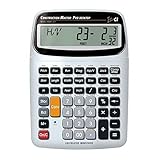
- SOLVE ALL YOUR DIMENSIONAL MATH: Quickly and accurately with the award-winning CM Pro-Desktop construction calculator's powerful built-in solutions for building; and full trig functions with sine, cosine, tangent, arcsine, arccosine and arctangent
- EFFORTLESS CONVERSION BETWEEN BUILDING FORMATS: Work in and convert between all common building dimension formats: feet-inch-fractions, decimal feet-inches, yards and metric -- including area and volume. Plus weight-per-volume and D: M: S to decimal degree conversions too
- TIME-SAVING BUILT-IN FUNCTIONS: Right angles give you instant solutions for square-ups, rafters (hip, valley, jacks), rake-walls, slopes, angles and more. Plus complete stair layout, advanced solutions for arcs, arches, circles, columns and more
- PREVENT COSTLY MATERIAL WASTE: Built-in solutions for roofing, drywall, studs, blocks, concrete footings and board-feet lumber estimating. Plus compound miter functions help avoid errors when working with crown molding and other millwork
- PROFESSIONAL CONSTRUCTION TOOL: Reduces headaches, saves time and prevents expensive material errors on your projects, from the office to the field. Comes with a large digits on easy-to-see multi-position tilt display LCD, easy-to-follow user's guide, plus a pocket reference guide in Spanish, full-size keys, long-life battery
Where equipment is material, assess ownership, age, condition, utilization, and replacement needs alongside asset finance. Equipment can contribute to asset value, but its condition, liabilities, and role in producing earnings matter; a list of machinery does not alone establish what a buyer will pay. Wipfli outlines asset and operating factors relevant to construction-company valuation.
A practical sequence for estimating value
- Set the scope. Clarify what is being valued—the operating business, its shares, or particular assets—and identify the relevant jurisdiction, valuation date, and transaction assumptions.
- Reconcile earnings. Start with reported financial results, document proposed adjustments, and test the resulting maintainable EBITDA against recent project performance.
- Rebuild the work forecast. Separate secured contracts from pipeline, then estimate expected profit, timing, contract risk, customer concentration, and capacity needs for secured work.
- Check project execution. Compare tender estimates with final outcomes and investigate recurring margin erosion, overruns, cost-to-complete changes, and unrecovered variations.
- Model cash requirements. Map billing, collections, retention, WIP, payables, advances, and mobilization costs to understand how much working capital delivery requires.
- Cross-check the result. Use relevant market evidence if it is genuinely comparable, and assess asset value where fixed assets are significant. Investigate differences between the approaches rather than treating one figure as automatic proof.
- Bridge to proceeds. Review debt-like items and the proposed working-capital mechanism in the sale terms to understand how the agreed enterprise value may translate into shareholder proceeds.
Why there is no reliable universal construction-company multiple
A multiple is only meaningful when its earnings base and comparison set are clear. Margin durability, backlog quality, cash needs, specialty, scale, assets, and deal risk can differ substantially between contractors. The reviewed sources do not establish a representative current EBITDA multiple range for construction businesses generally, so applying a single sector-wide number would imply more certainty than the evidence supports. UK transaction guidance and US advisory perspectives also reflect different jurisdictions; accounting, tax, contract, and sale conventions vary. For a specific sale or acquisition, use qualified local valuation, accounting, and legal advisers.
Quick Recap
Product prices and availability are accurate as of the date/time indicated and are subject to change. Any price and availability information displayed on Amazon at the time of purchase will apply.




