Starting an online store in 2026 is less about building a complicated website and more about making sound decisions about products, costs, taxes, fulfillment, and customer service. A store can be technically live quickly, but launching profitably requires a plan for startup expenses, margins, inventory, payment fees, shipping, and marketing.
This guide walks through the process from choosing a business model to accepting your first order. The legal and tax examples are U.S.-oriented; requirements vary by state, county, city, product, and business structure.
1. Decide what kind of online store you are building
Choose the business model before paying for a platform or buying inventory. Your decision affects startup capital, cash-flow risk, operating costs, and the work you will handle after a customer places an order.
| Model | What you sell | Main financial consideration |
|---|---|---|
| Physical products | Items you manufacture, wholesale, or resell | Inventory, storage, packaging, shipping, and returns |
| Dropshipping | Products shipped by a supplier after you make a sale | Lower inventory investment, but less control over quality and delivery |
| Digital products | Downloads, courses, templates, or software | Low fulfillment cost, but substantial upfront creation and marketing work |
| Subscriptions | Recurring products, content, or services | Predictable revenue if retention is strong; cancellations and payment failures matter |
| Services | Consulting, design, coaching, or other expertise | Often low inventory cost, but revenue depends on your available time |
Define four things before proceeding:
- Who is the target customer?
- What problem does the product solve?
- How will the product be sourced, stored, and shipped?
- What are the expected selling price, order value, gross margin, and monthly order volume?
Estimate the contribution from one order by subtracting product, processing, packaging, shipping, and advertising costs from its selling price. For example, a $40 order with $14 product cost, $1.50 processing, $8 packaging and shipping, and $7 advertising cost would leave $9.50 before overhead. This is an illustrative calculation, not a typical cost estimate.
Recommended Free Tools
#1 Best Overall
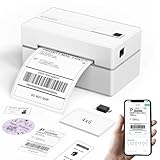
- Bluetooth Wireless Connection: KNAON Bluetooth shipping label printer enables wireless printing. For Mobile users, download the 'FlashLabel Pro' app from APP Store or Google Play for printing. Also, supports Windows and macOS, and can directly connect to the printer by downloading the 'FlashLabel Pro' App. Windows 7 or later computers can also print via Bluetooth by installing the latest advanced driver. Note: All devices CANNOT be connected directly to Bluetooth, and must be used through the 'FlashLabel Pro' app.
- USB Cable Connectivity: This printer ensures seamless USB connectivity with macOS, Windows (7 and above), ChromeOS, and Linux. KNAON printer features a built-in USB drive preloaded with drivers and tutorial videos for a fast and hassle-free setup. For ChromeOS, need to install 'FlashLabel' extension to your Google Chrome.
- Versatile DIY Labeling Options: KNAON Thermal Shipping Label Printer offers a vast selection of pre-designed templates, including 3,000+ templates, 5,000+ icons, and 100+ fonts available in the app. Designed for both professional and personal use, it supports various thermal paper sizes, ensuring effortless customization for all your labeling needs. Ideal for printing DIY shipping labels, barcode labels, thank-you labels, mailing labels, name tags, price tags, and various small thermal labels.
- Seamless Multi-Platform Compatibility: This Bluetooth shipping label printer works effortlessly with all major platforms, including Amazon, eBay, Shopify, USPS, UPS, Etsy, PayPal, Poshmark, DHL, and more, ensuring smooth and efficient label printing. (Note: Save the logistics label as a PDF file on the shipping platforms, then import it into the 'FlashLabel Pro' app for printing).
- Portable & Stylish Design: KNAON multi-function thermal label printer offers user-friendly operation in a compact design. Its perfect size (7.17 x 3.9 x 3.43 inches) makes it simple to store anywhere. With a fast printing speed of up to 180 mm/s and support for paper widths from 1.5 to 4.2 inches. The package also includes 10 test printing papers to get you started right away.
That contribution is not necessarily profit. It may still need to cover software, refunds, taxes, labor, insurance, and other overhead. If a product only works financially when everything goes perfectly, adjust the price, sourcing, shipping, or marketing plan.
Dropshipping does not eliminate responsibility. You still control the product description, advertising, customer support, refund process, and shipment promise. Under the FTC Mail, Internet, or Telephone Order Merchandise Rule, sellers need a reasonable basis for shipment claims and must notify customers when orders cannot ship as promised.
2. Choose a store platform
For most beginners, the practical choice is between a hosted platform such as Shopify and a WordPress-based store using WooCommerce.
| Platform | Best for | Costs and trade-offs |
|---|---|---|
| Shopify | Someone who wants a faster setup with less server maintenance | Monthly subscription, payment-processing costs, and possible third-party transaction fees |
| WooCommerce | Someone already using WordPress or wanting more control over hosting and extensions | Free core plugin, but separate costs for hosting, domain registration, payment processing, security, maintenance, and optional extensions |
| Custom storefront | An established business with development resources | Usually unnecessary complexity and expense for a first-time seller |
Shopify
Shopify’s online-store product requires the Basic plan or higher to sell through the Online Store sales channel. Shopify supplies a myshopify.com address, but a custom domain is more appropriate for a customer-facing business. Current plan names include Basic, Grow, and Advanced. Check Shopify’s plan information for current prices and processing rates, which vary by market and billing term. See also Shopify’s Online Store documentation.
Windows Errors? Fix Them Before They Spread
Repair common Windows errors and clear accumulated junk for a smoother, more stable PC - no reinstall needed.Free scan · no reinstallCrashes, No Sound, or Screen Glitches?
Random freezes, missing sound and display glitches usually trace back to one bad driver. Find and replace yours safely.Free scan · under a minuteWooCommerce
WooCommerce is a free, open-source WordPress plugin with no core monthly subscription or revenue share. That does not mean the store is free to operate: you still need hosting, a domain, payment processing, security, and maintenance. WooCommerce estimates hosting for many stores at approximately $25 to $350 per month and official extensions at approximately $29 to $299 per year; these are estimates, and actual costs vary widely. See WooCommerce pricing.
Choose Shopify if you value a managed setup. Choose WooCommerce if you already understand WordPress or specifically need control over your hosting, theme, data, and extensions.
3. Form the business and check legal requirements
There is no single U.S. “online-store license.” Requirements depend on your location, business activity, products, and structure. Before accepting orders, check:
- Business-name registration or DBA requirements.
- State and local business licenses.
- Seller’s permit or sales-tax registration.
- Product-specific permits for food, cosmetics, alcohol, supplements, children’s products, or imported goods.
- Zoning or home-business restrictions.
- Insurance needs, including product-liability coverage.
The SBA recommends checking state, county, city, and relevant federal-agency requirements. Regulated products can create obligations that a general ecommerce checklist will not identify.
Quick wins for a faster PC:
Repair Windows errors before they cause bigger problemsFix Now →Scan for outdated or missing drivers - takes under a minuteDriver Scan →An EIN may be useful for opening a bank account, dealing with payment providers, or registering with agencies. Do not assume every sole proprietor must obtain one; requirements depend on business structure and circumstances. The IRS provides a free online EIN application and EIN tools and guidance.
Online-store income is taxable income. Keep records of revenue, refunds, payment fees, shipping, inventory purchases, advertising, software, and other business expenses. Selling goods online can also create self-employment-tax obligations, as the IRS explains. A separate business bank account and bookkeeping system make these records easier to maintain, even when they are not legally required in your situation.
Rank #2
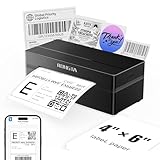
- Wireless Bluetooth Connectivity for Flexible Use: The RONGTA RP425 Bluetooth thermal shipping label printer is fully compatible with iOS and Android phones/tablets. Simply download the "RONGTA" App from the App Store or Google Play, connect via Bluetooth through the App, and start printing instantly
- Automatic Label Identification: Rongta shipping label printer automatically detects, grabs, and feeds labels, eliminating manual adjustment hassle. It supports all direct thermal labels with a width range of 0.98" to 4.37", covering common sizes such as 4x6" shipping labels, 2x2" circular labels, 2x1" barcode labels, and 1x1" QR code labels
- Easy Installation for Multiple Systems: The Windows and Mac driver software is available on Rongta official website for easy setup. Compatible with Windows 7 and newer, Mac OS 10.11 and newer, and Chrome OS
- Compact and Portable Design: The Rongta thermal label printer features a space-saving compact build with dimensions of 10.2 x 7.4 x 5.3 inches, making it easy to store anywhere on your desk, in a drawer, or during travel
- High-Speed Printing Performance: Features fast printing speed of up to 150 mm/s with 203dpi resolution and thermal printing method, ensuring efficient label production for warehouses, offices, and on-the-go use
4. Set a startup budget
Separate one-time launch costs from recurring costs. Your budget may include:
- Domain registration.
- Platform or hosting charges.
- Inventory and product samples.
- Packaging and shipping supplies.
- Business registration and permits.
- Insurance.
- Photography, design, or copywriting.
- Payment-processing fees.
- Email, analytics, and other software.
- Initial advertising or creator partnerships.
Keep a cash reserve for refunds, chargebacks, replacement shipments, and slow sales. Inventory matters: cash spent on products cannot be used for advertising, payroll, or an unexpected supplier bill until those products sell.
5. Buy and connect a domain
On Shopify, go to Settings > Domains > Connect existing domain. Enter the root domain without www, then select Connect domain.
For a manual third-party connection, Shopify’s current DNS values are:
| Record | Name | Value |
|---|---|---|
| A | @ | 23.227.38.65 |
| AAAA | @ | 2620:0127:f00f:5:: |
| CNAME | www | shops.myshopify.com. |
Remove conflicting A, AAAA, and www CNAME records. DNS changes can take up to 48 hours to propagate, and the domain may show as pending while TLS/SSL is provisioned. Follow Shopify’s manual connection instructions.
Common causes of domain problems include leaving an old A record in place, using multiple conflicting A or AAAA records, pointing www to the wrong target, using custom nameservers incorrectly, or leaving a proxy or DNSSEC configuration that interferes with certificate provisioning. See Shopify domain troubleshooting.
The Tool Desk
Outbyte PC Repair FREERepair Windows errors before they cause bigger problemsFix Now →Outbyte Driver Updater FREEFix the driver behind crashes, sound loss and screen glitchesFind Drivers →6. Add products with complete information
Shopify product setup
Go to Shopify admin > Products > Add product. A product needs at least a title and price, but a store-ready listing should also include:
- Original, specific description.
- Mobile-friendly product photographs.
- Variant names and prices.
- SKU and inventory quantity.
- Weight and dimensions for physical products.
- Processing time and expected delivery window.
- Lawful, clearly disclosed return restrictions.
Adding a product does not automatically make it visible everywhere. Visibility depends on the product status, sales channels, inventory, collections, and theme configuration. See Shopify’s product documentation.
WooCommerce product setup
WooCommerce’s onboarding checklist starts with Add your products. You can create physical, variable, grouped, and other product types, or import products through CSV. See the WooCommerce setup wizard.
Before publishing, check the listing as a customer would: select every variant, review the total price, confirm availability, and look for delivery information that could be misunderstood.
Rank #3

- Label maker for Shipping labels & small business labels
- supports multiple-size wide wireless printing
- Download "RONGTA" app for phone to bluetooth print
- Download computer driver for PC/Laptop to USB print
- Inkless Thermal Printing for Sharp Clarity
7. Design the storefront and publish essential pages
On Shopify, use Online Store > Themes, then select Online Store > Themes > Edit theme. The theme editor controls layout, sections, blocks, typography, colors, and app embeds without requiring code. Duplicate the theme before making major changes. See Shopify’s theme editor guidance.
Only one Shopify theme is published at a time. To publish a draft, go to Online Store > Themes > Draft themes > Publish, then confirm by selecting Publish again. See Shopify’s publishing instructions.
Shopify’s current menu path is Content > Menus, not the older Online Store > Navigation path found in many tutorials. See Shopify’s menus and links documentation.
At minimum, publish:
- About
- Contact
- Shipping
- Returns and refunds
- Privacy policy
- Terms of service
- Frequently asked questions
- Size guide or care instructions, where relevant
Platform-generated policies are starting points, not guaranteed legal compliance. Review them so they accurately describe your products, locations, data practices, shipping promises, and refund process.
Do these 3 things before closing this tab:
1Fix the driver behind crashes, sound loss and screen glitches2Repair Windows errors before they cause bigger problems3Scan for outdated or missing drivers - takes under a minuteWooCommerce’s current onboarding no longer uses the previous multi-step Customize Your Store flow. Its checklist opens a simplified design screen with options to use the site editor or browse themes, according to its setup documentation.
8. Configure payments
Shopify
Go to Shopify admin > Settings > Payments. Shopify Payments availability depends on your country and account information. When Shopify Payments is the sole payment provider, Shopify says it does not charge third-party transaction fees on orders; subscription and payment-processing charges still apply. Using another provider may add Shopify’s third-party transaction fee to that provider’s own fees. See Shopify Payments fee guidance and third-party provider information.
WooCommerce
Open WooCommerce > Settings > Payments. A provider may require account creation, authentication, and additional verification before it can accept live payments. See the WooCommerce setup wizard.
Stripe
Stripe Checkout offers hosted or embeddable checkout for one-time payments and subscriptions, with more than 40 payment methods depending on configuration and customer location. Stripe Payment Links create reusable URLs that open a hosted checkout.
Free tools Windows power users keep installed
One-click scans. No signup required.
Payment processing is not the same as tax compliance. Stripe Tax can calculate taxes when enabled, but you remain responsible for determining where registration and filing are required. See Stripe’s tax guidance.
9. Configure sales tax carefully
Do not rely on the outdated idea that an online seller only collects tax in the state where they live. Obligations can arise from physical locations, inventory, fulfillment activity, or economic nexus based on sales into a jurisdiction. Marketplace-facilitator rules may also affect who collects the tax.
Rank #4

- Go Wireless by Bluetooth: Download the "NELKO"app to print via Bluetooth on your Nelko Bluetooth thermal label printer for iOS and Android. Printing shipping labels has never been easier. Windows 7 or later computers can also print via Bluetooth. For Mac users with M1 or M2 CPUs, install the app and connect to the printer via Bluetooth. Note: All devices cannot be directly connected to Bluetooth and need to be used through the app
- Print via USB: For Windows (7 and later), Mac OS,Chrome OS, you can connect the desktop label printer via USB cable. Note that Mac OS only works with USB connection, you can not print via Bluetooth
- Good Helper for Cost Saving: Advanced thermal direct technology is adopted to achieve the printing speed of 150 mm/s, up to 72 sheets 4x6 labels/min. High speed brings high efficiency and helps your business grow faster! 203 DPI makes printing clearer. No ink, no toner, only thermal labels needed. Both fanfold labels and roll labels could be used. Label size: labels width ranges from 1.54" to 4.1"(40-104 mm), such as 4x6, 3x2, 3x1, 2x1 thermal labels and so on
- Strong Platform Compatibility: This bluetooth shipping label printer can work with virtually all platforms, including Amazon, Ebay, Shopify, USPS, UPS, Esty, PayPal, Poshmark,etc.(Note: Please remember to save the logistics label as a PDF on the logistics platform, then upload it to the editor APP "NELKO" for printing
- Suitable for Commercial and Home Use: Printer driver, instruction videos and problem shooting videos are provided in U-Disk for better setting. Nelko PL70E label printer is much smaller than traditional printers and only requires a small piece of space to achieve printing. Very suitable for printing shipping labels, mailing labels, price labels, barcode labels, name tags and all kinds of small category labels
Review:
- Your business and inventory locations.
- Customer destinations.
- Economic-nexus thresholds.
- Marketplace-facilitator rules.
- Product-specific taxability and exemptions.
- Registration, filing, and payment deadlines.
Tax software can calculate rates, but it does not automatically decide whether you must register or file. Verify requirements with the relevant state tax authority or a qualified tax professional.
10. Set shipping and fulfillment
Shopify shipping settings support profiles, zones, methods, fulfillment locations, labels, and self-serve returns. A shipping profile groups products with similar shipping requirements so the correct rates can apply. See Shopify’s shipping guide.
Configure:
- Ship-from location.
- Countries and regions served.
- Shipping zones.
- Flat, free, carrier-calculated, or weight-based rates.
- Processing time.
- Package dimensions and weights.
- Local pickup or delivery, if offered.
- International duties and taxes, if applicable.
- Return address and return procedure.
Missing weights can produce inaccurate carrier rates. Other common failures include assigning a product to the wrong shipping profile, failing to create a rate for a destination, advertising free shipping that excludes certain products, displaying a delivery date that ignores processing time, or having inventory unavailable at an eligible fulfillment location.
11. Configure email and customer support
Test the messages customers receive after an order:
- Order confirmation.
- Payment confirmation.
- Fulfillment and shipping updates.
- Refund notification.
- Password-reset email, if accounts are enabled.
- Contact-form messages.
Publish a monitored support address and a realistic response time. A personal inbox may work for a handful of orders, but it becomes difficult to manage as order volume grows.
Independent reader supportYour contribution helps us test, update, and keep practical guides available for everyone.12. Test the store before launch
Shopify supports test orders through the Bogus Gateway or Shopify Payments test mode. Test orders are not charged and do not appear in payouts or reports. Test mode must be disabled before launch; while it is active, real customers cannot place live orders. See Shopify’s test-order instructions.
Test these scenarios:
- Product page on mobile and desktop.
- Every variant and price.
- Inventory reduction after purchase.
- Discount codes.
- Shipping rates by destination.
- Tax calculation.
- Successful and failed payments.
- Order-confirmation email.
- Fulfillment workflow.
- Refund or cancellation.
- Return instructions.
- Broken links and missing images.
- An address outside your main service area.
- Out-of-stock behavior.
- Checkout on the real domain after DNS and SSL are active.
Shopify’s fraud-analysis test mode can simulate low-, medium-, and high-risk recommendations using these test email addresses:
The order must be worth more than zero, and Shopify Payments must be in test mode. See Shopify’s fraud-analysis guidance.
13. Launch deliberately
Before removing a password or “Coming soon” screen, verify:
- The custom domain resolves and HTTPS/TLS is active.
- The intended theme is published.
- Products are active on the correct sales channels.
- Inventory is accurate.
- The payment provider is live rather than in test mode.
- Shipping works for every advertised destination.
- Tax settings have been reviewed.
- Policies and contact details are visible.
- Confirmation emails arrive.
- Analytics and conversion tracking work.
If you cannot verify the complete live payment flow, consider placing a real, low-value order and refunding it after confirming the workflow. WooCommerce’s current checklist ends with Launch your store, which helps preview the store, review setup tasks, and turn off Coming soon mode. See the setup wizard.
What’s actually slowing this PC down?
Pick the symptom - the matching free tool is one click away.
Best Value

- 【High‑Quality, Energy‑Efficient Thermal Printing】The NULLTONEX shipping label printer uses direct thermal technology, eliminating the need for ink or toner and reducing maintenance and replacement costs. It delivers crisp 203 DPI resolution for sharp barcodes, text, and addresses that scan easily, with print speeds up to 150mm/s (72 labels per minute). Ideal for high‑volume small business shipping, it minimizes downtime during peak hours and boosts operational efficiency.
- 【Bluetooth & USB Dual Connectivity】 Connect seamlessly to your phone, laptop or PC via Bluetooth or USB. Download the free "FlashLabel Pro" app for quick Bluetooth pairing to create and print labels wirelessly. Also, simply use the USB cable to connect directly to your laptop for a steadier, interference‑free office workflow
- 【User‑Friendly Operation】 Easy setup and a dedicated FlashLabel Pro app offer 1,800+ customizable templates, 300+ fonts, and multiple editing tools for everything from daily home organization to express waybill printing. Offline capability allows local storage of templates and designs, so you can start printing immediately without waiting for cloud downloads – perfect for busy small businesses
- 【Wide Compatibility with Popular Shipping Platforms】 Works seamlessly with major shipping carriers and e‑commerce platforms including Amazon, Shopify, Etsy, USPS, UPS, FedEx, and DHL. Supports standard 4"×6" shipping labels as well as other sizes from 1.57" to 4.3" wide – ideal for shipping labels, barcode labels, mailing labels, and more.(Note: prints in black & white only)
- 【Durable, Compact & Ready to Use】 Featuring a special matte finish with reinforced coating and a space‑saving design that fits neatly on any desk. Built‑in printhead overheat protection ensures stable long‑run performance. The package includes the thermal printer, power cord, USB cable, and 25 sheets of 4"×6" thermal labels – everything you need to start efficient printing right out of the box
14. Market the store without losing money
Choose one or two measurable acquisition channels rather than spending on every available option. Possibilities include search content aimed at specific customer problems, eligible product feeds, email capture with clear consent, social content tied to particular products, creator partnerships, and paid advertising with a defined test budget.
Track more than clicks. Monitor conversion rate, average order value, contribution margin after advertising, refund rate, repeat purchases, and customer-acquisition cost. An ad campaign that produces sales can still lose money if the cost of acquiring each customer is higher than the contribution from the order.
Do not buy fake reviews, invent customer experiences, suppress legitimate negative reviews, or make incentives conditional on positive sentiment. The FTC’s Consumer Reviews and Testimonials Rule took effect on October 21, 2024 and addresses fake reviews, deceptive testimonials, insider reviews, review suppression, and sentiment-conditioned incentives. See the FTC’s rule Q&A.
FAQ
How much money do I need to start an online store?
There is no universal amount. A digital-product or service store can require less cash than a physical-product store, which may need money for inventory, samples, packaging, shipping, insurance, and returns. Build a budget for launch costs, recurring software, marketing tests, and a reserve for refunds and slow sales before choosing a product.
Is Shopify or WooCommerce better for beginners?
Shopify is usually simpler for a beginner who wants hosted software and less server maintenance. WooCommerce may be better if you already use WordPress or want more control over hosting, themes, data, and extensions. WooCommerce’s core plugin is free, but hosting, domains, payment processing, security, maintenance, and extensions still cost money.
Do online stores have to collect sales tax?
Sales-tax obligations depend on your business locations, inventory and fulfillment activity, customer destinations, economic-nexus thresholds, marketplace rules, and the products you sell. A tax calculator does not automatically determine whether you must register or file. Check the relevant state tax authority or consult a tax professional.
Can I start an online store with dropshipping and no responsibility for shipping?
No. A supplier may ship the product, but you remain responsible for accurate descriptions, customer support, refunds, and reasonable shipment promises. If an order cannot ship as promised, federal rules may require customer notification and an appropriate refund process. See the FTC prompt-delivery rules.
The Bottom Line
Start with the numbers, not the website. Choose a product with enough margin to cover fees, shipping, refunds, taxes, overhead, and customer acquisition. Then select the simplest platform that fits your needs, verify permits and tax requirements, publish clear policies, test every important checkout path, and launch with a small, measurable marketing budget.
Quick wins for a faster PC:
Repair Windows errors before they cause bigger problemsFix Now →Scan for outdated or missing drivers - takes under a minuteDriver Scan →Clear out junk files and repair common Windows errorsFree Scan →A store is not financially ready merely because a product page exists. It is ready when a customer can find the product, pay successfully, receive accurate delivery information, get the right emails, and obtain a clear remedy if something goes wrong.
Quick Recap
Product prices and availability are accurate as of the date/time indicated and are subject to change. Any price and availability information displayed on Amazon at the time of purchase will apply.




